
Explore Prague
Things to do in Prague
Prague rewards structure more than speed. The central sights are close on a map, but stone streets, hills, church interiors, museums and long café stops make a day feel fuller than the distances suggest. Group places by area instead of zig-zagging between famous names: one block around Hradčany and Malá Strana, another in Old Town and Josefov, then deliberately leave the historic core for a neighborhood, park, gallery or brewery. The result is a city visit with some shape to it rather than a checklist.
For a first visit, build Prague around four anchors: Prague Castle and Hradčany, the walk through Lesser Town and Charles Bridge, Old Town with the Astronomical Clock, and at least one district beyond the medieval core. Add Czech food, a park or river viewpoint, and one evening activity. Three full days are enough for a strong introduction; four or five let you slow down and add a day trip.
What is worth doing in Prague first
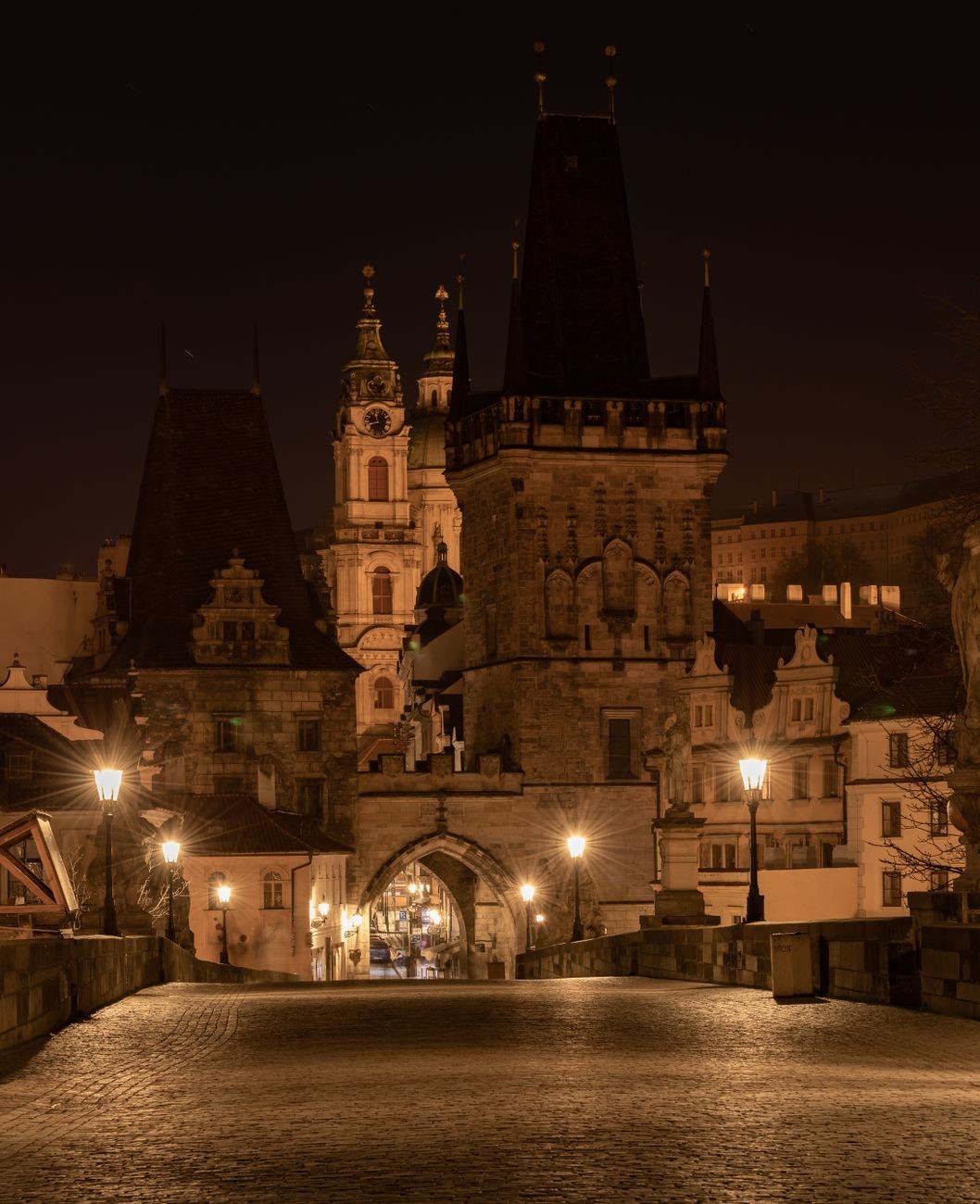
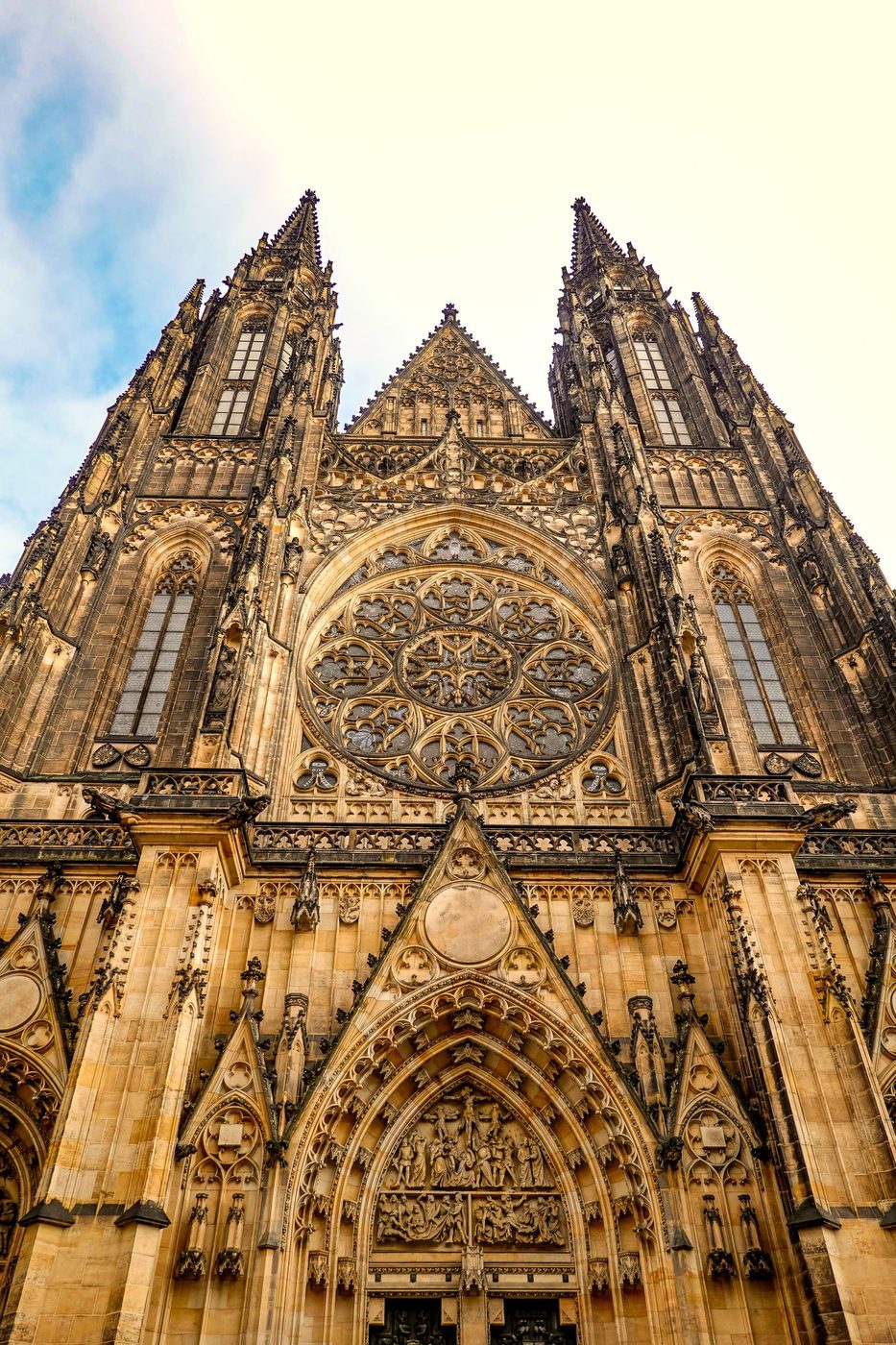
Begin with the places that explain the city. Prague Castle is the political and dynastic high ground; St Vitus Cathedral gives the clearest architectural timeline; Lesser Town shows the Baroque city beneath the Castle; Charles Bridge explains the medieval connection across the Vltava; and Old Town Square concentrates trade, religion, civic power and public memory into one space. The Astronomical Clock is worth seeing, but it is more revealing when read together with the Old Town Hall than as a three-minute show.
The second layer is where Prague becomes more specific. Walk Kampa and the Čertovka channel, climb through Petřín or Letná, spend time in Vinohrady, Žižkov, Karlín or Holešovice, look at Czech Cubism, and spend enough time in a pub to see that beer culture here is about service, glassware, cellar care and social rules as much as alcohol. If you have children, the zoo is substantial enough to occupy half a day or more. If rain arrives, Prague has enough churches, historic interiors, galleries, cafés and passages that bad weather changes the route more than it ruins the day.
Top attractions without wasting half the day in transit
A sensible first-day route starts high and walks downhill. Take a tram toward Hradčany, enter the Castle complex, visit St Vitus Cathedral and whichever historic buildings matter to you, then descend through Lesser Town. From Malostranské náměstí continue toward Kampa or directly to Charles Bridge. Cross into Old Town, pass the Klementinum and finish at the Astronomical Clock on Old Town Square. It is a long day if you enter several interiors; it is an easy walk only if you mostly stay outside.
Do not assume that every Castle courtyard or church interior is covered by one casual walk-in. Prague Castle has free-access grounds and ticketed historical buildings, with seasonal hours and occasional state-event closures. As checked on 16 September 2026, for example, the Castle's official site lists the Old Royal Palace as temporarily closed until 1 October. That is why an itinerary should be built around areas, not around a promise that one exact interior will be open.
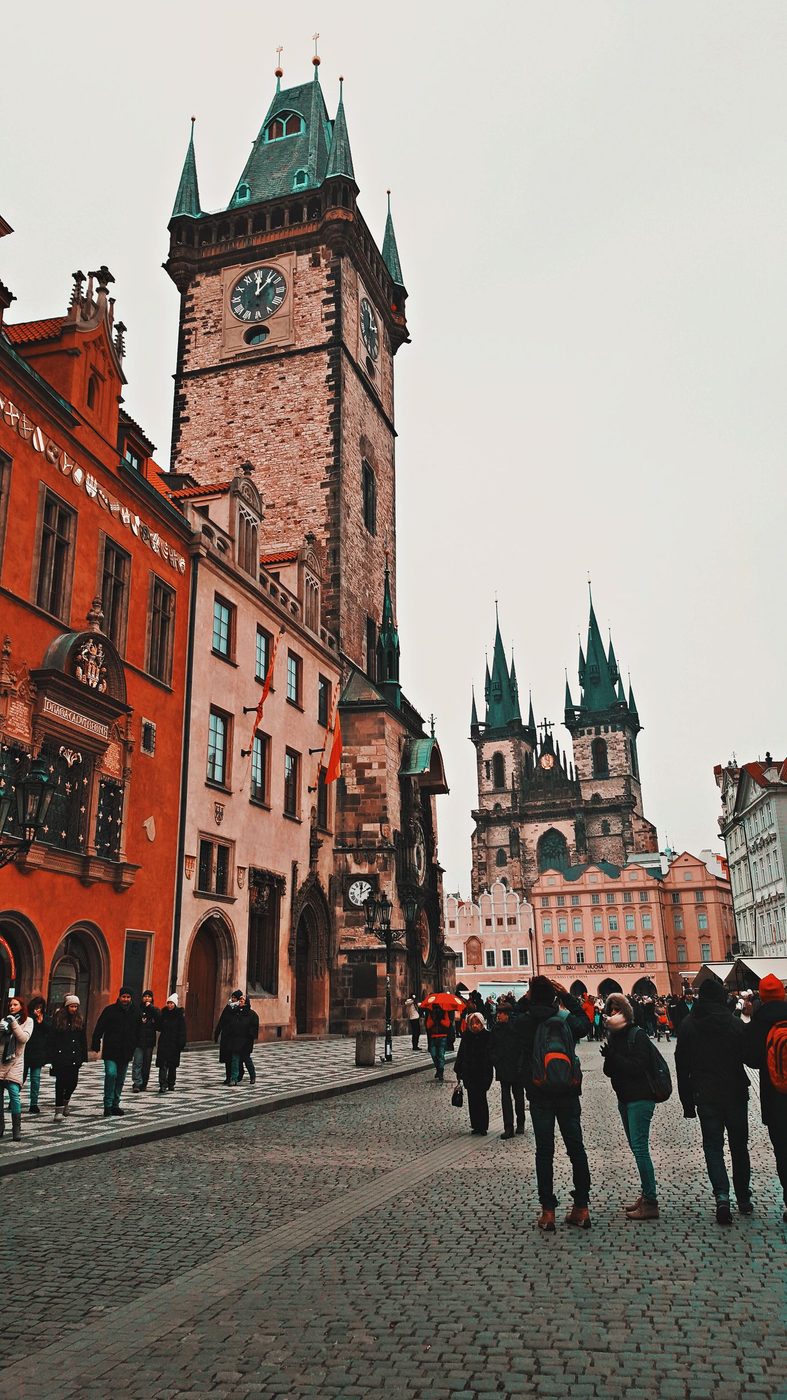
Old Town works the same way. Týn Church and Old Town Square can anchor several hours that continue through the lanes around Ungelt, the Old Town Hall, the Jewish Quarter edge and the river. Prague City Tourism currently schedules the Astronomical Clock's Apostle display once an hour, from 08:00 through 23:00. If you want the tower, historical interiors or underground rooms, plan them instead of letting them become accidental add-ons.
Choose one neighborhood outside the postcard core
The historic centre is real, lived-in Prague, but it is also where visitor pressure is strongest. One neighborhood outside Prague 1 makes the trip more legible. Vinohrady is useful for late-nineteenth- and early-twentieth-century urban Prague, broad streets, apartment blocks, cafés and parks. Žižkov is denser, hillier and historically more working-class, with a strong pub tradition and views from Vítkov. Karlín mixes a planned nineteenth-century district with post-2002 rebuilding, offices and restaurants. Holešovice combines former industrial ground, contemporary culture and the Trade Fair Palace. Smíchov shows another industrial-to-commercial transformation on the west bank.
Where you stay also changes what Prague feels like. Old Town minimizes transport but maximizes crowds and late-evening street activity. Lesser Town is quieter in places but less convenient if you dislike hills. Vinohrady gives fast metro and tram access while placing you outside the densest tourist zone. There is no universally best district; choose for the type of evening and morning you want.
History and culture: read the city as layers
Prague is easiest to understand when you stop treating its centre as one preserved medieval scene. Romanesque remains survive in rotundas and fragments; Gothic Prague is visible in St Vitus, Charles Bridge, Týn Church and the Old Town towers; Renaissance work survives inside palaces and town houses; the Baroque reshaped Lesser Town after the upheavals of the seventeenth century; the nineteenth century widened streets, cleared much of Josefov and added national institutions; the twentieth century brought Art Nouveau, Cubism, Functionalism, socialist-era infrastructure and post-1989 redevelopment.
Pair a major monument with one institution that changes the scale. The National Gallery, Museum of Decorative Arts, DOX, Museum Kampa, Jewish Museum, National Museum or a theatre performance each answer a different question about the city. Prague also has unusually strong links to music and performance: Dvořák, Smetana, Mozart's Prague premieres, the Czech Philharmonic and Laterna Magika all connect to places that still exist. Pick one line of interest instead of sampling everything.
Food and beer without tourist mythology
Czech food is broader than the three dishes most often printed on visitor menus. Svíčková gives you the sauce-and-dumpling tradition; a plate of roast duck, braised cabbage and dumplings introduces the roast tradition; Czech-style beef goulash is thicker and served differently from Hungarian gulyás; fried cheese is genuine everyday comfort food; chlebíčky belong to a different social setting entirely. Desserts and pastries matter too: koláče vary widely in shape and filling across regions rather than following one fixed template, while větrník belongs to the café and pastry-shop tradition.
Two tourist assumptions deserve correcting. Trdelník is widely sold in central Prague but is not a good shorthand for traditional Czech pastry. Absinthe is also less central to Czech drinking culture than souvenir-shop marketing suggests. Beer is the stronger local language: degrees such as 10°, 11° and 12° refer to original wort strength, not alcohol percentage; lager can be served in different pour styles; and a well-run tank-beer pub is as much about storage and turnover as branding.
Restaurant prices vary sharply by location and format, so a static citywide price table ages badly. Read the menu before ordering, check what is charged, and tip based on service rather than treating a fixed tourist percentage as law.
Views, parks and the river
Prague's topography does much of the sightseeing work. Letná gives a long view across the Vltava bridges; Petřín combines paths, gardens and a higher west-bank perspective; the Castle terraces look over the red roofs; Vítkov opens the eastern side of the city; Riegrovy sady gives a skyline view from Vinohrady.
The river is also transport. Prague Integrated Transport includes public ferries in its network, subject to seasonal operation and river conditions. They are not sightseeing cruises, but they are a cheap way to understand how the banks, islands and flood infrastructure fit together. A walk along Náplavka works best when treated as public space rather than a fixed attraction: its atmosphere changes with markets, weather and events.
Evenings and nightlife
Prague at night divides into several different experiences. Old Town and the lower part of Wenceslas Square carry the highest concentration of visitor-oriented bars and clubs. Národní and the riverfront mix theatres, bars and late restaurants. Žižkov remains dense with neighborhood pubs. Vinohrady has bars, restaurants and a more residential evening rhythm. Holešovice and Karlín are better thought of as destinations for particular venues than as continuous nightlife streets.
An evening does not have to mean drinking. The National Theatre, Estates Theatre, Rudolfinum, jazz clubs, classical concerts and night walks across the river all use the centre differently from daytime sightseeing. If you want Charles Bridge with less crowd pressure, late evening or early morning is more useful than chasing a mythical perfectly empty hour in peak season.
Prague with children
Do not compress a family itinerary into the adult one with more snack stops. Prague Zoo can justify most of a day. The National Technical Museum, public transport itself, playgrounds on islands and parks, Petřín, smaller towers and short tram rides can work better than a sequence of churches. Cobblestones are hard on small stroller wheels, and the Castle/Lesser Town terrain is not flat.
For older children, turn the city into visible puzzles: identify house signs from before modern numbering, find the Hebrew clock on the Jewish Town Hall, compare the bridge towers, or decode what the Astronomical Clock actually shows. The city becomes easier to remember when children are asked to find something rather than simply stand in front of it.
Rain, cold and indoor Prague
Rain changes the routing; it does not justify abandoning the day. Old Town Hall, the Jewish Museum sites, National Museum, National Gallery, Museum of Decorative Arts, DOX, Museum Kampa, cafés, churches and passages can absorb hours. The challenge is moving between them without turning a wet day into repeated long crossings. Pick one compact cluster.
In Old Town, pair the Town Hall with the House at the Black Madonna or nearby interiors. Around Josefov, the Jewish Museum circuit is naturally broken into several buildings. In the New Town, the National Museum and passages around Wenceslas Square reduce outdoor time. At Prague Castle, remember that you still walk between buildings outdoors and queues may be exposed.
Day trips worth giving up a Prague day for
A day trip makes most sense after you have given Prague at least two full days. For medieval urban history, Kutná Hora offers the strongest case and the Sedlec Ossuary; Karlštejn is compact and easy to combine with a walk; Terezín requires emotional and historical focus rather than being treated as another castle stop; Pilsen is straightforward by direct train and works for brewing history, Loos interiors and a less visitor-dense Czech city; Český Krumlov is visually powerful but consumes more travel time; Karlovy Vary is about spa architecture and landscape; Bohemian Switzerland and Bohemian Paradise work best when weather, trail conditions and daylight cooperate.
If you are interested in Kingdom Come: Deliverance, Kutná Hora and the central Bohemian landscape have an extra layer of recognition, but use the game as a prompt to look at actual history rather than as evidence for medieval detail. Transport timetables and monument opening days change, so check the operator and attraction the evening before departure.
One, two or three days in Prague
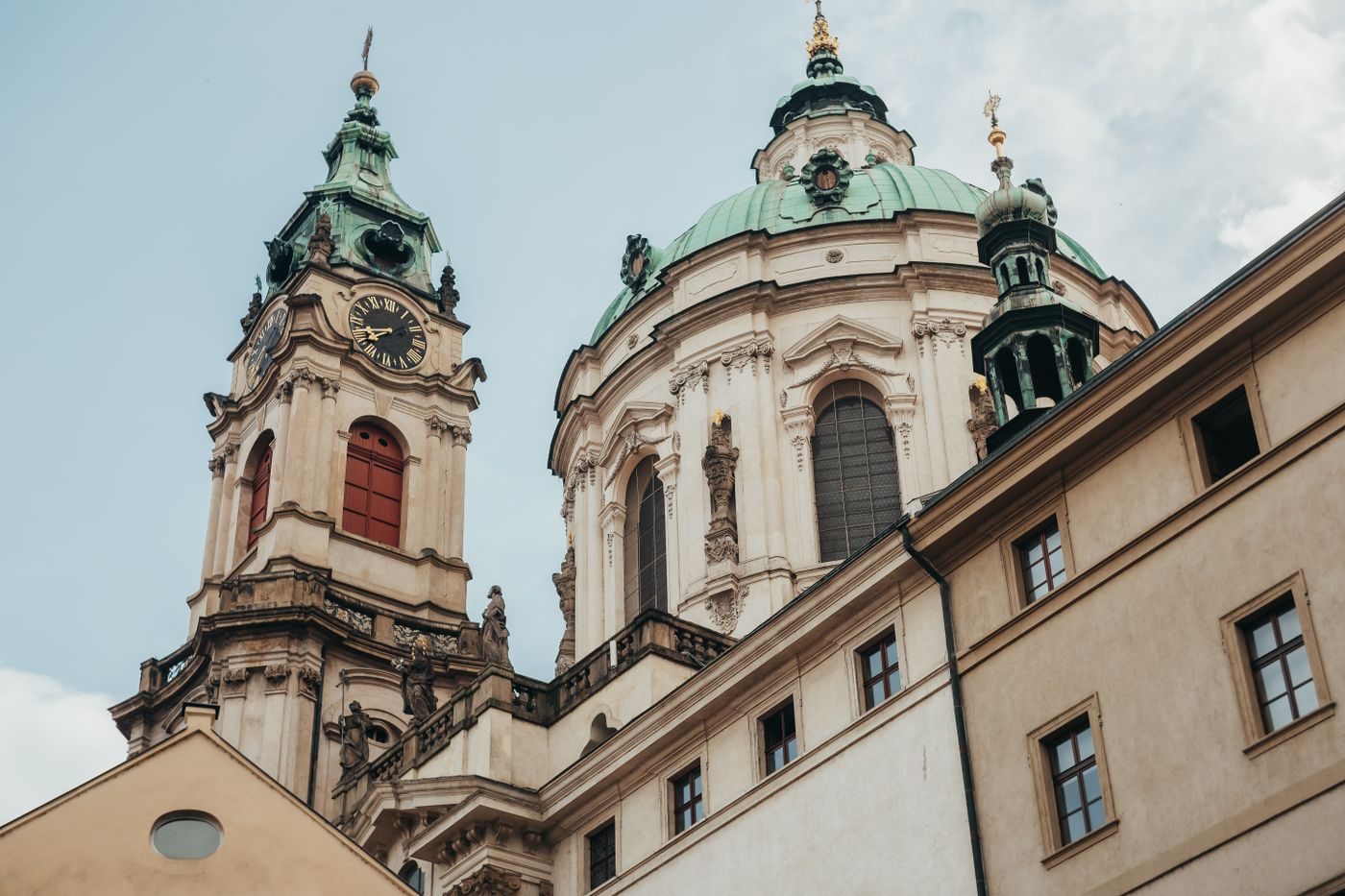
With one day, keep to one continuous line: Castle and St Vitus in the morning, Lesser Town, Charles Bridge, Old Town and the Astronomical Clock. Add only one substantial interior beyond the Castle. With two days, give Josefov and Old Town proper time, then choose either a neighborhood evening or a museum. With three days, spend the third outside the postcard core: Vinohrady–Žižkov, Karlín–Holešovice, Vyšehrad–Náplavka, or a specialized architecture or food day.
Since 1 January 2026, Prague's standard adult fares are cheaper in the PID Lítačka app than on paper. Thirty-minute, 90-minute, 24-hour and 72-hour products are available; the 24- and 72-hour tickets include the Petřín funicular while the short single tickets do not. Airport Express uses a separate fare. These figures should always carry a last-checked date rather than sit indefinitely as evergreen copy.
Spectrum insight: stop collecting landmarks
The common planning mistake is to arrange Prague by fame. That produces repeated river crossings and a day in which every stop is important but none has context. Arrange it by urban logic instead. The Castle belongs with Hradčany and Lesser Town. Charles Bridge belongs to both banks. Old Town Square belongs with the Town Hall, trade routes and Josefov. Vinohrady and Žižkov belong together because the boundary itself tells a story about the city's growth.
Once the first-day geography is clear, smaller stories become more valuable: why tram numbers began with five, how the hand-split pavement patterns work, why a Vltava side channel defines Kampa, or why one river island survived consolidation. These details do not replace the major monuments; they make the gaps between them worth walking.
Build days around geography, not a list of rankings
Prague’s centre is compact enough to tempt visitors into constant backtracking. A map makes Prague Castle, the Old Town, the Jewish Quarter, Wenceslas Square and the river look as though they belong to one continuous stroll. In practice they are different walking environments. Hradčany sits high above the Vltava; Malá Strana drops steeply toward the bridge; Old Town is dense and flat; Josefov rewards slower museum visits; New Town spreads farther south and east than its name suggests. Treating all of them as interchangeable pins is the quickest way to spend a day crossing the same streets twice.
A more useful planning unit is the half-day. Put the Castle, Hradčany and upper Lesser Town together. Pair Charles Bridge with Kampa, the river edge and Old Town rather than making the bridge a separate expedition. Josefov can share a day with northern Old Town, but the Jewish Museum circuit deserves time that cannot be reduced to the few minutes needed to walk between synagogues. Vinohrady and Žižkov make sense together; so do Karlín and Holešovice if the purpose is contemporary Prague rather than medieval monuments.
This approach also protects the trip from queues and weather. If one interior is unexpectedly closed, the surrounding district still supplies a coherent day. The UNESCO listing of Prague’s historic centre is useful here because it describes the city as an urban ensemble whose value lies in the relationship among Old Town, Lesser Town, New Town and the Castle, not in one isolated monument. That is a better model for a visitor too. The practical question is therefore not “How many top sights can I collect?” but “Which part of Prague am I trying to understand before lunch, and which part after it?”
There is one exception: on a very short first visit, a deliberate cross-city line can be worthwhile. Starting near the Castle, walking downhill through Malá Strana, crossing Charles Bridge and finishing in Old Town compresses several historical layers into one route. It works because the direction follows the old urban connection across the river. It stops working when extra attractions are bolted onto both ends until the day becomes a race.
Walking, trams and the small transport decisions that save energy
Prague is a walking city, but “walkable” does not mean that every useful journey should be walked. The tram network is especially valuable because it bridges the places where topography or distance adds little to the experience. Riding uphill toward Hradčany before walking down through the Castle district is often a better use of energy than climbing first and then spending the rest of the day tired. Trams also make residential districts easy to add without turning them into a separate logistics exercise.
The current PID system uses time-valid tickets rather than a simple pay-per-ride model. That matters because a valid ticket can cover transfers among trams, metro, buses and eligible urban rail services within its time and zone conditions. In 2026 the PID tariff changed, including different prices for tickets bought in the mobile app and on paper. Anyone publishing exact fares should date them; anyone visiting should check the current PID information instead of trusting an old travel blog or a screenshot from a previous trip.
Three habits prevent most mistakes. First, know whether your ticket has already been activated or still needs validation; the rules differ by medium. Second, do not plan the airport transfer as though the metro reaches the terminals. Public transport from Václav Havel Airport depends on bus connections into the rail or metro network, while other commercial airport options operate separately. Third, remember that Prague’s ferries are integrated into public transport on selected routes. They are useful transport, but they also reveal how the Vltava functions as part of the city rather than as scenery between two embankments.
Cobbles, stairs and steep lanes deserve their own planning line. Shoes that are comfortable on a hotel treadmill can be poor on polished stone after rain. Visitors with reduced mobility should verify individual routes because historical surfaces, cross-slopes and step-free access vary significantly. Prague City Tourism publishes accessibility-oriented route information for exactly this reason. None of this makes the centre difficult; it simply means that a good itinerary spends physical effort where the street itself is worth it.
Culture beyond the monuments: music, theatre, museums and twentieth-century Prague
The medieval skyline can make Prague look like a city whose important culture happened centuries ago. That is a distorted reading. The same centre contains institutions and buildings connected with Mozart, Dvořák, the Czech National Revival, modern theatre, interwar architecture, post-war visual art and the political culture of 1989. A visitor who spends every indoor hour in royal or ecclesiastical monuments sees only one part of the city’s history.
Music is the most obvious bridge. Prague’s concert life ranges from major halls to churches and chamber venues, but the useful distinction is not “classical versus non-classical.” It is whether the programme and venue have a real institutional or historical relationship to the music being performed. The Estates Theatre matters because of its direct Mozart history. Rudolfinum matters as the home of the Czech Philharmonic and as an architectural landmark of the late nineteenth century. Municipal House combines performance space with an Art Nouveau interior that belongs in an architecture itinerary as much as a concert programme.
Modern visual culture requires leaving the postcard route. Holešovice and the Trade Fair Palace, Kampa’s twentieth-century collections, the DOX area, and smaller galleries shift the centre of gravity away from royal Prague. Czech Cubism is another case where architecture and design intersect: Prague is unusual because Cubist ideas moved into actual buildings, façades, interiors and objects rather than remaining chiefly on canvas. Functionalist villas and interwar planning then add a different argument about how the city should work.
Theatre deserves similar care. Laterna magika emerged from the multimedia experiments associated with Expo 58 and became a distinctive Czech approach to combining stage performance, projection and movement. Puppetry has deep Czech and Slovak cultural roots recognized by UNESCO. Neither subject needs to become a compulsory attraction, but both help explain why Prague’s cultural identity cannot be reduced to Baroque churches and Gothic towers. One strong museum, concert or performance can give a three-day trip more range than three additional exterior photo stops.
Season changes the city more than the attraction list suggests
The headline sights remain the same in January and July, but the way Prague should be scheduled does not. Winter compresses daylight and makes indoor stops more valuable; summer gives gardens, river edges and long evenings a larger role. Spring and autumn sit between those extremes, with rapidly changing weather that rewards flexible half-days rather than rigid minute-by-minute plans.
At Prague Castle, seasonality is operational as well as atmospheric. Historical buildings have summer and winter schedules, and gardens have their own opening months and hours. Churches can change access because they are active religious spaces. Public events, state ceremonies, restoration work and security measures can close an interior that normally appears in an itinerary. This is why exact opening times belong in a freshness layer, not in evergreen prose that will be translated into twenty-five languages and left untouched for years.
Weather changes the best order of activities too. On a very hot day, a steep Castle climb in the middle of the afternoon is rarely intelligent when it can be moved to the morning. On a rainy day, Old Town can become a chain of interiors—Town Hall, churches, galleries, passages, cafés—rather than a failed outdoor plan. Snow creates beautiful streets but can make cobbles and slopes slow. Wind matters on exposed viewpoints and bridge crossings more than a temperature number alone suggests.
Packing advice should therefore focus on function. A light waterproof layer, shoes with reliable grip and the ability to add or remove one warm layer will solve more Prague problems than a complicated fashion checklist. In summer, shade and water matter; in winter, warm hands and dry feet extend the amount of time people are willing to spend outside. Prague’s tap water is safe, and public fountains or refill points can reduce the need to buy bottled water repeatedly, though individual fountains can be seasonal or temporarily out of service.
The strategic lesson is simple: decide which experiences depend on daylight, weather or seasonal access, then put those first. A museum can usually move. A garden that closes at dusk cannot.
How to leave room for Prague that was not preselected for you
A comprehensive guide can accidentally create the same problem it is trying to solve: too many recommendations. Prague is particularly vulnerable because the centre is saturated with monuments, memorials, façades, courtyards and stories within a small area. If every interesting detail becomes an obligation, the visitor spends the trip following instructions instead of observing the city.
Reserve one unscheduled block. It can be ninety minutes in a residential district, an evening with no booked attraction, or the return walk after dinner. This is not an invitation to wander randomly through unsafe or inaccessible places; central Prague is straightforward to navigate. It is a way to let the city’s scale work in your favour. A tram line can be followed for a few stops. A park can replace another tower. A street market, small exhibition or neighbourhood café can take the space that a fourth major church would otherwise occupy.
The most productive details are often infrastructural rather than monumental. Look at how hand-split paving patterns change from street to square. See how a former river channel makes Kampa legible as an island. Watch how tram tracks, embankments and bridges connect districts that tourists mentally separate. Prague’s nineteenth- and twentieth-century growth is easier to grasp when the visitor stops treating everything outside the medieval core as an optional appendix.
This also improves commercial decisions. Tours earn their place when they supply interpretation, orientation or access to a theme that would be hard to reconstruct from plaques and search results. They are less useful as a substitute for every independent walk. A strong first-day city tour can create a mental map; later time can then be spent following interests rather than repeating the same highlights with different commentary.
Do not make “all of Prague” the target. No three-day itinerary can do that, and a seven-day one cannot either. The better target is to leave with a usable model of the city: river, hills, historic towns, twentieth-century districts, food culture, transport and a few stories that make specific streets memorable.
A practical budget of attention for a first visit
Time is the scarce resource in Prague, not the number of things to do. Allocate it according to how much explanation a place needs. A bridge or square can be crossed in minutes, but its historical meaning may require half an hour. A museum ticket can absorb two hours even though the buildings sit only a few hundred metres apart. A neighborhood can look “done” after one main street while its actual character lies in side streets, parks and ordinary commercial life.
For a three-day first visit, one sensible attention budget is: a substantial half-day for the Castle ridge and Lesser Town; another for Old Town, Charles Bridge and Josefov; one block outside the medieval core; one Czech meal that is chosen for the food rather than a view; one viewpoint or park; and one evening cultural or social activity. Everything else is optional. The exact combination can change without harming the trip.
This framework is deliberately resistant to viral lists. A list of fifty attractions treats a twenty-second sculpture stop and a two-hour museum as equivalent units. They are not. It also tends to hide transit, meals, queues and the simple need to sit down. Prague works best when the itinerary contains fewer fixed appointments than the available hours. That spare capacity is what allows a closed church, sudden rain, a long lunch or an unexpectedly interesting gallery to improve the day instead of “breaking” it.
If there is a fourth or fifth day, add range rather than density. Go to a district with a different urban history, take a day trip, attend a performance, visit a major museum or spend more time along the river. The extra day should make Prague larger, not make the original tourist core busier.
Free Prague is not the same thing as no-budget Prague
Many of Prague’s strongest experiences cost nothing at the point of entry: crossing Charles Bridge, walking Old Town and Malá Strana, exploring parks, watching the river from an embankment or riding through neighborhoods if you already hold a valid transport pass. Free-access Castle grounds also let visitors understand the complex spatially before deciding whether ticketed interiors are worth their time.
A zero-admission itinerary still has costs. Transport, food, toilets in some locations, luggage storage and weather-related changes matter. Free attractions can also consume the most valuable resource of all: daylight. Waiting forty minutes for a free event that lasts five minutes may be worse value than paying for a museum you genuinely care about.
Use free time to create contrast. Pair a paid cathedral or museum with a park. Follow a ticketed Old Town Hall visit with a free river walk. Spend an evening on a neighborhood route rather than buying another generic “experience.” This produces a city day with different rhythms instead of a budget version of the same monument checklist.
The practical advantage is flexibility. Free exterior experiences can move around rain, queues and fatigue. Put timed tickets where they are irreplaceable; leave the rest loose enough to respond to the city.
The city rewards a second look at the same route
Repeating one central route at a different hour is not wasted time. The walk between Charles Bridge and Old Town Square in the morning is about delivery traffic, opening businesses and architectural visibility; in the evening it becomes a social corridor with restaurants, performances and a different light. The same physical distance can therefore supply two different kinds of information.
This is especially useful on a first visit because orientation compounds. The second crossing requires less map-checking, so attention shifts from navigation to details. A façade, memorial or side street missed earlier becomes visible without adding a new district to the schedule.
Use repetition selectively. There is little value in queueing twice for the same interior unless it contains a special interest. Streets, bridges, riverbanks and squares are different because they are public spaces whose use changes through the day. One repeated walk can reveal more about Prague than one extra attraction reached by a hurried transfer.
Explore by topic
Prague guides
Frequently asked questions
How many days do you need in Prague?
Three full days give a strong first introduction. With two days, a selective route can still cover the central historical districts; four or five days create room for slower museums, neighborhoods and an excursion.
Is Prague walkable?
The centre is highly walkable, but hills, cobbles and long monument visits make distances feel longer than they look. Trams are especially useful around the Castle, Lesser Town and outer neighborhoods.
What should I book in advance?
Book limited-capacity experiences that matter to you: special Castle exhibitions, major guided tours, popular performances and some day-trip attractions. Outdoor sightseeing normally needs no booking.
Where should a first-time visitor stay in Prague?
Old Town is the most central, Lesser Town is quieter in places but hillier, and Vinohrady is a strong compromise between residential streets and fast transport.
Is Prague expensive for visitors?
It can be moderate or expensive depending on location. Public transport is relatively inexpensive, while central restaurants, premium hotels and attraction tickets can raise the daily budget quickly.
Can you drink tap water in Prague?
Yes. Prague tap water is potable; carrying a refillable bottle is practical.
Sources & further reading
- Prague City Tourism — One day in Prague — Prague City Tourism
- Prague Castle — Opening hours — Prague Castle Administration / Office of the President of the Czech Republic
- Prague Castle — Visitor information — Prague Castle Administration / Office of the President of the Czech Republic
- Prague City Tourism — Old Town Hall with Astronomical Clock — Prague City Tourism
- PID — Tickets and fare — Prague Integrated Transport (PID)
- Prague City Tourism — food & drink — Prague City Tourism
- Prague City Tourism — beer culture — Prague City Tourism
- UNESCO World Heritage Centre — Historic Centre of Prague — UNESCO World Heritage Centre
- Prague City Tourism — Charles Bridge — Prague City Tourism
- Prague City Tourism — Old Town Square — Prague City Tourism