
Explore Prague
Prague Legends and Myths
A city with old streets does not automatically produce better legends, but Prague gives stories unusually durable scenery. Towers, cellars, river channels, execution sites, cemeteries and palace walls provide physical anchors. Once a tale attaches to a place, each generation can retell it without needing the original event to be provable. That is why Prague legends range from foundation myths to urban ghost stories. Libuše belongs to the imagined deep past of the Czech lands. The Golem grew around a real rabbi but became famous through later storytelling. Dalibor was a real prisoner, yet the violin episode collapses under chronological scrutiny. Faust never owned the house that carries his name, but owners with interests in alchemy and natural philosophy helped the association flourish. Good storytelling does not require pretending all of this happened literally. In fact, the boundary between archive and legend is where many of the best stories begin.
Prague's best-known legends include the Golem of the Jewish Town, Princess Libuše's prophecy of Prague, the knight Bruncvík and his lion, Dalibor playing the violin in prison, the Faust House, river water sprites and a large cast of headless or restless ghosts. These stories are culturally important, but they do not all have the same relationship to evidence. Some grow around real people or buildings; others come from medieval chronicles, later literature or oral folklore. The most rewarding way to follow them is to visit the real locations while keeping a clear line between documented history and the story Prague told about itself afterward.
Why Prague accumulated so many legends
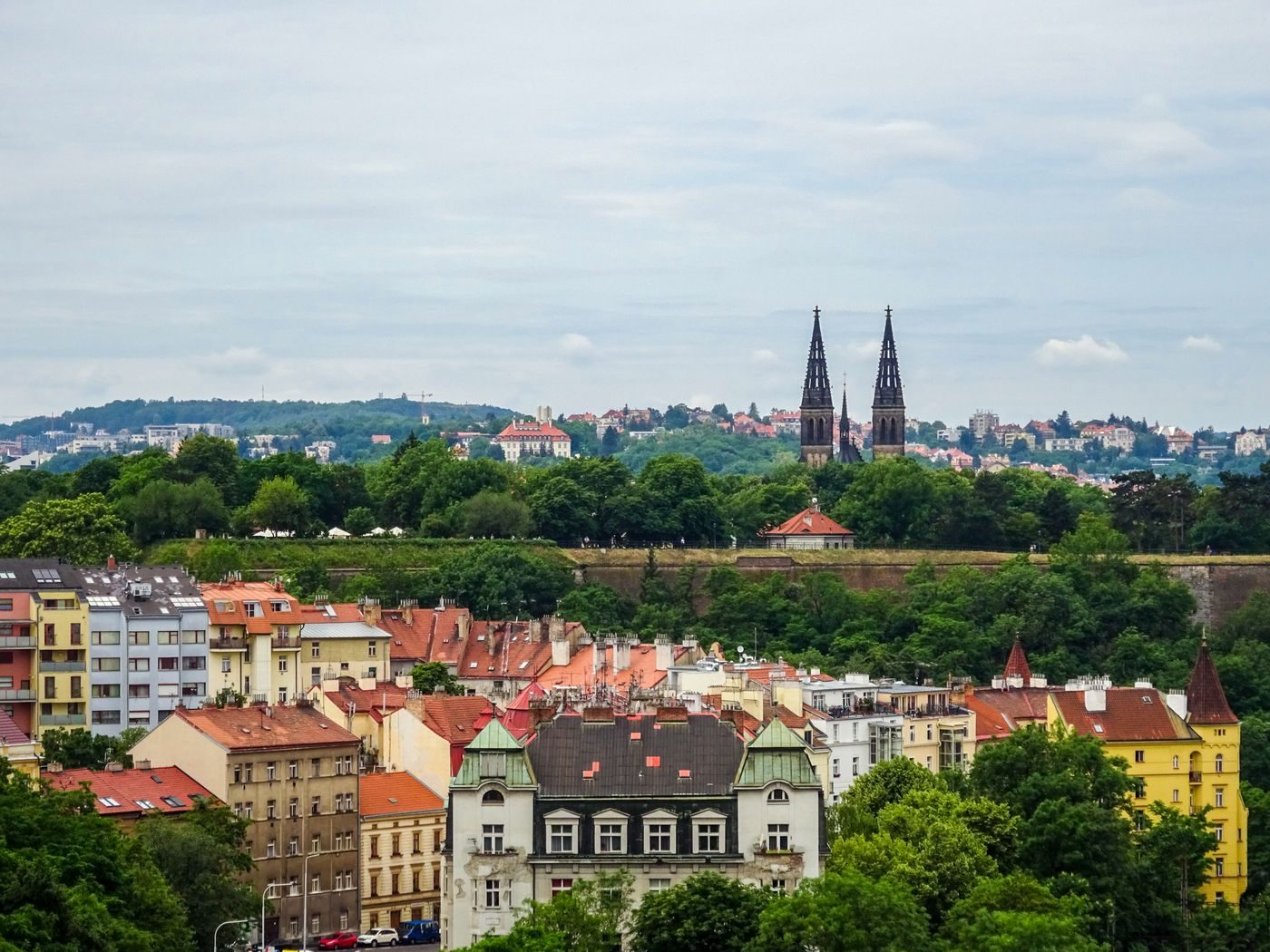
Prague was royal capital, pilgrimage centre, university city, commercial hub and multilingual metropolis. Different communities shared the same streets while preserving different religious and literary traditions. Political violence, fires, floods and epidemics added events that could be remembered, moralised or transformed.
The built environment helped. A tower already used as a prison invites prison stories. A medieval synagogue lends authority to a tale about secret sacred knowledge. A dangerous river generates water spirits. A house associated with eccentric scholars becomes a natural home for Faust.
Printing and literature then stabilised versions that might otherwise have remained fluid. Nineteenth- and 20th-century writers, collectors and tourist guides did not merely record folklore; they also selected, polished and popularised it. The 'traditional' Prague legend a visitor hears today may therefore contain several centuries of editing.
The Golem: real rabbi, later creature
The Prague Golem is said to have been created from clay by the Maharal, Rabbi Loew (Judah Loew ben Bezalel), to defend the Jewish community. In popular versions, sacred letters or a written name animate the creature, which later becomes dangerous or must be deactivated. Its remains are sometimes said to lie in the attic of the Old-New Synagogue.
Rabbi Loew was real: an important late-16th-century rabbinic scholar associated with Prague. The problem is chronology of the story. The version of the Prague Golem familiar today enters the surviving source tradition considerably later than Rabbi Loew's own lifetime, and no physical evidence supports the attic claim. Jewish Museum material on the synagogue documents the building; it does not turn the creature into historical fact.
Later literature profoundly shaped the Golem's fame. Gustav Meyrink's 1915 novel *Der Golem* used Prague's Jewish Town in a very different, expressionistic way and helped carry the figure into international culture. The legend has since been reinvented in film, comics, games and fantasy. Its cultural afterlife is indisputably real even when the clay guardian is not historically verifiable.
Princess Libuše and the prophecy of Prague
Princess Libuše belongs to the legendary Přemyslid origin cycle. She is portrayed as a wise ruler and prophet who foresees the rise of Prague and directs envoys toward a man working at a threshold—*práh*—providing a legendary explanation for the city's name.
The story comes through medieval chronicles written long after the supposed age in which Libuše would have lived. It is not an eyewitness account or a literal etymology. Its value lies elsewhere: it gives the Czech polity a prophetic female founder and connects political legitimacy to a landscape around Vyšehrad and the Vltava.
Later national culture amplified the myth through literature, painting, music and public monuments. When visitors stand at Vyšehrad, they are not standing at a proven scene of Libuše's speech. They are standing at a real historic place onto which centuries of Czech cultural memory projected an origin story.
Bruncvík and the lion: a legend that explains too much
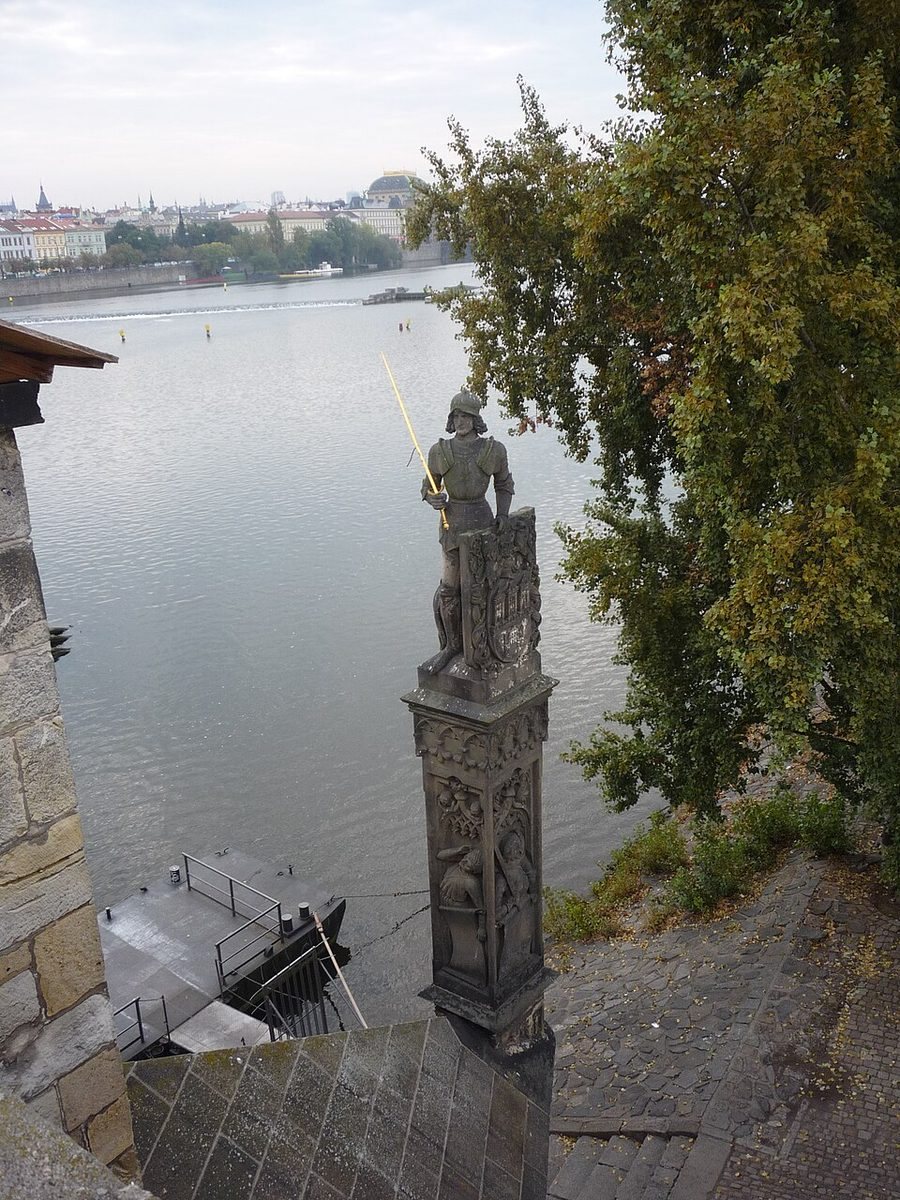
Bruncvík is a legendary Czech knight who travels abroad, survives extraordinary adventures and befriends or rescues a lion. Versions use the story to explain why the lion became associated with the Czech lands. A statue of Bruncvík stands near Charles Bridge on the Malá Strana bank, making the legend easy to attach to a physical walk.
The heraldic problem is that legends are not documentary proof of how coats of arms developed. The Bohemian lion has a traceable medieval heraldic history that does not require Bruncvík's adventures to be factual. The story works as a retrospective explanation: people saw a powerful symbol and created narrative around why it belonged to them.
That pattern appears repeatedly in folklore. A legend can encode identity without providing reliable chronology. Bruncvík is most interesting when read as an adventure story attached to heraldry, not as a substitute for heraldic evidence.
Dalibor: the prisoner who supposedly learned violin too late
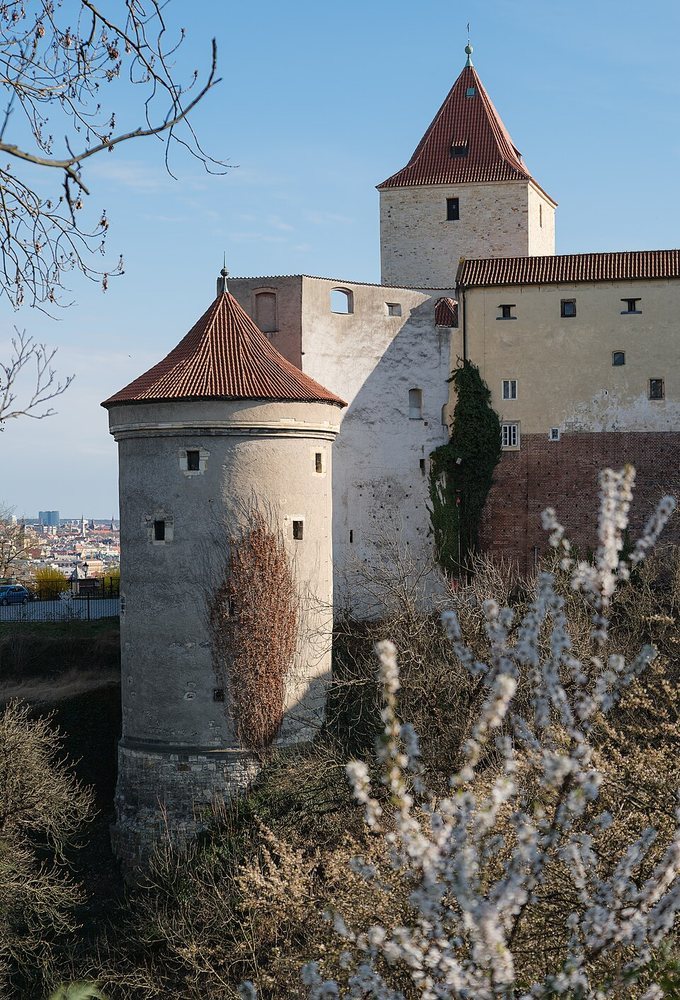
Daliborka Tower at Prague Castle takes its name from Dalibor of Kozojedy, a nobleman imprisoned there during the closing decades of the fifteenth century. Legend later claimed he learned to play violin in captivity so beautifully that Prague citizens brought him food or listened beneath the tower.
The romantic image became culturally powerful, most famously through Bedřich Smetana's opera *Dalibor*. Yet the familiar violin narrative fails basic historical testing: the details and instrument tradition do not line up neatly with the documented prisoner and period.
This does not make the tower less evocative. It demonstrates how a real punishment site can acquire a later moral story about art, sympathy and injustice. Visit the building for its prison history; keep the music as the legend layered over it.
Ghost Prague: executions, headless figures and guilty streets
Prague ghost stories often start with a real urban setting and then assign a moral cause to supernatural repetition. Executed men return to the square. Murderers or betrayed lovers cannot rest. Headless figures retrace a route. A merchant's courtyard acquires a violent tale that warns against jealousy or betrayal.
Old Town has especially dense folklore because its narrow streets and documented sites make stories easy to localise. Nerudova does the same in Lesser Town. But there is no evidential method by which a guide can prove a recurring apparition. Treating these stories as folklore frees them to be examined for what they reveal about fear, justice and memory.
Some ghost tales can be traced in relatively modern newspapers or collections rather than medieval tradition. 'Old story' and 'old event' are not synonyms. Spectrum's supporting Stories flag when a haunting enters the written record rather than silently pushing every tale into the Middle Ages.
Water sprites and the Vltava
The Czech *vodník* is a water spirit associated with ponds, rivers and mills. In folk imagery he can be comic, dangerous or both. Prague's Vltava gave the figure an obvious local landscape: mill races, weirs, floods, boatmen and riverside trades kept water close to daily life.
Around former mills and the old Podskalí district, supernatural stories overlap with a documented working river economy. Timber rafting, ice, mills and flood risk shaped communities that later redevelopment largely transformed. The legend of a water goblin becomes more intelligible when the river is understood as workplace and hazard, not only a scenic background.
Modern embankments make the Vltava look controlled. Historic Prague knew it as a force that could destroy bridges, inundate districts and support livelihoods. Folklore gave that force personality.
Faust House: the famous tenant who never lived there
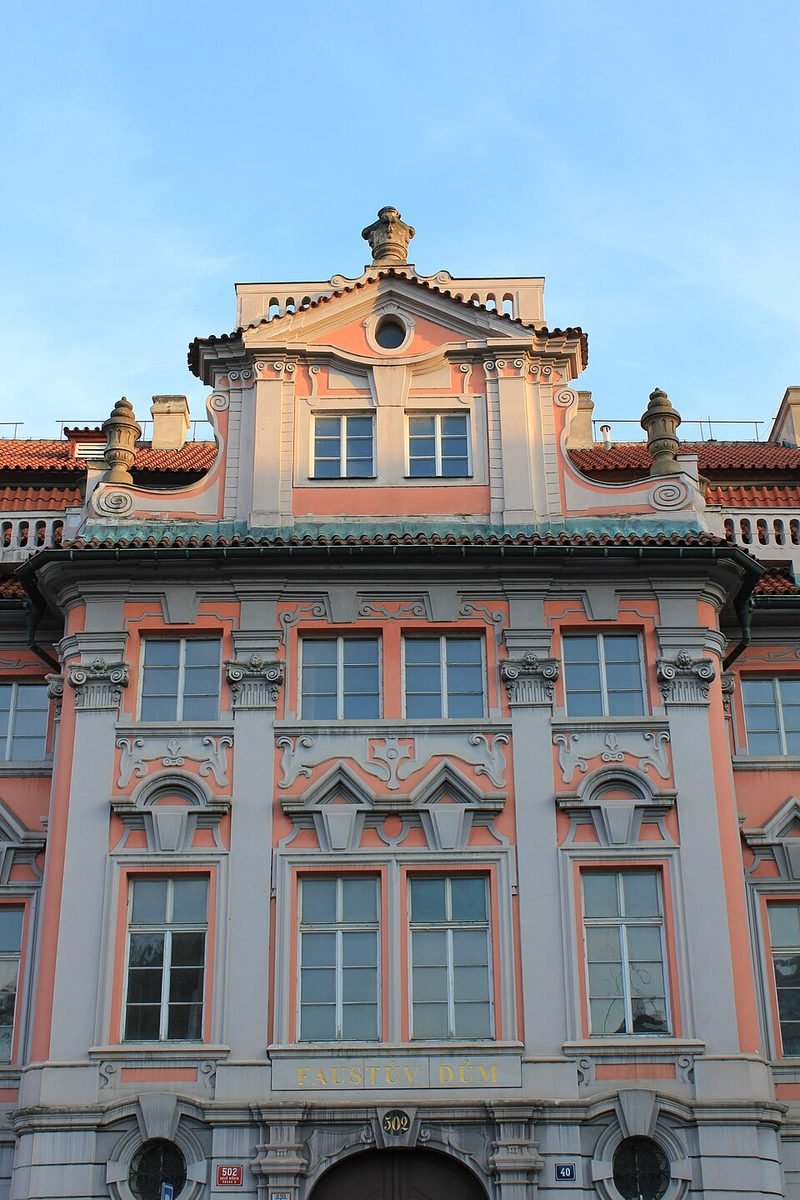
A palace on Charles Square is known as Faust House because Prague legend placed Doctor Faust there and described the devil carrying him away through the ceiling. The historical Faust did not own the Prague building.
Why, then, did the name stick? Several documented occupants had interests that later audiences could interpret through the language of alchemy, experiment or eccentricity. Members of the Mladota family are particularly important to the house's real history. The building supplied enough unusual biography for the Faust tradition to attach itself convincingly.
This is a classic case where debunking the literal claim improves the story. The question changes from 'Did Faust live here?' to 'Why did Prague decide this was the sort of house Faust should have lived in?'
Vyšehrad and the sleeping army
Vyšehrad carries more legendary weight than almost any other Prague site. Libuše's prophecy is connected with it, and stories of sleeping warriors waiting to rescue the nation belong to a wider Central European tradition of armies hidden in mountains or sacred places.
The motif should not be confused with archaeological evidence for a literal hidden army. Its function is symbolic: national protection is imagined as dormant rather than absent, ready to awaken in crisis. Similar stories attach to Blaník outside Prague, showing that the motif travels between landscapes.
Vyšehrad itself has substantial documented history—fortifications, churches, cemetery and strategic importance. That real record provides a foundation strong enough that the legends do not need to masquerade as facts.
Legend versus documented history: a simple four-part test
When you hear a Prague story, ask four questions. First: is the person or place documented? Rabbi Loew, Dalibor, the Old-New Synagogue and Daliborka are real. Second: when does the specific story first appear in writing? A tale recorded centuries later carries different evidential weight from a contemporary document. Third: does the chronology work? The Master Hanuš clock legend, for example, conflicts with evidence that the astronomical mechanism predates the version crediting him as sole creator. Fourth: did later literature transform the story?
Urban legends can emerge quickly. Pérák, the spring-heeled figure associated with occupied Prague, shows how wartime rumour can generate a modern supernatural hero. A story need not be medieval to become part of city folklore.
This method is not designed to drain the fun. It lets the reader enjoy two stories at once: the legend itself and the history of how people came to believe, repeat or repurpose it.
Where to see the places behind the stories today
For the Golem, visit Josefov and the exterior or visitor-accessible parts of the Old-New Synagogue; do not expect an attic hunt. For Bruncvík, find the knight's statue near Charles Bridge on the Malá Strana bank. Daliborka is located within Prague Castle and its current visitor access depends on the Castle circuit. Faust House stands on Charles Square, but it is not a general walk-in supernatural museum.
Vyšehrad provides the landscape for Libuše and national legends. Old Town Square anchors stories surrounding the 1621 executions. Nerudova, Liliová and the Ungelt retain locations associated with several ghost tales. River legends make more sense around Kampa, the Čertovka channel and former mill zones.
A dedicated ghost-and-legends walk can connect these stories through the city after dark, but the strongest version keeps documented history and folklore in separate sentences. Atmosphere should not be purchased at the cost of accuracy.
Prague legends come from different genres, so test them differently
A foundation myth such as Libuše’s prophecy is not the same kind of story as a ghost attached to one house, a saint’s miracle, a literary invention or a later urban anecdote. Grouping everything under “legend” can hide those differences. The right historical question depends on the genre.
For foundation myths, ask when the story first appears in written chronicles and what political community it helps explain. For legends attached to real people, separate the documented biography from motifs added later. For house legends, trace when the address became associated with the tale. For ghost stories, repetition and local variation may matter more than proving an event happened exactly as told.
This method makes folklore richer because it restores time. The Golem tradition connected with Rabbi Loew developed through textual transmission and later popular culture; it should not be projected backward as a detailed sixteenth-century eyewitness report. Libuše belongs to medieval chronicle tradition about Czech origins. The Faust House acquired its name through associations with alchemy and occupants long after the historical Faust became a European literary figure.
A good legend guide therefore gives two dates when possible: the date or period of the supposed event, and the date by which the story is actually documented. The gap between them is often the most interesting part.
Literature repeatedly rewrote the city’s folklore
Legends survive because writers, theatre makers, filmmakers and guides keep editing them. Alois Jirásek’s retellings became enormously influential in Czech popular understanding of old Prague. The Golem moved through German-language literature, film and later fantasy culture. Dalibor’s story was transformed by musical treatment, most famously Smetana’s opera. Faust had already become a European literary archetype before Prague’s specific house legends settled around one address.
That process explains why several “traditional” versions can coexist. One guide may give a moral ending, another a comic one, a third a darker nineteenth-century variant. Folklore does not behave like a municipal archive with one final authorized text.
Visitors should therefore be suspicious of claims such as “the original legend says” unless a source is named. Original according to which manuscript, chronicle, collector or literary retelling? A version recorded in the nineteenth century can still be culturally important; it simply should not be presented as a verbatim medieval account.
This also creates an opportunity for place-based storytelling. Stand at Daliborka and compare the documented prisoner with the violin motif. At Vyšehrad, separate archaeological and historical evidence from the Libuše cycle. In Josefov, distinguish the real Maharal from later Golem narratives. The city becomes a map of how stories were rewritten rather than a theme park of supposedly proven supernatural events.
Some stories need ethical distance as well as factual caution
Legends about Jewish Prague, executions, suicide, plague or violent death can become exploitative when suffering is used only as atmospheric material. The problem is not telling dark stories. It is stripping real communities and victims of context so that the city feels more “haunted.”
The Golem is the clearest case. Rabbi Judah Loew ben Bezalel was a real and important Jewish scholar. Prague's Old-New Synagogue is a living religious site. The later Golem legend can be enjoyed as folklore, but presenting the synagogue attic as a proven monster storage room turns Jewish religious heritage into a prop. The Jewish Museum’s documented history should anchor any serious interpretation.
Execution stories need similar care. Sites including Old Town Square witnessed real state violence in Prague. Ghost variants may have grown around those memories, but the documented victims should not disappear behind entertainment. Wartime sites require the same restraint: invented supernatural claims can trivialize well-established history.
A strong ghost tour can still be theatrical. It simply labels the performance layer honestly: “legend says,” “a later story claims,” “the archive documents,” “the building dates from.” Those phrases create trust without killing suspense. In fact, the tension between evidence and invention is often more memorable than a false promise that every tale is true.
A legends walk works best when daylight and darkness are both used
Start in daylight if you want architecture and evidence. Josefov’s synagogues, the Town Hall area, Vyšehrad or the Castle are easier to read when inscriptions and spatial relationships are visible. Save the narrower lanes, river edges and theatrical ghost material for dusk or evening. Darkness changes atmosphere, but it removes factual detail.
A compact central route can link the Faust House area, Old Town lanes, the Town Hall, selected Jewish Quarter stories and the river without pretending that every legend occurred on one continuous medieval “haunted trail.” A Castle-side route can combine Daliborka, Malá Strana house stories and the Vltava. Vyšehrad deserves its own cluster because Libuše, foundational myths and sleeping-knight traditions belong to a different narrative geography.
Do not overload the walk. Three stories with place, evidence and variant versions are more satisfying than fifteen names delivered as spooky trivia. Leave one story unresolved when the sources genuinely conflict. Folklore is one of the rare parts of travel where uncertainty is not a defect to be edited out.
The final rule is simple: let the real building survive the legend. If a story makes the place less specific—if the same ghost could be pasted onto any old European street—it needs more Prague and less fog.
Why uncertainty should stay visible in the finished story
Tourism writing often treats uncertainty as a defect and quietly converts “possibly,” “later tradition says” and “first documented centuries afterward” into confident narrative. Legends suffer badly from that editing habit because uncertainty is frequently the evidence.
Keep the seams. If versions disagree about where a ghost appeared, say so. If the earliest written form postdates the supposed event by a wide margin, include both dates. If a real person becomes the centre of a supernatural story only after death, separate biography from folklore. Readers do not need false certainty to stay interested.
This approach is particularly important once the articles are translated into many languages. A small ambiguity removed in English can become a strong factual claim after translation. Clear labels—documented history, later legend, literary retelling, modern custom—survive localization better.
Prague’s myths are durable because they invite retelling. The job of a modern guide is not to stop that process. It is to make sure readers can tell where history ends and storytelling begins.
A legend can be false as history and true as cultural evidence
The fact that a supernatural event did not occur as told does not make the story useless. A legend can reveal what later communities feared, admired or wanted to explain. The Hanuš tale turns technical expertise into a story about envy. Golem narratives explore protection, control and the danger of created power. Water-sprite stories attach personality to a river that repeatedly flooded and killed.
This is the right sense in which legends contain “truth”: not hidden proof that the miracle happened, but evidence of imagination, memory and social values. The distinction protects both history and folklore.
When a story survives for centuries, ask why each period kept it. Which details were added? Which medium spread it—chronicle, oral telling, opera, novel, film, tour? That question often leads deeper into Prague than arguing over whether a ghost is real.
Frequently asked questions
Was the Prague Golem real?
The historical record firmly establishes Rabbi Loew as a major scholar, but there is no evidence that he created a clay Golem or hid it in the Old-New Synagogue. The Prague Golem belongs to later legend and literature.
Did Princess Libuše really predict Prague?
The prophecy comes from medieval legendary tradition written long after the supposed events. It is culturally important but not documented eyewitness history.
Did Dalibor play the violin in prison?
The famous musical story is a later legend and does not withstand chronological scrutiny as a literal account of Dalibor's imprisonment.
Did Doctor Faust live in Prague's Faust House?
No reliable evidence shows that the historical Faust lived there. The house acquired the association through later legend and the unusual interests of documented occupants.
Where can I hear Prague ghost stories?
Many are attached to Old Town, Lesser Town, Prague Castle, Vyšehrad and the river. A guided legends walk can connect them, while the supporting Stories on this site separate folklore from archival history.
Why are there so many headless ghosts in Prague legends?
Decapitation is a common European folklore motif because it visualises violent or improper death instantly. Prague's execution history and narrow historic streets provided local settings for the wider motif.
Sources & further reading
- Prague City Tourism — Legends of Prague — Prague City Tourism
- Prague City Tourism — The Legend of the Golem — Prague City Tourism
- Prague City Tourism — About the House of Faust — Prague City Tourism
- Jewish Museum in Prague — Old-New Synagogue — Jewish Museum in Prague
- Prague City Tourism — Old Town Hall with Astronomical Clock — Prague City Tourism