
Explore Prague
Prague Castle
The first surprise at Prague Castle is scale. You do not arrive at one palace with one front door; you enter a sequence of courtyards, churches, halls, lanes, fortifications and gardens accumulated over more than a millennium. Visits often go wrong in one of two ways: people rush through without understanding what belongs to which period, or they assume the entire site needs a full day. A better approach follows the physical complex while keeping the chronology visible.
Prague Castle is a large historic complex, not a single castle building. The grounds stay open longer than the cathedral, palaces, basilica, Golden Lane and exhibitions, which follow separate visitor schedules and ticket rules. Allow roughly three hours for a selective first visit to the principal interiors; the tower, exhibitions and gardens push the visit longer.
What Prague Castle actually is
Prague Castle began as a fortified Přemyslid seat, probably founded around 880 under Prince Bořivoj. Over the centuries it became the centre of Bohemian royal power, an imperial residence, a Habsburg administrative complex and, after 1918, the seat of the Czechoslovak and then Czech presidency. The ensemble therefore contains medieval sacred buildings, royal halls, Renaissance and Baroque additions, nineteenth-century restorations and twentieth-century presidential interventions.
The grounds can be entered without buying the standard historical-building circuit, although security arrangements and temporary restrictions can affect access. Paid tickets are needed for the principal historic interiors. That distinction matters if time is limited: you can walk the courtyards and enjoy exterior architecture without doing every interior, but the Old Royal Palace, St George's Basilica and Golden Lane make much more sense as a connected visit.
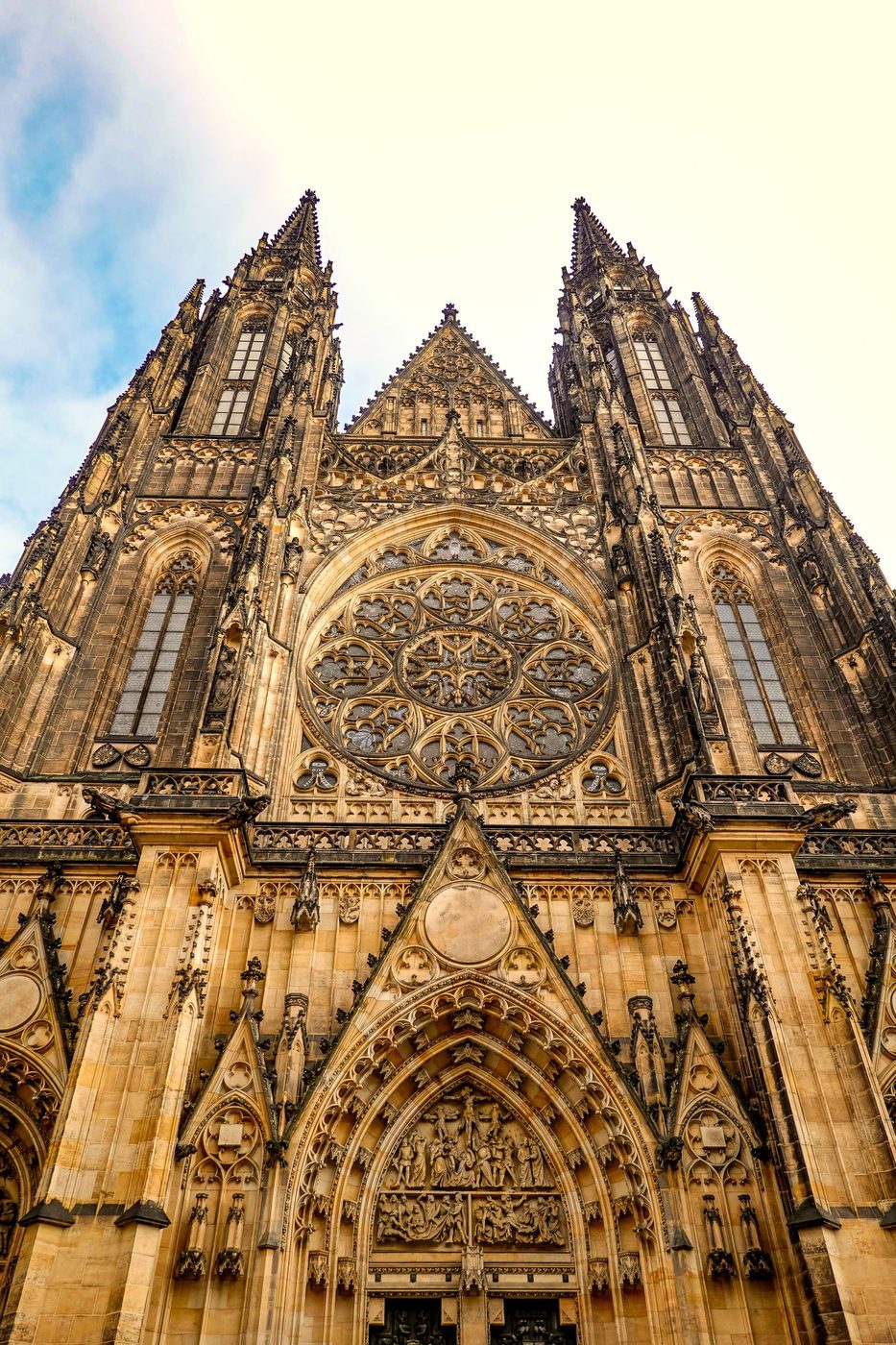
St Vitus Cathedral: the spine of the complex
The cathedral dominates the skyline, but its history is not one Gothic campaign. A rotunda dedicated to St Vitus stood here in the tenth century and a Romanesque basilica followed. The Gothic building seen today was begun in 1344, the year Prague was raised to an archbishopric, while Charles IV was shaping a capital suited to his dynastic ambitions. The medieval eastern part and great south tower belong to the long Gothic phase associated with Matthias of Arras and the Parler workshop. The western nave and façade were finished only from the late nineteenth century into the opening decades of the twentieth, and the cathedral was ceremonially completed in 1929.
Inside, focus on a few anchors. St Wenceslas Chapel surrounds the tomb of the patron saint and has exceptional importance in Czech state tradition. The royal crypt contains Bohemian rulers and other dynastic figures. The Crown Chamber above the chapel is associated with the Bohemian Crown Jewels, which are not normally on display. Stained glass spans different periods; Alphonse Mucha's 1931 window is unmistakably modern within the medieval setting.
For the 2026 summer season, Prague Castle publishes cathedral visitor hours of Monday to Saturday 9:00–17:00 and Sunday 12:00–17:00, with last entrance at 16:40. Services and state events can alter access.
Old Royal Palace and Vladislav Hall
The Old Royal Palace is where the Castle becomes political architecture rather than a mere sequence of church interiors. Its surviving complex contains Romanesque remains, later Gothic rebuilding and Vladislav Hall, the vast late-Gothic ceremonial space associated with Benedikt Ried. The hall hosted court ceremony, assemblies and even indoor tournaments; the Riders' Staircase was designed for mounted access. Nearby rooms connect the building to the Bohemian Estates and to the second Prague defenestration of 1618, which helped trigger the Thirty Years' War.
Temporary closures are normal because the palace still has ceremonial uses. On 16 September 2026, the official Castle visitor update shows the Old Royal Palace as closed from 3 September to 1 October, with Vladislav Hall temporarily used for the Crown Jewels exhibition during part of that period. This belongs in a dated alert, not in evergreen copy.
St George's Basilica
The red-and-white Baroque façade can mislead first-time visitors about the age of St George's Basilica. Its core is Romanesque and the institution reaches back to the tenth century. The basilica became closely connected with the adjacent Benedictine convent, the first convent in Bohemia. Inside, the heavy masonry, galleries and simpler spatial logic make a useful contrast with St Vitus.
Do not treat it as a five-minute filler between the palace and Golden Lane. Its value is comparative: the Castle contains radically contrasting concepts of religious architecture almost side by side.
Golden Lane: fortification before fairy-tale branding
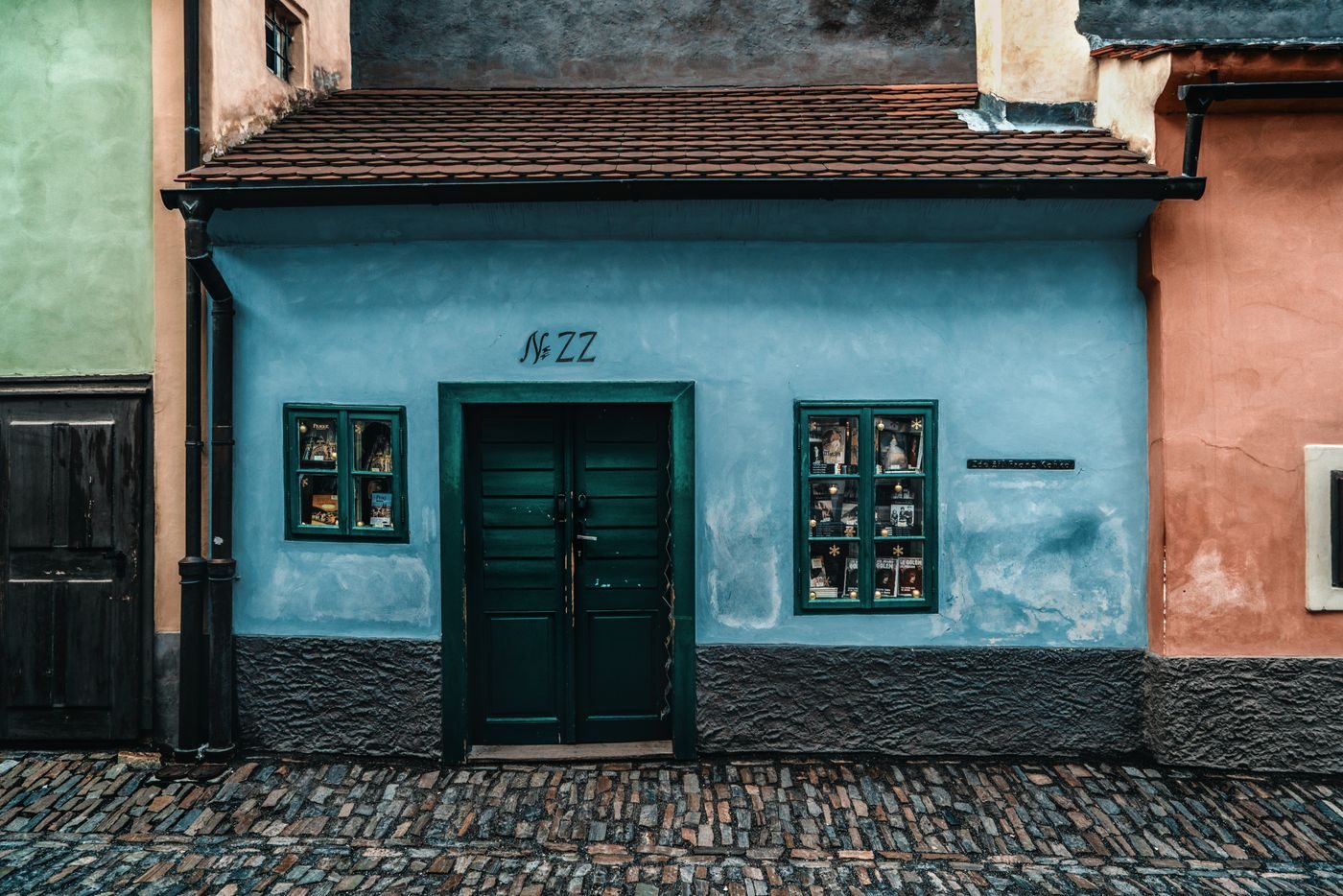
Golden Lane runs along the northern fortification wall in small houses built into the defensive arches. The houses were occupied by Castle marksmen and later by artisans and other residents; their scale reflects the constrained military structure rather than a purpose-built storybook street. The popular alchemist association is exaggerated. Rudolf II did attract alchemists and natural philosophers to Prague, but the lane itself is not accurately described as an alchemist colony.
Franz Kafka briefly used house no. 22 in 1916–17, rented by his sister. That literary connection is real but easy to overstate: Kafka did not spend his life there, and the lane had centuries of history before him.
Gardens and viewpoints
The Royal Garden, Stag Moat and South Gardens are seasonal. In 2026 the Castle publishes longer summer access and shorter spring and autumn hours, with major gardens closed through much of winter. The Garden on the Bastion follows the broader Castle-complex schedule.
The South Gardens are especially useful because they explain the Castle's relationship to the city below. From the terraces, Lesser Town, the river and the roofscape become connected topography rather than separate attractions. The terraced palace gardens lower down the slope are a different system with their own admission and seasonal arrangements.
Tickets and hours: verify these on the day
Prague Castle distinguishes the open complex from ticketed historical buildings and exhibitions. The main visitor circuit includes key interiors, but exact packages and prices can change. The Castle's official ticket page should be the source of truth rather than an old screenshot or a third-party blog.
For the 2026 summer season, the Castle complex is open 6:00–22:00 and the main historical buildings 9:00–17:00. In winter, historical buildings close earlier. St Vitus Cathedral has separate Sunday hours because it remains an active church. Its Great South Tower follows a separate timetable. State events, liturgy, security measures and exhibitions can supersede the normal schedule.
How to get there
For most visitors, tram to Pražský hrad followed by a short walk to the northern entrance is the easiest approach. Pohořelec is useful if you want to approach through Strahov and Hradčany. Malostranská allows an attractive uphill approach via the Old Castle Steps, but the climb is real. Nerudova and the New Castle Steps are scenic on foot but is a poor default choice for anyone with mobility limitations or luggage.
For a one-way sightseeing day, go up by tram and walk down through Lesser Town. That uses the terrain in your favor and avoids retracing the same streets.
A practical route through the Castle
Enter from the north near the Second Courtyard, move into the Third Courtyard for St Vitus, then continue toward the Old Royal Palace and St George's Basilica. Golden Lane follows naturally on the eastern side. If the South Gardens are open, use them after the interiors for the city view; otherwise descend toward the Old Castle Steps or return west through the courtyards.
If you want Hradčany beyond the Castle, reverse the order: begin at Pohořelec or Strahov, walk through Nový Svět, cross Hradčanské náměstí, then enter the Castle. This makes clear that the Castle is part of a wider hilltop district, not an isolated fortress.
A two-hour plan works only for a selective visit. A main circuit with the cathedral and time for views usually needs closer to half a day.
What many visitors miss
The most easily missed layer is the twentieth century. Once Czechoslovakia was established, architect Jože Plečnik altered courtyards, gardens, stairs, paving and presidential spaces for President Tomáš Garrigue Masaryk. His work is deliberately woven into older fabric, so visitors often cross it without recognizing a modern intervention.
Also pay attention to transitions. The cathedral's west front looks convincingly Gothic because it was designed to complete the medieval conception, but much of it was built from the late 1800s into the early 1900s. Golden Lane's present appearance is curated and restored. The Castle survives through repeated decisions about what to preserve, complete, adapt and represent.
One fortified site, several political eras
Prague Castle is easier to understand once it is separated from the image of a single medieval fortress. The site began as a Přemyslid power centre, accumulated churches and palatial buildings, became an imperial residence under Charles IV, changed again under the Jagiellonian and Habsburg dynasties, and was adapted repeatedly for rulers whose needs were ceremonial, residential, defensive or administrative. Its present appearance is therefore the result of addition and revision, not one master plan.
The chronology is visible in short distances. St George’s Basilica preserves a Romanesque mass that feels radically different from the vertical Gothic language of St Vitus. Vladislav Hall belongs to the late Gothic period but already contains forms that complicate a simple style label. Renaissance and later Habsburg interventions changed palace life and garden culture. Baroque and eighteenth-century rebuilding altered façades and circulation. After the creation of Czechoslovakia in 1918, the Castle had to be transformed again, this time from a dynastic seat into the symbolic workplace of a republic. The work associated with architect Jože Plečnik is essential to that transition.
That layered use explains why some spaces feel museum-like while others remain part of a living state complex. The Castle is still the official seat of the President of the Czech Republic. Ceremonies, security requirements and official events are not interruptions imposed on a dead monument; they are part of the reason the site still operates. A visitor itinerary has to accommodate that reality.
Reading the Castle this way also improves the architecture. Instead of asking whether the complex is “Gothic,” examine the moments when one era chose to preserve, cover, reinterpret or compete with another. The result is not stylistic purity. It is a record of nearly continuous political use on the same ridge above the Vltava.
State seat and visitor attraction: why access can change
The Castle’s dual role has practical consequences that generic attraction guides often flatten. Courtyards and outdoor routes may remain accessible while a historical interior is closed. Security screening can alter the time needed to enter. A state occasion can affect movement through the complex with little relevance to the normal seasonal timetable. Religious services can also change access to St Vitus Cathedral because the cathedral is not merely an exhibit within the Castle circuit.
The safest way to plan is to distinguish three categories. First are exterior spaces that are normally open for broad public circulation during complex hours. Second come paid historic interiors, each with its own seasonal schedule and last-entry time. Third are spaces whose access is controlled by institutional, liturgical or event needs. A single screenshot labelled “Prague Castle opening hours” does not capture all three.
This distinction matters most for visitors with one specific priority. Someone travelling mainly to see the St Wenceslas Chapel, Golden Lane or Vladislav Hall should verify that object’s access on the Castle’s own site shortly before the visit. Someone whose goal is the larger urban and historical experience has more resilience: the courtyards, architecture, views, Hradčany streets and descent into Lesser Town can still make the half-day worthwhile even if one interior changes.
The same logic applies to tickets. Castle ticket products define which paid interiors are included and how long a ticket remains valid; they should not be inferred from third-party maps. A free walk through the grounds is a legitimate visit, but it is not equivalent to entering the principal historic buildings. Conversely, buying an interior circuit does not mean every exhibition, tower or special programme is automatically included. The official ticket page is the only sensible authority for current combinations.
Route choices for ninety minutes, half a day or most of a day
The Castle can absorb very different amounts of time without either visit being inherently wrong. With roughly ninety minutes, concentrate on the spatial sequence: arrive on the Hradčany side, cross the principal courtyards, enter St Vitus if the queue and access allow, look into the Old Royal Palace or St George’s Basilica only if one is a priority, then leave through the eastern side and descend toward Malá Strana. That is an orientation visit, not a complete monument circuit.
A half-day allows the buildings to stop feeling like boxes on a checklist. St Vitus needs time for the nave, chapels, stained glass and royal memory. Vladislav Hall makes more sense when its scale and relationship to Bohemian political history are not reduced to a photograph. St George’s Basilica provides the architectural contrast that shows how much earlier sacred Prague looked. Golden Lane benefits from being read as a changing piece of the fortification and service zone rather than as a row of tiny souvenir-stage houses.
A longer visit can add the Great South Tower, gardens when open, exhibitions, the Picture Gallery or a slower Hradčany approach. This is where stamina becomes important. The site is large, surfaces are hard, and the cathedral tower is a separate physical commitment. A visitor who tries to climb the tower, inspect every interior and then continue directly across Charles Bridge may discover that the day’s second half becomes a blur.
For most first-time visitors, the strongest direction is downhill. Reach the ridge by tram or another suitable route, spend the demanding interior time first, then descend through Hradčany or Nerudova toward Lesser Town. Walking uphill can be rewarding for people who want the approach itself, but it should be a deliberate choice rather than an accidental consequence of following a map.
The Castle is also a landscape of edges, walls and views
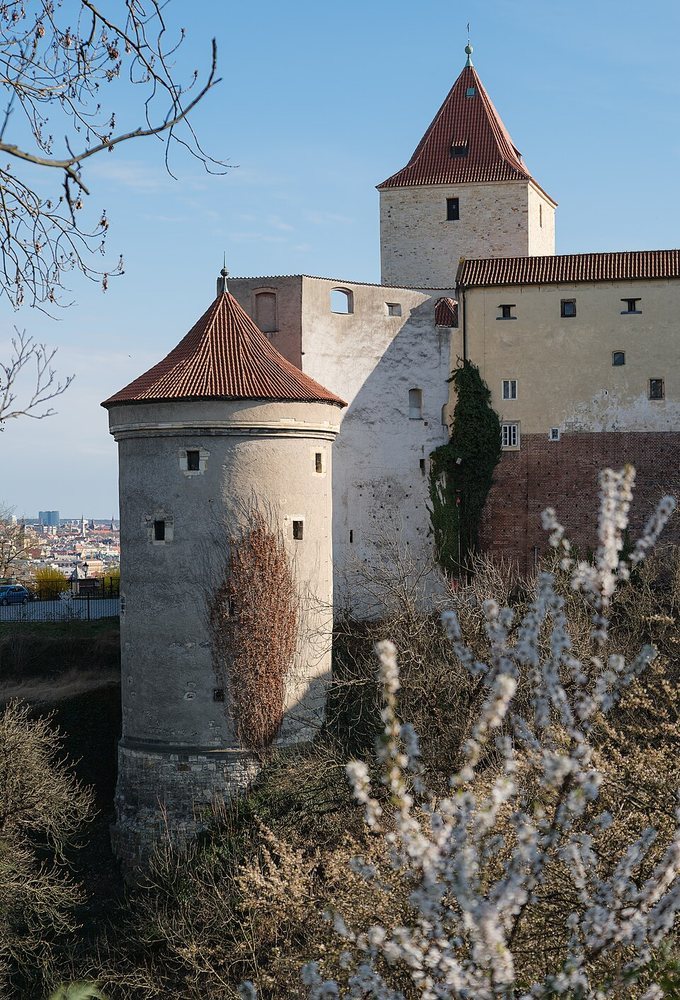
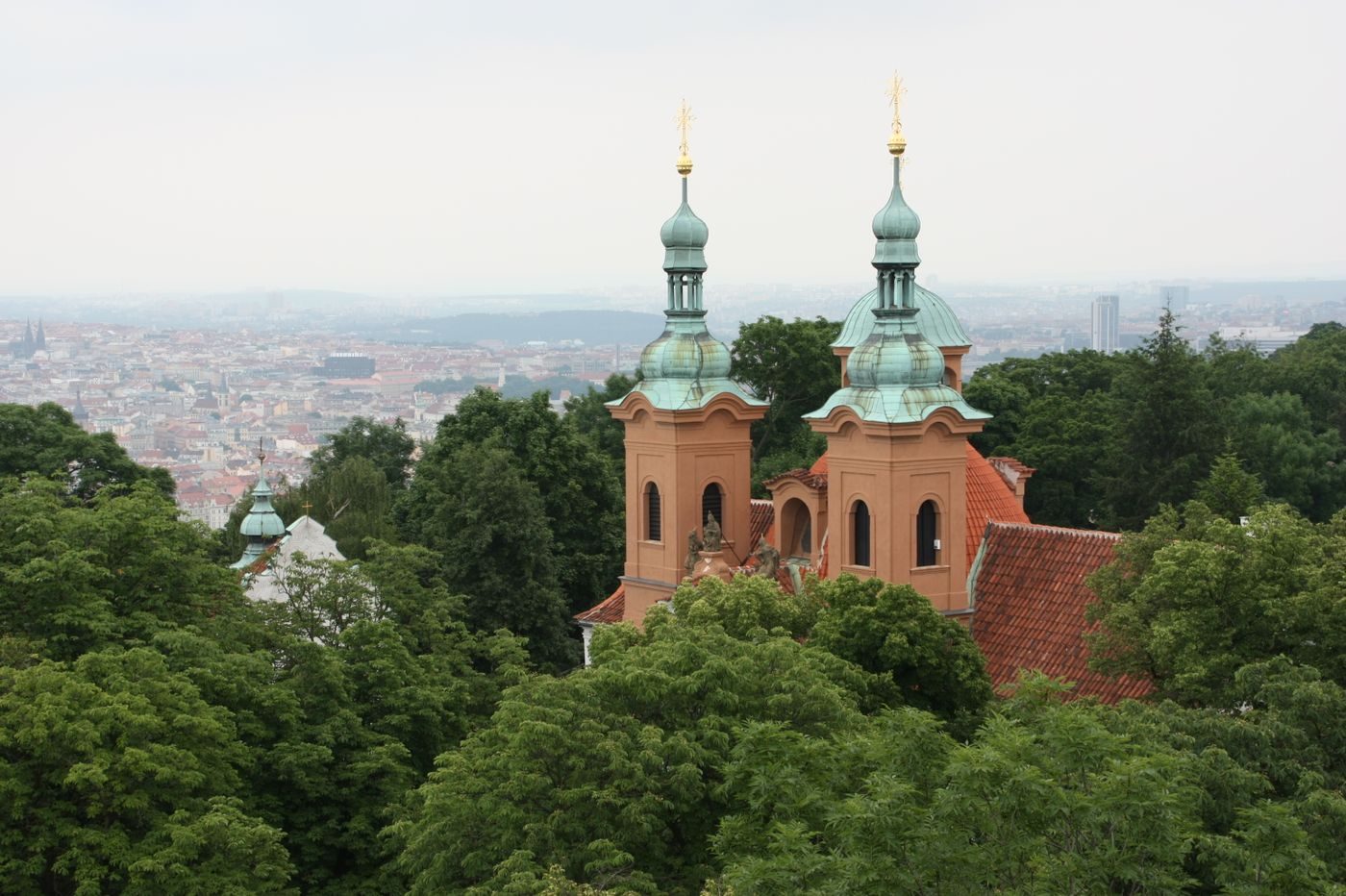
Visitors often treat the paid interiors as the “real” Castle and the spaces between them as transit. The ridge tells a different story. Defensive walls, changes in ground level, gates, gardens, terraces and framed views explain why this position became politically useful long before it became photogenic. The Vltava crossings, Lesser Town roofs and Old Town towers are not random scenery; they show the relationship between the seat of power and the urban settlements below it.
Gardens add a later layer of representation. Royal and palace landscapes were designed as controlled spaces with their own architecture, sculpture and views. Their access is seasonal, so winter visitors should not build an itinerary around a gate that may be closed. In warmer months, however, the gardens can turn a crowded monument visit into a more legible topographical experience. They also offer routes that differ from the standard courtyard-to-Golden-Lane stream.
The Castle’s edges contain some of the most useful moments for understanding Prague. From the eastern side, the city opens below the ridge. From the south, terraces reveal how tightly Malá Strana fits between the Castle slope and the river. From Hradčanské náměstí, the palaces outside the principal gates remind visitors that court society extended beyond the fortress walls.
This is also why leaving the complex matters. Hradčany, Loreto, Strahov and the descent to Lesser Town belong to the same historical geography even though they sit outside the ticketed Castle circuit. A visitor who arrives only at the main gate, crosses the interiors and departs by the same path sees the institution. A visitor who also reads the ridge sees the city.
What to identify before entering any building
Pause in the courtyards long enough to establish orientation. St Vitus is the dominant vertical marker; the Old Royal Palace sits along the southern edge; St George’s Basilica introduces the older ecclesiastical layer; Golden Lane runs near the fortifications toward the east. Once those anchors are clear, indoor visits stop feeling like disconnected ticketed rooms.
Also look at thresholds. Gates and courtyards tell visitors when they are moving from ceremonial approach to administrative core, from public circulation to historical interior, or from palace space toward defensive edges. Plečnik’s twentieth-century interventions are particularly valuable because they show how the republican Castle was made legible without pretending that the monarchy had never existed.
A simple discipline improves the whole visit: before entering an interior, ask what function the building originally served and which period dominates what you are about to see. In St Vitus the answer spans worship, dynastic memory and coronation. In Vladislav Hall it includes royal ceremony, assembly and state representation. In St George’s it is monastic and sacred continuity. In Golden Lane it begins with the Castle’s service and defensive environment, not with modern souvenir mythology. That one question prevents the site from collapsing into a sequence of attractive rooms.
A final planning rule: protect the one interior you would regret missing
Castle visits fail most often when every building is treated as equally essential. Decide before arrival which single interior carries the trip for you. For many people it is St Vitus; for a medieval political-history visitor it may be Vladislav Hall; for a traveller fascinated by small-scale domestic architecture it may be Golden Lane. Build the sequence around that priority and let the rest flex with queues, closures and energy.
This rule is especially useful on crowded days. A long cathedral line may justify changing the order. A temporary closure may redirect time toward St George’s or the gardens. Because the Castle is a complex rather than one building, a changed route does not have to become a failed visit.
Do not let the exit become accidental. Leaving east toward the Old Castle Stairs or south-west toward Hradčany and Nerudova creates different continuations through Prague. The choice should reflect what comes next, not simply the gate nearest the last ticketed room.
Security, ceremony and ordinary work share the same courtyards
Castle staff, the presidential office, clergy, guards, maintenance teams and visitors all use the complex for different purposes. This is why a courtyard can look like pure heritage one minute and function as an institutional workplace the next. Guard changes, official arrivals and controlled zones belong to the living site, but their exact form and timing should be verified rather than treated as permanent spectacle.
Do not block working entrances or assume a barrier exists for crowd management alone. Photography around security installations may be restricted. Instructions from Castle staff override an itinerary downloaded earlier.
This institutional life is historically appropriate. Prague Castle has repeatedly changed rulers and administrative systems while remaining a centre of state power. The modern presidency is another chapter in that continuity, not a visitor-service overlay.
Frequently asked questions
Is Prague Castle free to enter?
The grounds can be entered without the standard historical-building ticket, but the principal interiors and exhibitions require admission. Security and event restrictions can still affect access.
How many hours do I need at Prague Castle?
About three hours is a realistic minimum for a first visit to the main interiors and cathedral. Four hours allows a slower pace, gardens and more context.
When should I visit Prague Castle?
Early in the historical-building day is the simplest way to reduce queues. Late afternoon can be calmer for courtyards, but interiors close earlier than the grounds.
Can I visit St Vitus Cathedral without a Castle ticket?
Limited access arrangements can differ from the full visitor route. Use the Castle's official visitor page because church services and access rules can change.
Is Golden Lane really where Prague alchemists lived?
The lane is historic, but the image of it as an alchemist colony is overstated. It developed within fortification arches and housed Castle marksmen and later residents and artisans.
Which route is easiest for reaching Prague Castle?
Tram to Pražský hrad is usually the easiest first-time approach; then walk downhill through Lesser Town after the visit.
Sources & further reading
- Prague Castle — Visitor information — Prague Castle Administration / Office of the President of the Czech Republic
- Prague Castle — Opening hours — Prague Castle Administration / Office of the President of the Czech Republic
- Prague Castle — Tickets — Prague Castle Administration / Office of the President of the Czech Republic
- Prague City Tourism — Prague Castle — Prague City Tourism
- Prague City Tourism — St Vitus Cathedral — Prague City Tourism
- UNESCO World Heritage Centre — Historic Centre of Prague — UNESCO World Heritage Centre