
Explore Prague
What to eat in Prague
A useful Prague food guide should help you order, not merely hand you a bucket list. Czech dishes make more sense once you recognise a few recurring structures: meat served with a sauce and dumplings; roast meat paired with cabbage; soups that can be a substantial first course; cold pub snacks designed for beer; and sweet dishes that sometimes function as a main meal rather than dessert. The second thing to know is that Czech food is Central European. Borders, dynasties and shared ingredients connected Bohemian cooking with Austrian, German, Hungarian and other neighbouring traditions. Calling a dish Czech does not require pretending it appeared in isolation. The interesting question is how it is prepared, named and eaten here. Finally, Prague's tourist centre creates its own food folklore. Some heavily marketed foods are genuinely Czech; others are regional, modern or imported into the tourist economy. This guide separates those categories without turning authenticity into a purity test.
Start with dishes that show how Czech meals are built: svíčková with bread dumplings; roast pork or duck with cabbage and dumplings; Czech-style goulash; fried cheese; garlic soup; open-faced chlebíčky; pub snacks such as utopenec or tlačenka; and desserts or sweet mains such as koláče, větrník, buchtičky se šodó and žemlovka. Do not treat every food sold in central Prague as an old Prague tradition. Trdelník is the classic example: highly visible to visitors, but not a historic Prague specialty. Czech cooking is broader than meat-and-dumplings stereotypes, and a good menu often mixes sauces, soups, roast dishes, simple meatless meals, pastries and seasonal food.
A quick list: ten foods that explain Czech cooking
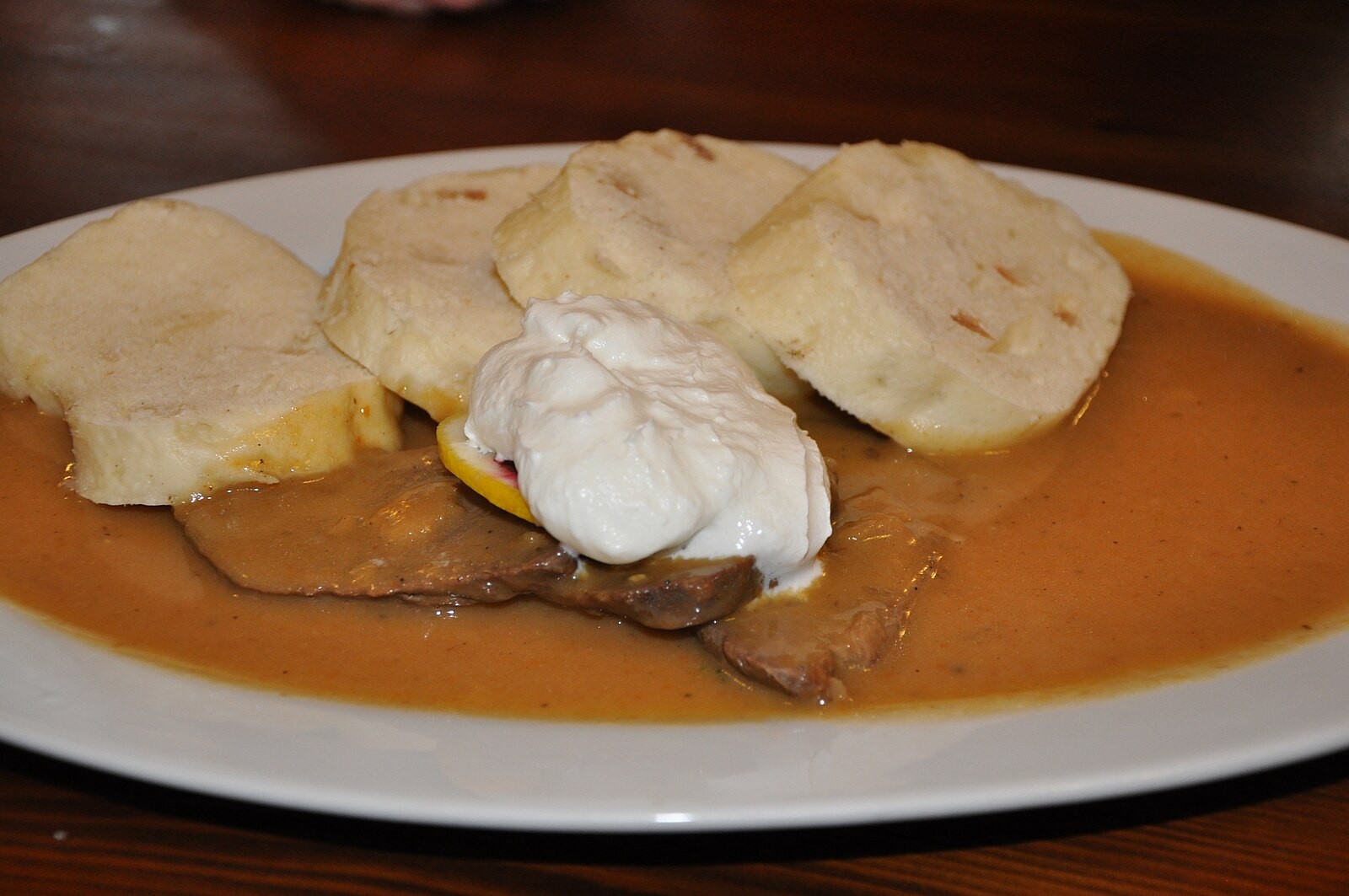
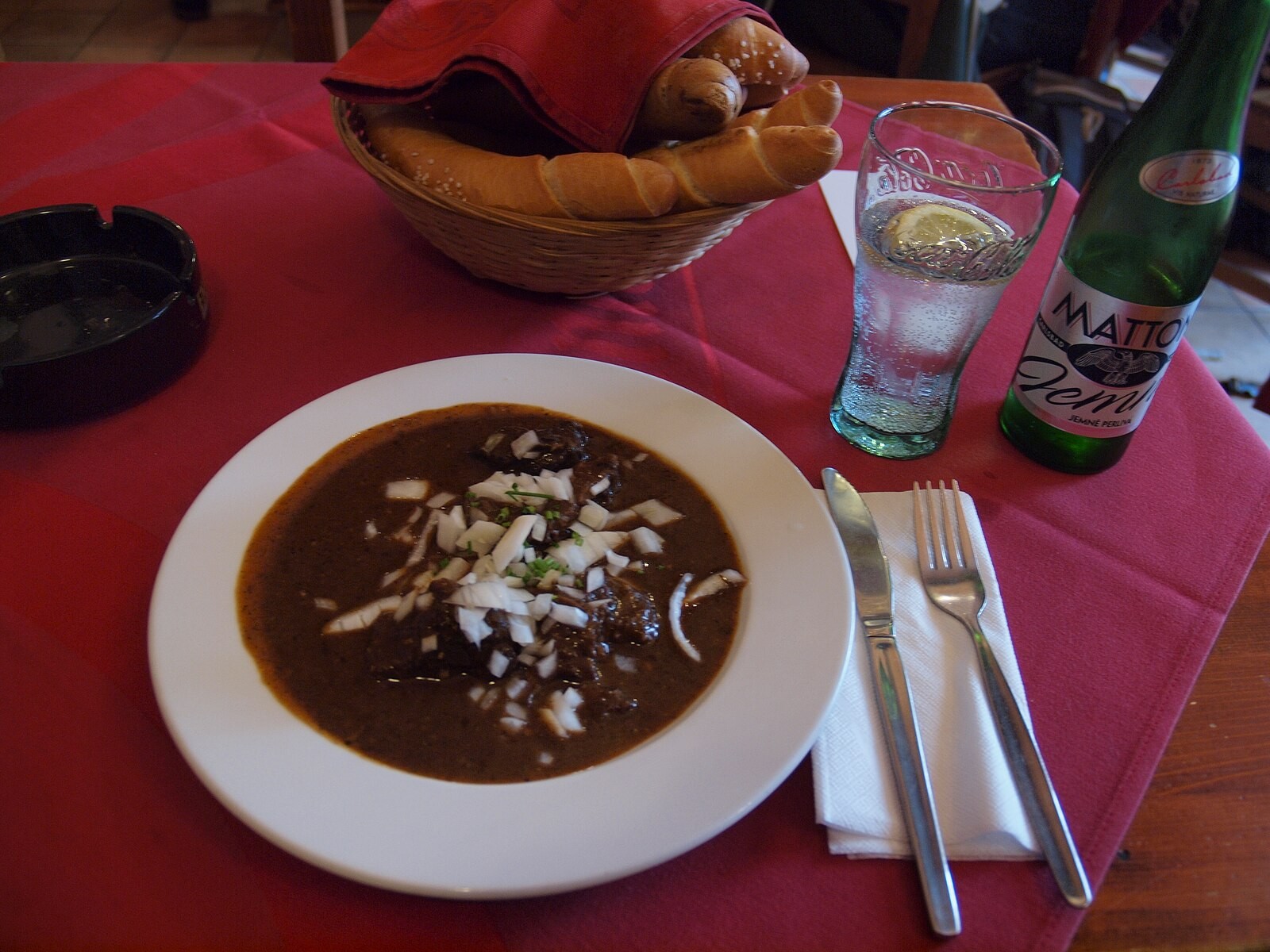
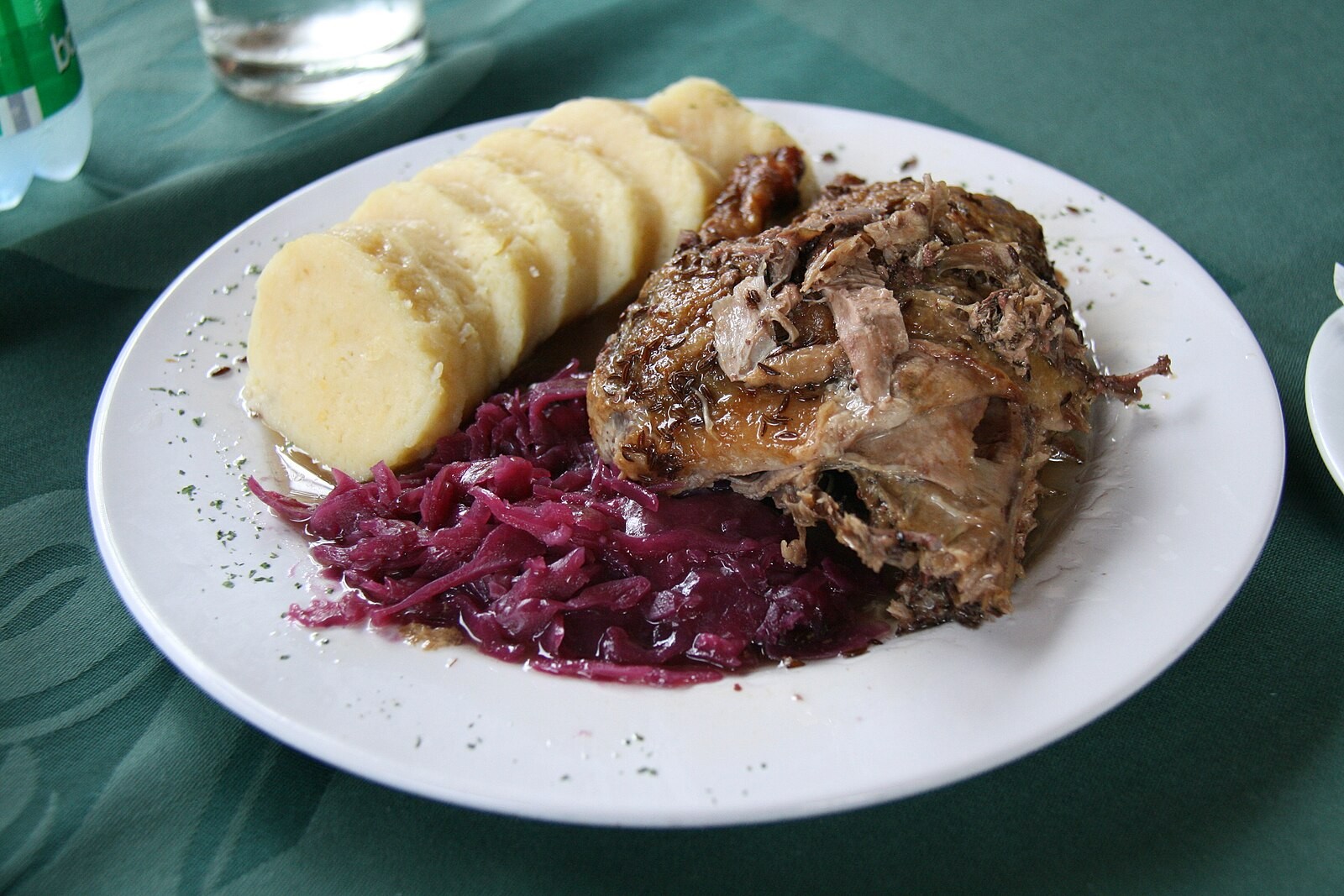
If you eat only a few Czech dishes, choose them for contrast. Svíčková shows the Czech habit of pairing smooth sauces with sliced dumplings: beef with a smooth root-vegetable cream sauce, typically accompanied by bread dumplings, cranberries and lemon. Roast duck with cabbage and dumplings shows the roast-meat side of the cuisine. Czech goulash demonstrates how a shared Central European dish changes when it crosses borders; the Czech restaurant version is commonly thicker and served with dumplings rather than presented as Hungarian gulyás.
Vepřo knedlo zelo is almost a grammatical lesson on a plate: pork, dumplings, cabbage. Smažený sýr, breaded fried cheese, is an everyday meatless classic rather than a concession invented for tourists. Česnečka is a robust garlic soup, often associated with cold weather and the morning after a long night.
For smaller food, chlebíčky are open-faced sandwiches built with carefully arranged toppings. Koláče are a broad pastry tradition with regional shapes and fillings, not a single standard form, and větrník is a café dessert of choux pastry and cream. The supporting Stories go into the details without forcing all of those foods into this overview.
Sauce dishes: why dumplings matter
Bread dumplings are not dumplings in the English sense of small filled parcels. Knedlíky are sliced accompaniments designed to absorb sauce. Once that clicks, a large section of Czech menus becomes easier to read.
Svíčková na smetaně is the best-known example. Beef is served with a creamy sauce based on root vegetables, and the plate often includes cranberries and lemon. The sweet, sour, savoury and creamy elements are deliberate; removing the garnish because it looks decorative changes the balance of the dish.
Czech goulash is another sauce-forward meal. Its relationship with Hungarian gulyás is historical rather than identical. In Czech restaurants, expect a thick meat stew or sauce often paired with bread dumplings and onion. Other traditional sauces may use dill, tomato, mushrooms or horseradish. A menu translated simply as 'beef with sauce' can therefore hide much of the dish's identity.
Roast meat: pork, duck and the cabbage question
Roast pork with dumplings and cabbage is so structurally Czech that the shorthand vepřo knedlo zelo names the three components. Duck follows a similar logic but is richer and often associated with weekends, celebrations or seasonal menus. Restaurants may serve red cabbage, white cabbage or both, and the dumpling can be bread-based, potato-based or a combination.
Do not judge the dish by portion size alone. Good versions depend on crisp skin where appropriate, moist meat, properly seasoned cabbage and dumplings that carry sauce without becoming paste. The plate is an exercise in balance despite its heavy reputation.
Goose appears especially around St Martin's Day in November. Seasonal menus can reveal Czech food especially well because they reflect a calendar rather than a permanently tourist-facing list.
Pub food is its own category
A hospoda menu is not merely a smaller restaurant menu. Traditional beer snacks are designed around salt, acidity, fat and strong flavours. Utopenec is a pickled sausage served with onion; the comic name means 'drowned man'. Tlačenka is a pressed pork preparation closer to brawn or head cheese than dairy cheese and is typically served cold with onion, vinegar and bread.
Pivní sýr can arrive as a pungent cheese that the diner mixes or seasons at the table. Nakládaný hermelín—marinated soft cheese—is another familiar pub option. These dishes make sense with beer because acidity and salt reset the palate.
For faster food, sekaná in a roll shows that Czech grab-and-go eating existed long before international burger branding. Chlebíčky sit between snack, party food and delicatessen culture. The important distinction is context: not every Czech food is intended as a three-course dinner.
Simple dishes tourists rarely search for first
Home cooking contains many dishes that do not dominate tourist menus. Šunkofleky combine pasta with smoked meat and egg into a baked casserole. Žemlovka layers bread or rolls with apples, dairy and spices and can appear as a sweet lunch rather than a dessert. Kuba, made from barley groats and mushrooms, is strongly associated with Christmas traditions and points to older meatless festive cooking.
These foods are useful because they break the stereotype that Czech cuisine is always an enormous piece of meat under brown sauce. They also reveal the economy of home kitchens: stale bread is reused, grain becomes a main dish, mushrooms carry savoury depth and leftovers are transformed rather than hidden.
If you see one of these on a daily lunch menu, it may tell you more about ordinary eating than a permanent 'Czech platter' assembled for visitors.
Sweet Czech food: dessert is not always dessert
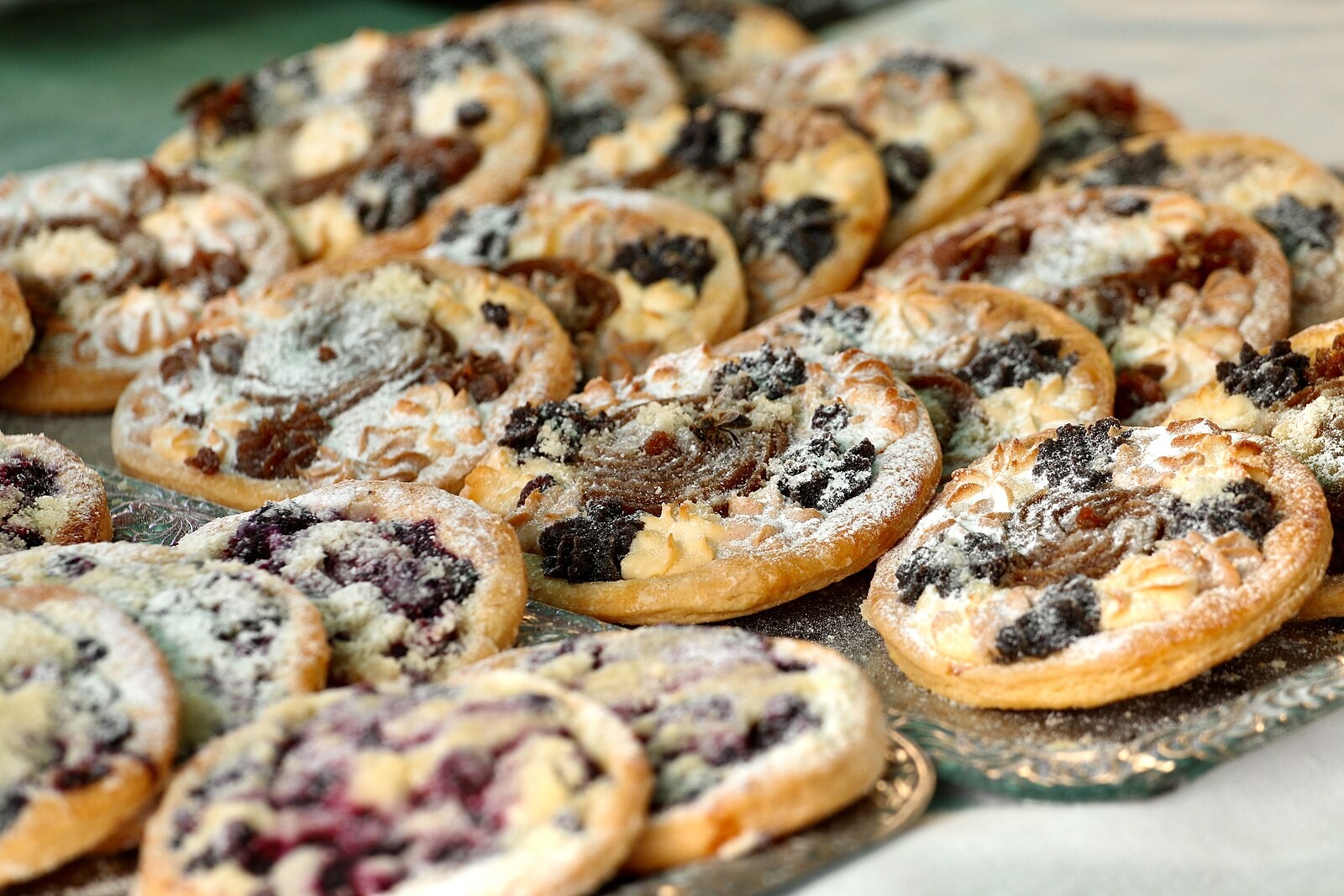
Czech sweet cooking moves across bakery, café and lunch traditions. Koláče are pastries with fillings such as poppy seed, quark or plum butter; there is no single shape that defines every regional version. Větrník is a choux-pastry café classic filled with creams and topped with caramel icing.
Rakvička—literally 'little coffin'—is an airy egg-based pastry shell usually served with whipped cream. The name is memorable, but its existence is not evidence of a morbid national dessert obsession. Czech food names can simply be literal, visual or comic.
Buchtičky se šodó are small sweet buns with a warm vanilla-style sauce in the modern Czech version. The word šodó has a history that does not map neatly onto what many restaurants now serve. Žemlovka and fruit dumplings can appear as a main course. Visitors accustomed to a strict savoury-main/sweet-dessert sequence should leave room for that category shift.
What is traditional — and what Prague tourism made famous
Trdelník is the clearest case where tourist visibility and Prague tradition diverge. The spit-baked pastry has roots elsewhere in Central and Eastern Europe and became a conspicuous product in Prague's tourist centre in recent decades. Enjoy one if you like it; just do not use it as evidence of an ancient Prague baking tradition.
Prague ham, by contrast, has a real association with the city, although the way some tourist stands sell large portions by weight has created a modern consumer trap. Confirm the total price before accepting a portion.
Becherovka belongs to Karlovy Vary, not Prague, even though every Prague bar can sell it. Absinthe has a complicated European history and modern Prague marketing often exaggerates a supposedly ancient Czech absinthe ritual. Geography and marketing matter. A drink can be popular in Prague today without being historically born here.
Restaurant, hospoda, jídelna, café: pick the room for the meal
A restaurace offers the broadest dining format. A hospoda or pivnice centres beer and straightforward food, though modern pubs can cook at a very high level. A jídelna or canteen focuses on quick, practical meals and may be busiest at lunch. Cafés range from historic grand rooms to contemporary specialty coffee shops.
The label does not guarantee quality, but it helps set expectations. Ordering svíčková in a beer-focused pub may be perfectly sensible; expecting an elaborate tasting menu there is not. Likewise, a café is often a better place for větrník than a tourist restaurant with fifty unrelated desserts.
Daily lunch menus—polední menu—remain important to working Prague. They can offer a narrower, faster and cheaper selection around midday. Availability is limited, and dishes may sell out.
How to order without turning dinner into a language exam
In central Prague, English menus are common. Learning a few Czech words still helps you decode what you are buying: hovězí is beef, vepřové pork, kuřecí chicken, kachna duck, smažený fried, pečený roasted, omáčka sauce, knedlík dumpling and zelí cabbage. 'Bez masa' means without meat, although that alone does not guarantee a dish is fully vegetarian if stock or lard is involved.
Tap water practices vary by venue; ask rather than assume it is automatically served. Bread or small accompaniments placed on a table may be charged if consumed. In pubs, beer service can move quickly and another beer may once have been assumed by convention in some places; modern venues are usually clearer, but signal when you are finished.
Check the bill before paying as you would anywhere. If a service charge is already included, do not add another simply because a payment terminal prompts you.
Vegetarian and lighter options
Czech traditional menus include genuine meatless dishes, but some are fried, cheese-heavy or sweet rather than vegetable-centred. Smažený sýr is the famous fallback. Mushroom dishes, fried cauliflower, lentils, potato dishes, fruit dumplings, kuba and soups can also work depending on preparation.
Modern Prague is much easier for vegetarians and vegans than the stereotype suggests. Dedicated restaurants and mainstream kitchens now offer plant-based meals across the city. The challenge is more specific when you want a traditional dish that is also vegan: dairy, egg, lard or meat stock can appear in components that look harmless.
Ask explicitly about stock and cooking fat if that matters to you. For allergies, communicate the allergen rather than relying only on the dish name; EU menu rules require allergen information, but execution and translation quality still vary.
Prices, tipping and avoiding the obvious traps
Restaurant prices in Prague vary widely with neighbourhood, venue type and service level; fixed price promises therefore age quickly. Compare like with like: a lunch menu in Žižkov, a historic café on a central square and a fine-dining restaurant are different products. A menu displayed outside should make the basic price structure clear.
Tipping in Czechia is customary for good table service but is not built around the North American 20-percent norm. Rounding up or leaving roughly five to ten percent is common when service merits it. Tell the server the total you want to pay before a card transaction if the venue handles tips that way, or use the terminal option if offered.
The most avoidable traps are not mysterious: unclear per-weight pricing, currency conversion offered at a poor rate, service charges you missed and a restaurant chosen solely because it faces a landmark. Walk one block, read the menu and decide with a clear head.
Lunch culture explains Czech food better than a tasting checklist
The most revealing Czech meal is often weekday lunch rather than a ceremonial dinner. Many restaurants and hospodas offer a polední menu or denní menu: a short list of dishes prepared for a fast midday service, sometimes paired with soup. The format tells you what people actually eat when they are not ordering for a visitor’s idea of tradition.
That menu may contain a sauce-and-dumpling dish one day, roast meat with cabbage another, fried cheese, pasta, a lighter chicken plate or something that would never appear on a “ten foods you must try” article. Czech cooking in Prague is not a museum catalogue. It absorbed Austro-Hungarian, Central European and later international habits while retaining recognizable structures around soups, sauces, meat, potatoes and dumplings.
Jídelna-style canteens push the everyday logic further. They are built for speed and value, not long service. A classic hospoda adds beer culture and a social rhythm around the meal. A modern Czech restaurant may take the same dishes apart and rebuild them with lighter sauces, better sourcing or more precise presentation. None of these formats has a monopoly on being Czech.
On an initial visit, use one meal to learn a canonical dish and another to learn the system. The second might be lunch chosen from a Czech menu with no famous item at all. That contrast prevents “Czech cuisine” from becoming three heavy plates repeated in every tourist district.
Dumplings are a category, not one side dish
English-language menus often translate several Czech preparations simply as “dumplings,” which hides important differences. Houskové knedlíky are bread-based sliced dumplings that work as a sauce carrier. Bramborové knedlíky use potato and have a denser texture. Karlovarský knedlík is another bread-based variation, often visibly flecked with herbs. Fruit dumplings belong to a different sweet-meal tradition and can use several dough types.
This matters because the side is part of the dish’s engineering. Svíčková without a starch capable of taking up the cream sauce becomes a different eating experience. Roast pork with cabbage changes depending on whether bread or potato dumplings are served. The dumpling is not decorative ballast placed beside “the real food.”
Sauces also need translation beyond colour. Svíčková combines a vegetable-based cream sauce with beef and characteristic garnishes; rajská is tomato-based and sweeter than many Italian tomato sauces; koprová uses dill; křenová centres horseradish. Some are strongly associated with home cooking and institutional lunch menus as much as with restaurants.
Visitors who dislike one famous dish should not conclude that Czech food is uniformly heavy or creamy. Soups, roasted meats, open sandwiches, potato dishes, salads, mushrooms, pastries and seasonal plates offer different textures. Ask what a restaurant does well rather than forcing every meal to contain dumplings.
Prague food is Czech food filtered through a capital city
Not every Czech regional speciality belongs equally to Prague, and not every food common in Prague originated there. A capital gathers dishes, workers, students and restaurants from across the country. That makes Prague a good place to taste Czech cooking, but a poor place to pretend that one city invented all of it.
Chlebíčky, the carefully garnished open-faced sandwiches associated with Czech delicatessen culture, fit urban Prague particularly well. Bakery and café traditions also matter. Koláče appear in many regional forms; buchty, bábovka and fruit pastries belong more naturally to a Czech sweet repertoire than the tourist-facing trdelník shops that now dominate some central streets. Trdelník has historical roots in the wider region, but its current status as “the traditional Prague cake” is a commercial simplification.
The same caution applies to drinks. Beer is central, but Moravian wine culture, fruit distillates and non-alcoholic options are part of the broader Czech table. Becherovka belongs to Karlovy Vary; absinthe’s Prague marketing history is more complicated than the impression created by souvenir stores.
Use origin claims sparingly. A food can be popular, enjoyable and worth trying without being ancient, uniquely Prague-made or nationally representative. Accurate context makes the meal more interesting, not less.
A small Czech menu vocabulary pays for itself immediately
You do not need conversational Czech to order well, but a dozen food words make menus less opaque. Hovězí is beef, vepřové pork, kuřecí chicken, kachna duck, brambory potatoes, zelí cabbage, knedlík dumpling, omáčka sauce, polévka soup, smažený fried and pečený roasted or baked depending on context. Bezmasé marks meatless dishes more reliably than guessing from photographs.
Allergen numbers are widely used under European rules, but they do not replace ingredient questions for serious allergies. Ask staff and do not assume that a vegetable-labelled sauce is vegetarian; stock, lard or bacon may be used in traditional cooking.
Portion language also matters. A menu may list weight for the meat component rather than the finished plate. Side dishes can be separate. Soup may be offered as part of a lunch set. Reading the structure before ordering prevents both accidental over-ordering and the mistaken belief that a price covers every accompaniment.
Breakfast is where imported expectations often fail
A Czech hotel buffet may look internationally familiar, but traditional everyday breakfast has not revolved around one iconic national plate. Bread and rolls, butter, jam, cheese, cold cuts, eggs, yoghurt and pastries are all normal parts of the contemporary spectrum. Cafés increasingly add international brunch dishes, especially in central and residential districts popular with younger customers.
Do not waste a morning searching for a mythical “authentic Prague breakfast” invented by listicles. If you want something specifically Czech, use the bakery and delicatessen traditions: fresh rohlík or bread, a pastry, chlebíček later in the morning, or a café with Czech cakes.
This matters because travel food guides often over-nationalize meals. Some food experiences are culturally specific because of preparation and history; others are simply how people in a Central European capital eat today.
Seasonality still matters in a modern Prague kitchen
Czech food is often presented as permanently wintery: roast meat, thick sauce, dumplings and cabbage. Those dishes matter, but ingredient seasons change what good kitchens serve. Mushrooms, asparagus, berries, plums, fresh herbs, game and young vegetables appear at different times, while Christmas and Easter bring their own baking and ritual foods.
A seasonal menu can therefore be more revealing than a permanent tourist menu containing every national classic in July and January alike. The presence of one famous dish all year is not automatically suspicious, but a restaurant that changes soups, sides and specials with produce is showing a living kitchen rather than a static catalogue.
For repeat visitors, season is also the easiest way to avoid eating the identical “Czech plate” on every trip. The cuisine has enough range to shift with the calendar.
Frequently asked questions
What is the one Czech dish I should try in Prague?
There is no single representative dish, but svíčková is a strong introduction to Czech sauce-and-dumpling cooking. Roast duck or vepřo knedlo zelo show a different roast-meat tradition.
Is trdelník a traditional Czech food?
It is sold widely in Prague today, but it is not historically an old Prague specialty. Its modern prominence in the city is strongly tied to tourism.
What is a Czech dumpling?
Knedlíky are usually sliced bread- or potato-based side dishes served to absorb sauces and accompany meat. They belong to a different category from filled Asian dumplings or small English suet dumplings.
Can vegetarians eat traditional Czech food?
Yes, although the classic menu is meat-heavy. Fried cheese, mushroom dishes, kuba, fruit dumplings and several potato or sweet dishes can be meatless; vegans should ask about dairy, egg, stock and lard.
How much should I tip in Prague?
No fixed mandatory percentage exists. Rounding up or leaving about five to ten percent for good service is common; first check whether a service charge is already included.
Is Czech goulash the same as Hungarian gulyás?
No. They are related Central European dishes, but Czech restaurant goulash is commonly a thicker meat preparation served with dumplings, while Hungarian gulyás has its own forms and history.
Sources & further reading
- VisitCzechia — Czech Cuisine — CzechTourism / VisitCzechia
- VisitCzechia — Svíčková na Smetaně — CzechTourism / VisitCzechia
- VisitCzechia — Gastronomy — CzechTourism / VisitCzechia
- VisitCzechia — Czech Pub Specialties — CzechTourism / VisitCzechia
- Prague City Tourism — Food and drink — Prague City Tourism