
Explore Prague
Best day trips from Prague
Prague sits in a country small enough for ambitious day trips but varied enough that the trips do not feel interchangeable. In one direction you can reach a silver-mining town whose wealth helped finance medieval Bohemia. In another, a fortress landscape became part of the history of Nazi persecution. Westward lies the city that gave the world the Pilsner style; farther on, a spa town built around mineral springs. South brings Český Krumlov, while the north opens into sandstone country. The common planning error is to treat every destination as equally easy. It is not. A 40-minute train to a castle town and a multi-hour transfer to Český Krumlov produce completely different days. This guide compares them by purpose and logistics, then adds several less obvious places with strong historical reasons to travel beyond Prague.
The best day trip from Prague depends on what you want from the day. Choose Kutná Hora for a compact UNESCO-listed historic town and Sedlec; Karlštejn for a close medieval castle trip; Terezín for serious 20th-century history; Pilsen for brewing history and an easy rail connection; Karlovy Vary for spa architecture; Český Krumlov for a long but rewarding historic-town excursion; and Bohemian Switzerland for hiking and sandstone landscapes. Do not choose only by fame: travel time, opening schedules, daylight, advance reservations and the amount of time you want to spend in transit matter more.
Quick comparison: choose the trip by interest
For a first trip outside Prague, think in categories. If you want medieval urban history with several sights close together, Kutná Hora is the strongest all-rounder. If a castle is the goal, Karlštejn is much closer and easier than many visitors expect. For 20th-century history, Terezín requires emotional preparation rather than sightseeing momentum. Pilsen combines a manageable city centre with brewery history. Karlovy Vary is more about urban form, spa culture and landscape than a checklist of monuments. Český Krumlov gives you the most famous small-town panorama but costs more of the day in transit.
Nature changes the equation. Outdoor choices such as Bohemian Switzerland and Bohemian Paradise depend heavily on forecast and daylight, so early departures pay off. Hiking times, bus connections and seasonal trail restrictions matter. A rainy Tuesday that works perfectly in Pilsen may be a poor choice for exposed viewpoints.
For families, mobility-limited travellers or anyone who dislikes long transfers, proximity should carry more weight than internet rankings. The closest good trip is often better than the most famous one.
Kutná Hora: silver, cathedral and Sedlec
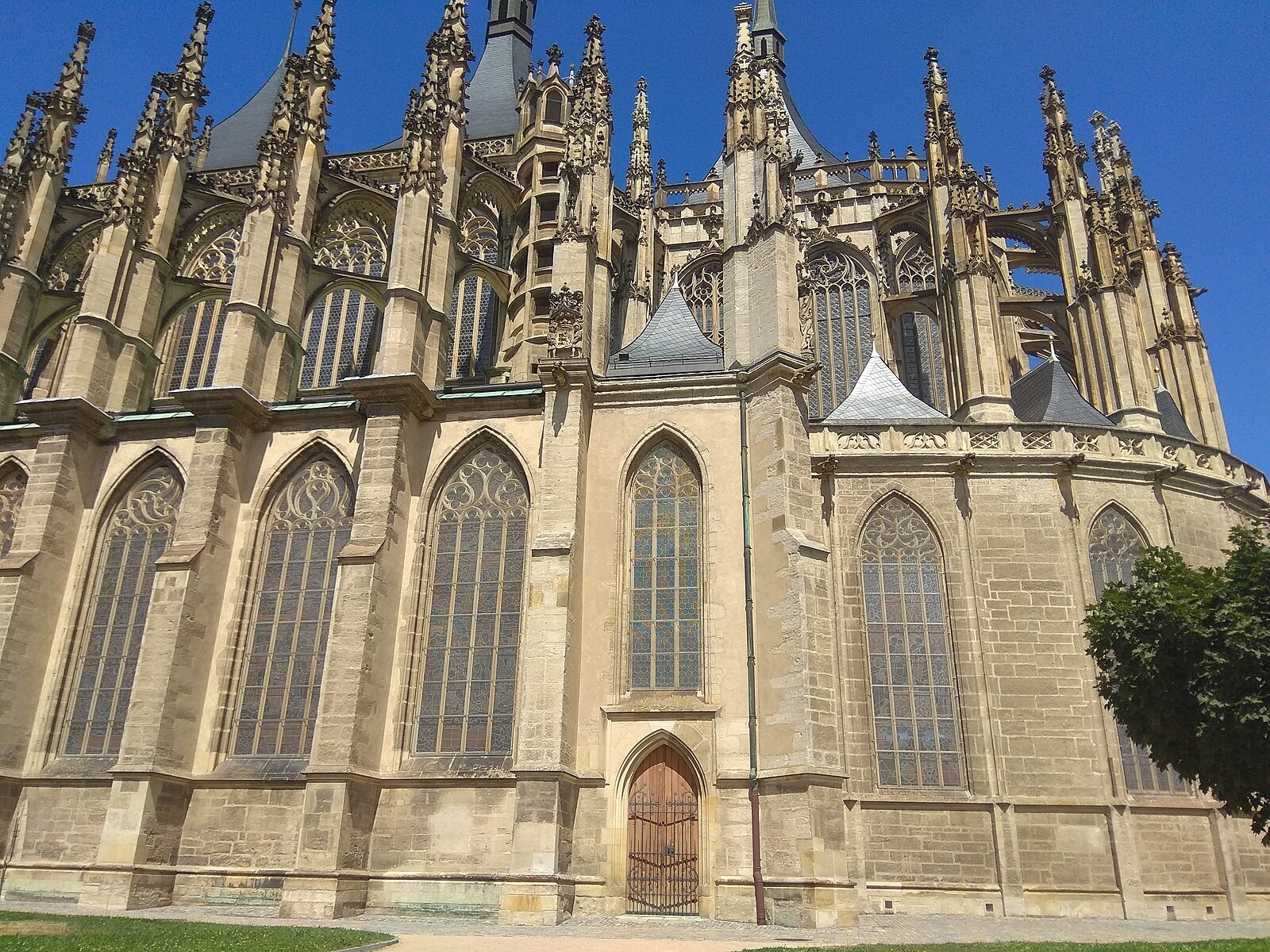
Kutná Hora grew through silver mining and became one of medieval Bohemia's most important towns. Its wealth is written into St Barbara's Cathedral, the Italian Court and the urban fabric that earned the historic centre UNESCO World Heritage status together with St Barbara's and the Cathedral of Our Lady at Sedlec.
Sedlec Ossuary is the site most international visitors know first, but reducing Kutná Hora to bones misses the economic story. Silver extraction and minting linked the town directly to royal power. The Italian Court served as a mint and royal residence, while St Barbara's expressed the identity and resources of a mining community.
The town works well as a day trip because the principal historic centre is walkable, while Sedlec sits near the railway side of town. Plan the sequence around your arrival station and any timed admission. Train schedules are generally straightforward, but always check the current connection rather than copying a timetable from an old travel article.
Český Krumlov: worth the long day if you know why you are going
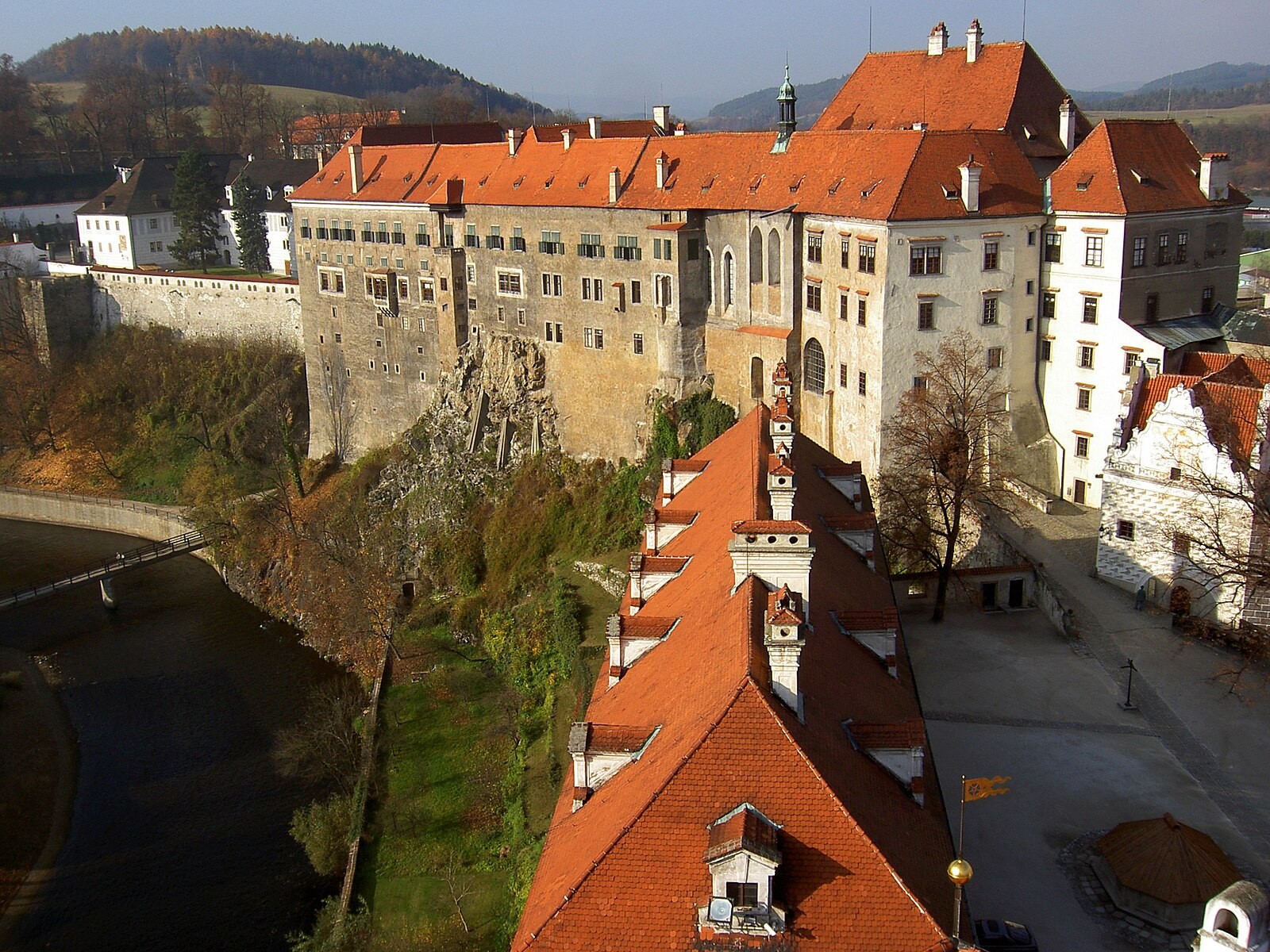
Český Krumlov is one of Czechia's most visually distinctive historic towns: the Vltava bends around a compact centre beneath a huge castle complex. UNESCO recognition reflects the unusually complete relationship between town, castle and landscape.
From Prague, however, this is not a casual half-day. The transfer is long enough that an early departure makes a major difference. A rushed visit can turn the town into two viewpoints, lunch and another bus. Give yourself time to cross the river repeatedly, walk through Latrán, explore castle courtyards and understand the town plan rather than chasing a single postcard angle.
Castle interiors and theatre access follow their own seasonal schedules. In winter or shoulder season, verify exactly what is open before making the castle interior your main reason for travelling. The town itself remains worthwhile, but the shape of the day changes.
Karlštejn: the easiest major castle escape
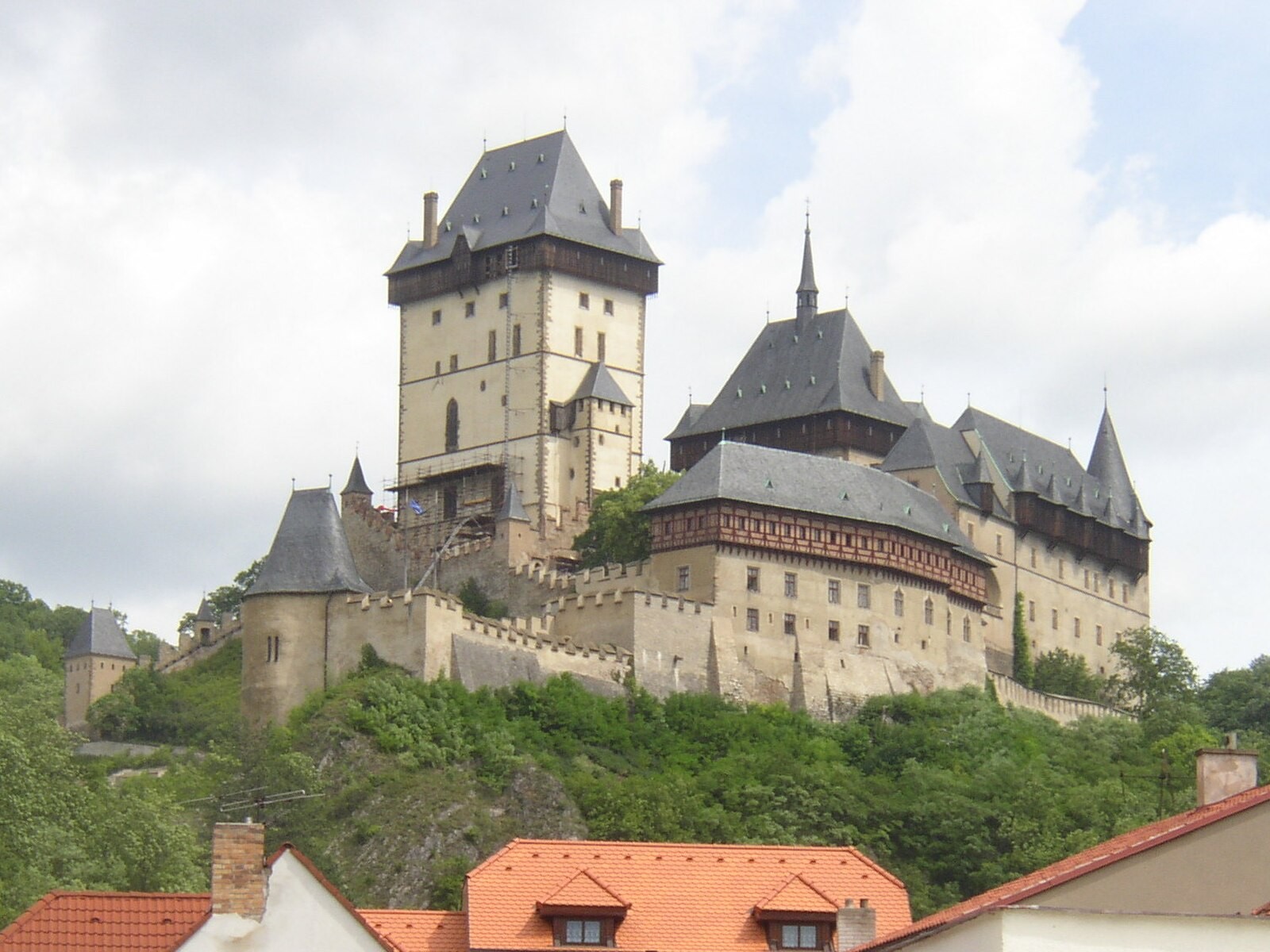
Charles IV founded Karlštejn in 1348 as a castle closely associated with the safeguarding of royal treasures and sacred relics. Its dramatic position above the Berounka valley gives the approach much of its appeal. From Prague, regular rail makes the village one of the simplest independent castle trips.
The important practical point is that Karlštejn's interiors are visited on guided circuits rather than as an unrestricted wander through every room. Different circuits can have different schedules, languages and capacity. If a particular interior matters to you, reserve the correct tour rather than assuming any castle ticket covers everything.
The station-to-castle walk belongs to the experience and climbs gradually through the village. Comfortable shoes matter more than distance figures suggest. If you prefer a quieter experience, avoid the middle of peak weekend days and allow time to continue into the surrounding Czech Karst landscape.
Terezín: a historical visit, not a conventional attraction
Terezín requires a different frame. The Habsburg fortress town was transformed during Nazi occupation into a ghetto and transit camp, while the Small Fortress was used by the Prague Gestapo as a prison. Tens of thousands of people passed through a system of confinement, persecution, forced labour, hunger, disease and deportation.
A visit can include the Ghetto Museum, Magdeburg Barracks, prayer spaces, cemeteries and the Small Fortress, but no single building communicates the whole system. Read enough beforehand to distinguish the ghetto from the Gestapo prison; they were connected within the same place but had different functions.
Plan generous time and avoid pairing Terezín with a light entertainment stop simply to 'fill the day'. For many visitors, the material is emotionally exhausting. Current opening hours and exhibition access should be checked with the Terezín Memorial.
Karlovy Vary: spa urbanism rather than one headline monument
Karlovy Vary developed around thermal springs and became one of Europe's major spa towns. Colonnades, hotels and steep wooded slopes create a city whose identity comes from movement between springs, promenades and treatment culture rather than from one dominant cathedral or castle.
It is possible as a day trip from Prague, but the transfer is longer than Kutná Hora or Karlštejn. The reward is a completely different urban atmosphere. Walk the Teplá river corridor, compare the colonnades and take time to understand why visitors historically came for multi-week cures rather than a few hours of sightseeing.
Spa wafers and Becherovka are strong regional associations, but neither should substitute for the city's wider history. If you are travelling specifically for the International Film Festival or another event, accommodation and transport patterns can change substantially.
Pilsen: go for the city as well as the brewery
Pilsen is the birthplace of the pale lager style that took the city's name around the world. Pilsner Urquell's first brew dates to 1842, and the brewery remains a major visitor attraction. Its official tour currently runs as a timed experience, so advance booking is sensible if the brewery is the core of your day.
Do not arrive, tour the brewery and leave. Pilsen's centre has the Cathedral of St Bartholomew, a historic square, synagogues and a network of medieval underground spaces. The city also tells an industrial and 20th-century story distinct from Prague.
Direct rail connections make Pilsen relatively easy from Prague; journey times vary by service, so check the current timetable. If you drink during the brewery visit, remember that the return train solves the driving problem but not the need to pace alcohol responsibly.
Bohemian Switzerland: sandstone landscapes and seasonal planning
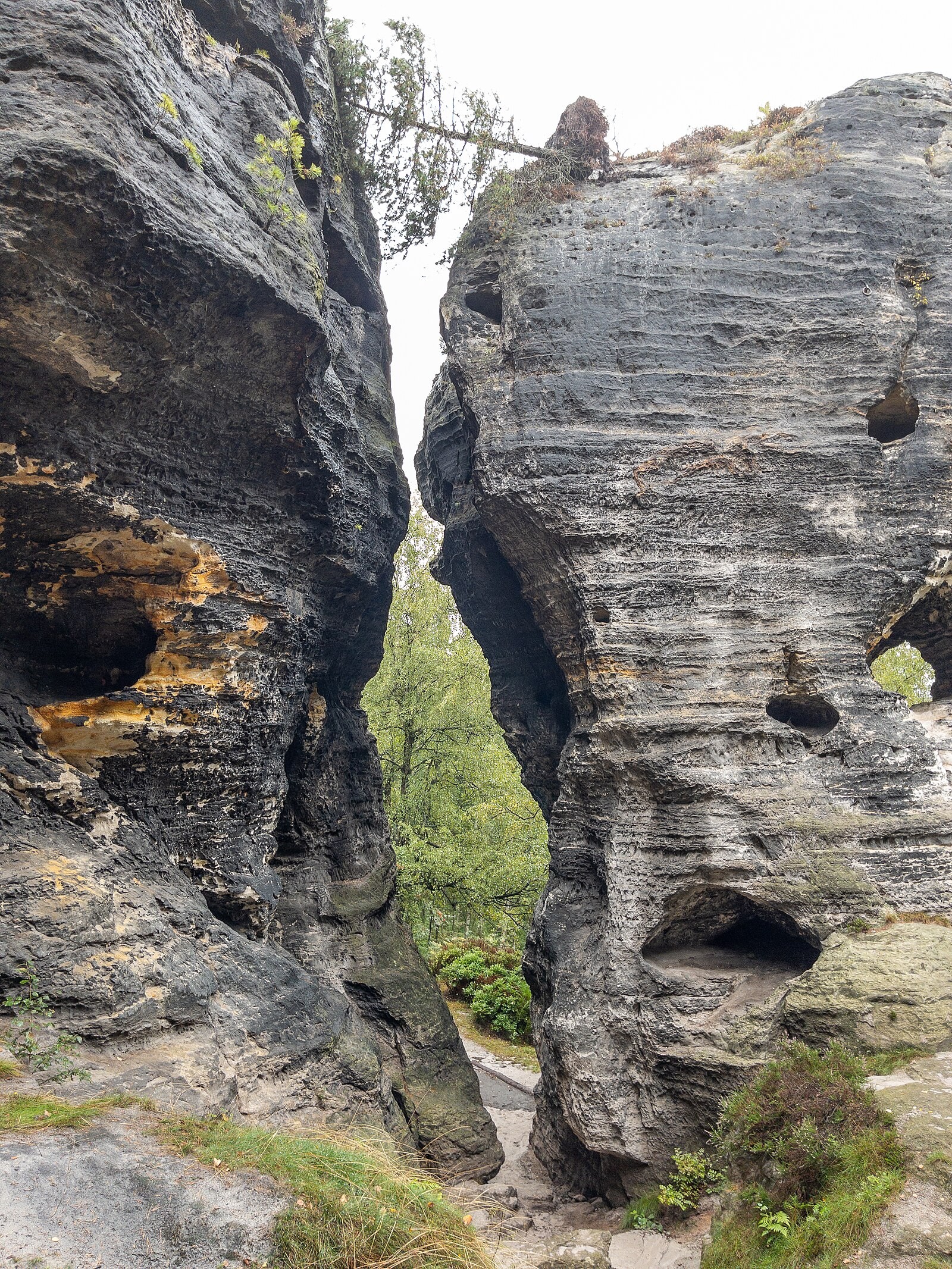
Bohemian Switzerland National Park is defined by sandstone formations, forests, gorges and viewpoints near the German border. It rewards walkers, but it is the day trip on this list most vulnerable to weather, trail closures and transport complexity.
Wildfire damage, erosion, forestry work and conservation measures can change access to specific trails. Famous photographs found online may show routes that are temporarily restricted. Always use the national park's current information rather than assuming a classic itinerary is available unchanged.
Start early, carry water, use proper footwear and choose a route based on daylight and fitness. Without a car on an initial visit, a guided or carefully planned public-transport itinerary can remove the risk of missing the last connection from a trailhead.
Bohemian Paradise and Trosky: landscape with a castle silhouette
Bohemian Paradise (Český ráj) combines sandstone rock towns, forests, castles and viewpoints northeast of Prague. Trosky Castle, with ruins on two volcanic plugs, provides the region's most recognisable silhouette. The area is better approached as a network of hikes and cultural stops than as one attraction.
Public transport is possible but requires more coordination than a train to Kutná Hora. A car gives flexibility, while hikers can design routes around rail and bus nodes. In high summer, rock towns can be crowded; in winter, ice and short daylight alter trail safety.
Choose this trip if walking is a major part of the day. If you mainly want a castle interior, Karlštejn is logistically simpler.
Kingdom Come: Deliverance locations and medieval Bohemia
The Kingdom Come games have made a new audience curious about real Central Bohemian places. That can be a productive way into history if the game is treated as interpretation rather than a literal reconstruction. Landscapes, settlement names and some monuments connect to the medieval setting, while gameplay, characters and compressed geography inevitably reshape reality.
A themed day can combine locations associated with the games with surviving medieval sites, but resist trying to match every digital scene one-to-one. Buildings have been rebuilt, roads moved and villages transformed over six centuries. The historical value lies in comparing what survives with what the game designers reconstructed.
For Spectrum's broader Prague content, these trips also solve a search-intent gap: visitors who discovered Czech history through a game may be ready for real places beyond the capital.
Nine smaller trips with unusually strong stories
The strongest lesser-known excursions are not random villages labelled 'secret'. They have a clear historical proposition. Budeč preserves one of the oldest standing church structures in Bohemia and is linked to the early Přemyslid world. Levý Hradec predates Prague Castle as an important Přemyslid centre. Tetín connects with the murder of St Ludmila and the formation of early Bohemian Christianity.
Závist and Stradonice point much farther back, to major Celtic oppida before the medieval Czech state existed. Svatý Jan pod Skalou compresses pilgrimage, monastery and dramatic karst landscape into a small valley. The Solvay Quarries add industrial history and a mining railway to the Czech Karst. Panenský Týnec offers the evocative remains of an unfinished Gothic church without needing paranormal claims to make the place interesting.
These destinations suit repeat visitors and people with a specific interest. They generally demand more planning than the headline trips, and some have limited public transport or seasonal museum access. The linked Stories explain why each one is worth the effort before you commit a day.
Transport, timing and the decision rule that prevents bad day trips
Build the trip from the return journey backward. Check the last comfortable train or bus, then opening hours, then your desired visit length. Only after that should you add lunch and optional stops. This prevents a common problem in which an attractive morning itinerary leaves no margin for a delayed tour or missed connection.
For trains, compare direct services with journeys requiring transfers. For buses, confirm the exact Prague departure terminal; names such as Florenc, Na Knížecí, Černý Most and Roztyly are not interchangeable. In integrated regional transport, ticket rules may differ from long-distance rail or commercial coach tickets.
Reserve attractions when capacity is genuinely limited—castle tours, popular brewery times and certain seasonal experiences. Do not overbook every hour. A day trip should have a primary reason for travel, one secondary option and enough slack to enjoy the place.
Distance is less important than the shape of the day
Two destinations can take similar time to reach and produce very different levels of fatigue. Karlštejn is a compact castle excursion with a final walk uphill and time governed by guided-tour slots. Kutná Hora spreads interest across a historic town, St Barbara’s area and Sedlec, so local movement matters after arrival. Český Krumlov asks for a long intercity day before the visitor even starts exploring its castle-and-river topography. Bohemian Switzerland substitutes trail conditions and daylight for museum opening hours.
Choose by friction, not kilometres. Count the number of transfers, fixed reservations, last-return constraints and physical demands. A direct train followed by a walk may be easier than a shorter road distance requiring parking, shuttle logistics and timed entry.
This matters in winter, when daylight shrinks hiking value and some castle circuits reduce operations. It matters on summer weekends, when famous destinations can be extremely busy. A day trip is not “easy” merely because hundreds of tour companies sell it.
Before committing, write down the one reason you are going. Silver-mining urban history points to Kutná Hora. Charles IV and a major castle point to Karlštejn. Brewery history points to Pilsen. Spa architecture points to Karlovy Vary. Landscape hiking points to the sandstone regions. If the reason is only “it is famous,” Prague may still have a better use for that day.
Terezín requires a different planning mindset
Terezín should not be compared with castles, spa towns or scenic villages on a simple “best day trip” ranking. The site is connected with Habsburg military history, Nazi persecution, the ghetto and prison system, deportation and post-war memory. Visiting responsibly means allowing time for the historical material rather than treating the Small Fortress as a dramatic photo stop before lunch elsewhere.
Use the Terezín Memorial’s own information to identify which components are open and how they relate. The town, museums, memorial spaces, cemetery and Small Fortress are geographically and historically connected but not identical. A rushed visit can flatten complex institutions and experiences into one word, “Terezín.”
Families should consider the age and preparation of children. The site contains material about imprisonment, deportation and death that requires context. Adults also benefit from arriving with basic knowledge of the Protectorate of Bohemia and Moravia and the role of Terezín in the Nazi system.
The correct measure of a successful visit is not how many buildings were entered. It is whether the historical distinctions remained clear and the memorial purpose was respected.
Rail, bus, car or organized excursion: match transport to the destination
Rail is excellent when the station relationship is straightforward and the visitor wants independence. Pilsen fits that model well. Kutná Hora is also practical by rail, but the main station and the historic centre are not the same place, so local transfer planning matters. Karlštejn’s station leaves a pleasant walk through the village before the climb to the castle; timed interior tours make punctuality more important.
Longer destinations such as Český Krumlov can work by bus or organized transport because the road journey is substantial and the rail geography is less convenient for a simple same-day visit. Natural areas may favour a car or carefully planned public transport, especially when trailheads sit away from town centres. A car adds flexibility but also parking restrictions, driver fatigue and the inability to treat travel time as rest.
Organized excursions make sense when they simplify several pieces at once: transport, reserved entry, interpretation and return timing. They make less sense when a destination is easy to reach independently and the group schedule would remove the freedom that justified the trip.
Always verify the final leg. “Prague to destination” search results can hide a twenty-minute local bus, steep castle walk or seasonal shuttle after the intercity journey. That final leg often determines whether a day feels smooth or improvised.
When not to take a day trip at all
Skip the excursion if Prague itself still contains an unvisited priority that matches your interests better. A traveller who has not yet seen Josefov but is fascinated by Jewish history gains little from leaving the city merely because a day-trip list says Kutná Hora is essential. An architecture-focused visitor who has not explored Prague’s Cubism or functionalist villas may get more from staying local than spending hours in transit.
Weather can also cancel the logic. Heavy rain may be tolerable for a museum-heavy destination but ruin a sandstone hike. Extreme heat changes long castle approaches. Winter darkness reduces landscape value. Use cancellation as an intelligent option, not as failure.
Finally, consider the return. A day trip that deposits you in Prague exhausted at 21:00 effectively consumes the evening too. That may be worthwhile for Český Krumlov or a long hike, but it should be counted honestly as more than “one day.”
A day trip should add a category Prague cannot supply
Prague already contains castles, Gothic churches, museums, breweries, parks and twentieth-century architecture. The strongest excursion therefore adds scale or context rather than a weaker duplicate. Kutná Hora adds the silver-mining economy of a royal town. Terezín adds a memorial landscape inseparable from twentieth-century persecution. Karlovy Vary adds spa urbanism. Bohemian Switzerland adds a protected sandstone landscape. Pilsen adds the industrial and brewing context behind pale lager.
This test is stricter than fame and more useful than distance. If a proposed destination offers “another old town with a castle” but no particular historical or personal reason to go, the extra travel may not be justified.
Conversely, a specialist interest can make a less famous excursion exceptional. Railway history, glassmaking, industrial heritage, military sites or a specific Kingdom Come location can be reason enough when the subject is genuinely yours.
Frequently asked questions
Which day trip from Prague is simplest?
Karlštejn and Kutná Hora are among the easiest major trips because of relatively simple rail access. Pilsen is also straightforward by direct train.
Is Český Krumlov too far for a day trip?
It is possible, but it creates a long day with significant transit. An overnight stay gives the town more breathing room; for a day trip, leave early and avoid overloading the itinerary.
Can I visit Terezín and another destination on the same day?
Logistically it can be possible, but Terezín is a substantial memorial visit. Many travellers will find it more appropriate and less exhausting to give the site the main part of the day.
Do I need a car for day trips from Prague?
No for destinations such as Kutná Hora, Karlštejn and Pilsen. A car becomes more useful for dispersed landscapes such as Bohemian Paradise or combinations of small heritage sites.
Which day trip is best in winter?
Pilsen, Kutná Hora and Karlovy Vary can work well because they offer urban and indoor content. Castle interiors and hiking destinations have more seasonal limitations, so check current schedules.
Which trip is best for Kingdom Come fans?
That depends on which game locations interest you, but Central Bohemian medieval sites can be combined into themed routes. Verify current access because many relevant places are villages, ruins or living settlements rather than formal attractions.
Sources & further reading
- VisitCzechia — Czech destinations and day-trip context — CzechTourism / VisitCzechia
- Pilsner Urquell — Brewery Tour — Plzeňský Prazdroj / Pilsner Urquell
- Karlštejn Castle — Official site — National Heritage Institute (Národní památkový ústav)
- Terezín Memorial — Official site — Terezín Memorial
- Bohemian Switzerland National Park — Official site — Bohemian Switzerland National Park Administration
- UNESCO World Heritage Centre — UNESCO World Heritage Centre
- UNESCO World Heritage Centre — Kutná Hora — UNESCO World Heritage Centre
- UNESCO World Heritage Centre — Historic Centre of Český Krumlov — UNESCO World Heritage Centre
- Karlštejn Castle — history of the castle — National Heritage Institute (Národní památkový ústav)