
Prague Stories · Practical Culture
Can You Drink Prague Tap Water? The Simple Answer and the Useful Details
Yes: water supplied through Prague's public network is drinking water and is routinely monitored. The more useful questions are where it comes from, why its taste changes, and when a restaurant or public fountain is a separate issue.
Prague

Prague Waterworks and Sewerage states that water in the city's public supply meets Czech and European drinking-water requirements and is monitored across more than two hundred parameters.
The simple answer is yes
For an ordinary visitor using a normal cold-water tap connected to the municipal network, that is the evidence that matters: Prague tap water is potable. No water authority can promise that every private building fixture, neglected internal pipe or unmarked outdoor spout is safe forever. That is why the precise claim is about the public drinking-water supply. In hotels, apartments and homes on that network, the cold tap is generally the straightforward refill point unless the property says otherwise.
Prague drinks from more than one source
The city's water is supplied primarily from the Želivka and Káraný systems, with Podolí also part of Prague's supply and reserve infrastructure. Prague Waterworks publishes current source shares and quality information, which means the water in one district is not necessarily chemically identical to the water in another. That helps explain why visitors can perceive different taste or mineral character across the city. Káraný water, for example, is harder than water from some other sources. A mineral taste is therefore not evidence that the water is unsafe. Hardness describes dissolved minerals; potability is assessed through a much broader set of health and quality parameters.
“Hard water” is a taste and appliance question, not a danger label
Travellers often notice scale in kettles or a different mouthfeel and conclude that the water must be poor. Prague Waterworks describes most supplied water as soft to moderately hard depending on source. Hardness can influence taste, soap behaviour and limescale, but it should not be confused with contamination. If you strongly prefer a particular taste, a simple filter may change the sensory profile, but filtering is not required to make compliant municipal water drinkable. The important distinction is between preference and safety.
Restaurant water is a service question
The fact that municipal tap water is potable does not automatically create a rule that every restaurant must provide unlimited tap water free of charge. A restaurant can have its own service and pricing policy, provided prices and charges are disclosed appropriately. If you want tap water, ask for it directly and check whether the venue charges. That may feel strange to visitors from countries where free table water is automatic, but it is a hospitality convention rather than a water-quality issue. Bottled water on the menu says nothing about the safety of the tap.
A fountain must identify itself as drinking water
Prague has many ornamental fountains, historic wells and water features. Their beauty is not evidence of potability. Only use a public fountain or outdoor tap when it is clearly intended and marked for drinking, or when an official source identifies it as such. Seasonal shutoffs and maintenance can change availability. The easiest refill strategy is therefore not to hunt every square for a fountain. Fill a bottle at your accommodation, workplace or another known potable tap, and treat public drinking points as a bonus. Prague's water story is less dramatic than tourist forums make it: a modern monitored urban supply, with interesting source geology and a few practical distinctions around service.
Reviewed visuals
See the story
Supporting images selected in the Prague Stories visual review. Context images are labeled so they are not mistaken for documentary proof of the exact subject.
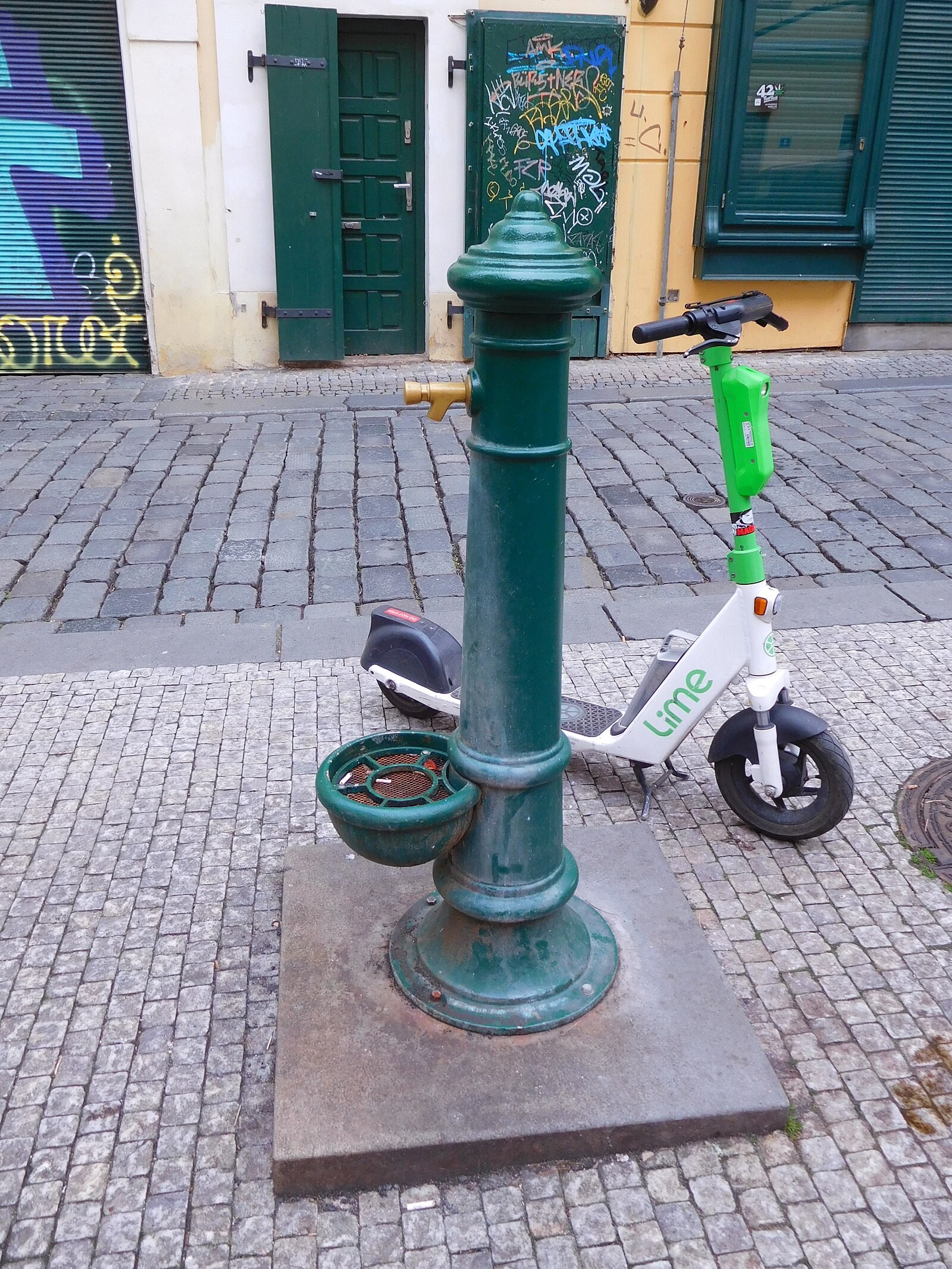
Public drinking-water fountain in Jilská Street, Prague Old Town.
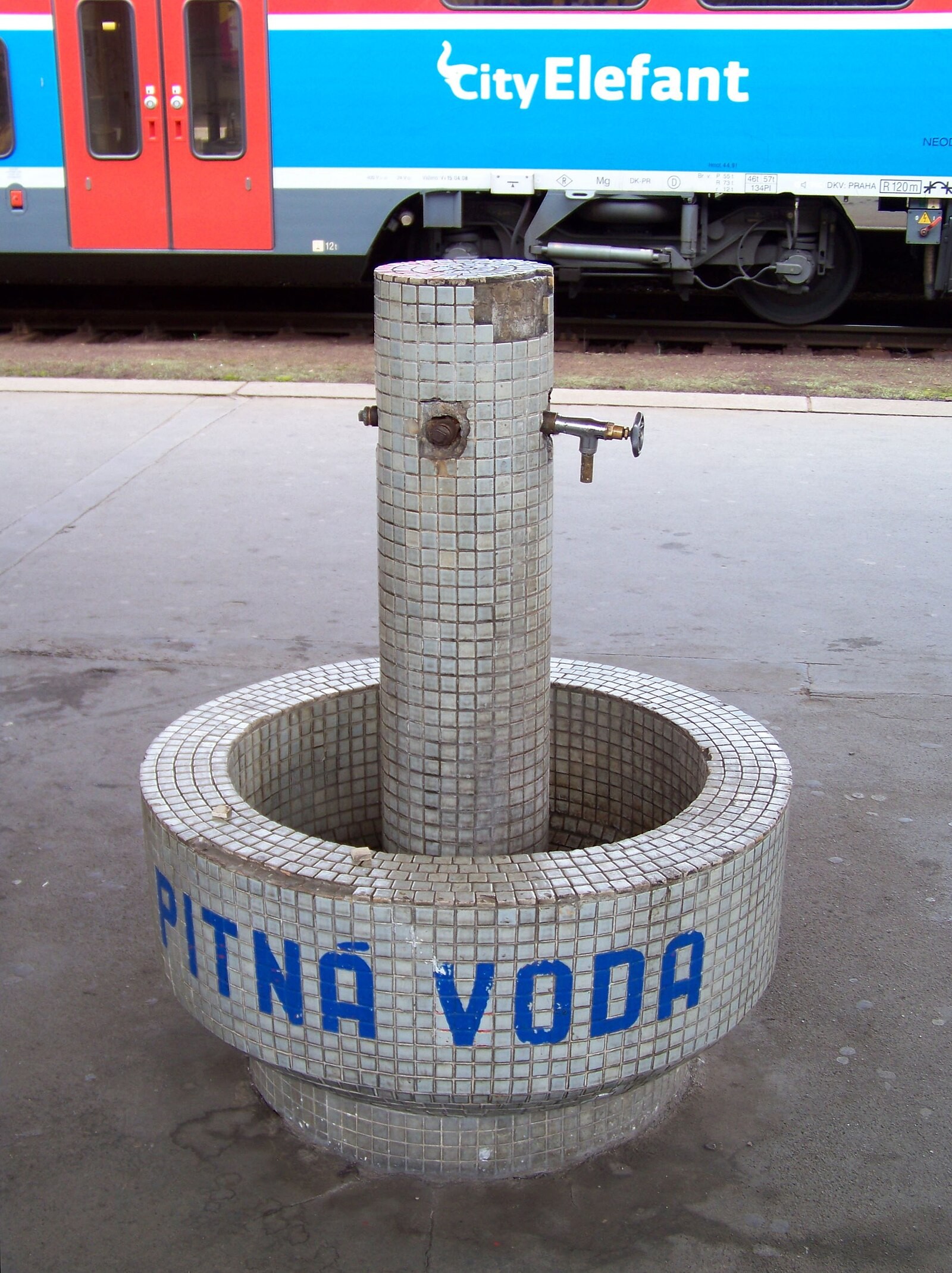
Public drinking-water point at a Smíchov platform in Prague.
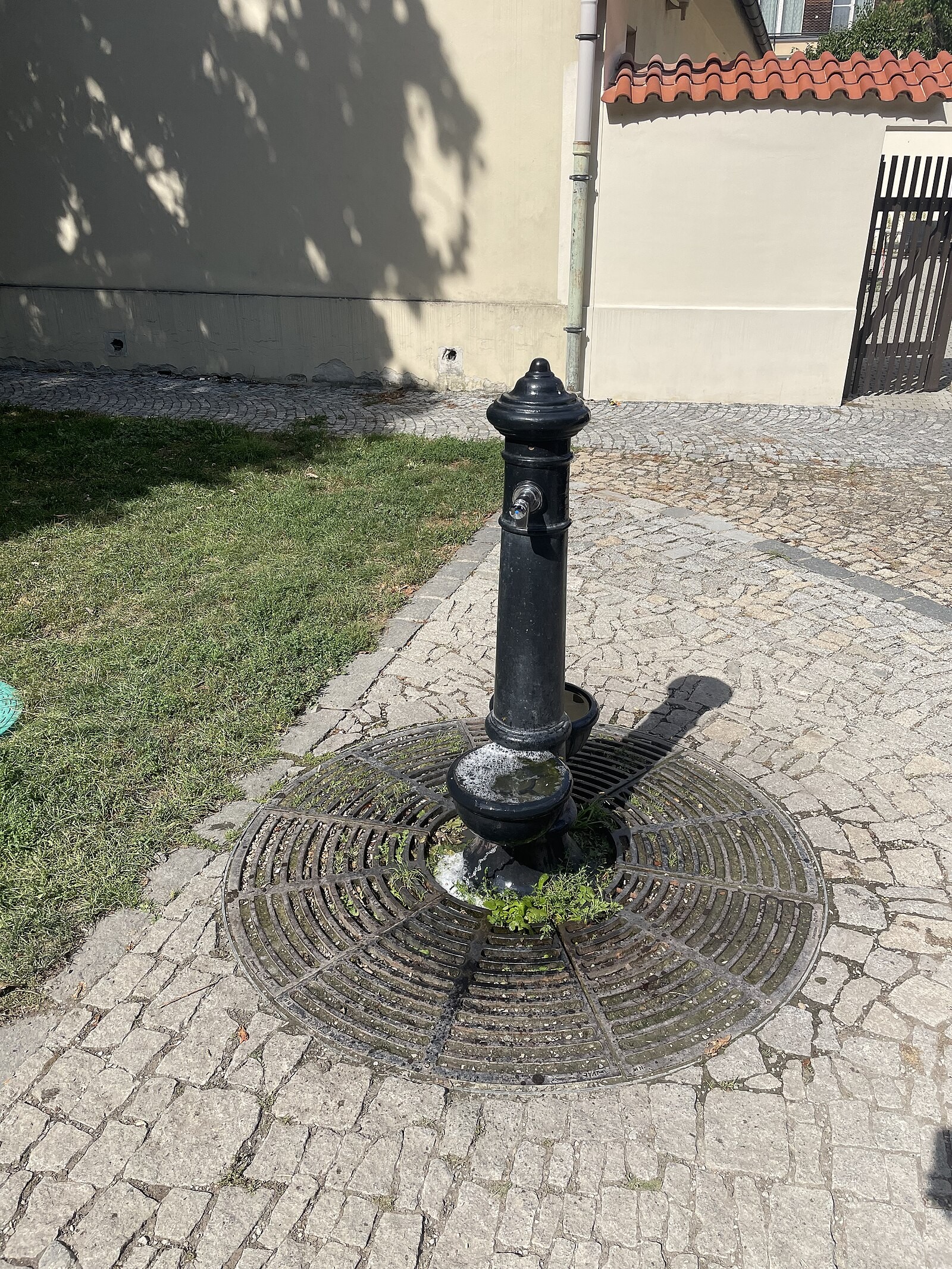
Public drinking fountain near Petřiny/Obora Hvězda in Prague.
Quick facts
- Prague's public water supply is monitored as drinking water under Czech and EU requirements.
- Prague Waterworks reports monitoring across more than 200 parameters.
- Major Prague sources include Želivka and Káraný, with Podolí also part of the system.
- Water hardness and taste can vary because the source mix varies.
- Hardness is not the same thing as unsafe water.
- Restaurant tap-water policy and public-fountain availability are separate from municipal water quality.
Questions
Is Prague tap water safe?
The municipal public supply is drinking water and is routinely monitored to Czech and EU standards. Use ordinary cold-water taps connected to that supply.
Can restaurants charge for tap water?
Restaurant service policies can differ. Ask before ordering and check the menu or bill for any stated charge; potable municipal water does not automatically mean every restaurant serves it free.
Can I refill a bottle in Prague?
Yes, from a known potable tap you are permitted to use. Public drinking fountains may also exist seasonally, but use only points clearly identified as drinking water.
Does Prague water taste hard?
It can, depending on the source mix. Prague's water ranges in mineral character, and Káraný-sourced water is harder than some other sources.
Sources & further reading
- Drinking water — Prague Waterworks and Sewerage
- Water quality FAQ — Prague Waterworks and Sewerage
- Open data: PVK and PVS — Prague Waterworks and Sewerage