
Explore Prague
Prague Beer Guide
Prague beer is easy to drink and surprisingly easy to misunderstand. Visitors meet unfamiliar numbers, large collars of foam and pubs where a half-litre lager can arrive faster than they have finished reading the menu. None of those details is accidental. This serving culture is built around pale lager, cellar care, glass washing, tap technique and repeat rounds. The city now also has microbreweries, specialist craft bars and imported styles, so 'Czech beer' no longer means one flavour. Still, the most useful starting point remains the classic světlý ležák: pale, bottom-fermented lager with a balance of malt, bitterness and drinkability. Learn how Czech menus classify it, then explore outward.
In Prague, the number 10°, 11° or 12° on a beer menu usually refers to original wort extract measured in degrees Plato, not to alcohol percentage. A 12° Czech pale lager is commonly around five percent alcohol by volume, but exact strength depends on the beer. Czech beer culture is built around well-kept lager, fast cellar-to-tap turnover and a distinctive approach to foam. You may see pours such as hladinka, šnyt or mlíko, each changing the ratio of liquid beer to dense wet foam. Order by style and strength, not by assuming the biggest number means the 'best' beer.
Why Czech lager matters
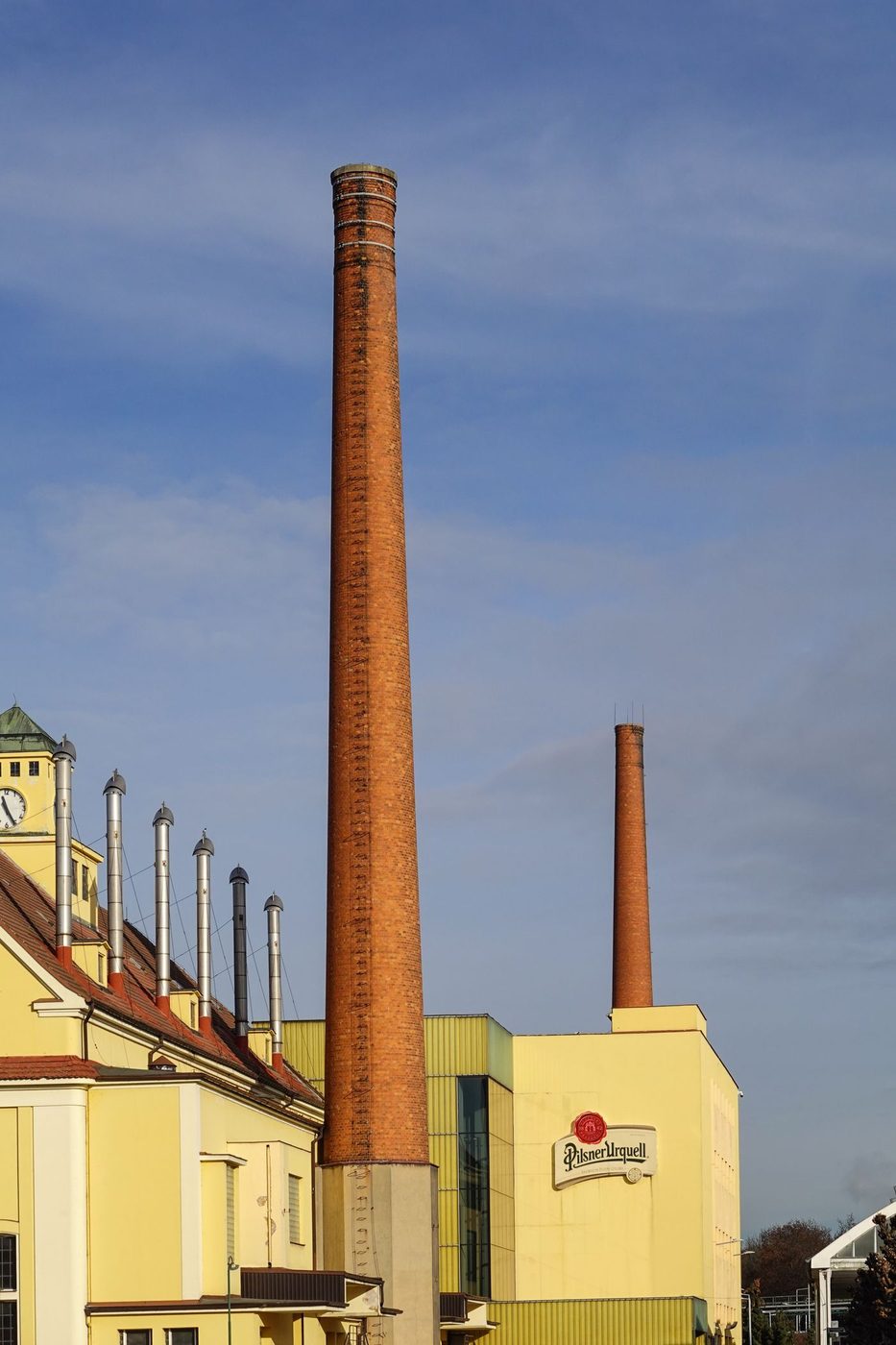
The most influential date in Czech brewing history is 1842, when the first batch of what became Pilsner Urquell was brewed in Plzeň. Pale malt, soft local water, Saaz hops and bottom fermentation helped create a bright golden lager that became the model for the worldwide Pilsner family.
That global success can obscure diversity. Czechia has major industrial breweries, regional breweries and hundreds of smaller producers. Dark lager, amber lager, stronger special beers and modern ales coexist with the pale lager tradition. Prague is therefore a good place to compare not only brands but approaches to service.
One geographical correction matters: Pilsner Urquell is brewed in Plzeň, not Prague. Prague pubs can serve it exceptionally well, but the brewery story belongs to another Czech city and makes Pilsen an easy beer-focused day trip.
What 10°, 11° and 12° actually mean
The degree sign on a Czech beer menu is not an alcohol reading. It refers to the concentration of extract in the wort before fermentation, traditionally expressed in degrees Plato. A higher original extract generally gives yeast more fermentable material and often correlates with more body and alcohol, but the relationship is not one-to-one.
That is why a 12° beer is not twelve percent alcohol. A conventional 12° pale lager is commonly around the neighbourhood of five percent ABV, while a 10° is often lighter. Always check the brewery's listed alcohol percentage when precision matters.
Historically, Czech legal and commercial categories developed around wort strength, which is why drinkers casually refer to a desítka, jedenáctka or dvanáctka—ten, eleven or twelve. Ordering by these names is normal; treating them as a competition for strength misses the point.
Lager is a process, not a synonym for bland beer
Lager uses bottom-fermenting yeast and a period of cold maturation. Czech pale lager traditionally places substantial emphasis on malt body, hop bitterness and a smooth, integrated profile. Decoction mashing and Czech hop varieties can play important roles, but recipes and techniques vary among breweries.
Do not assume 'lager' means every beer tastes alike. Compare a lighter výčepní beer with a fuller ležák from the same brewery. Then compare two breweries at the same strength. Water, malt, hopping, fermentation, maturation and serving conditions all become visible once the basic category is held constant.
Modern Prague beer bars add IPA, sour beer, stout and other styles to that landscape. Those are part of contemporary Czech brewing even if they are not the traditional starting point.
The foam is part of the beer
A tall, dense head of wet foam is not evidence that the pub cheated you. In Czech tap culture, properly formed foam protects beer from rapid oxidation, affects texture and carries aroma. Bartenders can deliberately change the ratio of beer and foam to create different pours.
Hladinka is the classic full pour with a substantial creamy cap. Šnyt is a smaller amount of beer with a generous head, traditionally useful when you want one modest glass rather than a full half-litre. Mlíko—'milk'—is mostly dense wet foam and tastes sweeter and softer because of the way the foam presents the beer. Terminology and execution can vary slightly by pub.
These pours are not cocktail tricks layered onto mediocre beer. They depend on clean glasses, correct tap handling and a faucet designed to control flow and foam. If a pub takes serving technique seriously, watching the bartender is part of understanding the product.
Tank beer: what the system changes
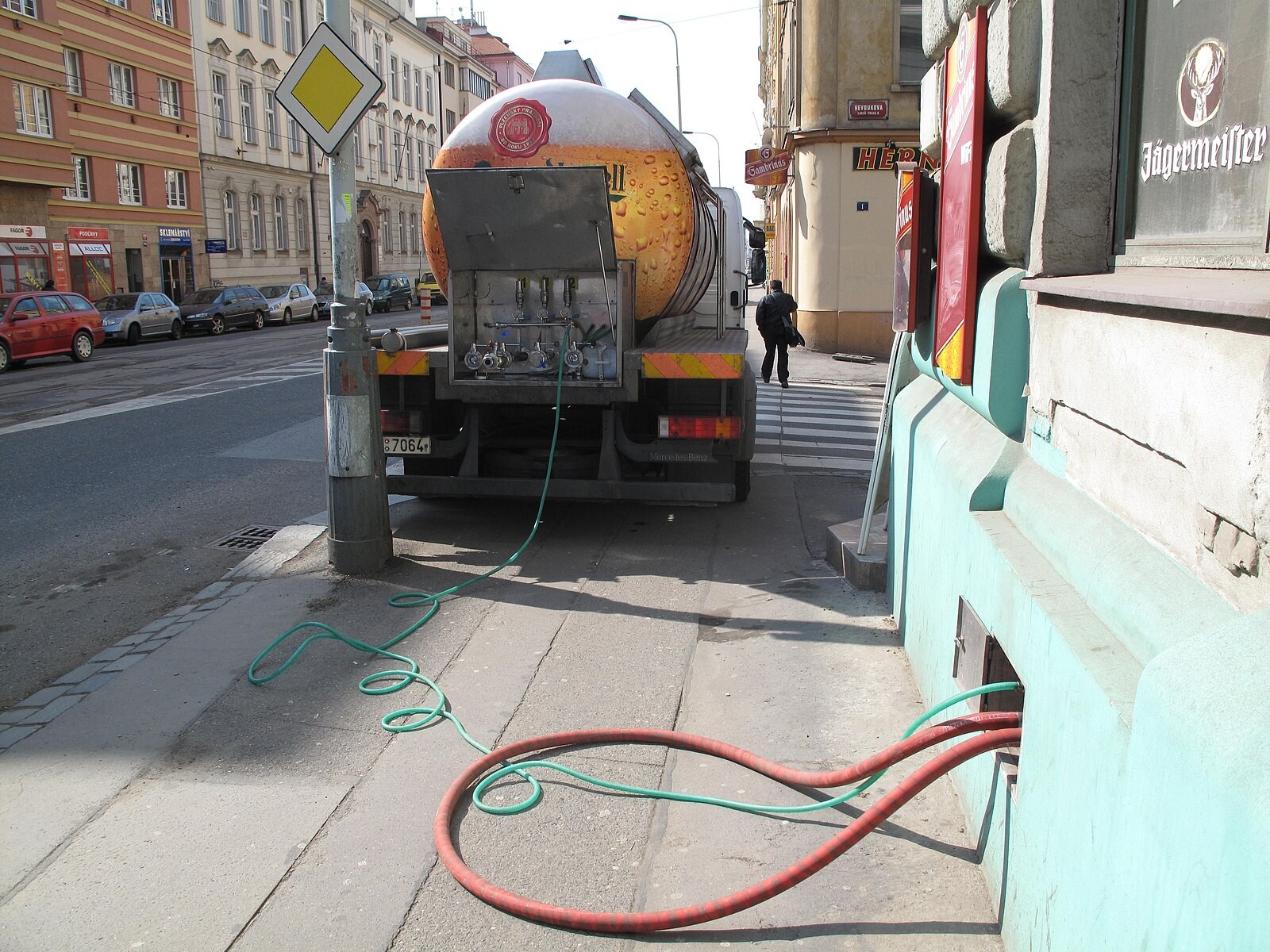
Tank beer is delivered to equipped pubs in large containers and served from a cellar system rather than individual kegs. In common Czech tank systems, beer is held in an inner bag while compressed air acts outside the bag, so the pushing gas does not directly contact the beer. This can support high-volume service and protect the beer from some handling variables.
The label 'tankové pivo' is not a guarantee that every glass will be perfect. Turnover, temperature, line hygiene, glass washing and tap technique still matter. A busy specialist pub with disciplined cellar practice can make the system shine; a neglected system cannot be rescued by the word 'tank'.
Unpasteurized beer is often associated with tank service, but do not turn that into an absolute rule across every brewery and venue. Check the producer's description when the production method itself matters.
Brewery pub, classic hospoda or craft bar?
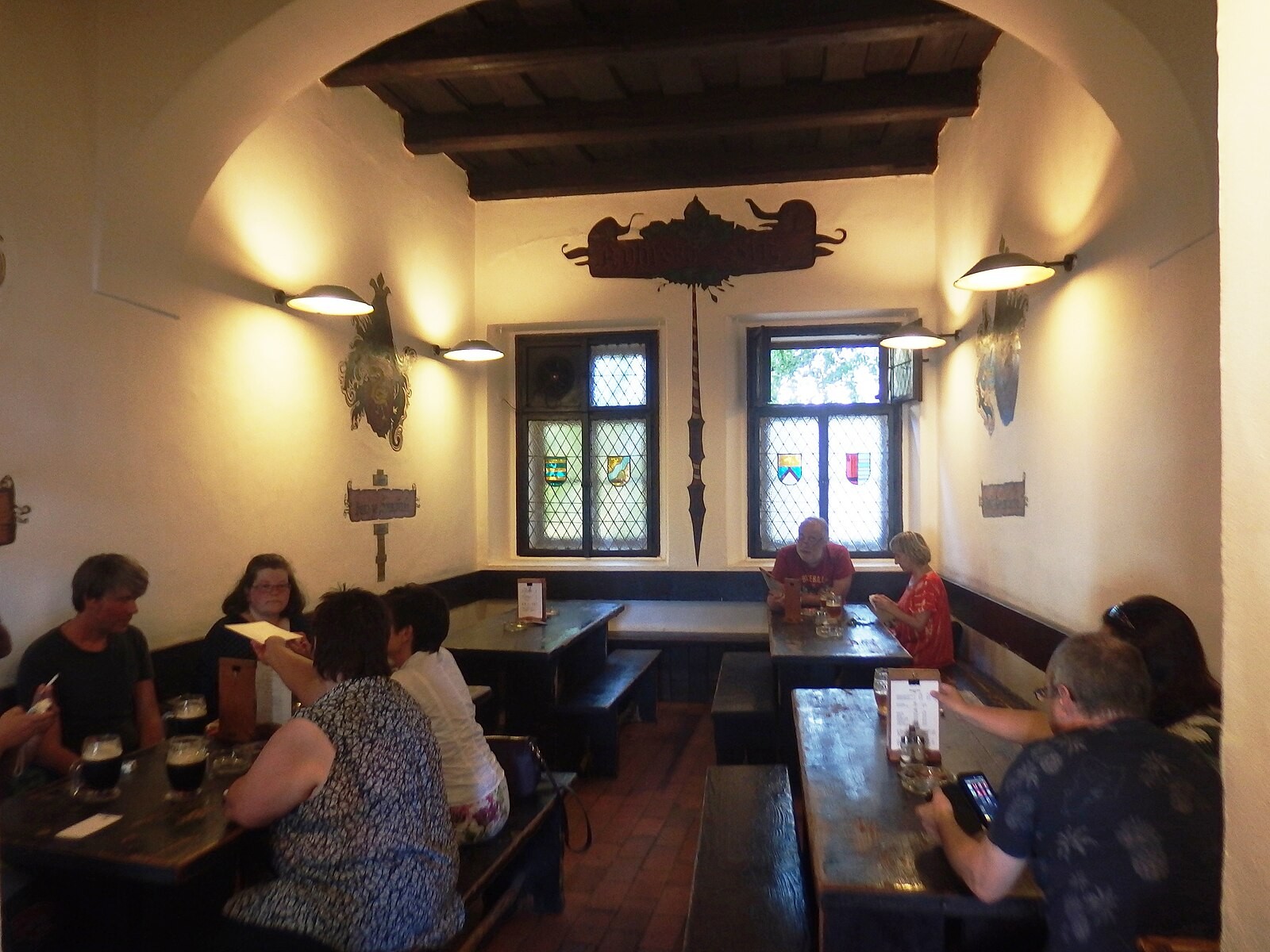
A brewery pub makes at least some beer on site or is directly attached to a brewery. A classic hospoda may focus on one major brewery and pour a narrow range with very high turnover. A specialist craft bar usually offers more taps and rotates producers and styles.
None is automatically superior. To study Czech lager service, a high-volume pub with two beautifully maintained lagers may teach you more than a board of twenty beers. If you want breadth, a multi-tap bar is the better laboratory. If you care about production, a brewery tour adds equipment and process that a pub cannot show.
Prague supports all three formats within a few tram stops. Match the room to the question you want answered.
Pub etiquette without pretending there is one sacred rulebook
Traditional pubs can be brisk. Staff may expect you to know whether you want another round, tables may be shared in busy rooms, and the bill can be tracked on a paper slip. In other venues, service works like any international restaurant. Read the room rather than performing a ritual you learned from a travel video.
Say 'jedno pivo, prosím' if you want to try simple Czech, but pointing clearly at the beer name and size works too. To stop automatic momentum, make it clear that the current glass is your last before the next one is poured. When paying, state the total including your tip if that is how the venue handles card or cash settlement.
Beer is culturally normal in Czechia, but alcohol is still alcohol. The relaxed setting is not permission to ignore your own limit, medication, driving responsibilities or the people around you.
What to order with beer
Czech pub snacks favour salt, acidity and fat. Utopenec combines pickled sausage, onion and vinegar. Tlačenka is often served with onion and vinegar. Pivní sýr can be mixed and seasoned at the table. Pickled cheese, topinky and simple spreads also appear frequently.
For a full meal, goulash, roast pork, schnitzel-style dishes and fried cheese all work naturally with lager, though no pairing is mandatory. A lighter 10° can suit lunch; a fuller 12° may stand up better to rich roast meat. Treat those as useful tendencies, not laws.
The strongest pairing is often logistical: choose food that lets you slow the drinking pace. A Prague beer afternoon is more enjoyable when it includes lunch and water, not a race through brewery logos.
Prices, sizes and the language on the menu
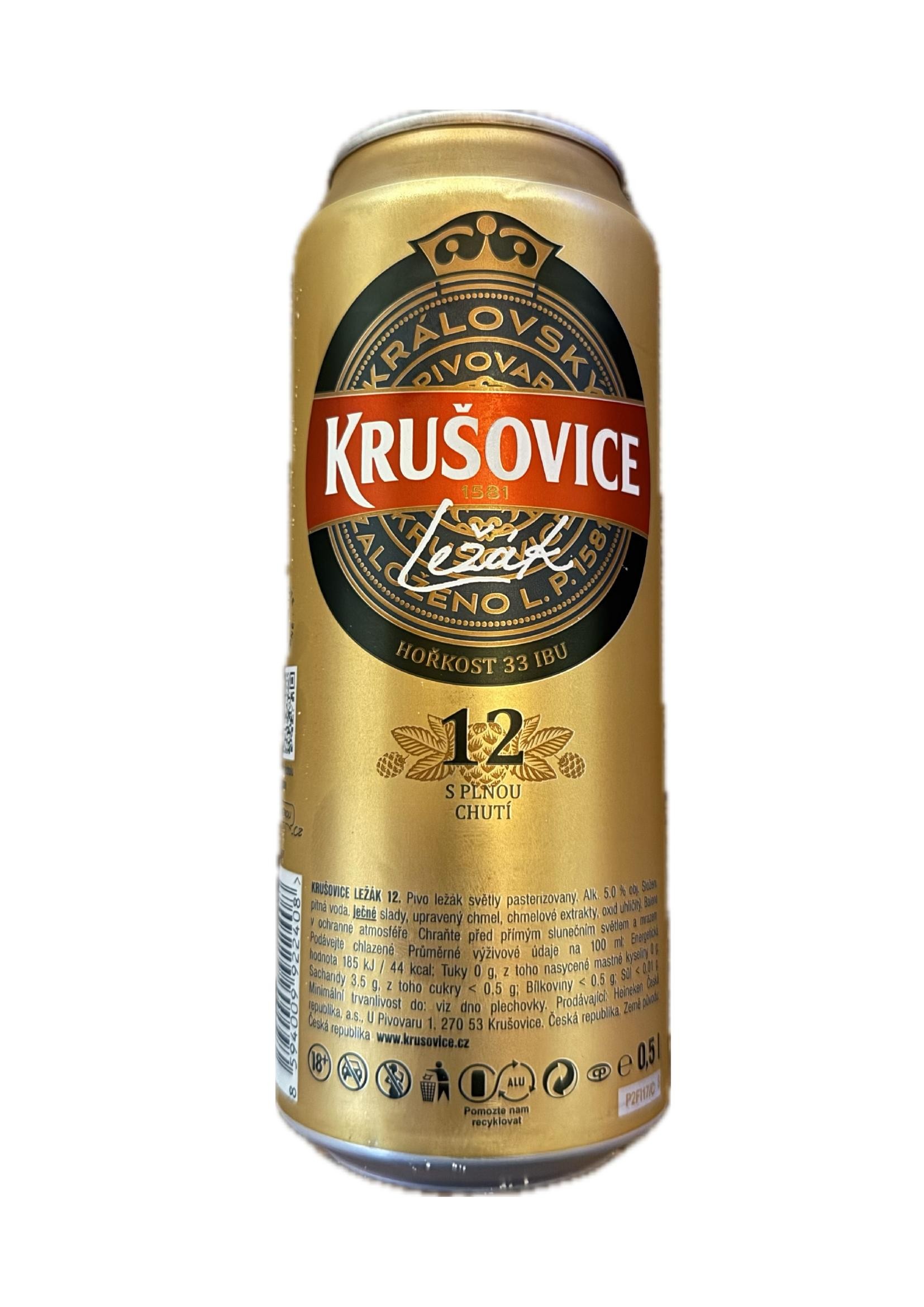
Half a litre remains a common standard draft size, but 0.3-litre measures and tasting pours are easy to find. Craft bars may use different glass sizes according to style. Compare the stated volume before comparing prices.
Prices shift quickly and vary by location, brewery and format, so this guide deliberately avoids a number that would soon become obsolete. Central landmark areas tend to cost more; neighbourhood pubs may be cheaper, but quality depends on turnover and care rather than postal code.
On a Czech menu, světlé means pale, tmavé dark, polotmavé amber/semi-dark, nealkoholické alcohol-free and řezané typically refers to a mixed pale/dark pour where offered. Ležák is a lager category; výčepní usually denotes a lighter-strength beer category under Czech rules.
Alcohol-free beer is no longer an afterthought
Czech breweries have invested heavily in alcohol-free and low-alcohol beer, and Prague pubs increasingly keep one on draft or in bottles/cans. Quality has improved enough that choosing nealko is not a punishment between 'real' beers.
If you need zero alcohol for medical, religious or driving reasons, inspect the label rather than assuming 'non-alcoholic' means absolute 0.0% in every product. Legal category limits and individual products differ. Many breweries now explicitly sell 0.0 variants, while others contain a small residual amount.
For drivers, the practical rule in Czechia is especially simple: do not plan to drink and drive. Public transport makes that unnecessary in Prague.
A sensible first Prague beer session
Start with one well-kept pale lager at a specialist pub rather than five random beers. Order a hladinka. Then, if the venue offers it and the bartender is not overwhelmed, try a šnyt or compare a 10° and 12° from the same brewery. Add food and water.
For a second stop, change the variable. Visit a small brewery or craft bar and taste a different producer or style. You will learn more from two contrasting venues than from a six-pub checklist where palate fatigue turns every glass into cold bitterness.
If you have a spare day, Pilsen completes the story at its source. If you stay in Prague, the city still offers enough lager culture to build a serious tasting without leaving the tram network.
The taste of Czech lager starts before fermentation
Czech lager is often discussed as though yeast and cold maturation alone explain it. The style begins earlier with pale malt, hop character, water, mash choices and a brewing tradition built around drinkability rather than maximal intensity. Saaz-type hops are historically important to Czech brewing, especially for their aromatic rather than aggressively bitter profile. Decoction mashing has also been closely associated with many Czech lager traditions, although individual breweries use different equipment and procedures.
Pilsner Urquell’s 1842 beer in Plzeň became the reference point for pale lager worldwide, but “Pilsner” outside Czechia now covers products made with very different ingredients and methods. Ordering a Czech světlý ležák therefore tells you more than asking for something merely labelled pilsner in another country.
The 10°, 11° and 12° numbers refer to original extract or degrees Plato-like strength before fermentation, not direct alcohol percentage. A 12° beer is generally fuller and often stronger than a 10°, but the relationship is not one-to-one. The final alcohol content depends on attenuation and recipe.
For a visitor, the practical lesson is to read the brewery and degree together. Two 12° lagers from different producers can taste markedly different because malt profile, hopping, fermentation, maturation and service all change the result. The number is a useful category, not a flavour guarantee.
Hladinka, šnyt and mlíko are serving styles, not three different beers
Czech draft culture gives foam an unusually visible role. A hladinka is the standard full pour with a substantial cap of wet, dense foam. A šnyt is a smaller quantity of beer beneath a larger foam head, traditionally useful when someone wants less volume while staying at the table. Mlíko is dominated by creamy wet foam and is consumed for its soft texture and sweeter impression. Exact proportions vary by pub and tapster; these are service conventions, not laboratory definitions.
What matters here is the difference between wet foam created as part of the pour and dry, collapsing foam dumped onto beer afterward. Proper foam protects the beer from rapid oxidation, carries aroma differently and changes mouthfeel. That is why a glass that looks “not filled to the rim with liquid” is not automatically short measure in the Czech context.
Different tap techniques also reveal the skill involved in service. The tapster controls flow, glass angle and foam formation; clean glassware and properly maintained lines matter as much as the theatrical one-handed pour. A celebrated tap cannot rescue stale beer or poor cellar practice.
Visitors do not need to order every named style. Start with a normal hladinka. Try a šnyt if you want a smaller serving or comparison. Order mlíko because you are curious about foam texture, not because social media says it is a secret local password. Czech beer culture is confident enough to survive being enjoyed without performance.
Tank beer is a logistics system before it is a quality slogan
Tankovna signage attracts visitors because “tank beer” sounds automatically superior. The actual idea is distribution and storage. Instead of arriving in ordinary kegs, beer is delivered into larger tanks, often held in replaceable inner bags or systems that isolate the beer from driving gas. A busy venue can therefore serve substantial volume while reducing some handling steps.
Freshness still depends on turnover, temperature, sanitation and competent service. A neglected tank system is not magically better than a perfectly handled keg. Conversely, a high-volume Czech pub with disciplined cellar practice can make tank service exceptionally consistent.
This is why brewery reputation and pub reputation are separate questions. The brewery produces the beer; the pub controls the final metres from storage to glass. Line cleaning, glass washing, pressure, temperature and tap technique can all alter what reaches the table.
When comparing pubs, look at turnover and specialization rather than décor. A place that sells enormous quantities of one lager may serve it in superb condition even if the room is visually ordinary. A photogenic “beer experience” with a dozen taps may be better for variety than for the freshest possible example of one brand. Decide which experience you want before choosing the venue.
Drink like a visitor who still has a day tomorrow
Czech beer is easy to underestimate because lager can taste soft, food is widely available and social drinking often unfolds over several smaller decisions rather than one obvious binge. The degree marking does not replace the alcohol-by-volume figure, and repeated half-litres add up quickly.
Alternate with water and eat. Tap water in Prague is safe, though a restaurant may charge for bottled or filtered water depending on its service policy. Public transport is excellent, so there is little reason to plan a car after a beer session. Czech law and enforcement around driving and alcohol are strict; visitors should not treat “one beer” as a safe driving rule.
Alcohol-free Czech beer has improved significantly and is widely available. Some pubs stock a brewery’s non-alcoholic lager, while others offer flavoured radlers or newer low-alcohol products. Asking for nealko is ordinary, not a social failure.
The best beer evening is the one in which you can still distinguish the third glass from the first. If flavour comparison is the goal, smaller pours, shared tastings or a slower pace produce more information than chasing a numerical pub count.
Beer with food: pair by salt, fat and acidity rather than prestige
Czech lager works unusually well with the national pub menu because bitterness, carbonation and dry finish cut through fat and salt. Roast pork, schnitzel, sausage, pickled cheese and fried dishes do not require a rare specialty beer to become coherent meals. A fresh pale lager is often the most historically and gastronomically sensible choice.
Darker lagers can add caramelized malt notes without becoming dessert beers. Wheat beer exists but is not the defining Czech pub default. Modern craft bars broaden the range with IPA, sour and strong styles, yet those should be approached as part of contemporary beer culture rather than proof that classic lager is old-fashioned.
The useful experiment is to taste the same beer before and during food. Bitterness and malt sweetness can feel different after salty or fatty bites. This turns dinner into a real sensory comparison without turning the table into a lecture.
One brewery name can appear in very different pubs
Brand signage tells you what beer a pub sells, not what kind of pub it is. The same major Czech lager can appear in a century-old hospoda, a modern restaurant, a sports bar or a high-volume tourist venue. Service quality and atmosphere can differ more than the liquid’s recipe.
That is why choosing by brewery logo alone is unreliable. Look at the room, menu, turnover and tap setup. Decide whether the goal is classic pub culture, food, a technically excellent pour, brewery variety or late-night social energy.
This also avoids a false opposition between “tourist” and “local.” A central pub can serve residents and visitors well; a residential pub can be mediocre. Evaluate the actual operation rather than using location as a moral category.
Fresh lager has a short journey from cellar to glass
The final metres matter disproportionately. Beer that left the brewery in excellent condition can lose quality through warm storage, dirty lines or poorly rinsed glassware. A good pub manages temperature, turnover, sanitation and serving technique as one system.
Glass preparation is visible to customers. A properly cleaned beer glass wets evenly and lets foam behave predictably. Grease or detergent residue can destroy head retention. Busy Czech pubs often rinse glasses immediately before pouring, both for cleanliness and temperature control.
This is why recommendations should name pubs cautiously and freshness flags should be maintained. Staff, ownership and cellar practice can change. The evergreen lesson is process: high turnover, clean equipment and competent pouring matter more than a decorative tap handle.
Frequently asked questions
What do 10°, 11° and 12° mean on Czech beer?
They refer to original wort extract, traditionally measured in degrees Plato, not alcohol percentage. A 12° lager is nowhere near 12% ABV.
Why does Czech beer have so much foam?
Dense wet foam is an intentional part of Czech service. It protects the beer and changes texture and aroma; different pouring styles use different beer-to-foam ratios.
What is hladinka?
Hladinka is the classic Czech draft pour: a full glass of beer under a substantial cap of creamy wet foam.
Is Pilsner Urquell brewed in Prague?
No. It is brewed in Plzeň (Pilsen), where the first batch was produced in 1842. Prague has many pubs that serve it.
What is tank beer?
It is beer served from a large tank system rather than individual kegs. The system can support freshness and high turnover, but hygiene and pouring skill still matter.
Can I find alcohol-free beer in Prague pubs?
Yes. Alcohol-free beer is widely available and increasingly common on draft. Check the specific product if you require true 0.0% alcohol.
Sources & further reading
- VisitCzechia — Beer and Breweries — CzechTourism / VisitCzechia
- Pilsner Urquell — Brewery Tour — Plzeňský Prazdroj / Pilsner Urquell
- VisitCzechia — Gastronomy — CzechTourism / VisitCzechia
- Prague City Tourism — Beer culture — Prague City Tourism