
Explore Prague
Kingdom Come: Prague & Bohemia
A reality-first guide to the Bohemian places behind Kingdom Come: Deliverance: what existed in 1403, what still survives, what changed later, and how to visit Rataje, Sázava, Talmberk, Kutná Hora and Trosky from Prague.
Kingdom Come: Deliverance is rooted in real Central Bohemian geography, but the games are historical reconstructions rather than digital scans of the modern landscape. Rattay corresponds to Rataje nad Sázavou; Talmberg to Talmberk; Sázava is a real monastic settlement; Kutná Hora was a major medieval silver city; and Trosky is a real late-medieval castle in Bohemian Paradise. The useful way to visit these places is to separate documented history, surviving fabric and game reconstruction—and to treat them as several distinct day-trip regions rather than one giant “Kingdom Come route.”
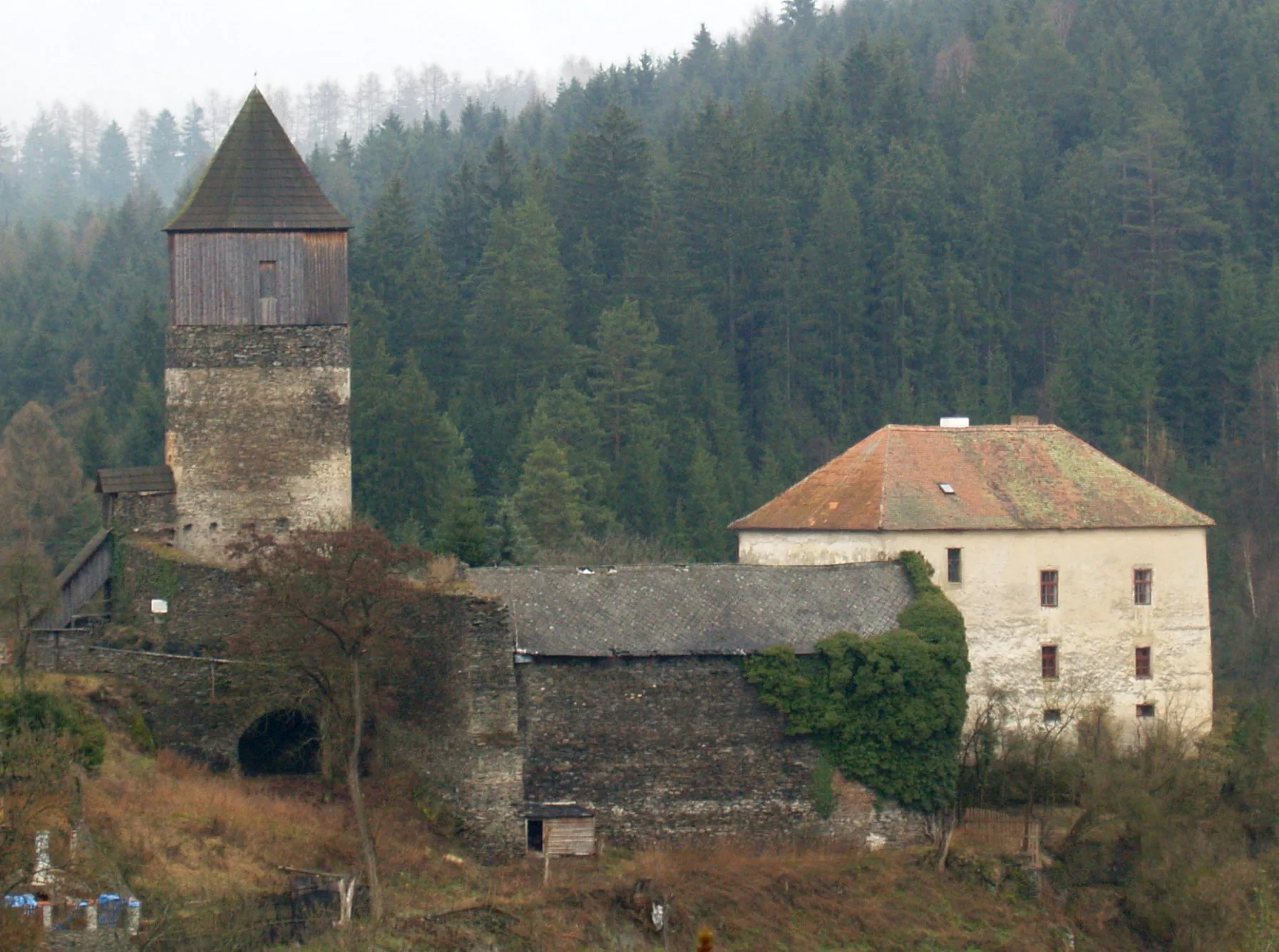
The useful answer: Kingdom Come's Bohemia is real geography, not a preserved 1403 theme park
The strongest historical pleasure in Kingdom Come: Deliverance is not discovering that every doorway is “accurate.” It is realizing that a surprising amount of the game's geography begins with actual places. Rattay is Rataje nad Sázavou. Talmberg is Talmberk. Sázava is a real monastery settlement on the river. Kutná Hora grew rich from silver and became one of medieval Bohemia's most important royal towns. Trosky still raises its two unmistakable towers above the landscape of northern Bohemia. Those correspondences are real enough to travel to, but they should not be confused with a claim that the modern sites—or the game maps—freeze the year 1403.
Three layers need to stay separate. The first is documented medieval history: charters, archaeology, architectural dating and political events. The second is what physically survives now, often after fires, abandonment, Baroque rebuilding, nineteenth-century changes and modern conservation. The third is game reconstruction: a designed environment that must compress distance, fill gaps in the evidence and serve story, navigation and combat. When those layers are kept apart, the comparison becomes more interesting rather than less. A ruined wall can tell you where a castle stood without telling you the exact colour of its 1403 interior; a surviving tower can preserve a powerful silhouette while containing later alterations.
For a Prague-based visitor, the real locations also divide naturally into separate landscapes. Rataje, Sázava and Talmberk form a Central Sázava cluster. Kutná Hora is its own major historic city. Trosky belongs to Bohemian Paradise farther north. Seeing all of them as one checklist produces more transit than understanding. The better route follows the history as well as the map.
Bohemia in 1403: a kingdom under pressure
The year 1403 is not a decorative date. It sits inside a struggle over royal authority. Wenceslaus IV, king of Bohemia, had been taken captive for a second time in 1402 during conflict involving his brother Sigismund and factions of the Bohemian nobility. Research from Charles University's Institute of Czech History describes 1402–1403 as the period in which Sigismund provisionally governed the Kingdom of Bohemia as administrator while Wenceslaus was held. That political instability matters because the game's world of local lords, shifting loyalties and armed insecurity is set against a genuine crisis of authority.
That does not turn every fictional raid, conversation or personal motive into a documented episode. Medieval political history works at different scales. We can establish that rulers and noble factions fought for control, that castles and fortified towns mattered, and that the countryside of Central Bohemia was embedded in those conflicts. We usually cannot verify the daily biography of an invented protagonist or assume that a dramatic game sequence reproduces a specific event exactly. The safest reading is contextual: the designers place personal fiction inside a period whose larger power struggle is real.
The date is also useful when looking at Prague. Charles IV had died in 1378, so the great fourteenth-century expansion of the capital was already part of living memory. His New Town existed; the stone bridge now called Charles Bridge was standing; work on St Vitus Cathedral belonged to an ongoing Gothic project; and Prague remained a royal and ecclesiastical centre. Yet the skyline a visitor sees today contains major later layers. Reading “Prague in 1403” therefore requires subtraction as much as recognition.
Prague in 1403: what a Kingdom Come player should mentally subtract
Modern Prague is an unusually rich place to understand the political and urban world behind Kingdom Come, even though the first game's map does not turn the capital itself into its main playable landscape. The medieval city already consisted of distinct urban units around the castle, Old Town, Lesser Town and the expansive New Town founded by Charles IV. The bridge linked the banks and royal routes connected civic, ecclesiastical and courtly spaces. That gives today's visitor a genuine medieval framework to walk.
But a great deal of the visual Prague people instinctively call “old” is not 1403 Prague. Baroque church domes, palace façades, post-medieval rebuilding, nineteenth-century boulevards and restorations, twentieth-century infrastructure and modern tourism all occupy the same frame. Even monuments with medieval origins often contain fabric from several centuries. The point is not to strip those later layers of value. It is to avoid using today's appearance as proof of what a game reconstruction should look like.
If you want one practical exercise, walk from Prague Castle toward the Old Town while asking two questions: which part of the urban structure is medieval in origin, and which part of the visible surface is later? The exercise trains exactly the kind of historical vision needed at Rataje, Sázava and Talmberk. Place continuity can be strong even where building continuity is partial.
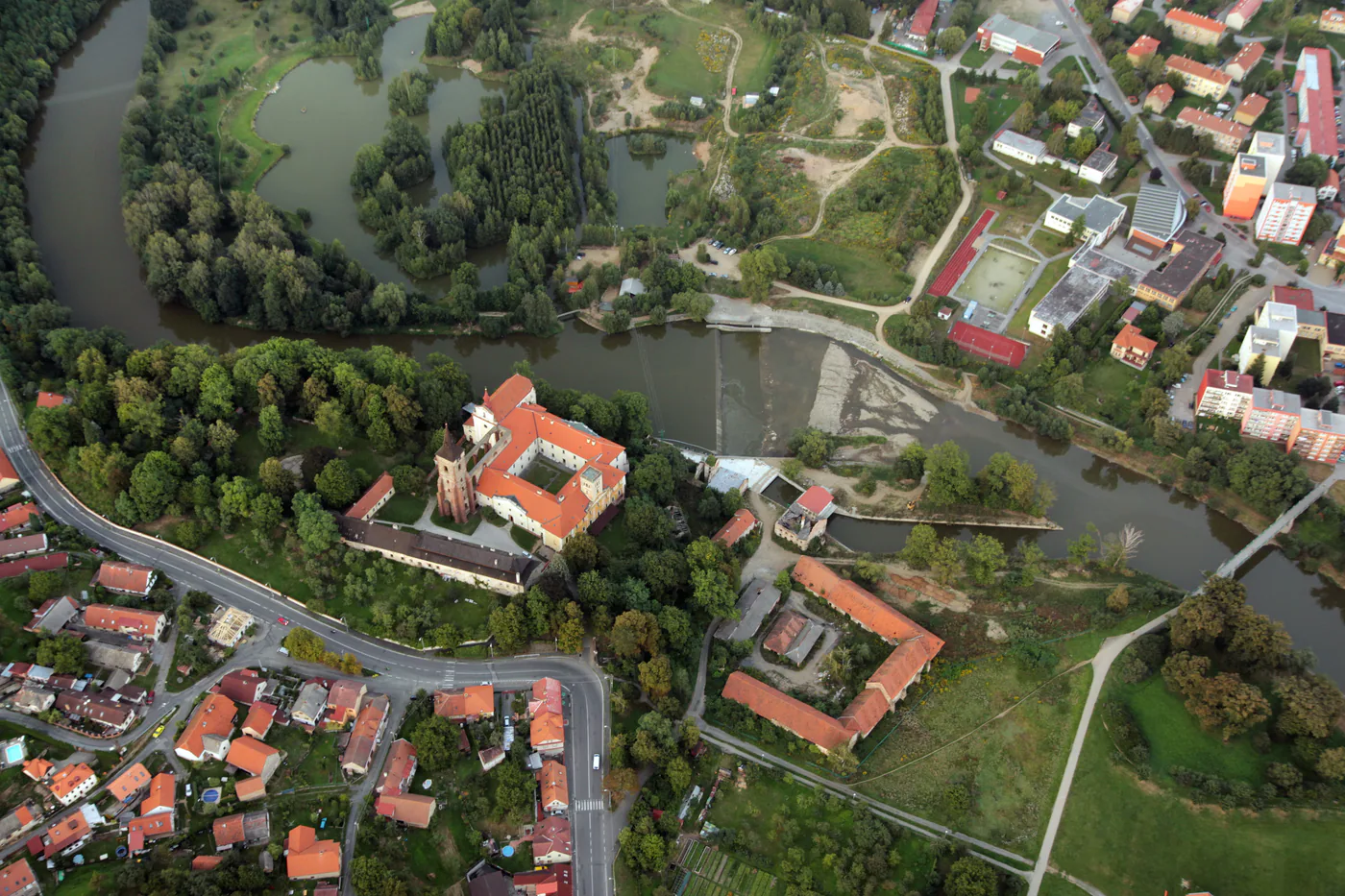
Rataje nad Sázavou: Rattay is a real town
For many players, Rataje nad Sázavou delivers the clearest real-world reveal. The game's Rattay is not a fantasy name pasted onto an invented settlement. The real town stands above the Sázava valley and has a documented medieval history. The municipal history records medieval lords associated with the site and identifies Pirkštejn, the lower castle, as a fourteenth-century foundation linked with the Lords of Lipá. Regional tourism describes Rataje as a “town of two castles,” which is a useful reminder that the fortified landscape was more complicated than a single keep.
The strongest physical anchor is Pirkštejn. Its cylindrical tower and compact lower-castle position remain immediately legible. That makes it a better comparison point than a vague claim that “the whole town looks just like the game.” Streets, houses, roofs, surfaces and vegetation have all changed. Pirkštejn itself also acquired later functions and alterations; sources note its conversion to a rectory in the early eighteenth century. The continuity is therefore topographic and architectural in part, not total.
On site, start with the relationship between slope, castle and settlement. The game can teach your eye to notice why a fortified position above a river valley works, but the real place teaches what the game necessarily simplifies: distances are lived rather than clicked through, sightlines depend on modern growth, and centuries of ordinary use have continued after the medieval moment. That tension is the point of the visit.
Sázava: a monastery landscape with a much longer life than the game
Sázava matters because it turns the comparison away from castles and toward religious institutions. The National Heritage Institute traces the monastery's origins to the first half of the eleventh century, when a community formed around the hermit Procopius and developed into a Benedictine monastery. Its early association with Old Church Slavonic liturgy and learning makes Sázava significant far beyond a game map. By 1403 the institution already carried centuries of history.
The modern complex cannot be read as an untouched medieval monastery. Gothic construction survives, but the site also bears Baroque and later secular transformations. The monastery was abolished under Joseph II in 1785; parts of the complex were later adapted as a château, and nineteenth-century work changed its appearance again. Recent conservation and interpretation explicitly present multiple building phases. This is a perfect case where “the real location” is true while “what you see is exactly what Henry would have seen” is false.
For visitors, the most rewarding comparison is spatial. Notice the monastery's position relative to the river and settlement, the surviving Gothic elements, and the scale of the precinct. If an exhibition or guided route discusses archaeological evidence, treat that evidence as the bridge to the medieval complex. Modern roofs or later façades are not mistakes in the landscape; they are chapters added after the period the game reconstructs.
Talmberk: the real castle survives as archaeology and ruin
Talmberk is one of the places where expectations should be reset before arrival. The National Heritage Institute's archaeological record places the first evidence for the castle around the end of the thirteenth century and documents surviving structural remains, including elements of the fortification and bergfried. The site is therefore genuinely medieval, but the modern experience is a ruin integrated into a living village rather than a complete castle waiting behind a gate.
That difference makes Talmberk especially useful for understanding reconstruction. A game needs walls at functional height, doors, interiors, circulation routes and readable boundaries. Archaeology may instead preserve foundations, fragments, earthworks and a tower remnant from which specialists infer phases and relationships. Reconstructed completeness is not necessarily deception; it is a hypothesis made visible, combined with design decisions where evidence is incomplete. What matters editorially is not to present every reconstructed detail as an archaeological fact.
Visit for the terrain and surviving fabric rather than for a one-to-one screenshot hunt. Look at how the castle occupies the slope, where masonry interrupts later village fabric, and how little material is needed to reveal the logic of a fortified site. Talmberk is less spectacular than a restored show castle, but intellectually it is one of the best real-world companions to the game because the gap between evidence and reconstruction is visible.
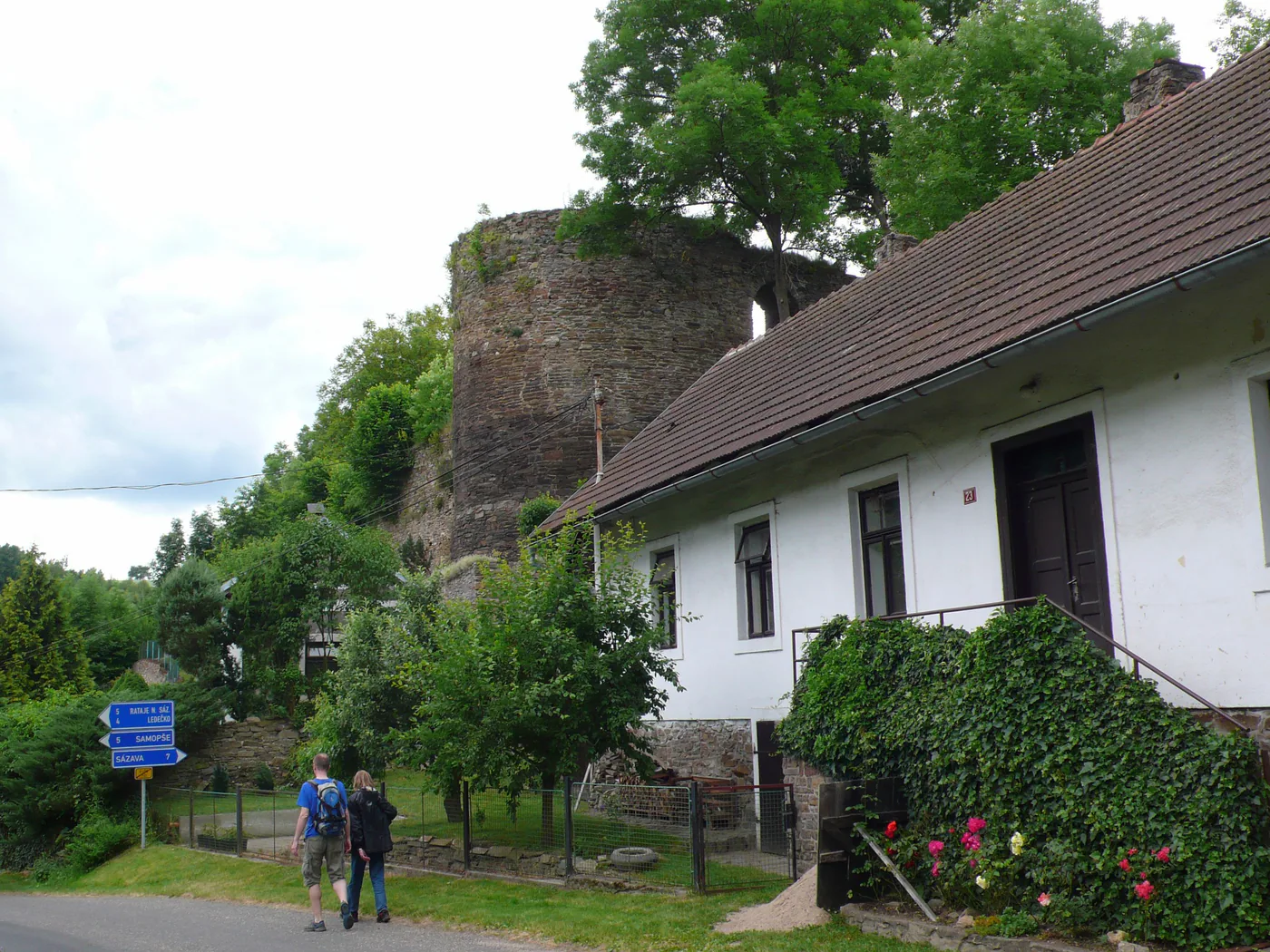
Kutná Hora: silver explains why this city mattered
Kutná Hora is not important because a game chose it; a game chose it because it was important. UNESCO describes the town as a product of rich silver exploitation from the end of the thirteenth century and notes that it became a royal city in the fourteenth century, endowed with monuments expressing extraordinary prosperity. That economic base is the key to reading the place. Mining, minting, royal power, religious patronage and urban growth belong to the same system.
The surviving city is also a warning against flattening centuries. St Barbara's Church is one of the great late-Gothic monuments associated with the mining town, while Sedlec's former Cistercian church received major Baroque-Gothic restoration in the early eighteenth century. The historic centre combines Gothic and Baroque fabric. In other words, a modern walk through Kutná Hora is not a transparent window onto one year; it is a preserved urban structure carrying layers of later architecture.
For a Kingdom Come-focused visit, give the city more time than a quick photo stop. Read the topography between historic centre, mining-related sites, the Italian Court and major churches. Ask where wealth came from and how it was converted into architecture and royal administration. That gives the game's urban setting an economic logic: a prosperous medieval city is a network of labour, institutions and resources, not just a denser collection of picturesque buildings.
Trosky and Bohemian Paradise: landscape as a historical actor
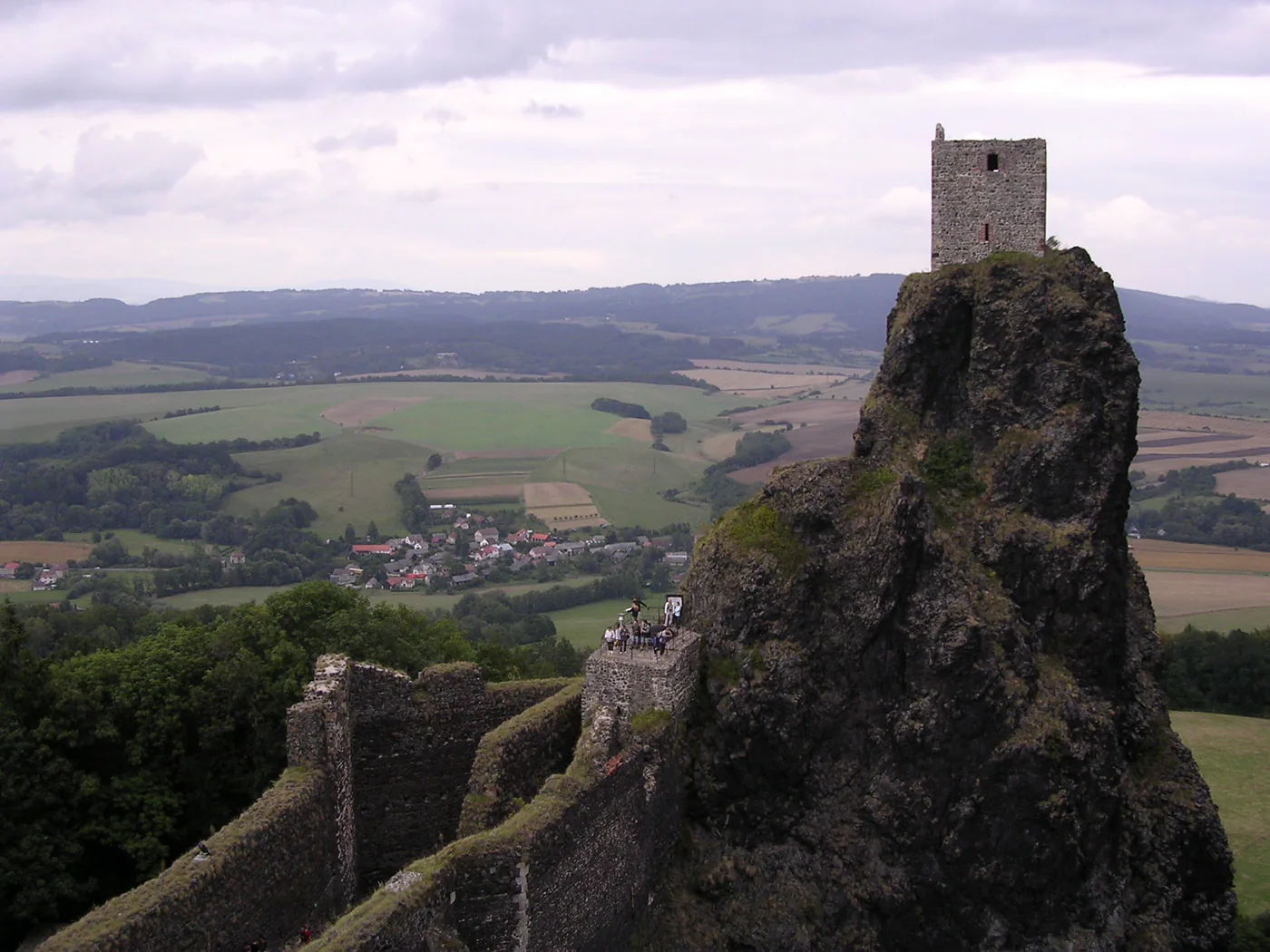
Trosky belongs to a different geographic chapter. The castle rises on two volcanic basalt plugs in the landscape now known as Bohemian Paradise, and its twin-tower silhouette is so distinctive that geography itself becomes the monument. National Heritage Institute archaeological material documents the medieval castle and its development; modern Czech tourism material also connects the region with Kingdom Come: Deliverance II. This is not the Sázava valley transplanted north. It is a separate landscape with a different visual grammar.
That matters for route planning and for historical interpretation. Castles were not generic objects placed on interchangeable hills. Their siting responded to terrain, routes, visibility, lordship and local geology. Trosky makes that obvious: the rock formation dictates the form in a way a flat diagram cannot communicate. The game can compress terrain for play, but a real visit restores scale, gradient and weather to the story.
Do not combine Trosky casually with Rataje, Sázava and Talmberk just because all appear in the same franchise. From Prague, Bohemian Paradise works better as its own outing. If your interest is primarily the first game's Central Bohemian geography, prioritize the Sázava cluster. If your interest extends to the sequel's landscapes and dramatic castle sites, give Trosky a separate day or fold it into a broader Bohemian Paradise trip.
What the games reconstruct—and why exactness is the wrong test
Historical games solve a problem that monuments cannot solve by themselves: they have to make an environment complete enough to inhabit. A ruin does not supply its missing roof. A charter does not specify every market stall. Archaeology can identify walls without recovering every furnishing choice. Developers therefore work along a spectrum: some features are tightly constrained by surviving evidence; some are plausible reconstructions based on comparable sites and period practice; others are design decisions required by narrative, gameplay or readability.
Scale is another source of change. Real travel between settlements consumes time, while a playable map must preserve rhythm. Streets and landscapes may be compressed, sightlines emphasized and routes simplified. Interiors may be made more legible, population patterns adjusted and events concentrated. None of that should be silently promoted as “what 1403 definitely looked like.” At the same time, dismissing the whole environment because it is not a literal survey misunderstands what reconstruction can do: it can make relationships of space, hierarchy, material culture and landscape intuitive.
A strong historical comparison therefore asks graded questions. Is the place real? Is this structure medieval in origin? Which fabric survives from the relevant period? What was rebuilt later? Which game element is documented, which is plausible, and which is clearly narrative? Those questions produce a richer answer than a binary “accurate/inaccurate” score.
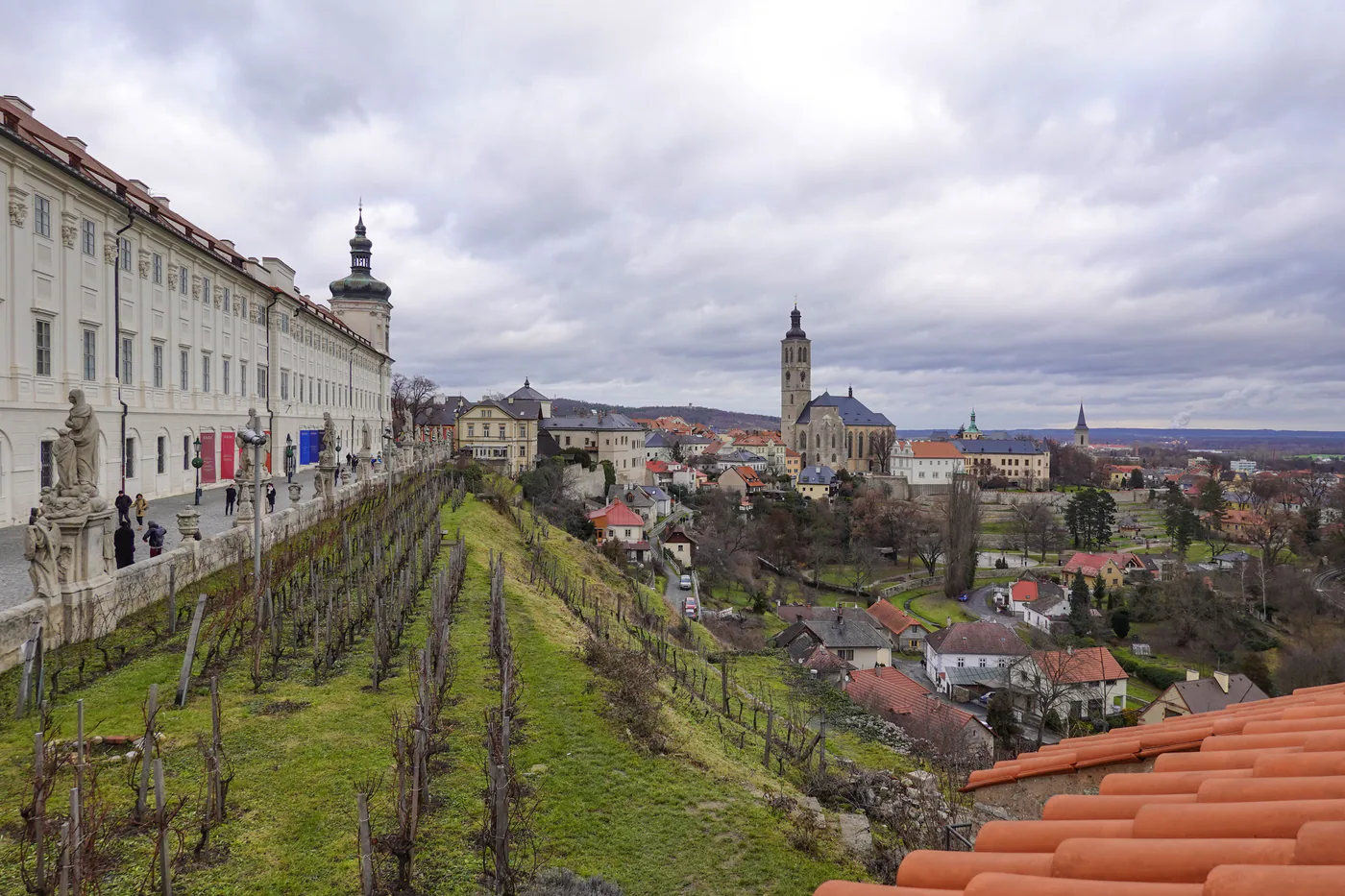
How to visit the real locations from Prague
Think in three trips, not one. The Central Sázava trip is the most directly associated with the first game's geography: Rataje nad Sázavou, Sázava and Talmberk sit in the same broader region, but local connections and walking distances still need current timetable checking. A car makes multi-stop sequencing easier; public transport can work if the day is built around actual connections rather than an imagined continuous tourist shuttle. Rural ruins also demand better footwear and more weather tolerance than central Prague.
Kutná Hora deserves a separate day for most visitors. It has enough historical substance to stand independently of Kingdom Come, and treating it as a rushed franchise stop wastes the reason it became important in the first place. Focus on the medieval urban core, silver economy and major monuments; then use the game as an interpretive layer rather than the only reason to look. Check current opening hours for interiors and mining-related tours close to your visit, because access can be seasonal or timed.
Trosky and Bohemian Paradise are a third outing. The region rewards landscape time, so squeezing it between distant Central Bohemian stops defeats its main strength. If you have only one spare day, choose according to the question you want answered: Rataje for the strongest Rattay recognition, Kutná Hora for the richest medieval city context, or Trosky for landscape and castle drama. That is a choice among experiences, not a ranking of historical importance.
A field method for players: compare one physical anchor at a time
Screenshot hunting can be fun, but it becomes historically useful when each comparison is tied to one physical anchor. At Rataje, use Pirkštejn's tower and the castle's relationship to the slope. At Talmberk, use surviving fortification remains and terrain. At Sázava, use the monastery precinct and identifiable Gothic fabric. At Kutná Hora, use the medieval street structure and buildings with secure dating rather than every picturesque façade. At Trosky, use the twin basalt peaks and castle masses.
Then add a second question: what happened after 1403? A rectory conversion, Baroque church rebuilding, nineteenth-century adaptation or modern conservation may explain why the real site diverges from the game. This prevents a common mistake in heritage travel—assuming difference means the reconstruction is wrong, or similarity means every visible detail is medieval. Continuity and change can exist in the same wall.
Photographs are most informative when the caption records that distinction. Instead of “the exact castle from the game,” write “Pirkštejn at Rataje: a medieval-origin lower castle whose surviving tower anchors the game's Rattay comparison; the complex was altered in later centuries.” That sentence preserves the excitement without flattening the history.
What to prioritize if Kingdom Come is your reason for leaving Prague
If you want the strongest single recognition moment, Rataje is the cleanest starting point because the name, settlement and Pirkštejn anchor connect directly. If your interest is how historians and designers turn fragmentary evidence into a complete environment, add Talmberk. If you want a site whose significance reaches far beyond the game, Sázava provides early Czech religious history and Kutná Hora provides the economic and urban scale of a medieval royal city. Trosky adds a landscape-driven castle experience in a different region.
The larger payoff is conceptual. Kingdom Come can make rural Central Bohemia legible to visitors who might otherwise remain inside Prague's monumental centre. The real sites then correct the game in productive ways: they show later centuries, incomplete survival, ordinary modern life and distances that no game map can fully reproduce. You leave with fewer claims of exactness but a much stronger sense of how historical geography persists.
That is the right relationship between game and place. The game supplies curiosity and a provisional mental map. Archival history, archaeology and the surviving landscape supply constraints. Travel supplies scale. None is sufficient alone, and their disagreements are often more revealing than their matches.
From castle walls to ordinary life: what the landscape can and cannot tell you
The franchise's historical appeal depends as much on ordinary material life as on dynastic politics: roads, mills, farms, taverns, workshops, clothing, food and the practical distance between settlements. Real heritage sites preserve those categories unevenly. Stone fortifications survive better than timber outbuildings; churches and castles attract more documentation than temporary market structures; elite objects enter collections more readily than many traces of everyday labour. A walk through the real landscape therefore has an evidence bias. The things that look most permanent today were not necessarily the things that occupied most of a medieval person's attention.
This matters when a game seems visually fuller than a ruin. A complete settlement needs conjectural houses, fences, yards, storage, animals and working spaces. Archaeology and comparative research can constrain those choices, but no surviving wall can certify every prop. The historically responsible response is neither to accept every detail nor to dismiss reconstruction as fantasy. Ask what kind of evidence could support the element: excavated footprint, standing fabric, written record, period image, comparable building, experimental archaeology or design inference.
The Sázava valley is especially good for restoring the non-monumental scale. Between named sites are river bends, gradients, fields, woodland and roads. Those are not background decorations. They shaped movement, communication, agriculture and defensive visibility. Even when a modern road follows a different line, travelling through the terrain makes clear why medieval settlements and strongpoints were not isolated level-design nodes.
A source hierarchy for checking Kingdom Come claims
Not every “real Kingdom Come location” claim deserves the same confidence. Start with monument authorities, archaeology records, municipal archives and established heritage institutions for dating, surviving fabric and documented historical ownership. UNESCO is particularly useful for the broad significance and protected urban fabric of Kutná Hora and Prague. Regional and national tourism organizations are useful for current visitor context and for confirming that a place is publicly presented in relation to the games, but promotional language should not be treated as a substitute for archaeological evidence.
Fan maps, videos and forums can be excellent discovery tools, especially for locating viewpoints or noticing visual correspondences, but they sit lower in the evidence chain. A screenshot match can show resemblance; it cannot by itself date a wall. Likewise, a local legend may be culturally meaningful without being a documented event. When claims conflict, prefer the institution responsible for the monument or the scholarly record, and state uncertainty rather than forcing a clean answer.
Repeating the same unsourced game-history claim does not make it established. The real sites are interesting enough without that inflation. Pirkštejn does not need an invented “exact room” to be compelling; Talmberk does not need every game building to have a proven footprint; Sázava's documented monastic history is stronger than any vague claim of perfect visual accuracy.
If you have two days: build a history-first Kingdom Come extension
With two days beyond Prague, avoid spending both days in transit-heavy screenshot collecting. Day one can be a Central Sázava day centred on Rataje, with Sázava or Talmberk added according to current transport, opening conditions and how much walking you want. The purpose is comparison: one intact-enough visual anchor at Pirkštejn, one monastic landscape at Sázava, or one archaeological ruin at Talmberk. Those three site types teach more together than three superficially similar castle stops.
Day two works well in Kutná Hora because it changes scale completely. Instead of a small fortified town or rural castle, you encounter a medieval urban economy powered by silver and linked to royal authority. The city's UNESCO-listed fabric gives enough substance for a full day even if you stop thinking about the game entirely. That independence is a useful quality test for heritage travel: the historical place should remain meaningful after the franchise reference is removed.
Choose Trosky instead of Kutná Hora when landscape and the sequel are your stronger interests, not as an add-on after a rushed Sázava circuit. Whichever route you choose, check current opening days, seasonal access and connections shortly before departure. The stable facts in this guide are historical; the timetable that makes a three-stop day possible is not.
Sources & further reading
- Historie — Městys Rataje nad Sázavou
- Pirkštejn Castle — Central Bohemia Tourist Board
- Talmberk – zřícenina hradu a obec — National Heritage Institute (NPÚ)
- Jeskyně sv. Prokopa a objevený středověký dům v klášteře Sázava se zpřístupní veřejnosti — National Heritage Institute (NPÚ)
- Kutná Hora: Historical Town Centre with the Church of St Barbara and the Cathedral of Our Lady at Sedlec — UNESCO World Heritage Centre
- Trosky – hrad, k. ú. Troskovice — National Heritage Institute (NPÚ)
- Kingdom Come: Deliverance II – discover the real Czech locations — CzechTourism / VisitCzechia
- Bruderzwist im Hause Luxemburg: Politika uherského krále Zikmunda Lucemburského v Českém království před rokem 1419 — Charles University, Faculty of Arts
- Historic Centre of Prague — UNESCO World Heritage Centre
- History of Prague Castle — Prague Castle Administration
- Rataje nad Sázavou — CzechTourism / VisitCzechia
- Letní novinky v národní kulturní památce Klášter Sázava — National Heritage Institute (NPÚ)
- Talmberk Castle — CzechTourism / VisitCzechia