
Explore Prague
Prague Neighborhoods
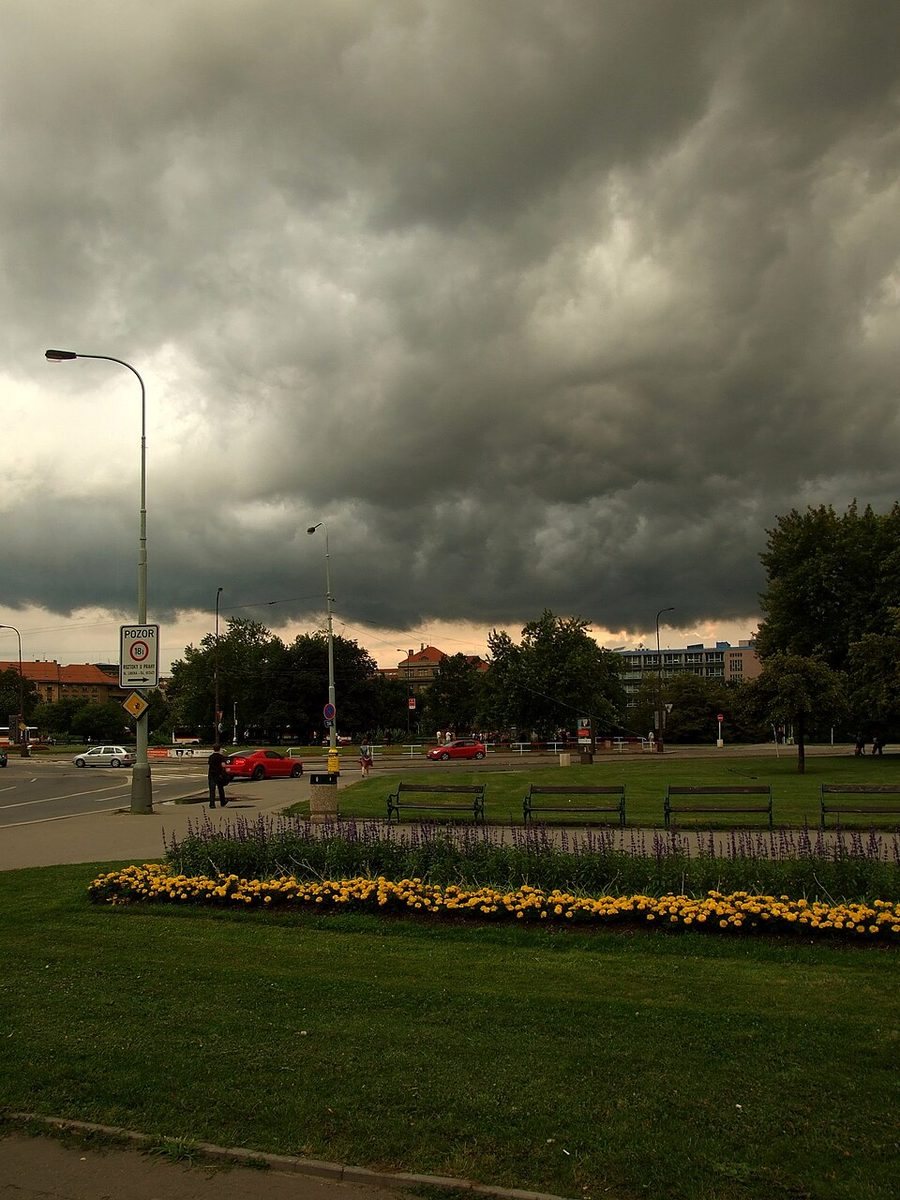
Prague looks compact on maps, yet its districts are far from culturally uniform. A ten-minute tram ride can move you from medieval lanes to a 19th-century apartment grid, from former factories to interwar villas, or from a nightlife district to a residential square where the main event is the Saturday market. Choosing where to stay therefore changes more than commute time. It changes what Prague looks like when you step outside in the morning. The most useful distinction is not 'touristy versus authentic'. Real residents live in central districts; visitors stay in outer ones; neighbourhoods change by block and by hour. A better question is what kind of urban environment you want around your hotel: historic monuments, late-night bars, parks, design and galleries, restaurants, quiet streets, or transport connections. This guide uses that practical lens while explaining how each area acquired its character.
For first-time lodging, Old Town and Lesser Town put major sights within walking distance but cost more and receive the heaviest visitor traffic. Vinohrady is the strongest all-round residential base for cafés, restaurants and easy metro/tram access. Žižkov is hillier, denser and more pub-oriented. Karlín mixes 19th-century streets with offices and post-2002 redevelopment. Holešovice is useful for contemporary art, converted industrial buildings and access to Letná. Smíchov is a major transport and commercial district with an industrial past, while Dejvice offers broad planned streets, modern architecture and a calmer base near the airport side of the city. Prague's public transport makes staying outside the historic core much easier than many first-time visitors assume.
How Prague neighborhoods differ
Prague grew through the merger and expansion of historically separate towns, villages and planned suburbs. That history still shows. Old Town and Lesser Town retain medieval street patterns. Vinohrady and Žižkov expanded rapidly in the 19th century. Dejvice carries the geometry of interwar urban planning. Karlín and Smíchov reveal industrial development and subsequent redevelopment. Holešovice mixes port, railway, market and factory heritage with cultural reuse.
Transport reduces the penalty for staying outside Prague 1. Metro lines A, B and C, a dense tram system and frequent night services make many inner neighbourhoods functionally central. A hotel 3 kilometres from Old Town Square can be easier to reach than a property technically inside the historic centre but up a steep hill or far from a useful stop.
When comparing accommodation, check the exact stop and walking gradient, not only the district name. 'Prague 2' can mean a quiet residential street or an intensely busy road; 'Žižkov' can mean a five-minute walk from the main station or a steep climb toward Vítkov.
Old Town: maximum proximity, minimum separation from tourism
Old Town is the obvious base for travellers who want the Astronomical Clock and Old Town Square close at hand, with Charles Bridge and Josefov also within an easy walk. Early mornings are its greatest advantage: you can see streets before day-trip crowds arrive and return to your room easily between sightseeing blocks.
The trade-off is price, noise and restaurant selection distorted by visitor traffic. A street that feels romantic at 08:00 may carry groups, pub crawls or late-night voices twelve hours later. Rooms facing internal courtyards can be much quieter than those above pedestrian routes.
Old Town suits short first visits, travellers with limited mobility who prioritise central sights, and people who value atmosphere over neighbourhood routine. It is less compelling if your idea of Prague involves regular markets, parks, local gyms or inexpensive everyday dining.
Lesser Town: historic streets with hills and diplomatic quiet
Malá Strana sits beneath Prague Castle and beside the Vltava. Its Baroque palaces, gardens, Nerudova Street and Kampa make it one of the city's most visually distinctive areas. Compared with Old Town, parts of Lesser Town become remarkably quiet after sightseeing hours because government offices, embassies and institutions occupy large buildings.
Topography is the hidden variable. Streets climb steeply toward Hradčany, and cobbles can be tiring with luggage. Staying near Malostranské náměstí gives strong tram connections; staying high near the Castle delivers atmosphere but may mean repeated climbs.
For couples and architecture-focused visitors, it is an excellent base. For nightlife, supermarkets or late everyday services, other districts provide more depth.
Vinohrady: the easiest residential recommendation
Vinohrady takes its name from vineyards once spread across the slopes east of the historic centre. Much of the present district was built in the late 19th and early 20th centuries, producing broad streets, decorated apartment houses, squares and parks. Náměstí Míru forms one urban centre; Jiřího z Poděbrad forms another.
For visitors, the attraction is balance. Metro line A reaches the centre quickly, trams run in several directions, and the district supports everyday urban life: bakeries, restaurants, wine bars, cafés, parks and food shopping. You can spend the day sightseeing in Prague 1 and return to streets that are active without feeling built around monuments.
Vinohrady is particularly strong for longer stays and repeat visitors. Prices are no longer low, and parts of the district are as internationally oriented as central Prague, so avoid selling it as undiscovered local territory. Its value is functionality and architectural quality.
Žižkov: steep streets, pubs and a complicated reputation
Žižkov developed from the area once called Královské Vinohrady I and was renamed in 1878. Historically associated with working-class housing, pubs, political irreverence and writers such as Jaroslav Hašek and Jaroslav Seifert, it acquired one of the city's strongest neighbourhood myths.
Modern Žižkov is not one thing. Lower streets near the centre have undergone substantial redevelopment and price pressure. Upper Žižkov retains dense apartment blocks, small pubs and steep climbs toward Vítkov and the television tower. New construction continues to alter former railway and industrial land.
Stay here if you like evening street life, independent bars and being close to the centre without sleeping inside it. Check elevation before booking. A 'ten-minute walk' can mean a serious hill, especially with suitcases.
Karlín: a flood changed the direction of the district
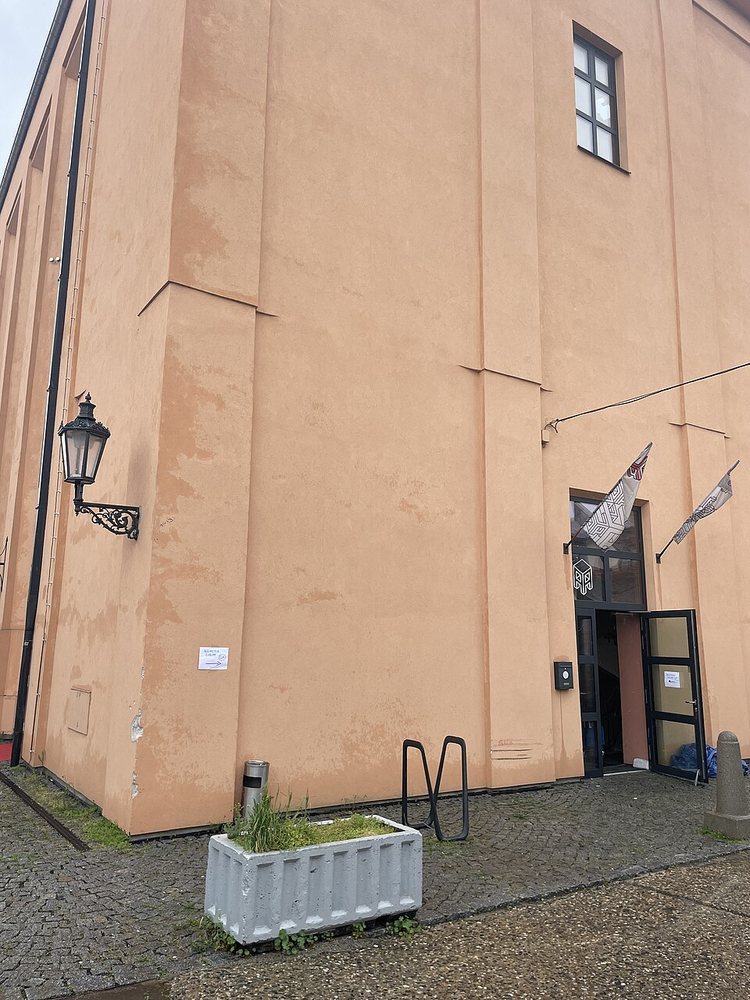
Karlín was one of Prague's early planned industrial suburbs, laid out outside the old city and later filled with factories, workshops, workers' housing and major infrastructure. The catastrophic 2002 flood damaged the district heavily. Reconstruction then accelerated investment that was already beginning to change its economy.
Today Karlín mixes restored 19th-century blocks, new offices, restaurants and large redevelopment projects. Křižíkova Street and Karlínské náměstí give it a strong internal spine, while metro line B puts the Old Town within minutes.
The transformation is often described as a simple success story, but rising property values and changing business patterns are part of it too. The district shows post-industrial Prague reinventing itself rather than a preserved slice of one past.
Holešovice: factories, galleries and a district still changing
Holešovice occupies a Vltava bend north of the centre and developed around industry, railway infrastructure, markets and port functions. Former industrial buildings now hold studios, cultural venues, cafés and offices, while large residential and commercial projects continue to reshape the district.
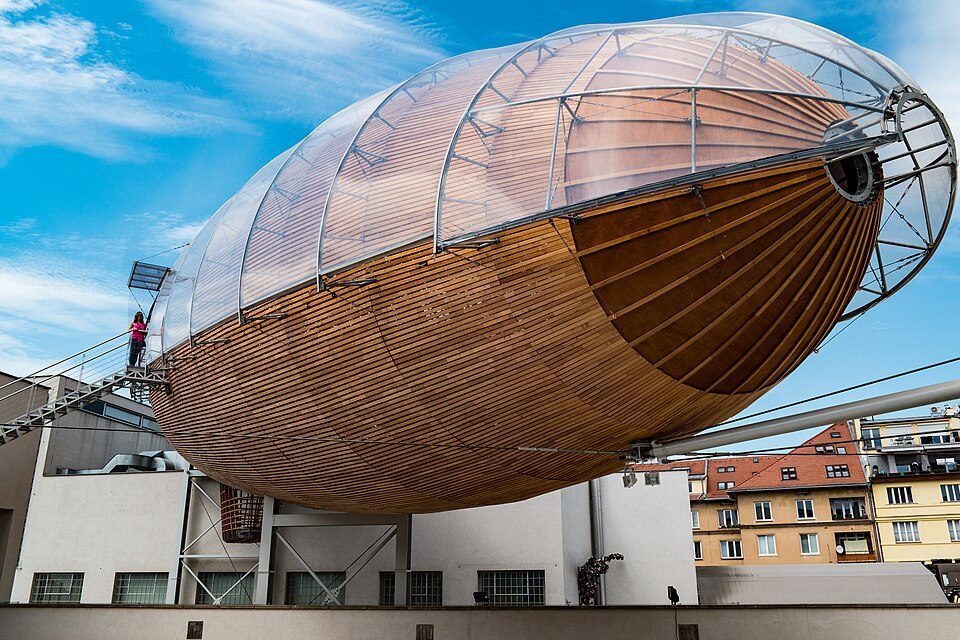
Two cultural anchors illustrate its range. In Holešovice, the Trade Fair Palace is an important Functionalist building used by the National Gallery for modern art. DOX Centre for Contemporary Art combines converted industrial space with the conspicuous Gulliver airship structure above it.
Holešovice works well for travellers who prioritise galleries, contemporary culture and access to Letná or Stromovka over walking to the Astronomical Clock. Tram connections are strong; the exact micro-location matters because railway lines and large roads can make nearby points less directly connected than the map suggests.
Smíchov: industrial 'Manchester' turned major urban hub
Smíchov grew into one of Prague's principal industrial districts, with factories, railway facilities and the Staropramen brewery shaping its identity. The scale of industry led to comparisons with Manchester. Much of that manufacturing landscape has disappeared or changed use, while Anděl became a major office, shopping and transport centre.
As a visitor base, Smíchov is practical rather than postcard-like. Metro line B, trams and regional rail provide fast connections. The riverfront and redevelopment around former industrial parcels are changing rapidly, and the district extends far beyond Anděl toward quieter residential slopes and Barrandov.
Choose it for transport, modern services and value relative to the historic core. A hotel window framed by Gothic towers is not this district’s proposition.
Dejvice: Prague as a planned 20th-century city
Dejvice expanded dramatically in the 20th century around a planned urban composition centred on Vítězné náměstí. Broad avenues, institutional buildings, apartment blocks and nearby villa districts show a Prague that is often absent from medieval-centre itineraries.
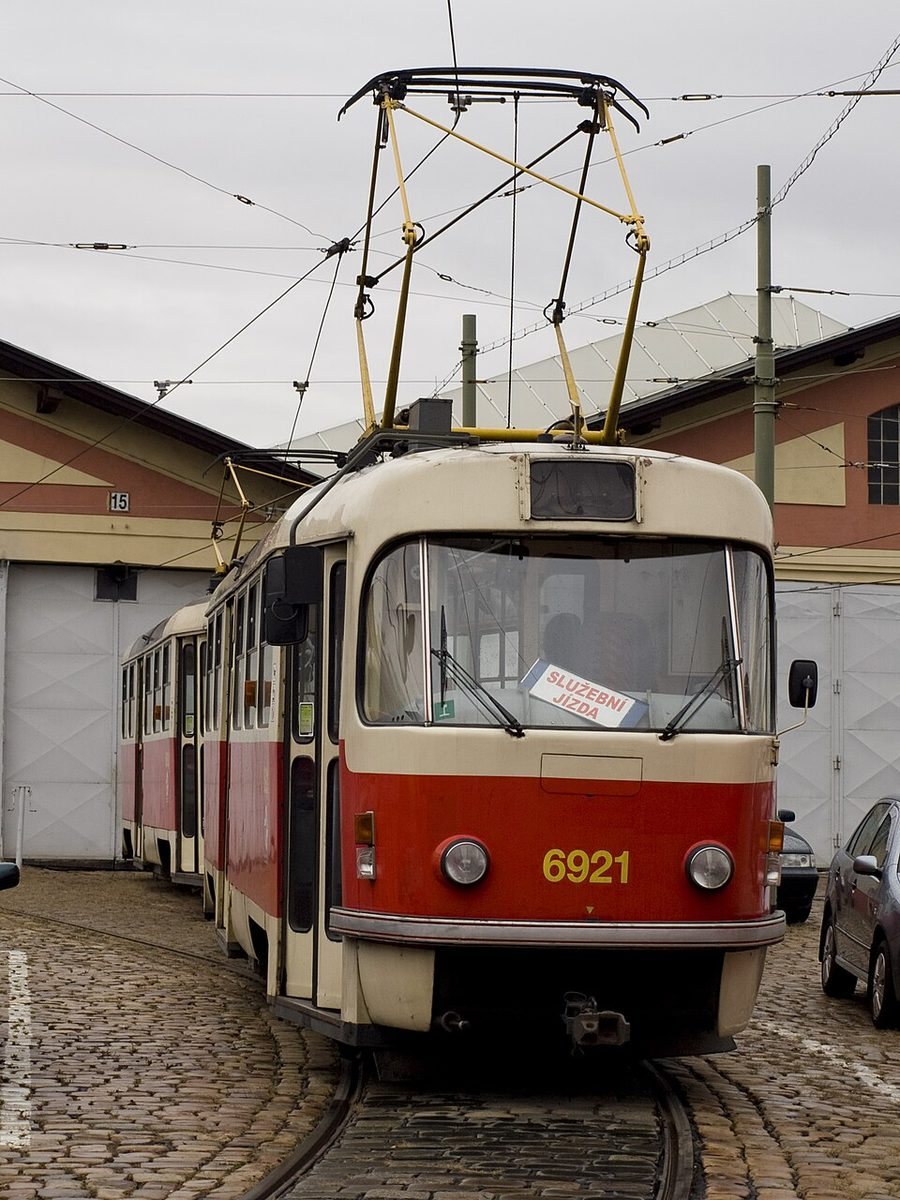
The area is convenient for Prague Castle from the north and for airport connections by public transport. Metro line A links it directly with the centre. Nearby Baba is a major Functionalist villa ensemble, while Střešovice contains the public transport museum in a historic tram depot when open.
Dejvice suits travellers who want calmer evenings, architecture and easy transport. It is also a strong base for longer stays because daily services are designed for residents rather than visitor flows.
Best neighborhoods for first-time visitors
If your visit is two or three nights and the headline monuments are the priority, Old Town, Lesser Town and the border of New Town reduce travel overhead. Vinohrady is the strongest alternative when you want a residential base without sacrificing easy access.
Do not overpay simply for a Prague 1 postcode. A hotel beside Náměstí Míru metro can get you to Staroměstská quickly, while some central properties require awkward walks across cobbles. Compare door-to-door time at the hours you will actually travel.
Families may prefer Vinohrady, Dejvice or quieter parts of Holešovice for space and parks. Travellers with heavy luggage should prioritise lifts, flat access and tram/metro proximity over romantic lanes.
Best areas for nightlife
Prague nightlife is distributed. Old Town concentrates tourist bars and late-night venues. Žižkov remains strong for pubs and informal bars. Vinohrady and nearby Vršovice support cocktail bars, wine bars and restaurants. Holešovice offers clubs and cultural venues in larger converted spaces. The riverfront becomes important in warm months.
The best district depends on the night you want. Beer-focused pub hopping, electronic music, wine, live performance and large clubs occur in different places. Avoid treating 'nightlife district' as a guarantee that every street is loud; even Žižkov contains quiet residential blocks.
For accommodation, being one tram stop away can be better than sleeping over the venue. Prague's night trams make that separation easy.
Best areas for a more residential Prague
For everyday city rhythm, Vinohrady, Dejvice, parts of Holešovice and quieter Žižkov are reliable choices. Hradčany's Nový Svět offers a radically different small-scale environment, although it is close to major sights and should not be marketed as unknown. Náplavka shows how river infrastructure became social space, while Štvanice reveals a Prague shaped by islands, sport and transport.
Do not treat escaping tourists as the purpose; their presence does not invalidate a place. It is to spend time in neighbourhoods where housing, schools, markets, parks and ordinary services remain visible. Ride a tram beyond the final monument on your checklist. Take a ferry that is part of public transport. Walk through a district with no single landmark to justify every step.
Spectrum's neighbourhood-focused routes fit this kind of exploration because the subject is the city between attractions, not a promise of access to every site mentioned in this guide.
Choose a place to stay by the journeys you will repeat
Hotel advice often treats neighborhood character as the only variable. For a short Prague trip, repeated transport matters just as much. A beautiful room in a district that requires two transfers for every planned activity can cost more attention than a less romantic address on a direct tram line. Conversely, paying a premium for Old Town makes little sense if most evenings are planned in Vinohrady, Karlín or Holešovice.
Mark three recurring journeys: morning start, evening return and airport or station connection. Then check tram and metro access. Prague’s network makes many non-central areas practical, but “near metro” is not universally better than “on a frequent tram.” Surface routes can be faster for cross-centre trips and reveal the city while moving.
Noise is another location variable that broad neighborhood labels hide. One Old Town street can be quiet while another is dominated by nightlife. Vinohrady can mean a calm residential block or a busy corridor. Žižkov contains steep side streets and major transport axes. Read the immediate block, not only the district name.
For first-time visitors who want maximum walking access, Old Town, New Town edges and Malá Strana remain logical. For longer stays, residential districts often trade a few minutes of transport for better everyday services, parks and evening choices. There is no universal “best neighborhood”; there is a best network of repeated journeys for a particular trip.
Neighborhood brands change faster than street plans
Karlín is regularly described as transformed, Holešovice as creative, Vinohrady as elegant and Žižkov as bohemian. These labels are useful shorthand until they become substitutes for reality. Districts contain schools, offices, elderly residents, new apartments, old pubs, expensive restaurants, social housing and construction sites at the same time.
Karlín’s post-2002 redevelopment is a clear example. Flood damage accelerated changes already connected with deindustrialization and office development. The district that visitors now associate with cafés and modern workplaces is also a place with nineteenth-century blocks, a major church, transport infrastructure and traces of industrial use.
Holešovice is similarly plural. Former industrial and market areas coexist with galleries, clubs, apartments and large transport corridors. Smíchov has undergone several waves of industrial decline, shopping-centre development and current large-scale construction. Treating any of these districts as a completed “local neighborhood” freezes a moving city.
Administrative boundaries complicate the picture further. Common neighborhood names do not always align neatly with municipal district lines. Visitors rarely need to master Prague’s administrative system, but they should avoid assuming a hotel marketing label maps perfectly onto historical identity.
Pick one anchor—park, market, gallery, square, pub street or architectural route—and walk outward. The neighborhood will explain itself better than a slogan.
Go beyond the famous seven when the trip is long enough
Prague’s useful neighborhood map extends well past the districts most often recommended to visitors. Břevnov combines a major monastery with residential streets and access toward western parks. Vršovice has become known for cafés and bars around Krymská but also retains ordinary housing and football culture. Bubeneč contains embassies, villas and Stromovka access. Libeň mixes industrial fragments, transport infrastructure and Hrabal associations. Nusle reveals valley topography and a very different scale of Prague life beneath the large bridge.
These areas are not “better because tourists do not go there.” That framing turns residents into scenery and encourages a competitive hunt for obscurity. Their value is specific: different building periods, land uses, parks, food scenes or cultural histories.
A longer stay creates the space to choose one according to an actual interest. Architecture may point toward Baba in Dejvice or functionalist villas elsewhere. Beer may justify a brewery district. Literature can pull the route toward Libeň. Parks may make Stromovka, Divoká Šárka or Vítkov more important than another central square.
Prague becomes a much larger city once the visitor stops dividing it into “centre” and “outside.” The tram network makes that expansion practical.
A neighborhood day should contain one ordinary task
To understand a district, include one activity that is not sightseeing: buy breakfast, browse a supermarket, sit in a park, use a local tram stop or have lunch where the menu is aimed at workers nearby. Ordinary routines reveal price level, pace and street life better than a curated “local secrets” list.
This does not mean performing residency for a day. Visitors remain visitors, and there is no need to pretend otherwise. The value lies in changing the type of observation. In Old Town, space is heavily organized around tourism. In residential districts, schools, deliveries, dog walking, commuting and errands compete for the pavement.
One ordinary task also prevents over-programming. A neighborhood with three attractions can feel like another checklist. A neighborhood with one anchor and time to observe how people actually move through it becomes legible as part of Prague.
Crossing the river changes more than the view
Prague neighborhoods are partly organized by the Vltava, but bridges make the river a connector rather than a hard boundary. Smíchov and the New Town face one another across busy crossings; Holešovice relates to Karlín and Libeň through transport networks; Dejvice and Bubeneč connect south toward the historic centre without sharing its street pattern.
For a visitor, crossing the river can be used deliberately to change urban texture. Walk one direction and take a tram back. Follow an embankment until the architecture shifts. Use a ferry where it genuinely serves the route.
The point is to stop treating “left bank” and “right bank” as two sightseeing zones. Prague’s modern growth depended on bridges, railways and tram lines that continually remade those relationships.
Nightlife geography is more fragmented than one party district
Visitors looking for evening energy should choose by format rather than a single “nightlife neighborhood.” Old Town contains dense tourist bars and late venues. Vinohrady mixes pubs, wine bars and restaurants within residential blocks. Žižkov has a long pub reputation but is not one continuous bar street. Holešovice and Karlín combine restaurants, clubs and cultural spaces with large areas that become quiet after work.
Transport home matters. Metro service eventually ends for the night, while night trams and buses take over. A venue that seems only fifteen minutes away at 20:00 may require a different route at 02:00. Check the night network before drinking, not after.
Noise also has local consequences. Residential districts do not stop being residential because a bar is popular. Move conversations indoors late at night and avoid treating courtyards or apartment entrances as public smoking lounges.
Frequently asked questions
Which Prague area works best for a first stay?
Old Town and Lesser Town maximise walking access to major sights. Vinohrady is an excellent alternative if you prefer a residential area with fast metro and tram links.
Which Prague neighborhood is best for nightlife?
It depends on the style: Old Town for concentrated visitor nightlife, Žižkov for pubs and bars, Vinohrady/Vršovice for varied restaurants and bars, and Holešovice for larger cultural and club spaces.
Is it safe to stay outside Prague 1?
Central inner districts such as Vinohrady, Žižkov, Karlín, Holešovice, Smíchov and Dejvice are normal urban neighbourhoods used daily by residents. Use ordinary city precautions and evaluate the exact street and late-night route rather than assuming the district number determines safety.
Is public transport good enough to stay outside the centre?
Yes. Prague's metro and tram network makes many inner neighbourhoods functionally central. Check the walking distance to a useful stop before booking.
Where should I stay for a quieter visit?
Dejvice, residential Vinohrady, upper Hradčany and selected parts of Holešovice can provide calmer evenings while retaining good transport. Street-level noise varies block by block.
Which area feels most different from historic Prague?
Dejvice, Holešovice, Karlín and Smíchov show planned, industrial and modern Prague. They are useful if you want the city beyond its medieval and Baroque centre.
Sources & further reading
- Prague City Tourism — From Vinohrady to Žižkov — Prague City Tourism
- Prague City Tourism — Walking Routes — Prague City Tourism
- Prague City Tourism — Vítkov — Prague City Tourism
- Prague City Tourism — Sites and culture listings — Prague City Tourism
- UNESCO World Heritage Centre — Historic Centre of Prague — UNESCO World Heritage Centre