
Prague Stories · Planning
Prague Weather: What Visitors Should Actually Pack for Each Season
Pack for Prague’s surfaces and temperature swings, not for a fantasy version of Central Europe. Good shoes, one useful outer layer and clothes you can add or remove will solve more problems than a giant ‘Europe packing list.’
Prague

Prague’s weather matters, but the ground often decides whether a day feels comfortable.
Your shoes will notice Prague before your jacket does
The historic centre contains cobbles, polished stone, slopes and staircases. In dry weather, poor shoes become tiring. In rain or winter moisture, they can become slippery. “Comfortable walking shoes” is not travel-blog filler in Prague; the city’s physical surface makes the advice concrete. Ordinary sightseeing does not call for expedition footwear. You do want a sole with grip, enough cushioning for long days, and a shoe you have already worn. The new pair that looks perfect with every outfit is less impressive after fifteen thousand steps and a descent through Malá Strana. If the forecast shows persistent rain or winter slush, water resistance matters more. If it shows a dry heat spell, breathability wins. The shoe should answer the week you are actually visiting.
Spring: layers you can remove without carrying a wardrobe
Spring temperatures can move quickly between a cool morning, a pleasant sunny afternoon and a sharp evening. The useful kit is modular: a base layer, a mid-layer and a light outer shell that handles wind or rain. An umbrella can work in the city, but a light waterproof jacket has advantages when you want both hands free for a phone, camera or tram rail. It also deals better with wind. By late spring, sunglasses and sun protection belong in the bag. So does something warmer than the afternoon forecast suggests if you plan to stay out after dark. The packing mistake is not bringing too little. It is bringing five single-purpose outfits when three compatible layers would have covered the same range.
Summer: prepare for heat without assuming every day is hot
Prague summers can be genuinely warm, and heat feels stronger on exposed squares and paved streets. Light clothing, sun protection and a refillable water bottle are obvious. Less obvious is the value of one thin extra layer. Churches, underground spaces, shaded courtyards and late evenings can feel much cooler than a sunny riverbank. Air-conditioned interiors add another swing. A light shirt or layer that lives in a day bag costs very little space. Rain does not disappear in summer either. The long-term climate record includes precipitation through the warm months, and thunderstorms can arrive quickly. A small rain layer is more useful than trying to predict a completely dry week months in advance. Most importantly, do not schedule your heaviest walking for the hottest part of a very warm day simply because the itinerary says “Old Town: 13:00.” Weather is allowed to edit your plan.
Autumn: the month matters
Early September may still behave like late summer. By November, that packing logic is gone. The further you move into autumn, the more useful a warmer mid-layer, wind-resistant outer layer and rain protection become. Leaves are beautiful in parks; wet leaves on stone steps are also an excellent argument for shoe grip. Daylight shrinks faster than many visitors expect. If your plan includes an evening viewpoint or a long return walk, you will feel the temperature drop after sunset. This is the season when a compact umbrella, light gloves late in the year and a bag large enough to hold removed layers earn their space.
Winter: warmth without making yourself immobile
Winter sightseeing alternates between cold streets and heated interiors. One enormous coat over one thin shirt can make every museum feel tropical. Several layers are easier to regulate. A warm outer coat, hat and gloves matter. So do socks and footwear that can tolerate cold pavement and wet conditions. If snow falls, central routes are cleared, but slush and slick patches remain part of city walking. The forecast is the final editor. Climate normals can tell you that January is typically cold and July typically warm; they cannot tell you whether your specific Tuesday will be unusually mild, windy or wet. Check the short-term forecast in the final days before travel. Pack the climate months ahead; pack the weather at the last minute.
Reviewed visuals
See the story
Supporting images selected in the Prague Stories visual review. Context images are labeled so they are not mistaken for documentary proof of the exact subject.
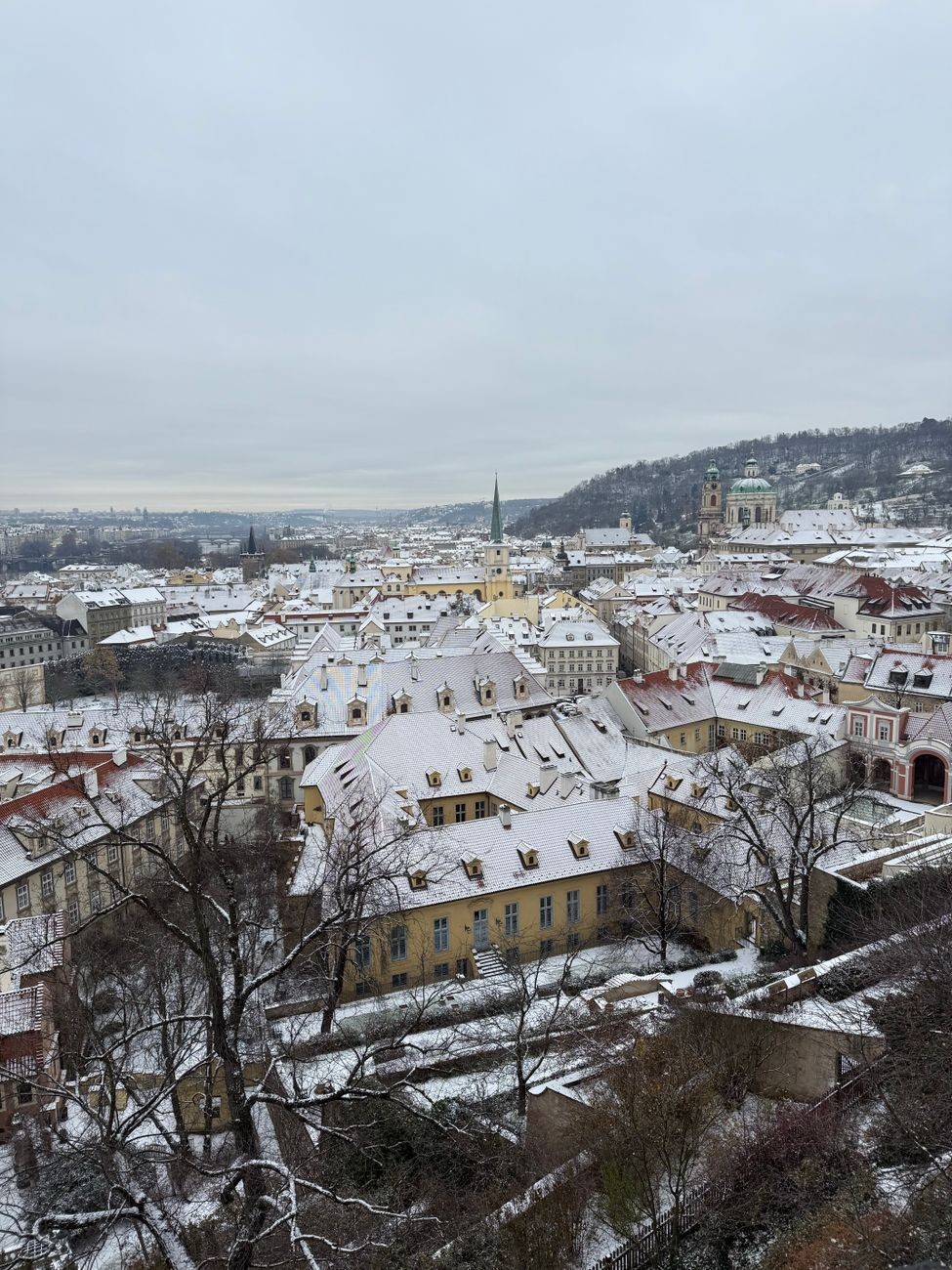
Snowy winter Prague skyline, illustrating cold-season packing needs.
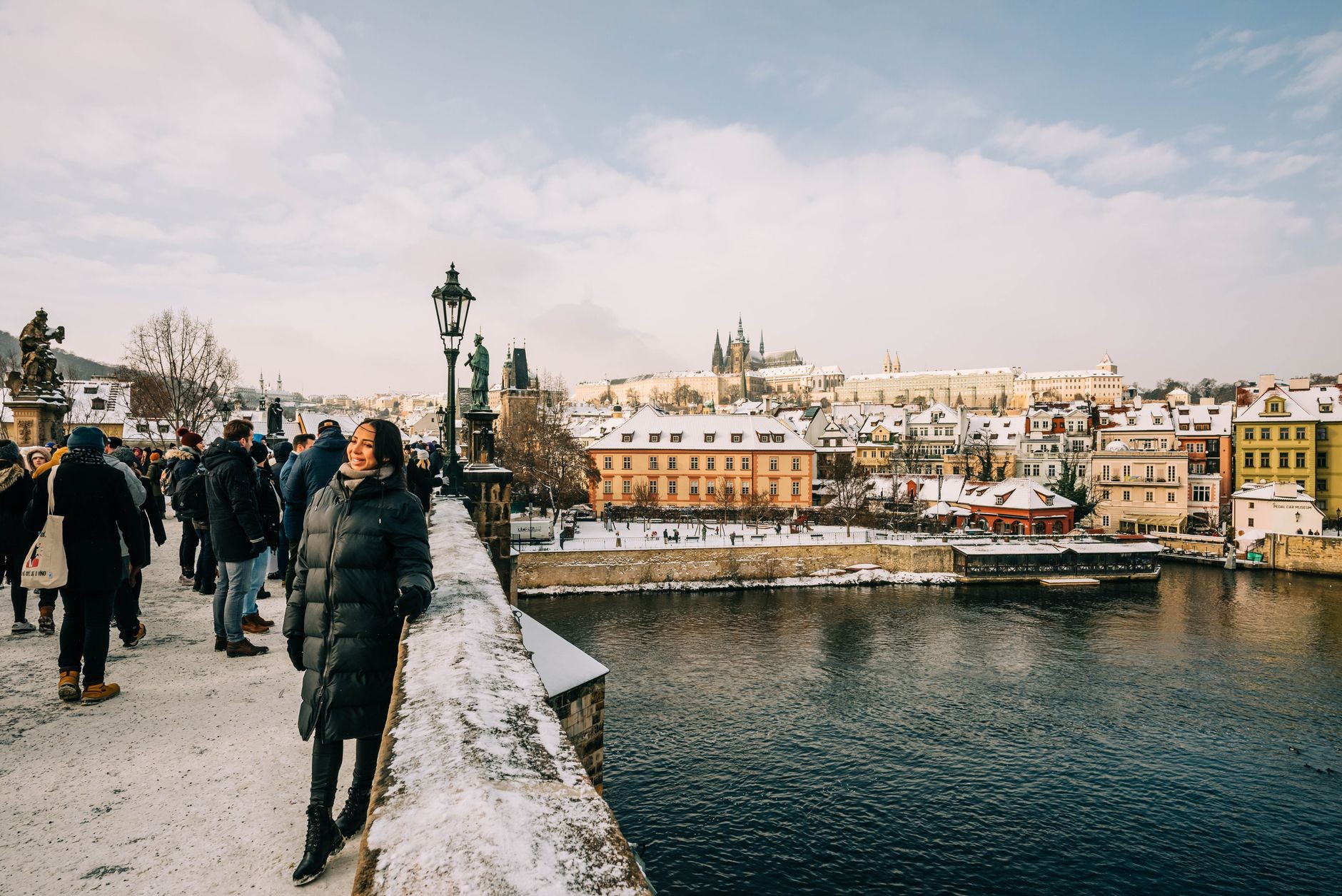
Clear-weather Prague cityscape with Charles Bridge for milder-season context.
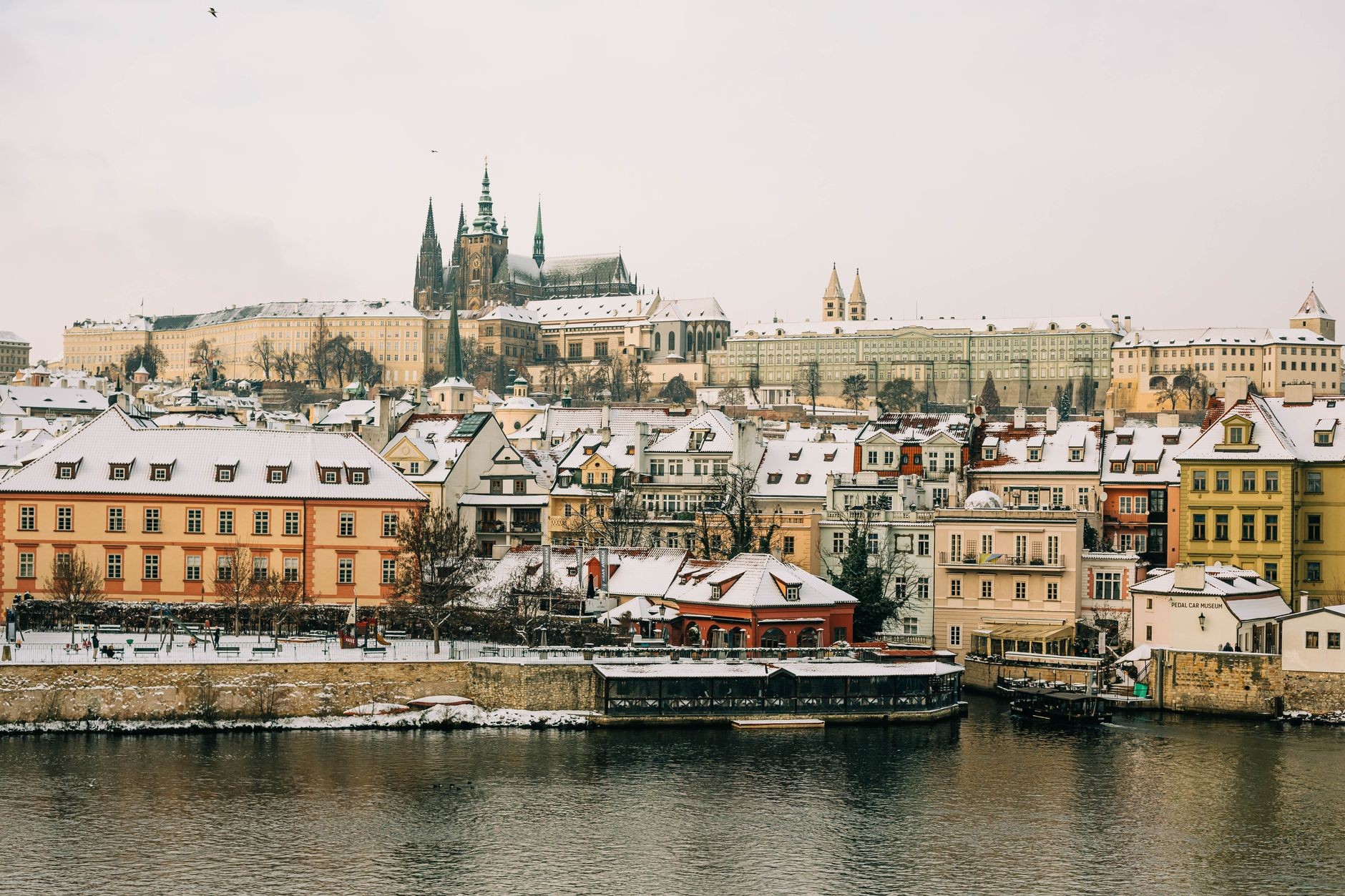
Prague Castle cityscape in a distinct weather/seasonal setting.
Quick facts
- Prague’s historic walking surfaces include cobbles, stone, slopes and stairs, making grip and comfort important.
- Spring and autumn can produce large temperature changes across one day.
- Summer can be hot, but rain and thunderstorms remain possible.
- Winter snow is possible but conditions can also be wet, icy or simply cold.
- Long-term climate normals are useful for seasonal planning; a short-term forecast should guide the final packing decision.
- Layering works well because sightseeing repeatedly moves between outdoor and heated indoor spaces.
Questions
Does it rain a lot in Prague?
Rain occurs throughout the year, but Prague is not defined by constant rainfall. For a specific trip, use the short-term forecast rather than a monthly stereotype.
How cold is Prague in winter?
Winter is cold enough to require a proper coat and warm layers, with freezing conditions possible. Exact temperatures vary significantly from week to week.
How hot is Prague in summer?
Warm and hot spells occur, and exposed stone areas can feel tiring in direct sun. Pack light clothing and sun protection, but keep a thin layer for cooler interiors and evenings.
Do I need waterproof shoes?
Not for every trip. They are useful when sustained rain, snow or slush is forecast; year-round, grip and all-day comfort are more important than a waterproof label alone.
Sources & further reading
- Územní teplota a srážky — Czech Hydrometeorological Institute
- Accessible Prague — information and services — Prague City Tourism
- Plan your trip to Prague — Prague City Tourism