
Explore Prague
Famous People in Prague
A people-led guide to Prague through writers, composers, artists and scientists—from Kafka and Mozart to Mucha, Kepler and Einstein—focused on the places and institutions that actually shaped their work.
The most useful way to explore famous people in Prague is by following the institutions and neighbourhoods that connected them: Old Town for Kafka and Mozart, the Rudolfinum for Dvořák, the riverfront for Smetana, Municipal House for Mucha, Hradčany for Tycho and Kepler, university Prague for Einstein, and Libeň for Hrabal.
Why Prague produced so many overlapping biographies
Prague is a good city for biography because famous lives here rarely belong to one neat national story. The same streets were used by Czech-, German- and Yiddish-speaking writers, imperial officials, musicians, Jewish intellectuals, university scientists, artists, publishers and political dissidents. The city’s institutions—court, university, theatres, cafés, concert halls, newspapers, salons and museums—created repeated points of contact. What makes Prague interesting is not simply that “Kafka lived here” or “Mozart visited.” It is that people from different linguistic and cultural worlds repeatedly met in a compact city where ideas moved faster than political identities could be simplified.
For visitors, that means the best people-led guide should avoid two traps. The first is birthplace tourism: standing outside a plaque and assuming the address explains the work. The second is heroic isolation: presenting each artist or scientist as if they lived in a private bubble. Prague’s figures make more sense in networks. Kafka belongs to Prague German and Jewish culture, law, insurance bureaucracy and cafés. Dvořák and Smetana belong to institutions of Czech national culture as well as international music. Einstein’s sixteen months in Prague connect university life to a broader Central European scientific world. Tycho Brahe and Kepler make sense through Rudolf II’s court.
A people-led visit therefore works best as a route through institutions and neighbourhoods. Old Town reveals Kafka, the Estates Theatre and the multilingual urban centre. The Rudolfinum and riverfront lead into Czech musical life. Hradčany opens the Rudolfine world of court astronomy. New Town connects museums, universities and modern national institutions. Libeň and other outer districts bring twentieth-century writers back into everyday streets rather than memorial interiors.
The point is not to collect famous names. It is to see how Prague repeatedly offered a particular combination: concentrated institutions, political tension, multilingual audiences and a cityscape strong enough to become material for art. Some people were born here, some stayed briefly, some returned after success abroad, and some became more strongly associated with Prague after death than during life. Those differences are part of the story.
Writers: Kafka, Čapek and Hrabal wrote different Pragues
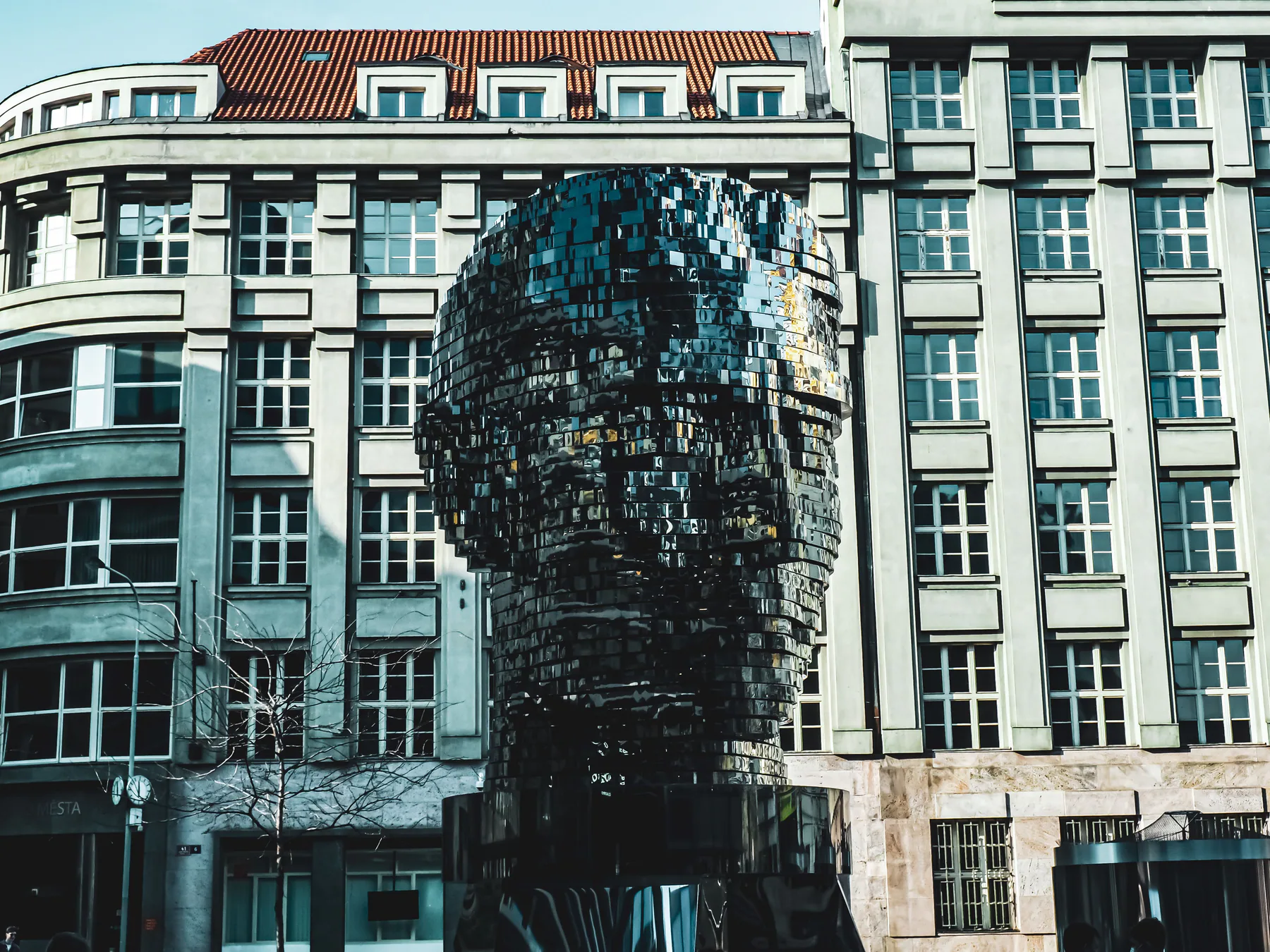
Franz Kafka is the unavoidable starting point, but the useful distinction is between Kafka’s actual biography and the later adjective “Kafkaesque.” Kafka was born in Prague in 1883, studied law at the German branch of Charles-Ferdinand University and worked in insurance. His family moved repeatedly within the centre, and his adult life remained closely tied to the city. He wrote in German, belonged to a Jewish family and lived in a Prague where Czech and German cultural institutions overlapped but did not merge. The city is therefore not a literal key that decodes his fiction, yet its bureaucracies, courtyards, old streets and social divisions form part of the environment in which he worked.
Visitors often search for a single “Kafka Prague,” but a better route shows movement: his birthplace area near Old Town Square, school and university connections, offices, cafés and temporary writing spaces such as No. 22 Golden Lane. Some associated buildings have disappeared or changed function. That matters. Kafka’s Prague was itself being modernized, especially around the former Jewish Town. The tension between memory and redevelopment is closer to his lived city than the idea of an untouched Gothic maze.
Karel Čapek represents a different Prague: democratic, journalistic and interwar. Internationally, he is best known through the word “robot,” introduced in his play R.U.R.; his brother Josef is generally credited with suggesting the term. But reducing Čapek to that linguistic fact misses his role as novelist, playwright, critic and public intellectual in the First Czechoslovak Republic. His Prague was a capital debating democracy, technology, nationalism and the threats of the 1930s. A Čapek route therefore belongs as much to villas, editorial culture and theatre as to literary museums.
Bohumil Hrabal leads away from monumental central Prague. His literary geography is strongly associated with Libeň, pubs, railway edges, workshops and peripheral urban life. Prague City Tourism’s current Hrabal walk explicitly uses Libeň’s surviving and vanished places to show how the district shaped his imaginative world. This is a useful corrective: Prague literature is not only about Old Town. Hrabal’s city is noisy, comic, damaged and ordinary, built from people who would rarely appear in official monuments.
Prague's multilingual cultural world
The phrase “Prague culture” can hide how divided the city’s audiences once were. In the nineteenth and early twentieth centuries, Czech and German institutions often operated in parallel: schools, theatres, newspapers, universities and associations could be organized by language. Jewish residents participated in several overlapping worlds, and identity did not map neatly onto one language. Kafka’s biography is impossible to understand without that complexity. He wrote in German, knew Czech, studied at the German university and moved through a Jewish intellectual environment inside a city whose Czech-speaking majority was growing in political confidence.
That multilingual structure affected more than literature. The university was formally divided into Czech and German institutions in 1882. Einstein’s professorship in 1911–1912 was at the German Charles-Ferdinand University; Kafka had studied there a few years earlier. Their shared institutional map did not mean a shared intellectual project, but it shows how Prague could host globally important work through parallel cultural systems.
For visitors, the former Jewish Town is where simplified national narratives most often fail. Josefov was a Jewish religious and communal centre, yet it also sat inside a modernizing metropolis whose Jewish residents used German, Czech and sometimes both. The late nineteenth-century clearance of much of the old ghetto further complicates the picture: many “Kafka Prague” streets around today’s Pařížská are later urban replacements. The preserved synagogues and cemetery carry extraordinary historical weight precisely because much of the surrounding fabric changed.
This is why labels such as “Czech writer,” “German writer” or “Prague writer” should be treated as descriptors, not boxes. They tell us something, but not everything. Prague’s cultural importance often came from friction between communities that shared space without sharing the same institutions or political goals. The city’s famous people are most revealing when that friction remains visible.
Mozart in Prague: a visitor who became part of the city's identity
Mozart did not belong to Prague in the same way Kafka did, but his relationship with the city was unusually productive. Prague audiences received The Marriage of Figaro enthusiastically, and Mozart conducted a performance at the Nostitz Theatre in January 1787. Later that year, the same theatre hosted the world premiere of Don Giovanni on 29 October, conducted by Mozart. The building survives as the Estates Theatre, making it one of the rare places where a major work can still be encountered in the venue directly tied to its premiere.
The important story is not that Prague “understood Mozart better than Vienna” in some absolute sense. Reception varied by work, audience and moment. What can be said safely is that Figaro’s Prague success contributed to the commission and premiere context of Don Giovanni, and that Mozart returned to the city. The theatre scene shows Prague as an active musical market connected to Vienna and the wider Habsburg world, not a provincial backdrop awaiting a genius.
For modern visitors, the Estates Theatre is the strongest physical anchor because its institutional continuity is clear. Other Mozart-associated sites require more caution. Bertramka, for example, has a long tradition connecting Mozart with the Dušek family and his Prague stays, but individual anecdotes about exactly where and when he completed specific passages are often repeated more confidently than the surviving evidence permits. A good guide should distinguish the documented performance record from later Mozart lore.
Mozart’s Prague also belongs in a broader people-led route. Within a short walk of the Estates Theatre are the university, Old Town venues and later cafés used by entirely different generations. The value is comparative: an eighteenth-century composer, a twentieth-century German-language writer and modern Czech artists all used the same dense urban centre through different institutional networks.
Smetana and Dvořák: music, nation and international careers
Bedřich Smetana and Antonín Dvořák are often paired as symbols of Czech music, but their Prague stories are not interchangeable. Smetana’s career is closely tied to the development of Czech-language opera and public musical culture in the nineteenth century. His cycle Má vlast became central to national musical memory, and his opera The Bartered Bride achieved an international life. The Smetana Museum, on the Vltava near Charles Bridge, preserves collections connected with his life and work; its location also places him physically inside the landscape later celebrated by his music.
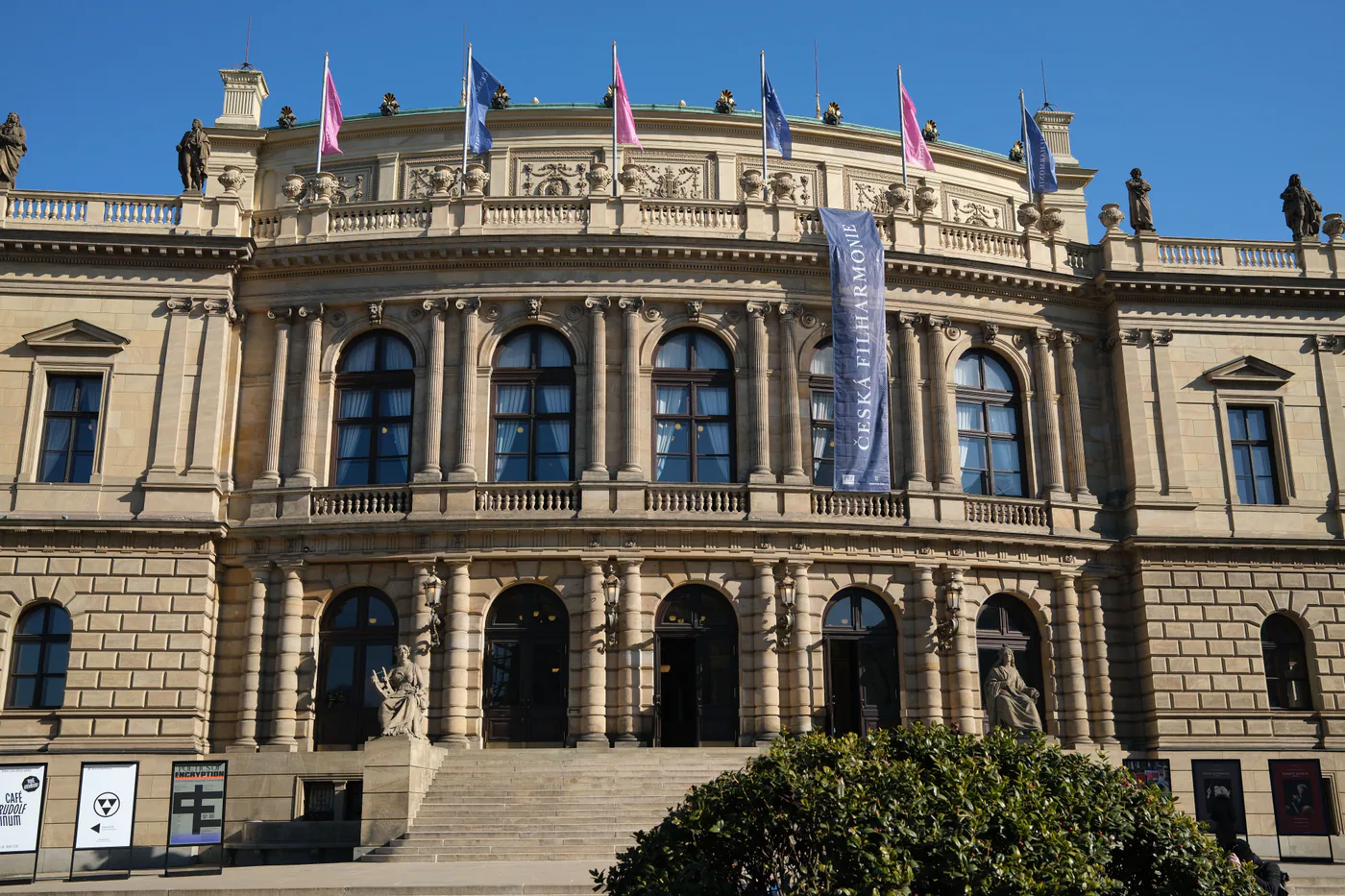
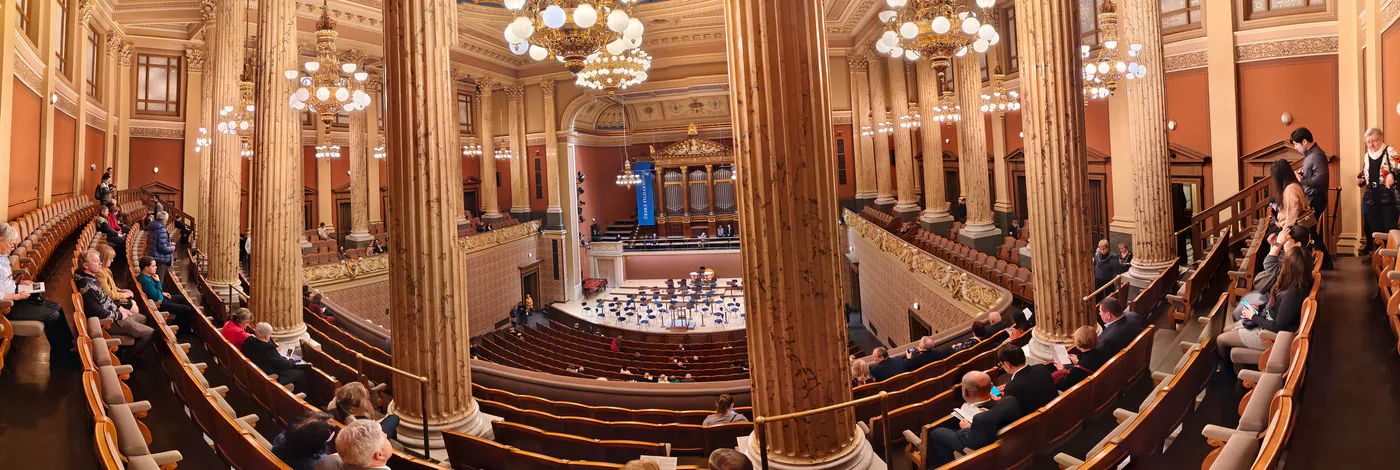
Dvořák’s Prague is more strongly connected to a mature international career. He spent significant periods abroad, including in the United States, but Prague remained central to his Czech musical identity. On 4 January 1896, he conducted the first official concert of the Czech Philharmonic in the Rudolfinum, directing a programme of his own works. That single event captures an institutional shift: Czech musical culture now had a permanent orchestra able to present itself in a major public concert hall.
A visitor should resist treating either composer as musical wallpaper for “romantic Prague.” Their importance lies partly in institution building. Smetana’s generation fought for Czech-language cultural space; Dvořák’s career demonstrated that Czech musical idioms could circulate internationally without losing local roots. The National Theatre, Rudolfinum, music museums and Vyšehrad cemetery all help tell this story, but no one building contains it.
If time is short, choose one museum and one live performance rather than trying to photograph every composer plaque. Prague’s musical culture is still active in the same broad network of theatres, orchestras, conservatories and churches. Hearing music in the city prevents the historical figures from becoming static memorial brands.
Alfons Mucha: Prague after Paris
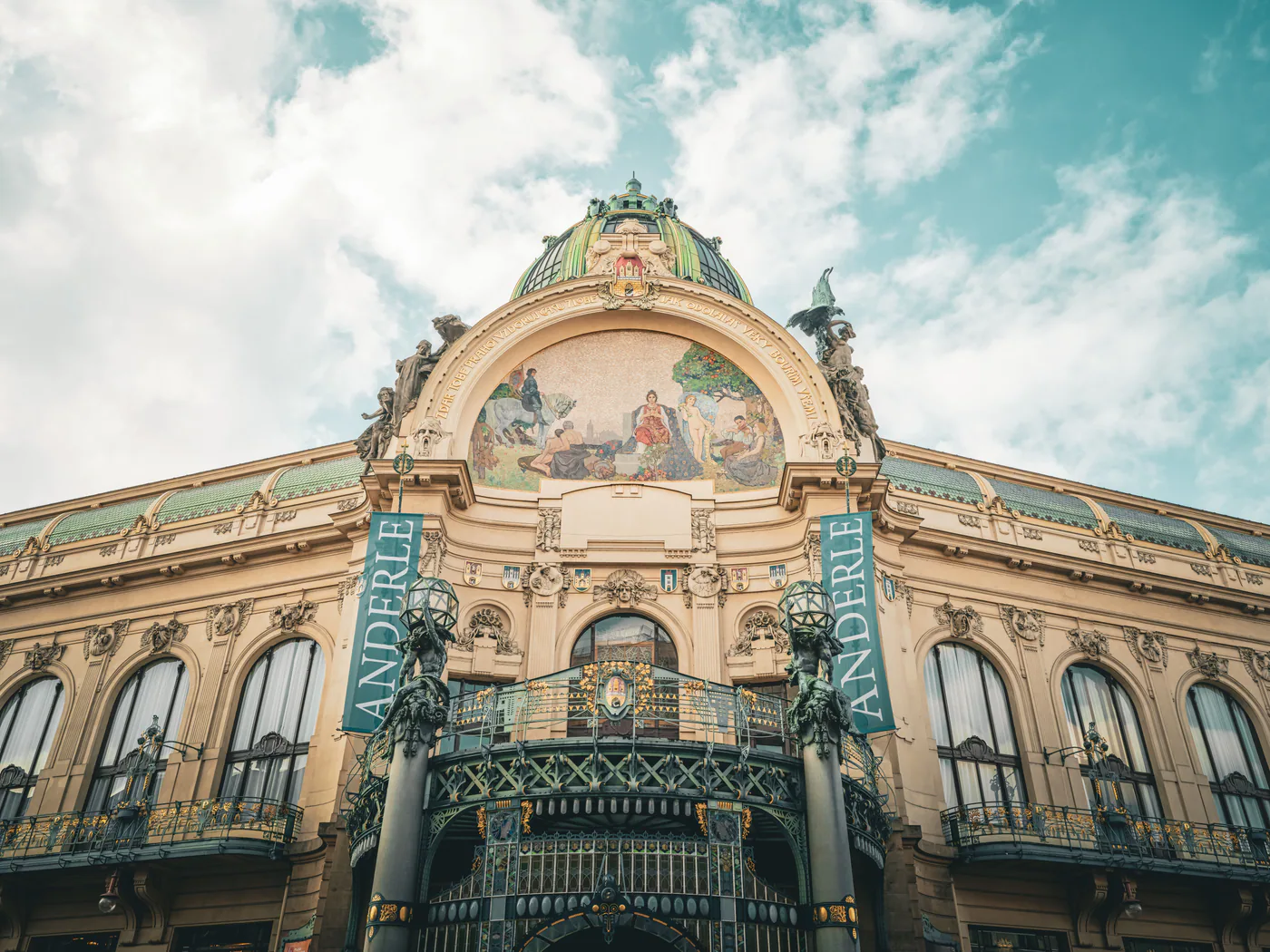
Alfons Mucha is globally associated with the Paris posters that made “le style Mucha” famous, but his Prague story belongs mostly to what happened after international success. He returned to Bohemia in the early twentieth century and worked on projects that linked art to Czech and Slavic identity. In 1911 he completed the decoration of the Mayor’s Hall in Prague’s Municipal House, one of the city’s most concentrated Art Nouveau interiors. After Czechoslovakia was created in 1918, he designed stamps and banknotes for the new state.
This matters because Mucha is often marketed in Prague as a decorative Art Nouveau illustrator detached from politics. His later work was deeply connected to national history and civic representation. The Slav Epic, his enormous cycle on Slavic history, was conceived as a monumental historical project rather than commercial graphic design. He eventually presented the completed cycle to the Czech people and the city of Prague in 1928.
Mucha’s career also illustrates how Prague’s cultural prestige depended on movement abroad. Like Dvořák, he became internationally famous through work outside the city and returned with a reputation that could be invested in national projects. Prague was not simply the place that produced artists; it was a place to which successful artists returned to help define public culture.
For visitors, Municipal House is the most useful anchor because it puts Mucha inside a collaborative civic building rather than an isolated gallery. Its architecture and decoration involved many Czech artists. That setting makes clear that Art Nouveau Prague was a collective urban language tied to a rising metropolitan elite, not the private style of one celebrity.
Science in Prague: Tycho, Kepler and Einstein
Prague’s scientific biographies span two very different institutional worlds. Around 1600, Tycho Brahe and Johannes Kepler worked in the orbit of Rudolf II’s imperial court. Brahe brought exceptionally precise astronomical observations; Kepler used observations, mathematics and theory to reshape the description of planetary motion. Prague City Tourism notes that two of Kepler’s planetary laws were formulated in Prague. Their work depended on court patronage, instruments and personal access to data—a scientific environment unlike a modern university department.
The physical traces are uneven. Tycho is buried in the Church of Our Lady before Týn, while houses and observatories associated with the astronomers have changed or disappeared. That makes Hradčany and Prague Castle useful contextual sites rather than literal preserved laboratories. The key surviving landscape is the court itself: the imperial centre that attracted specialists from across Europe.
Albert Einstein’s Prague was three centuries later and institutionally modern. Charles University records that he became professor of theoretical physics at the German Charles-Ferdinand University in 1911 and remained until 1912. During the Prague period he worked intensively on gravitation and published important papers on the path toward general relativity. He lived in Smíchov and worked in university buildings in the centre and New Town. His stay was short, but it was scientifically productive.
Einstein also shows why famous-person tourism needs proportion. Prague did not “invent relativity,” and Einstein did not spend his career here. Yet the city was a meaningful station in his intellectual development, embedded in a multilingual university environment that had already produced figures such as Ernst Mach. The correct claim is specific and stronger for being specific: Prague was one of the places where Einstein advanced his thinking about gravitation before the final theory of general relativity.
Cafés, salons and informal networks
Formal institutions explain only part of Prague’s creative life. Cafés, private salons, editorial offices and pubs provided spaces where writers, scientists, artists and journalists encountered one another outside official hierarchies. The early twentieth-century centre was dense with such places. Some survive under old names, some have been recreated, and others disappeared, but the social function matters more than the authenticity of a particular chair.
Einstein’s Prague circle included intellectual gatherings associated with Berta Fanta’s salon, where figures from the German-Jewish cultural world met for discussion and music. Kafka and Max Brod belonged to overlapping literary networks. Later generations used cafés and pubs differently: interwar journalists gathered around editorial life, while Hrabal’s public persona became strongly associated with ordinary drinking places and the storytelling culture of the pub. These were not interchangeable scenes, but each shows creative work embedded in conversation.
Tourism tends to turn such places into celebrity décor. A menu may advertise that a famous person once sat there, but this claim should be treated as a starting point, not evidence of importance. The stronger question is whether the venue belonged to a documented social network. Café culture mattered because it offered newspapers, warmth, extended stays and semi-public meeting space in an era before digital communication. Pubs mattered because they crossed class and professional boundaries in different ways.
A good people-led itinerary therefore allows at least one unprogrammed stop in a historically relevant district. Sit in a café near Národní, Old Town or the university, or in a pub in a neighbourhood associated with a writer, and watch how people use the room now. This is not historical reenactment. It is a reminder that cultural production depends on social infrastructure as much as on monuments.
A people-led route through Prague
A compact route can connect these lives without pretending they all knew one another. Start in Old Town near Kafka’s birthplace and the former Jewish Town. Walk to the Estates Theatre for Mozart, then pass Carolinum to register the university as a long-lived institution rather than a single-person site. Continue toward the Rudolfinum, where Dvořák conducted the Czech Philharmonic’s first concert. Across the river or uphill, the castle district adds the Rudolfine court of Tycho and Kepler.
On another half-day, move south and east. The Smetana Museum on the river gives a nineteenth-century musical anchor; Municipal House brings Mucha into the civic culture of the early twentieth century; New Town university sites introduce Einstein. Then leave the centre for Libeň if Hrabal matters to you. The change in urban texture—from ceremonial centre to former industrial neighbourhood—is part of the interpretation, not wasted transit.
Do not try to make every stop a museum. Many of the most meaningful connections are exterior or contextual, and museum opening hours can distort a route. A plaque can be enough when the surrounding streets still explain the geography. Conversely, a surviving venue such as the Estates Theatre or Rudolfinum deserves more time because it continues to perform the function that made the biography historically important.
The route also demonstrates Prague’s strongest people-led theme: famous figures repeatedly arrived at the city through institutions. Court patronage brought Brahe and Kepler; the theatre brought Mozart; the university employed Einstein; orchestras and national institutions structured Smetana and Dvořák; publishing and bureaucracy shaped Kafka; cafés and neighbourhood networks mattered to writers. Prague’s celebrity is therefore less about genius loci in the mystical sense than about a dense civic ecosystem.
What survives, what is reconstructed, and what is mostly memory
People-led tourism is especially vulnerable to overclaiming because visitors want an exact chair, room or window. Prague offers genuine survivals, but not every association has the same evidentiary strength. The Estates Theatre is a documented Mozart performance venue that still functions as a theatre. Kafka’s Golden Lane room is connected to a period in which he used the space for writing, but the lane’s current presentation is curated heritage. Einstein’s former workplace locations survive within institutions that have changed. Hrabal’s Libeň contains both surviving and vanished sites.
A useful rule is to rank connections by type rather than by emotional appeal: documented residence or workplace; documented performance or event venue; institution with a relevant archive; later museum; commemorative marker; literary association; or legend. All can be worth visiting, but they answer different questions. A birthplace tells you where a life began, not necessarily where the major work happened. A museum may hold the best primary material even if the person never entered that building.
Prague is at its best when biography becomes a way of reading the city rather than a scavenger hunt for relics. Kafka helps explain multilingual modern Prague; Mozart reveals eighteenth-century theatre culture; Smetana and Dvořák show the creation of national institutions; Mucha connects international Art Nouveau to the new Czechoslovak state; Tycho, Kepler and Einstein reveal changing structures of science; Hrabal returns attention to districts outside the monumental core. Together they make Prague feel less like a backdrop and more like a working cultural system.
Choosing which famous-person sites are worth your time
If you have only one day, prioritize places where the person, event and surviving setting strongly overlap. The Estates Theatre is unusually powerful because Mozart conducted there and the building remains a working theatre. The Rudolfinum similarly connects Dvořák with a still-active orchestra and concert culture. Kafka’s central Prague route is worthwhile because several documented addresses fit naturally into a broader Old Town walk. Hradčany works for Tycho and Kepler because the court landscape explains why they were in Prague at all.
If you have two or three days, add specialist museums and outer districts. The Smetana and Dvořák museums reward visitors interested in manuscripts, objects and institutional history. Municipal House gives Mucha a richer context than a poster shop. Libeň is worth the detour for Hrabal precisely because it refuses the polished visual language of central Prague. Einstein’s sites suit visitors interested in the history of science more than those expecting a conventional museum attraction.
Families and casual visitors may prefer one strong story per category: Mozart for theatre, Kafka for literature, Mucha for visual art and Kepler for science. Music specialists can build a route around Smetana, Dvořák, the National Theatre and Rudolfinum. Literature-focused visitors can connect Kafka, Čapek and Hrabal to changing twentieth-century neighbourhoods and political cultures. The hub is designed to support those choices rather than imply that every famous name deserves equal time.
The essential distinction is between historical significance and tourist convenience. A centrally located statue may be easy to photograph but tell you little; an archive, neighbourhood or surviving performance venue may take more effort and explain far more. Prague’s best famous-person experiences are the ones that reveal the city around the individual, not merely the individual’s brand.
How to avoid turning biography into celebrity sightseeing
A plaque proves that a person is associated with a place; it does not automatically make the stop meaningful. Prioritize sites that explain work, networks or historical context. Kafka's Prague matters because it reveals the multilingual city in which he lived and wrote. Smetana and Dvořák are more intelligible when connected to institutions that built Czech musical life. Tycho Brahe and Kepler become more than famous names when placed inside Rudolf II's court and the exchange of astronomical observations. Einstein's Prague years matter because they belong to a specific university and scientific career, not because every café story attached to him is equally documented.
This also helps with contested or commercialized memory. Modern statues, branded museums and themed cafés may be worth visiting, but distinguish commemoration from biography. Ask whether the person actually lived, worked or performed there; whether the present building is contemporary with them; and whether the claim comes from an archival or institutional source. A people-led Prague route becomes richer when each stop answers a different question rather than repeating the same 'famous person was here' formula.
Sources & further reading
- Franz Kafka – Timeline — Franz Kafka Museum
- History of the Czech Philharmonic — Czech Philharmonic
- Bedřich Smetana Museum — National Museum
- The Estates Theatre – Opera history — National Theatre
- Alfons Mucha – Biography — Mucha Museum Prague
- Key dates in the history of Charles University — Charles University
- Albert Einstein in Prague — Charles University, Faculty of Mathematics and Physics
- Tycho Brahe — Prague City Tourism
- A short-sighted man who peered into the heavens — Prague City Tourism
- Libeň in the time of Bohumil Hrabal — Prague City Tourism