
Prague Stories · Industrial day trip
Solvay Quarries: The Mining Railway Hidden in the Czech Karst
Above Svatý Jan pod Skalou, a former limestone quarry preserves narrow-gauge railway equipment, mine workings and the transport systems that once moved stone by rail, underground and even through the air.
Svatý Jan pod Skalou, Central Bohemia

There is a mining railway hidden in the hills outside Prague — and the limestone once travelled above the treetops.
The quarry existed for chemistry, not scenery
The Solvay quarry was established to supply limestone to a chemical plant in Neštěmice using the Solvay soda process. Concession work began during the First World War and extraction started in 1918.
A 600 mm railway moved the stone
Workers loaded limestone into wagons on a narrow-gauge railway with a 600 mm track gauge. Early wagons were pushed by human power toward the upper station of a gravity cableway.
The stone also flew
The cableway ran 1,580 metres and crossed 126 metres of elevation, carrying limestone toward the state railway transshipment point. The quarry’s own history records capacity of 38 tonnes per hour. That combination of rail, underground movement and aerial transport makes the site much more than a collection of old locomotives.
Industrial archaeology makes the landscape legible
Today the open-air museum turns forest paths, quarry faces and machinery into evidence for how the Czech Karst was worked. Pairing it with Svatý Jan pod Skalou creates an unusually dense day trip: monastic history in the valley and industrial extraction above it.
The engineering challenge was getting stone off the hill
Blasting limestone was only the beginning. Heavy material still had to move through steep terrain and into the wider rail system. Narrow-gauge wagons, gravity, the cableway and transshipment worked as one chain. Once you follow that chain, the locomotives stop looking like isolated museum pieces and start behaving like parts of a production system.
The forest is not the opposite of the quarry
The Czech Karst is sold through caves, cliffs and hiking, yet this was also a working landscape. Quarry faces, recovering vegetation and preserved machinery sit on top of one another. That tension is what makes Solvay such a good companion to a hike: the scenery is still beautiful, but it no longer pretends people never extracted anything from it.
Reviewed visuals
See the story
Supporting images selected in the Prague Stories visual review. Context images are labeled so they are not mistaken for documentary proof of the exact subject.
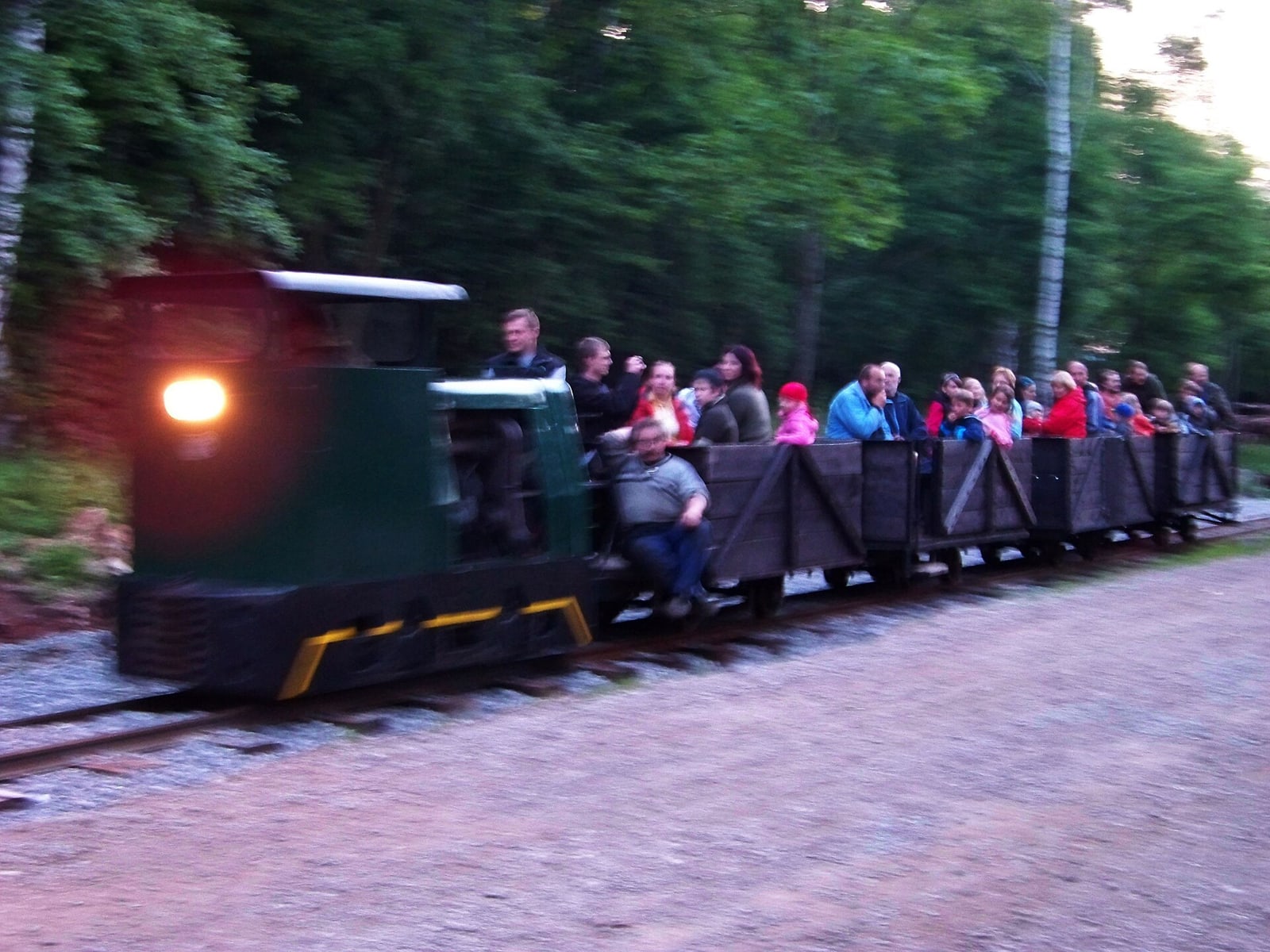
Narrow-gauge train carrying visitors through the Solvay Quarries site.
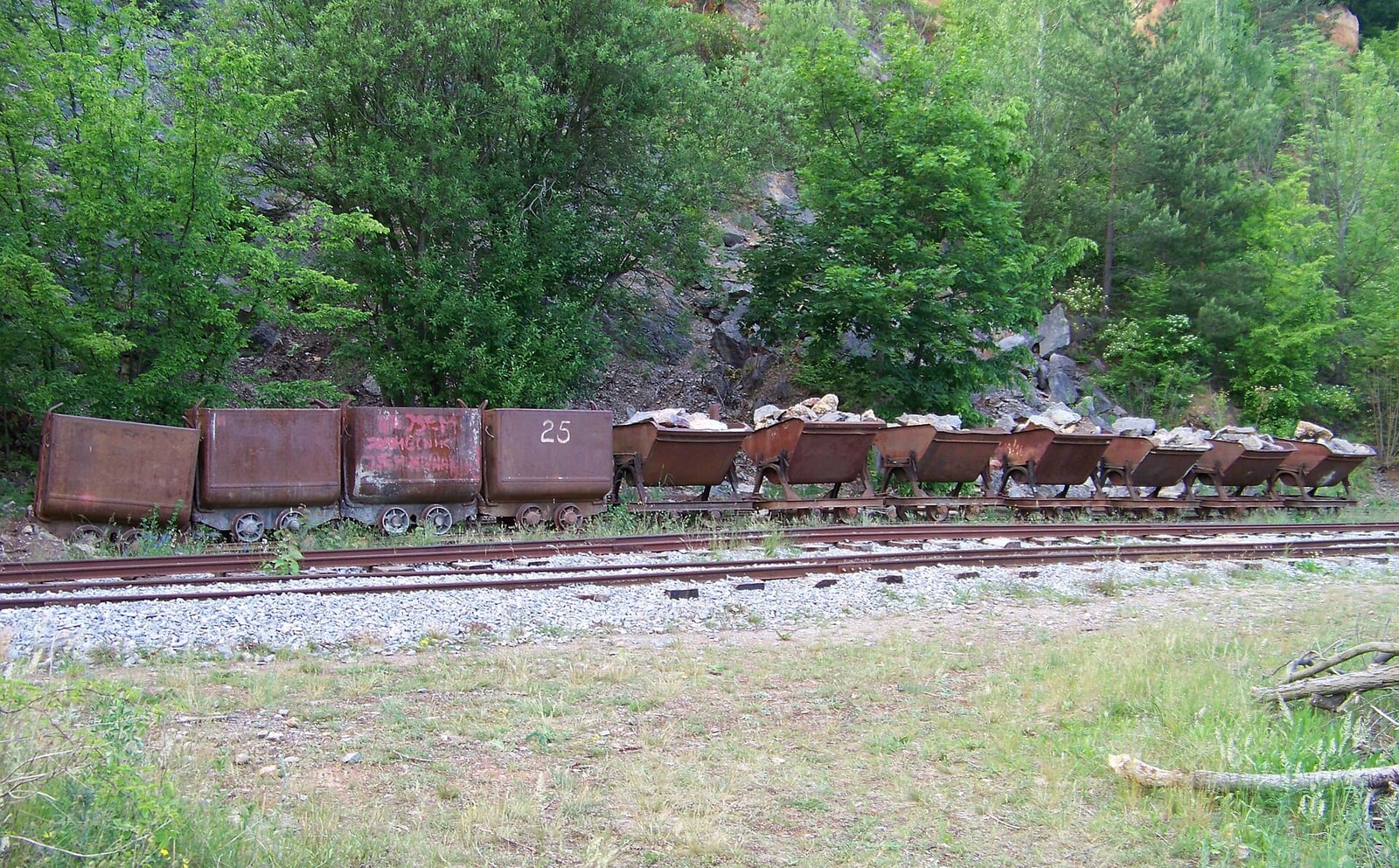
Historic mining carts on narrow-gauge track at Solvay Quarries.
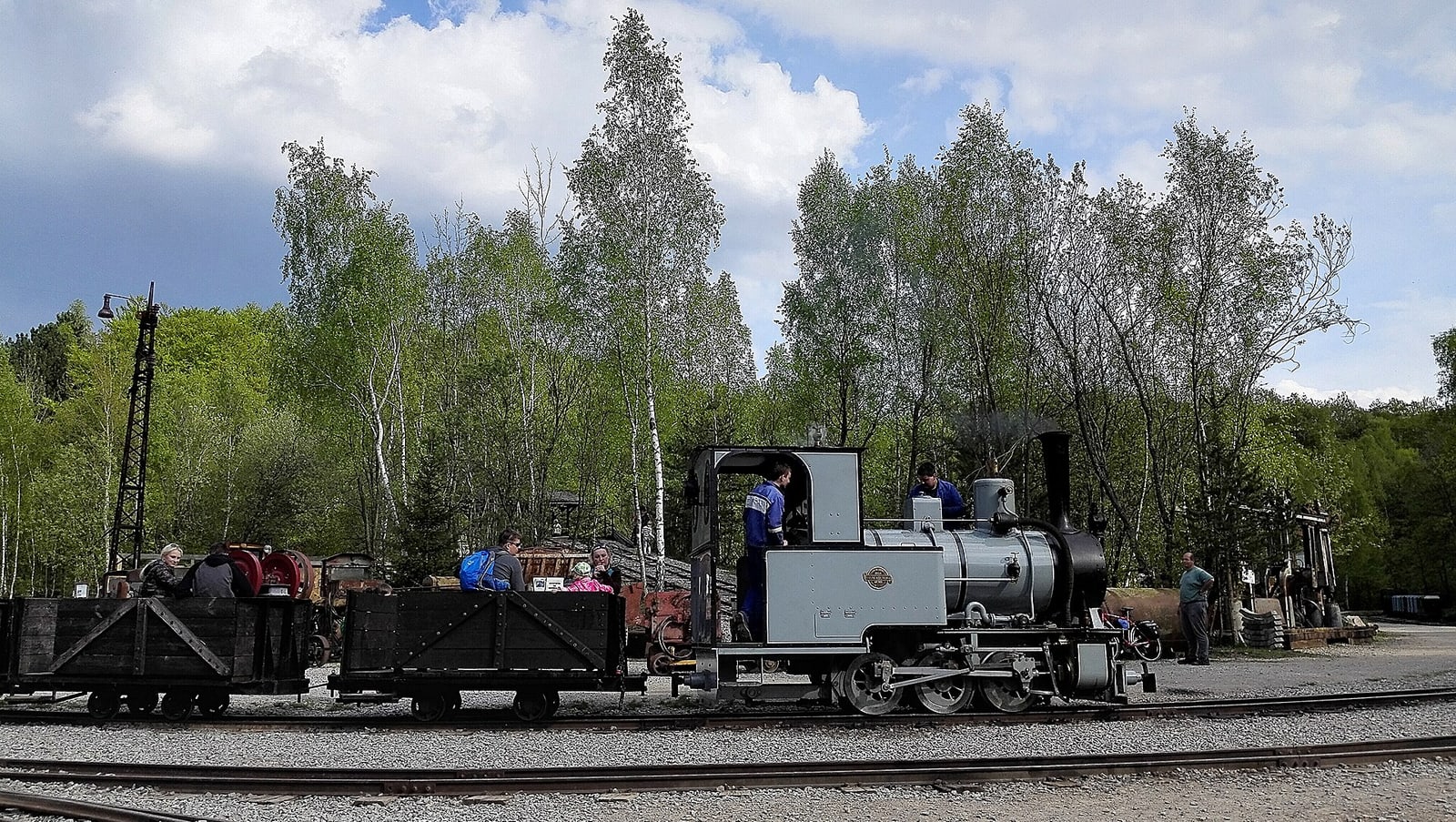
Steam locomotive on the preserved Solvay quarry railway.
Quick facts
- Limestone extraction began in 1918.
- The quarry used a 600 mm narrow-gauge railway.
- A 1,580-metre gravity cableway moved stone toward the state railway.
- The site supplied limestone for chemical production using the Solvay process.
Questions
Is the railway still operating?
The site functions as an open-air mining museum; check current visitor operations for train rides and underground access.
Why is it called Solvay?
The quarry supplied limestone for soda production using the Solvay process.
Can it be combined with Svatý Jan pod Skalou?
Yes. The sites are close enough to form a strong combined history-and-landscape excursion.
Sources & further reading
- Historie lomu — Skanzen Solvayovy lomy