
Prague Stories · Unfinished places
Panenský Týnec: The Gothic Church That Never Received Its Roof
High Gothic walls and window openings rise directly into the sky at Panenský Týnec. The church was planned on an ambitious scale, worked on by a royal building lodge and then left unfinished for centuries.
Panenský Týnec, Central Bohemia

They began a major Gothic church here in the 14th century. The sky is still its ceiling.
The unfinished state is the architecture
Construction of the church began around 1316. Prague City Tourism describes a planned three-aisled church with two towers and notes work by the royal lodge of Peter Parler in the second half of the 14th century.
History interrupted ambition
A fire damaged the monastery buildings in 1382, weakening the conditions for completion, and the complex suffered again during the Hussite period. This is not the shell of a church that once stood finished and later lost its roof. The ambitious project itself stopped short.
The open roof changed the meaning
Today the twenty-metre-high unfinished walls frame weather, trees and sky. That creates the atmosphere visitors remember, but the visual drama should not erase the construction history that produced it.
Separate heritage from energy claims
Panenský Týnec is also promoted through stories of a healing “positive energy zone.” Those claims belong to modern belief and visitor culture, not established medical evidence. The documented Gothic building history is strong enough without converting folklore into science.
Missing architecture makes the design easier to see
At Panenský Týnec, unfinished supports and openings point toward spaces that were planned but never built. A completed church would hide much of that logic beneath roof, furnishings and later decoration. Here, the absence works almost like a drawing at full scale: walls show where the building was heading and exactly where it stopped.
And then weather moved in
Clouds, wind and changing light now occupy the volume a roof was meant to close. That accident of history is the source of much of the atmosphere people respond to today. It also helps explain the site’s modern reputation as a place of “positive energy” — a belief worth noting as contemporary visitor culture, but not confusing with medical evidence.
Reviewed visuals
See the story
Supporting images selected in the Prague Stories visual review. Context images are labeled so they are not mistaken for documentary proof of the exact subject.
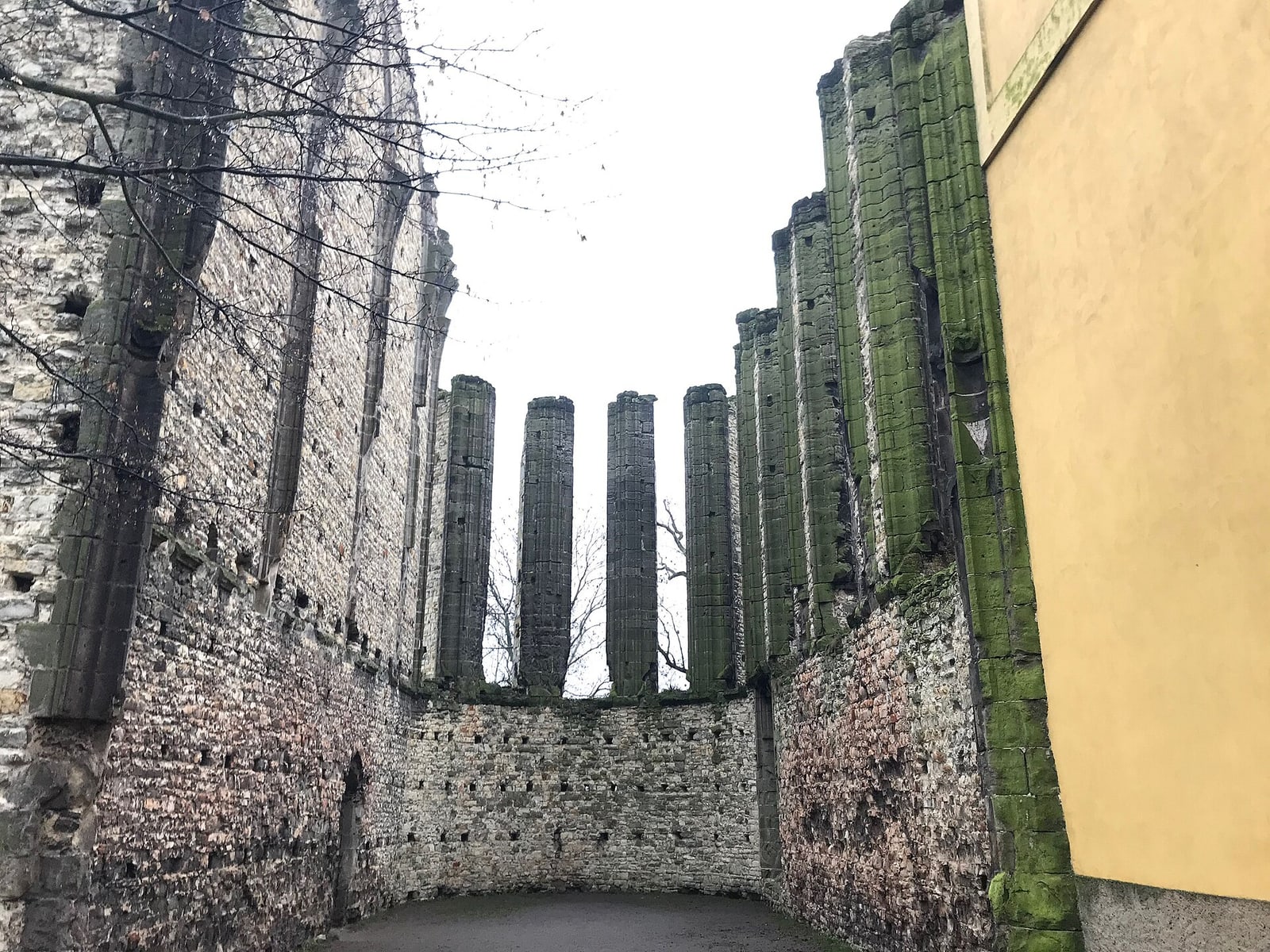
Open-to-sky interior view between the unfinished Gothic walls and columns.
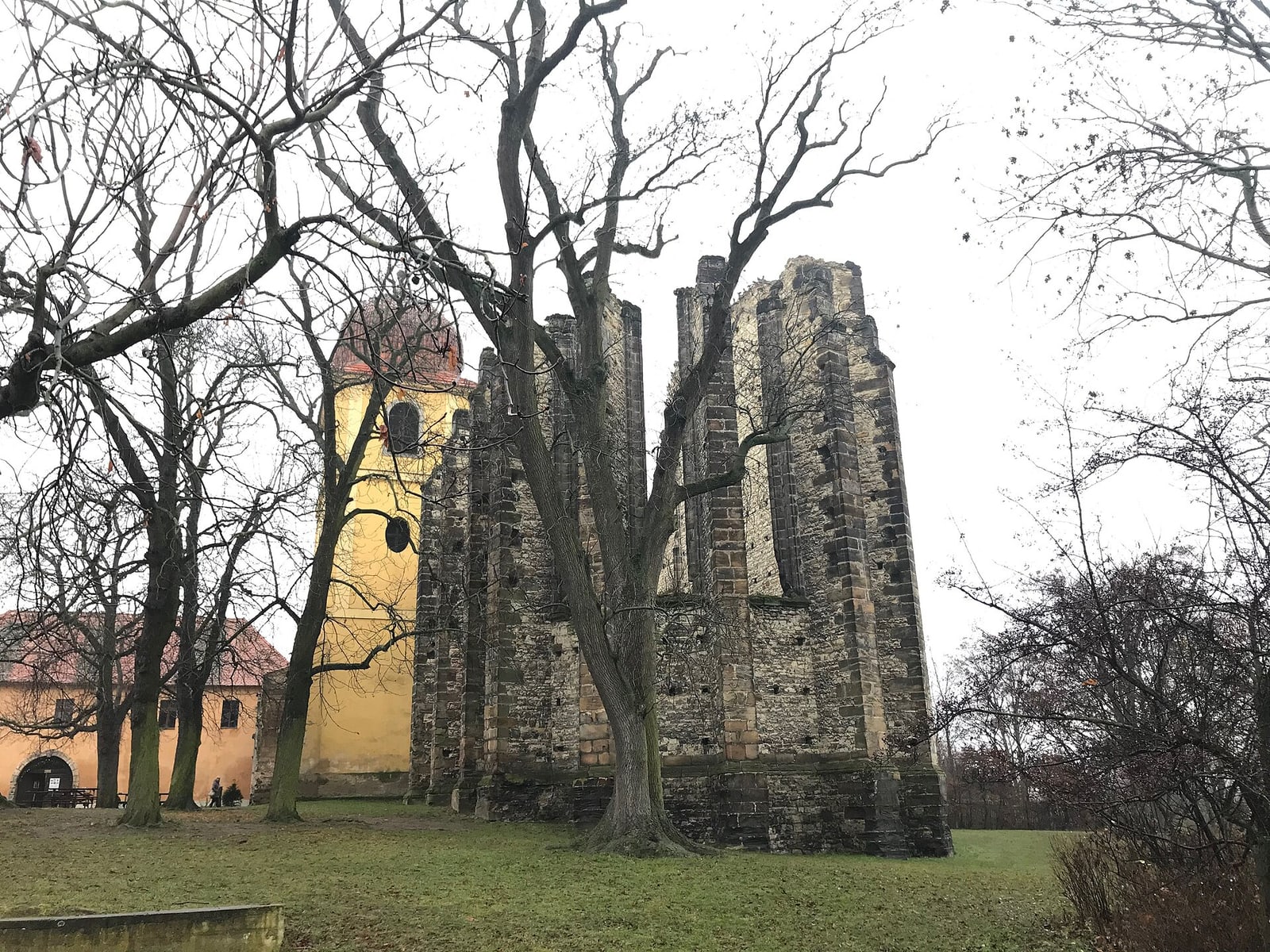
Rear exterior view showing unfinished buttresses/walls.
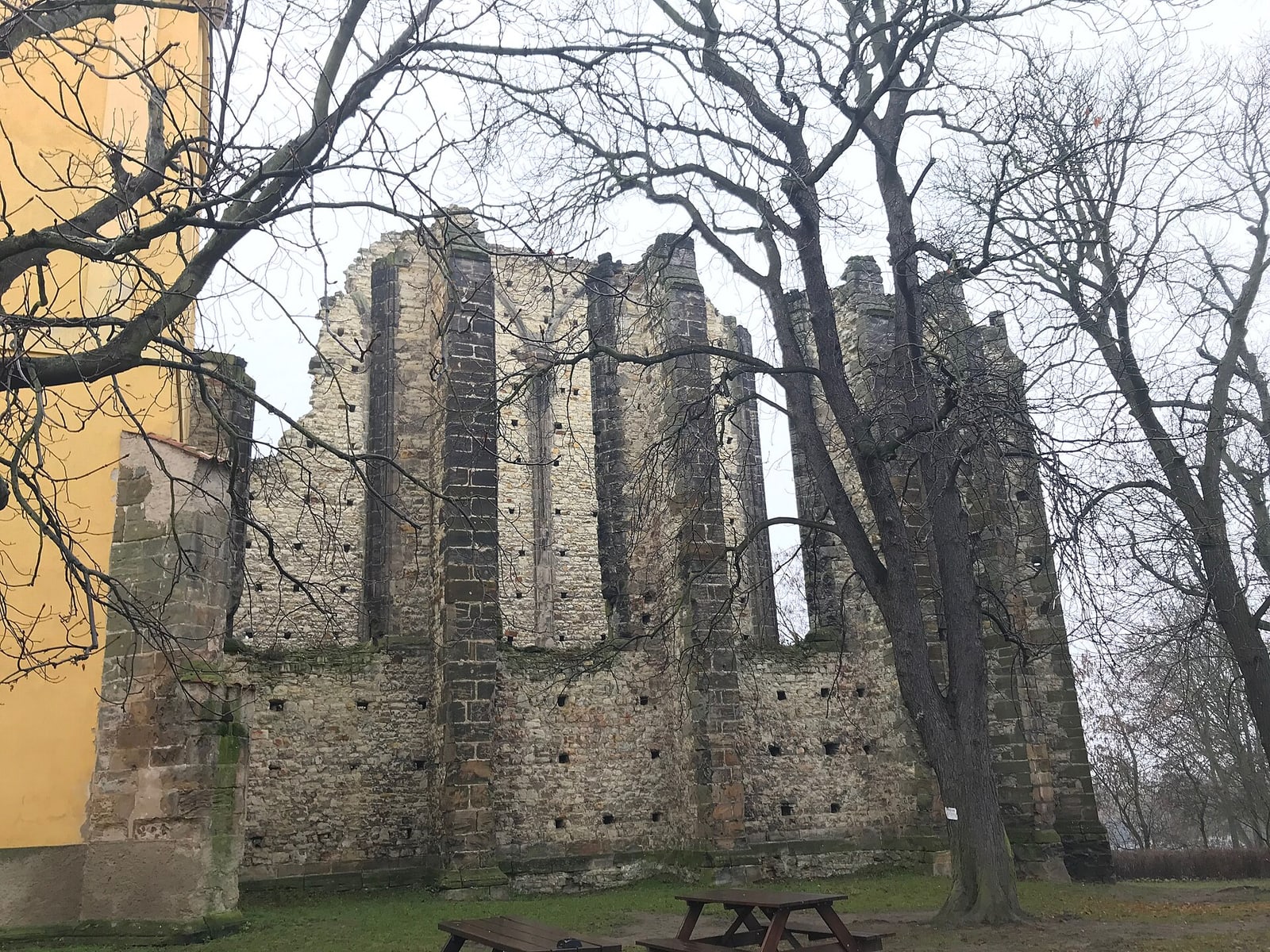
Wide overall view of the roofless unfinished church.
Quick facts
- Construction began around 1316.
- The church was planned as a three-aisled Gothic building with two towers.
- The royal lodge associated with Peter Parler worked on the project.
- The building was never completed and remains open to the sky.
Questions
Why was the church never finished?
A combination of monastery fire, political disruption and changing circumstances prevented completion.
Is the “healing energy” scientifically proven?
No. It is a modern belief associated with the site, not an established medical fact.
Is it a ruin of a completed church?
The remarkable point is that the Gothic project itself remained unfinished.
Sources & further reading
- A geyser of positive energy in Panenský Týnec — Prague City Tourism