
Prague Stories · Archaeology near Prague
Závist: A 200-Hectare Iron Age Centre on Prague’s Southern Edge
On wooded high ground just south of Prague, the oppidum at Závist once covered nearly 200 hectares. Archaeology identifies it as one of the most important Iron Age centres in the Bohemian basin.
Závist, Prague-West

Prague has a nearly 200-hectare Celtic-era fortified centre on its doorstep — and most visitors never know it is there.
The scale is the first surprise
The Archaeological Atlas describes Závist as the best-known La Tène oppidum in the country. Including its outer areas, the later oppidum covered nearly 200 hectares — large enough that walking the terrain matters more than looking for one central ruin.
Its importance began even earlier
The site reached major importance already in the Late Hallstatt and Early La Tène periods, with contacts extending toward western Europe, Italy and Greece. Archaeologists also identify monumental stone architecture from this earlier phase.
What survives is landscape archaeology
Do not expect city walls standing at human height. Banks, gates, slopes and route logic are the evidence. The site rewards visitors who can read terrain, especially when aided by maps showing the acropolis, pincer gates and defensive lines.
It complicates the phrase “before Prague”
Závist is not an earlier version of Prague and should not be marketed as such. Its value is that it proves central Bohemia already supported large, connected and socially complex centres many centuries before the medieval capital emerged.
Two hundred hectares is something you feel with your legs
On paper, the number is abstract. On the hill, the distance between enclosed areas, approaches and defensive lines starts to do the explaining. Závist was not one tidy summit fort. Its size implies circulation, gates, defended zones and the movement of large numbers of people and goods. Even after the buildings disappear, scale survives underfoot.
“Celtic” compresses a long sequence
The landscape mattered across more than one archaeological period. Major pre-oppidum phases came before the later La Tène centre, so a single label can flatten centuries of change. Závist is more interesting as a place repeatedly organised, rebuilt and reinterpreted than as one frozen “Celtic city.”
Take a map or the forest wins
Trees make every bank and slope look deceptively alike. A plan showing gates, defensive lines and the acropolis turns an ordinary woodland walk into spatial archaeology. Distances begin to line up with features; a change in ground stops being just a bump. Here, orientation is part of the interpretation.
Reviewed visuals
See the story
Supporting images selected in the Prague Stories visual review. Context images are labeled so they are not mistaken for documentary proof of the exact subject.
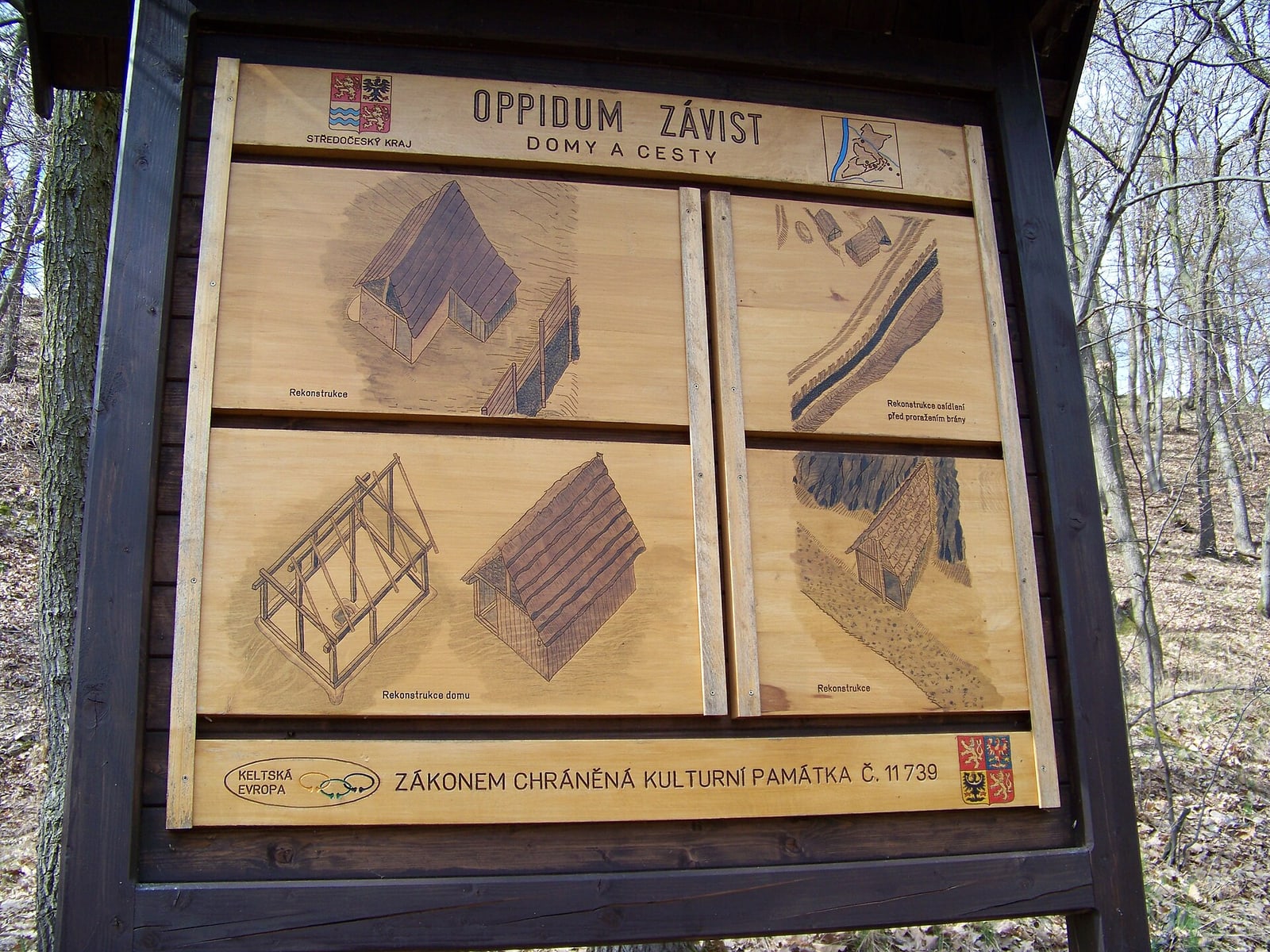
Interpretive board showing houses/routes at the Závist oppidum.
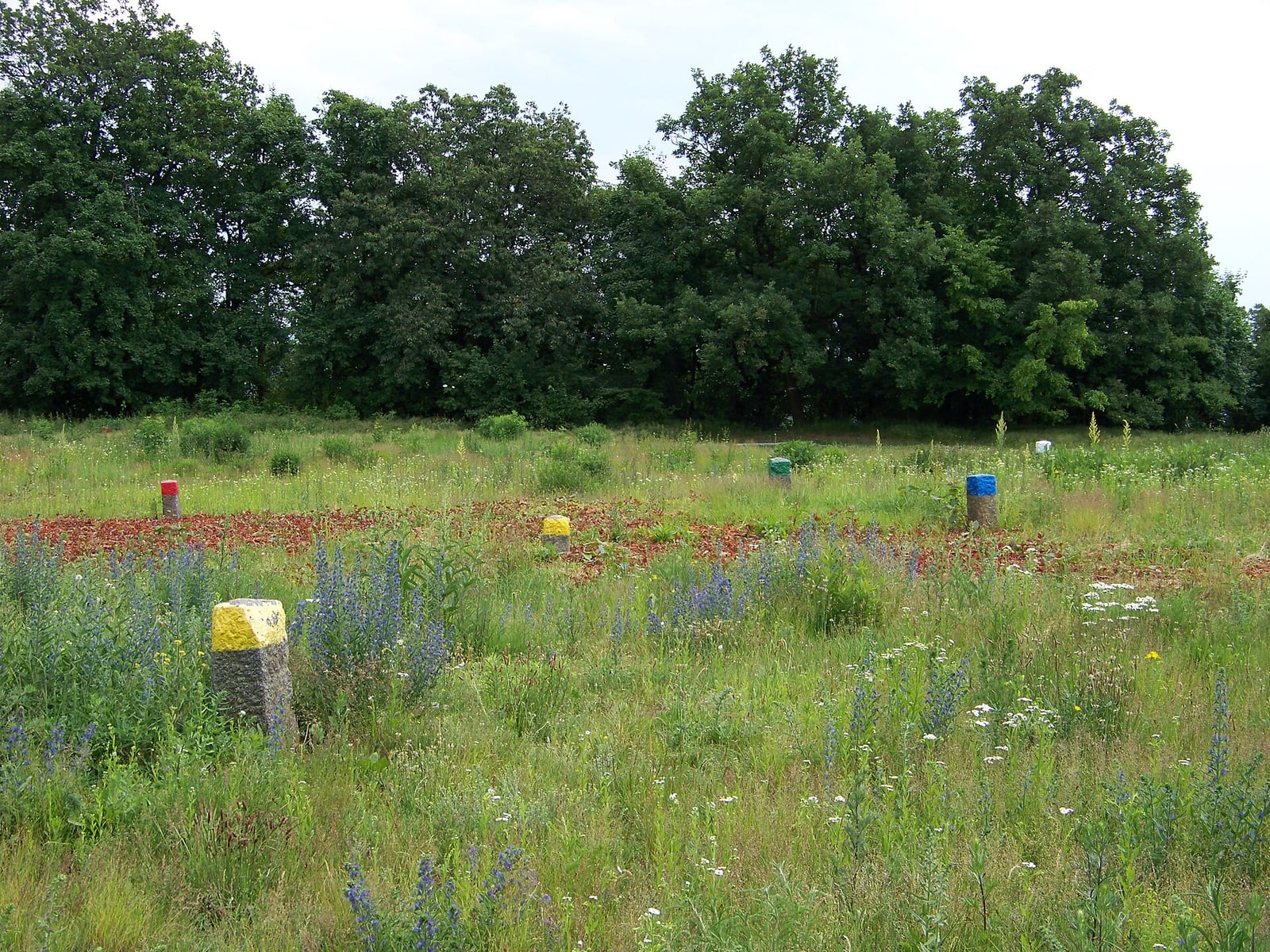
Acropolis area of the Závist archaeological site.
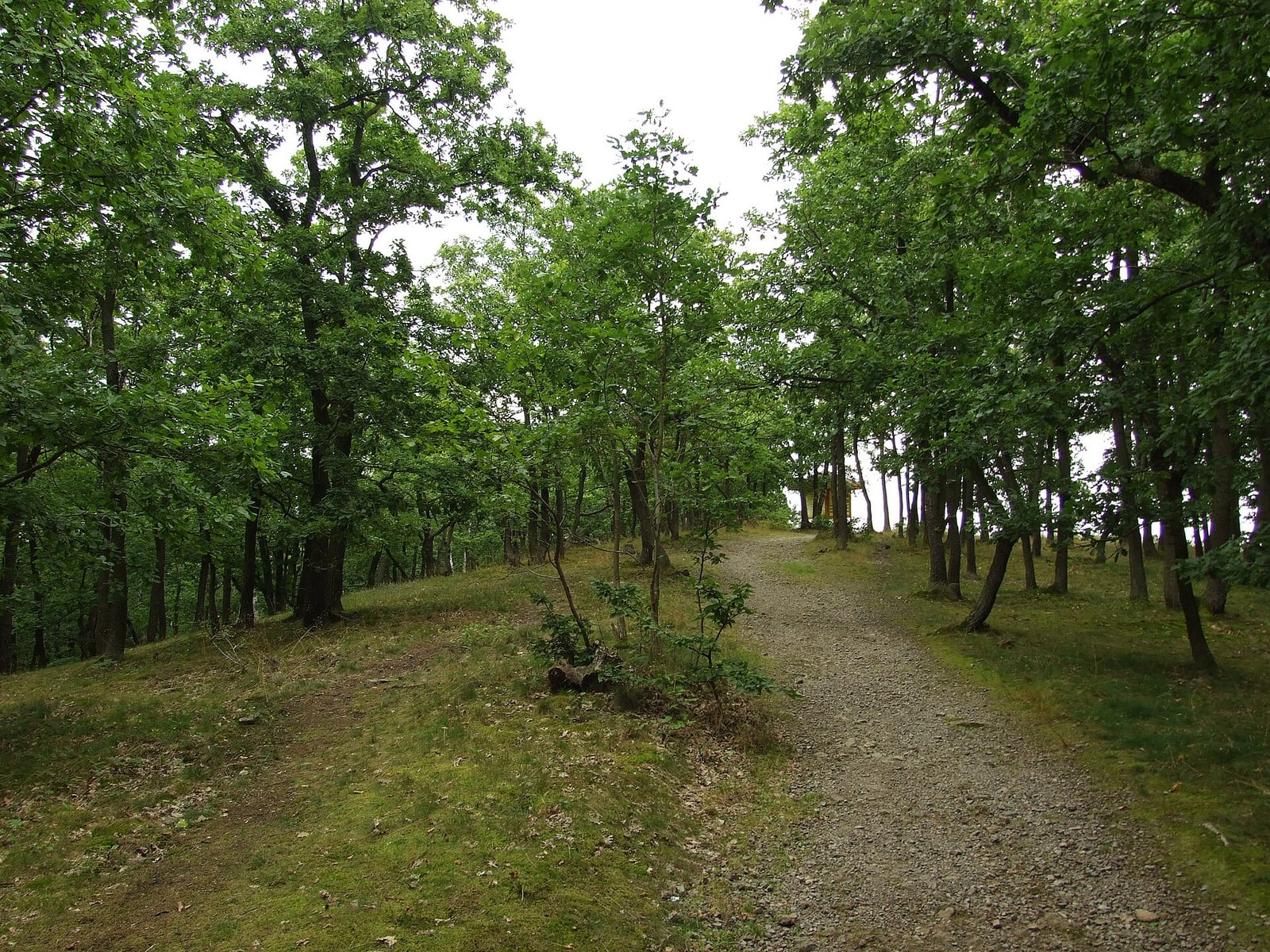
Forest path leading toward Závist’s acropolis, showing the present-day site experience.
Quick facts
- The Závist oppidum covered nearly 200 hectares with its outer areas.
- It was a major centre in the Bohemian basin.
- The site had long-distance contacts with western Europe, Italy and Greece.
- Visible remains today are primarily earthworks and archaeological landscape features.
Questions
Was Závist a Celtic city?
It was a large fortified La Tène centre traditionally associated with Celtic settlement; “city” can be useful shorthand but should not imply a medieval urban structure.
Can you see ruins?
The most important visible remains are earthworks, banks and gate terrain.
How close is it to Prague?
It lies immediately south of the city in the Prague-West area.
Sources & further reading
- Lhota u Dolních Břežan — Oppidum Závist — Archaeological Atlas of Bohemia