
Prague Stories · Archaeology day trip
Nižbor and Stradonice: A Celtic Urban Centre Before Prague Existed
Across the Berounka from Nižbor Castle lies Stradonice, one of the richest Iron Age oppida in Bohemia. The landscape connects a modern Celtic information centre with the remains of a large settlement that flourished centuries before Prague.
Nižbor / Stradonice, Central Bohemia

People were minting, trading and producing goods near today’s Prague region long before Prague existed.
Stradonice was not a village-scale settlement
The Archaeological Atlas describes Stradonice as the largest, richest and earliest-known La Tène oppidum in Bohemia. Its enclosed area exceeded 90 hectares and included an inner fortified settlement, acropolis and outer areas.
Industry and exchange left archaeological traces
Excavation has revealed specialised production and dense occupation along major internal routes. Nineteenth-century discoveries made the site famous but also led to destructive treasure hunting as objects were sold to collectors.
Nižbor gives the archaeology a visitor doorway
Nižbor Castle now houses the Celtic Culture Information Centre. Its position opposite Stradonice turns the museum visit into a landscape lesson: artefacts and interpretation on one side, the physical oppidum on the other.
Do not turn it into “Celtic Prague”
Stradonice should not be forced into a direct origin story for Prague. Its value is different. It shows that complex settlement, long-distance connections and specialised production were already part of central Bohemia centuries before the medieval city formed.
The treasure hunters are part of the story
Nineteenth-century discoveries made Stradonice famous and also damaged it. Objects were pulled from the ground and sold while their archaeological context disappeared. A coin in a collection can be beautiful; a coin tied to a layer, building and group of other finds can tell you far more. The site records both Iron Age complexity and the cost of early collecting habits.
Pair the museum with the hill
Nižbor Castle gives the artefacts and interpretation; Stradonice gives them distance, slope and scale. Looking across the Berounka before or after walking the oppidum helps the pieces click together. The museum prevents the earthworks from feeling anonymous, and the landscape keeps the objects from becoming things in cases with no place attached.
Reviewed visuals
See the story
Supporting images selected in the Prague Stories visual review. Context images are labeled so they are not mistaken for documentary proof of the exact subject.
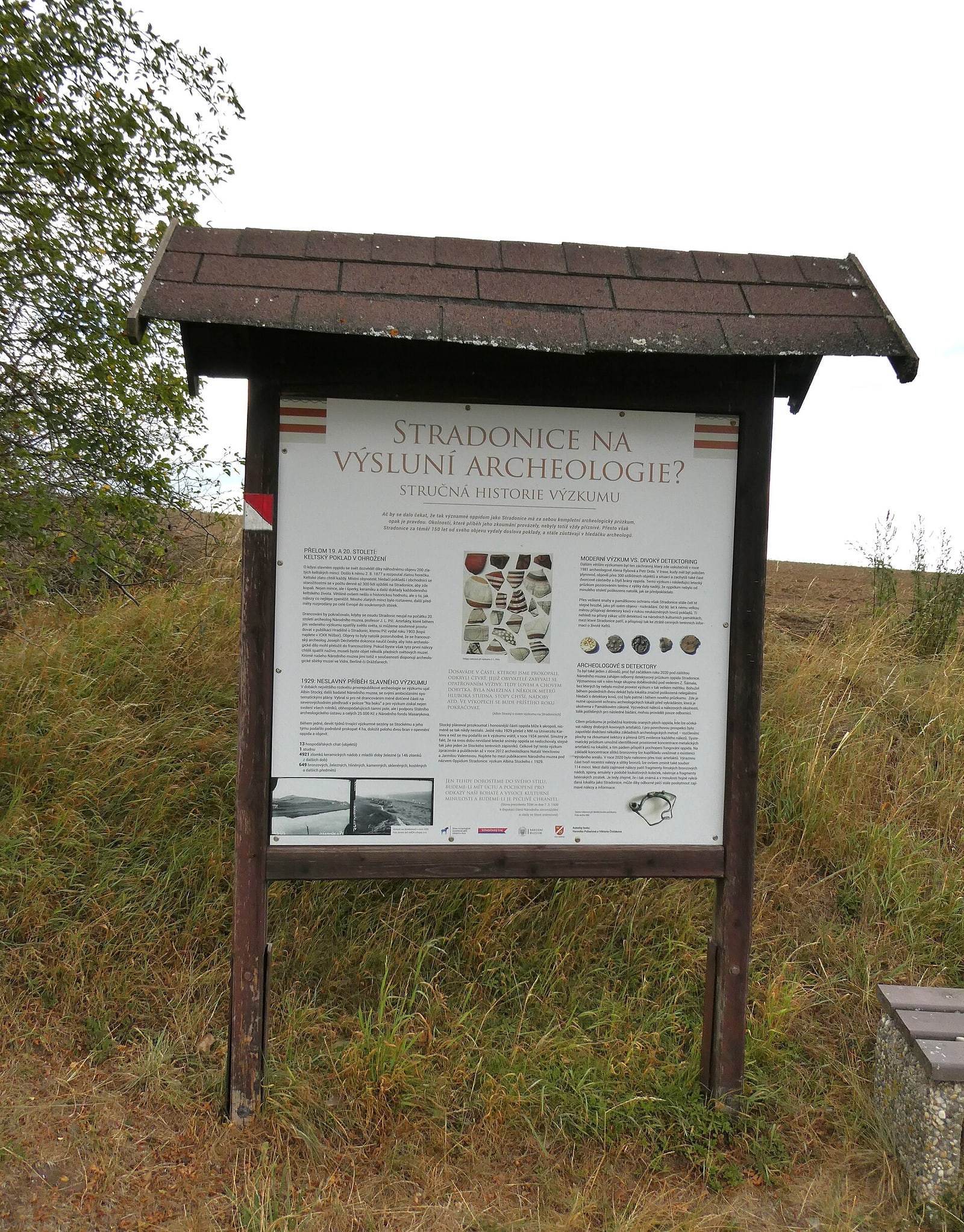
Interpretive information board at the Stradonice oppidum.
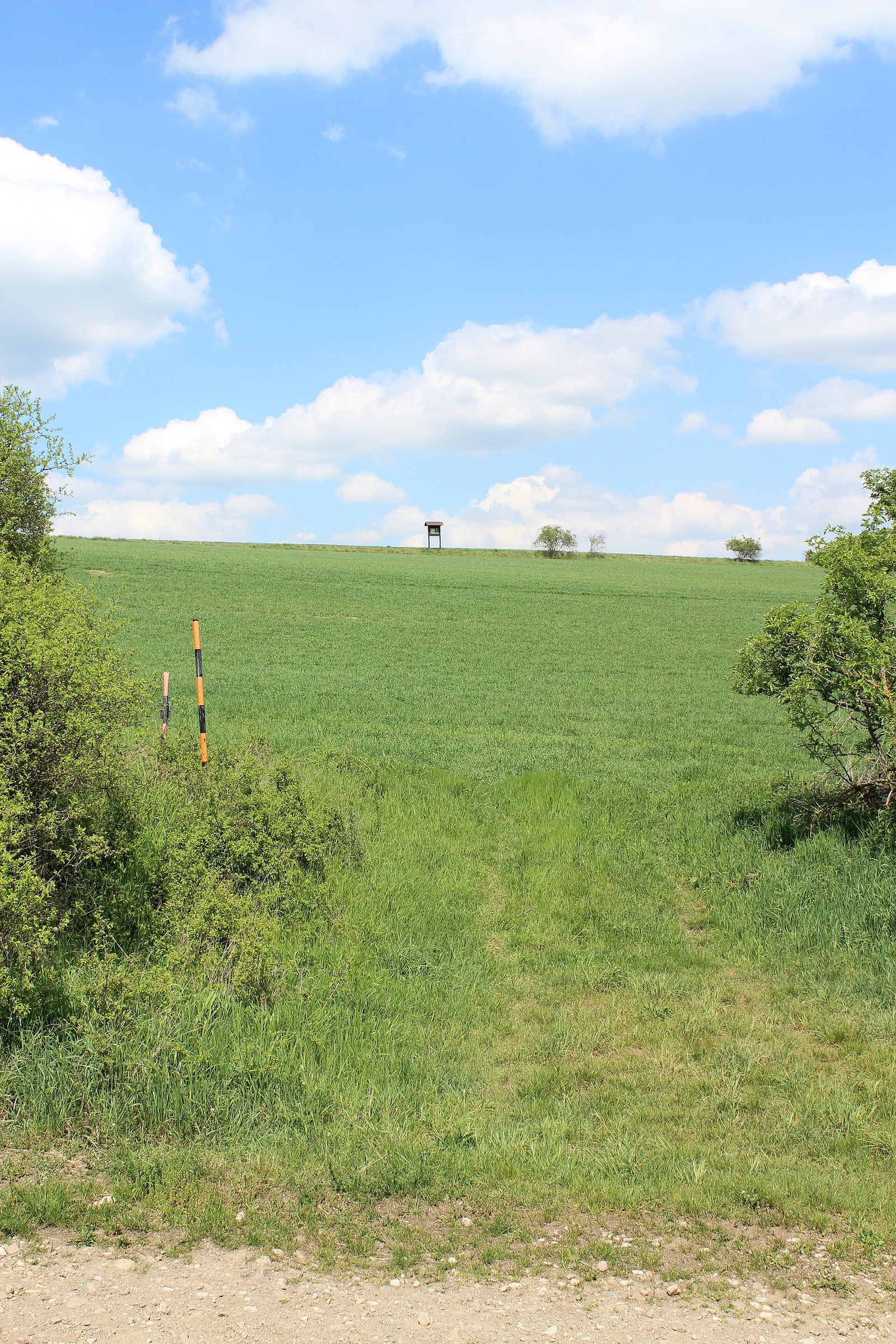
Wooded archaeological terrain/earthwork at the Stradonice Celtic oppidum.
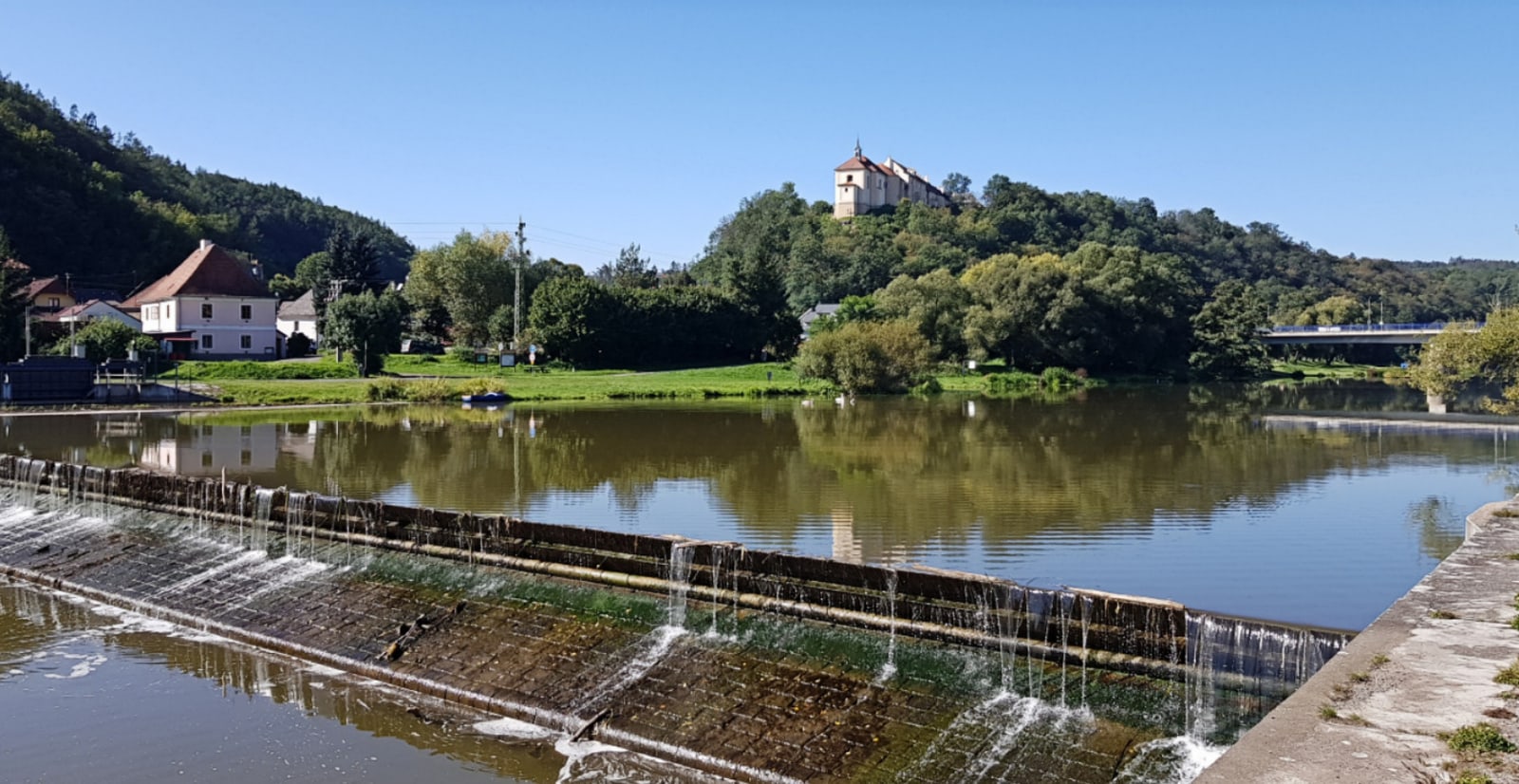
Nižbor Castle, which houses the Celtic Culture Information Centre mentioned in the story.
Quick facts
- Stradonice was a La Tène oppidum of more than 90 hectares.
- It is described as one of the richest and earliest-known oppida in Bohemia.
- The site preserves evidence of specialised production and fortified settlement.
- Nižbor Castle houses a Celtic Culture Information Centre opposite the oppidum landscape.
Questions
What is an oppidum?
A large fortified Iron Age settlement associated with La Tène culture.
Are there visible buildings at Stradonice?
Do not expect reconstructed streets; the important surviving evidence is archaeological and topographical.
Why visit Nižbor too?
Its Celtic Culture Information Centre provides context for the hillfort across the river.
Sources & further reading
- Stradonice u Nižboru — Archaeological Atlas of Bohemia
- Informační centrum keltské kultury — Ústav archeologické památkové péče středních Čech