
Prague Stories · Hidden day trip
Svatý Jan pod Skalou: A Monastery, a Cave and a Legend Under One Cliff
A limestone cliff rises almost directly above the monastery village of Svatý Jan pod Skalou. Below it, a preserved cave, a spring and centuries of Benedictine history wrap around the legend of the hermit Ivan.
Svatý Jan pod Skalou, Central Bohemia

This village looks as if someone pushed a monastery into the bottom of a limestone wall.
Begin with the landscape
The setting is not decoration. Travertine caves, spring water and the steep limestone wall shaped the religious identity of the place. The municipality traces the local tradition to the hermit Ivan, who according to legend lived in a cave here in the late 9th century.
Legend and documentation meet but do not merge
The surviving cave is real. The written history of the site becomes firmer in medieval documents, while the detailed encounters of Ivan, Bořivoj, a miraculous deer and St John the Baptist belong to hagiographic legend. Keeping those layers separate makes the place more interesting, not less.
The monastery had many lives
A Benedictine community developed here, the Baroque church was built in 1661 and later stabilised by Kryštof Dientzenhofer. After the monastery was abolished under Joseph II, the complex passed through industrial, spa, educational, prison, police-school and archive uses before returning to church ownership.
One valley, radically different Czech histories
Few day trips compress early Christian legend, Baroque architecture, industrial reuse and communist-era coercive institutions into such a small physical space. The cliff remains constant while the buildings beneath it repeatedly change purpose.
The monastery never stayed frozen in one role
After monastic suppression, the complex moved through manufacturing, spa use, education, prison and forced-labour functions, police training and archival storage. Sacred buildings remained while the institutions inside and around them changed radically. It is hard to reduce the valley to one postcard once you know how many versions of Czech history have occupied the same walls.
The cliff pulls everything together
On photographs the complex can look spacious. In person, the valley feels compressed: rock rises abruptly, water emerges at the foot of the cliff and buildings compete for limited flat ground. The cave, spring, church and monastery stop reading as separate attractions. The landscape forces them into one scene.
Reviewed visuals
See the story
Supporting images selected in the Prague Stories visual review. Context images are labeled so they are not mistaken for documentary proof of the exact subject.
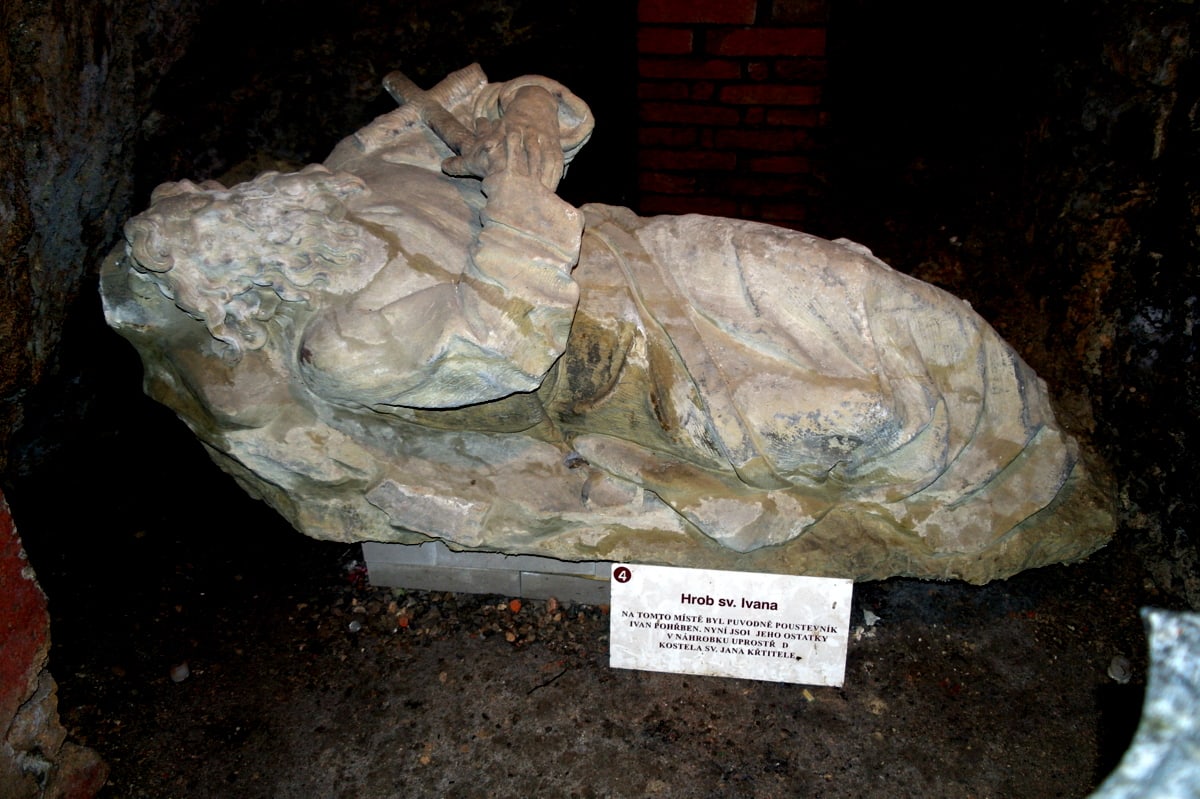
Cave/chapel associated with Saint Ivan inside the monastery complex.
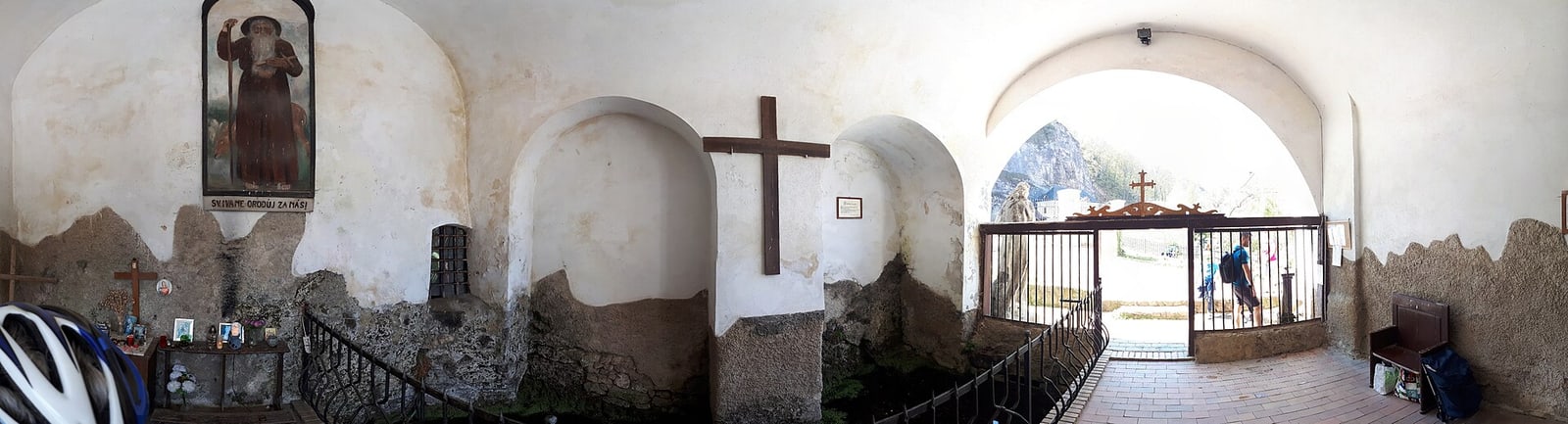
St Ivan spring at Svatý Jan pod Skalou, another element of the hermit/monastery story.
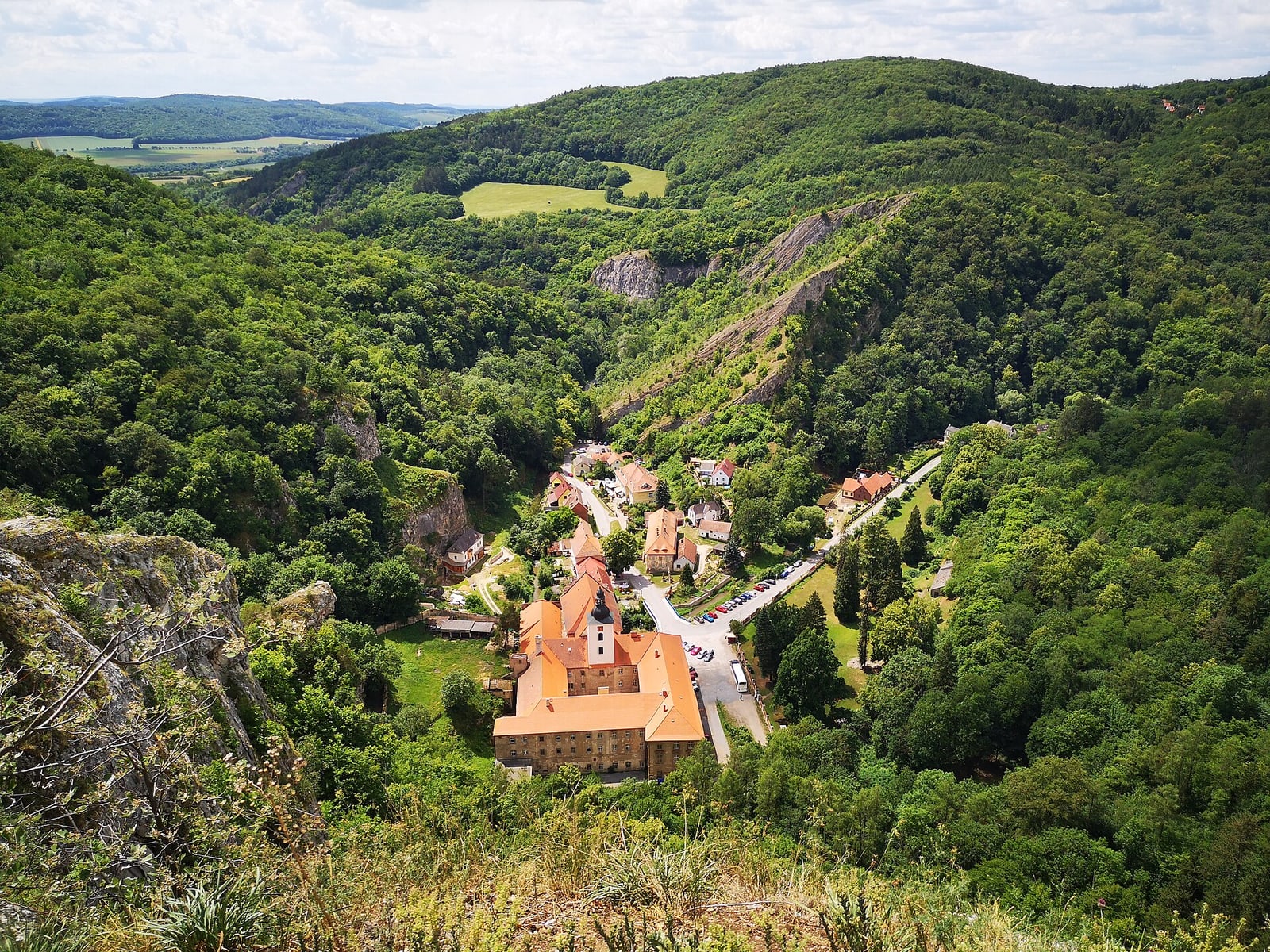
High viewpoint over the monastery/village from the limestone cliff, showing the site’s dramatic topography.
Quick facts
- The site preserves the Cave of St Ivan beneath a limestone cliff.
- Ivan’s detailed life story is a legend, not a fully documented biography.
- The Baroque church dates from 1661 and was later stabilised by Kryštof Dientzenhofer.
- The former monastery had industrial, spa, prison and state-security uses after monastic life ended.
Questions
Was St Ivan a documented historical person?
The local tradition is ancient, but the municipality itself notes the lack of conclusive direct written evidence for his existence.
Can visitors enter the monastery?
Visitor access varies by part of the complex; check current local information before travel.
Why combine this with Solvay Quarries?
The mining museum lies in the same Czech Karst landscape and tells a completely different industrial story.
Sources & further reading
- Historie — Municipality of Svatý Jan pod Skalou
- Památky obce Sv. Jan pod Skalou — Municipality of Svatý Jan pod Skalou