
Prague Stories · Deep Bohemia
Budeč: The Early Medieval Site Where One of Bohemia’s Oldest Buildings Still Stands
Only a short journey from Prague, Budeč preserves something the capital cannot show in quite the same way: an early medieval hillfort with the Rotunda of St Peter and Paul, identified by the Archaeological Atlas as the oldest standing church in Bohemia.
Budeč, Central Bohemia

One of the oldest standing buildings in Bohemia is not in Prague Castle. It is on a quiet hill outside the city.
The rotunda survived while the stronghold changed
The early medieval hillfort at Budeč developed around the turn of the 10th century. The Rotunda of St Peter and Paul belongs to that same foundational period. Later centuries altered the church, but its surviving core gives the site a physical continuity that many early Přemyslid centres can only reconstruct archaeologically.
This was not an isolated chapel
Budeč was a fortified centre with an acropolis, bailey, cemeteries and another church dedicated to the Virgin Mary. The rotunda makes the site memorable, but archaeology asks you to picture a functioning political and religious settlement around it rather than a solitary chapel in the countryside.
St Wenceslas enters through memory
Budeč is traditionally connected with the education of St Wenceslas. That association belongs to the cultural memory of the site and should be handled separately from what archaeology can physically prove. The hillfort and rotunda are documented; individual episodes from a saint’s childhood belong to the textual tradition around them.
Why it changes Prague history
Prague Castle dominates many modern accounts of the Přemyslids because the later capital survives at enormous scale. Budeč reminds you that early state power worked through a network of fortified centres. Seeing one makes the rise of Prague feel less inevitable and more like one outcome inside a wider landscape.
The rotunda is only half the site
The standing church naturally draws the eye, yet the earthworks are what restore its scale. Walk beyond the rotunda and the hill begins to read as a fortified centre with movement, burial grounds, defended space and several kinds of activity. The oldest-looking building is not the whole story; it is the surviving piece of a much larger one.
Prague was not yet the whole map
Budeč is close enough to the capital to feel connected, but old enough to recall a period when Přemyslid power was spread across several centres. That is the reason to come. The reward is not spectacle. It is the sudden ability to picture early Bohemia before every important road in the story seems to lead automatically to Prague Castle.
Walk the perimeter before you leave
A quick photograph of the rotunda misses the best clue. Banks, changes in level and the relation between church and surrounding ground reveal themselves slowly. Once the perimeter is in your legs, the church stops looking isolated and starts sitting where it belongs: inside a defended early medieval landscape.
Reviewed visuals
See the story
Supporting images selected in the Prague Stories visual review. Context images are labeled so they are not mistaken for documentary proof of the exact subject.
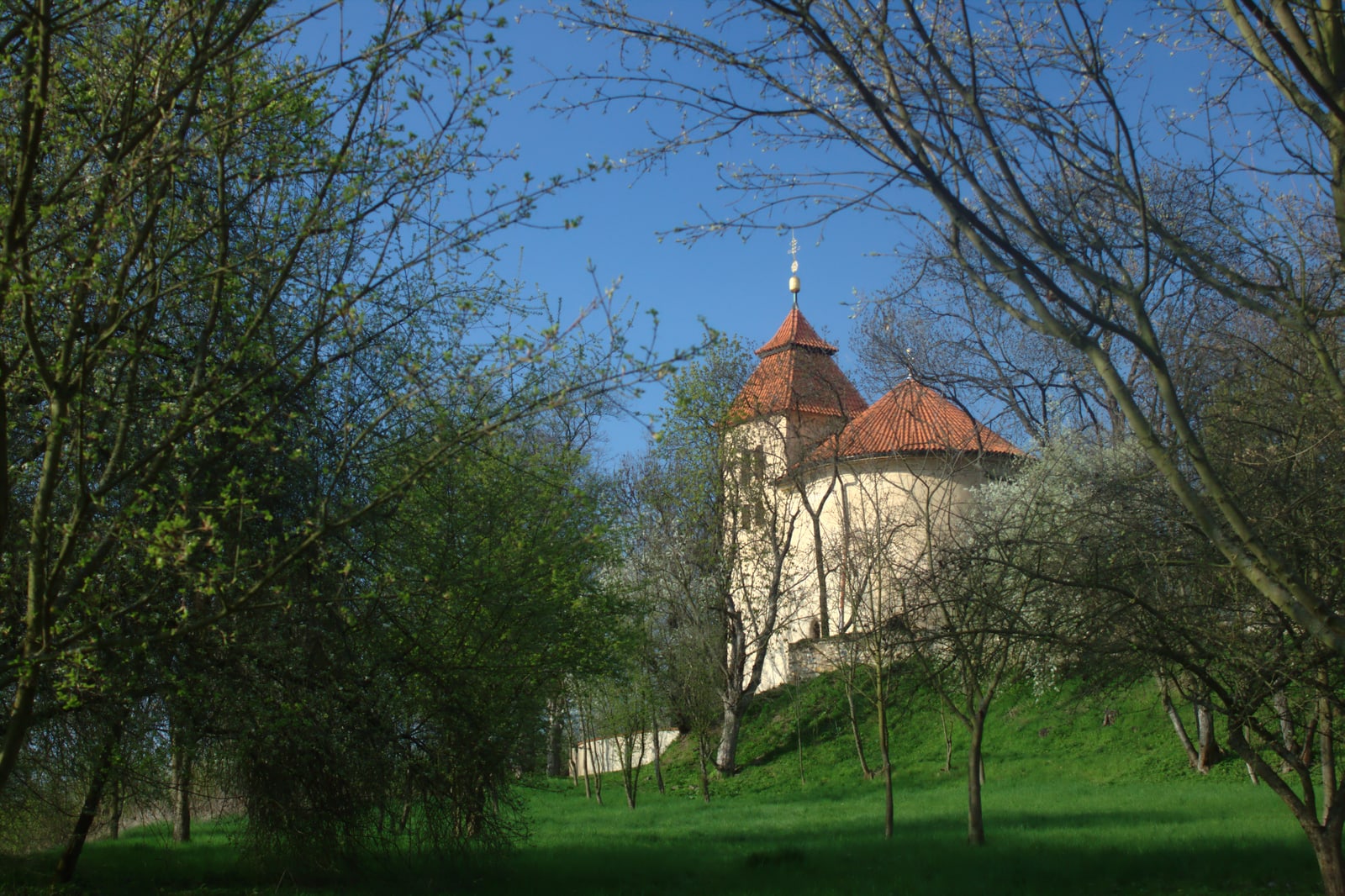
Spring exterior of the Budeč rotunda from a different angle.
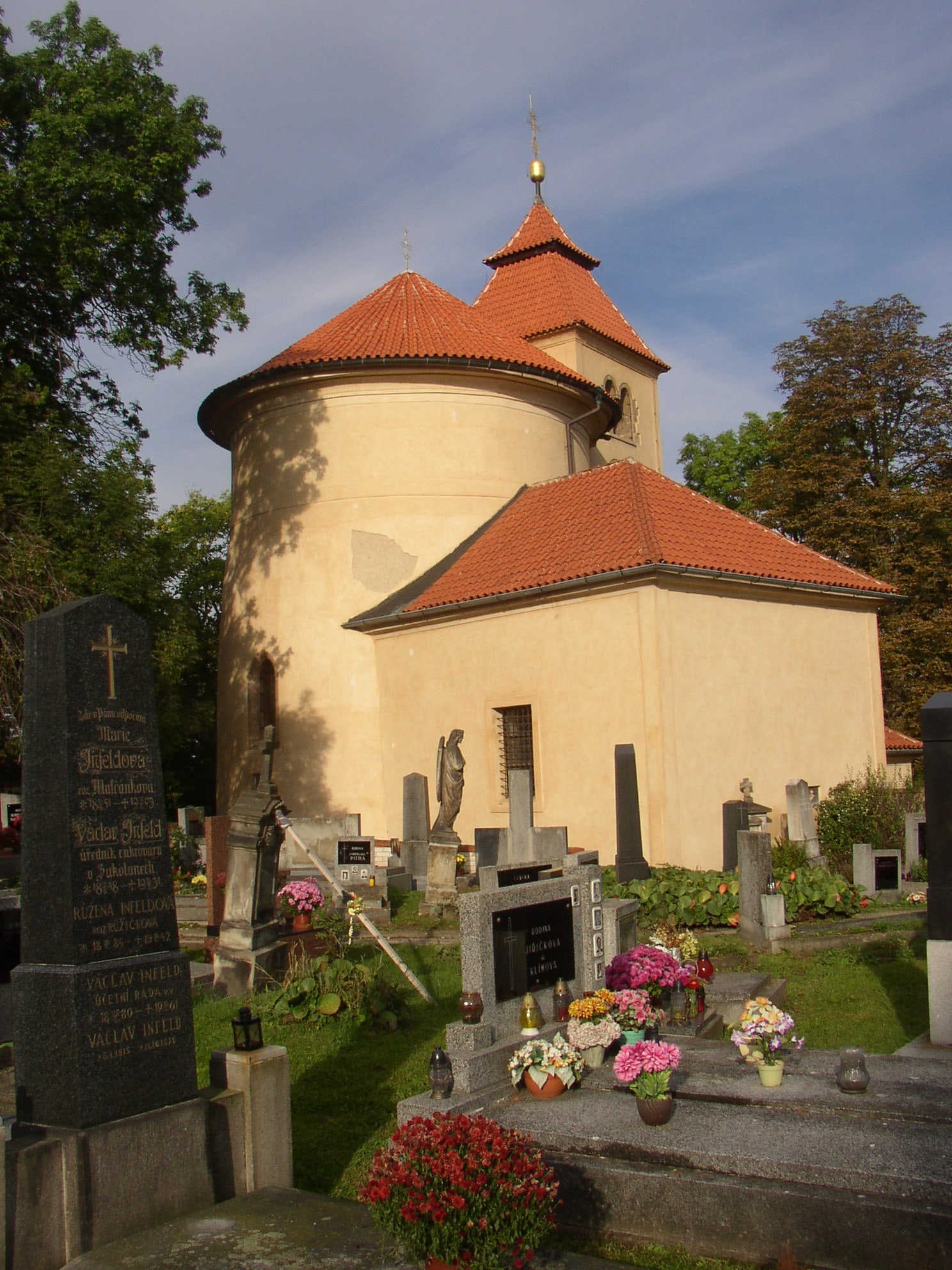
Another exact architectural view of the Budeč church/rotunda complex.
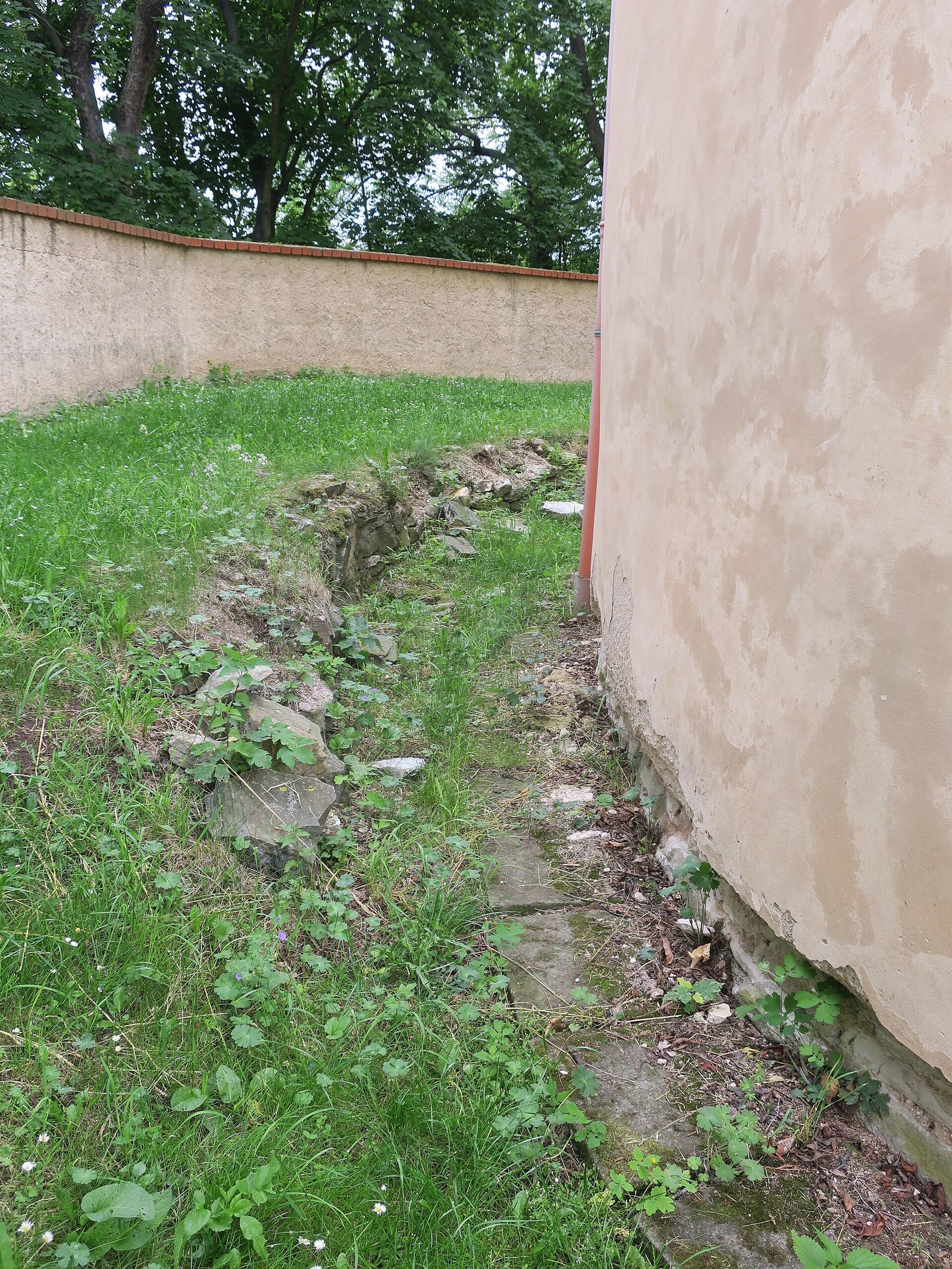
Low stone foundations/remains of an apse at the archaeological site, showing Budeč beyond the standing rotunda.
Quick facts
- Budeč was an early medieval fortified centre.
- Its Rotunda of St Peter and Paul dates to the turn of the 10th century.
- The Archaeological Atlas calls it the oldest standing church in Bohemia.
- The site also preserves remains of fortifications, settlement and cemeteries.
Questions
Is Budeč older than Prague Castle?
Both belong to the formative early Přemyslid period; the important point is that Budeč preserves an exceptionally early standing church.
Is the whole rotunda original?
No. It was altered over time, including later additions, while retaining its early medieval core.
Why is Budeč important?
It preserves evidence for the network of early Přemyslid fortified centres outside Prague.
Sources & further reading
- Kováry — Early Medieval hillfort Budeč — Archaeological Atlas of Bohemia
- Hradiště Budeč — National Heritage Institute