
Prague Stories · Modern Prague
Barrandov Terraces: When Prague Borrowed a California Cliff-Side Dream
In the late 1920s, Václav M. Havel turned a rocky site above the Vltava into a modern leisure project inspired partly by San Francisco’s Cliff House. The Barrandov Terraces became architecture, social stage and part of a wider film-era vision for the district.
Barrandov, Prague

Prague once looked at a restaurant above the Pacific and decided to build its own cliff-side social world above the Vltava.
California entered through a Czech engineer
Václav M. Havel had seen San Francisco’s Cliff House and carried the impression back to Prague. The official history of the Barrandov Terraces identifies that building as an inspiration for the Prague project on a rocky promontory above the river.
Max Urban turned the idea into modern architecture
Architect Max Urban designed the terraces and restaurant as part of the wider Barrandov development. Nautical motifs — terraces, ramps, rounded corners and strip windows — helped produce a modern leisure architecture suited to long views over the Vltava.
The district and film industry grew together
Urban also worked on the nearby film studios and the broader residential plan. Housing, entertainment, cinema and a carefully branded landscape were being built as parts of the same Barrandov idea, not as unrelated projects that happened to share a hill.
A restaurant that also sold a district
The glamour had a practical job. From the terraces, guests looked across the Vltava from a new quarter of villas, roads and modern architecture. A lunch or evening drink could double as a demonstration of what living above the old city might feel like. Barrandov was selling tables, views and a new address at the same time.
Cinema completed the picture
The film studios nearby gave the district another dose of modernity. Actors, production crews and new technology reinforced an image already suggested by the Terraces: Barrandov was meant to feel outward-looking and contemporary. The easy comparison is Hollywood on the Vltava, but the local ambition was more specific — to make a new Prague district feel culturally magnetic from the start.
The view did part of the selling
The rocky site was awkward for ordinary development and perfect for theatre. The climb separated the Terraces from the streets below; the architecture then opened toward the river and city. The panorama was not background decoration. It was one of the things people had come to consume.
Reviewed visuals
See the story
Supporting images selected in the Prague Stories visual review. Context images are labeled so they are not mistaken for documentary proof of the exact subject.
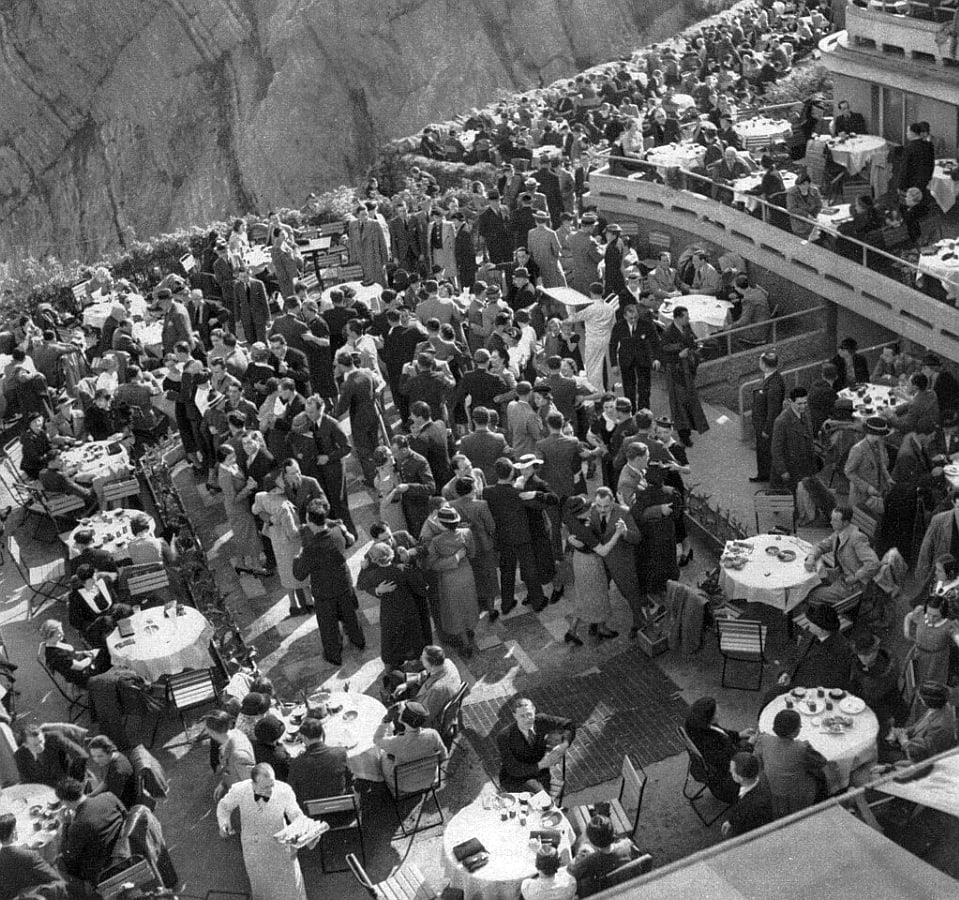
1937 archival view of the busy multi-level terraces with guests and tables.
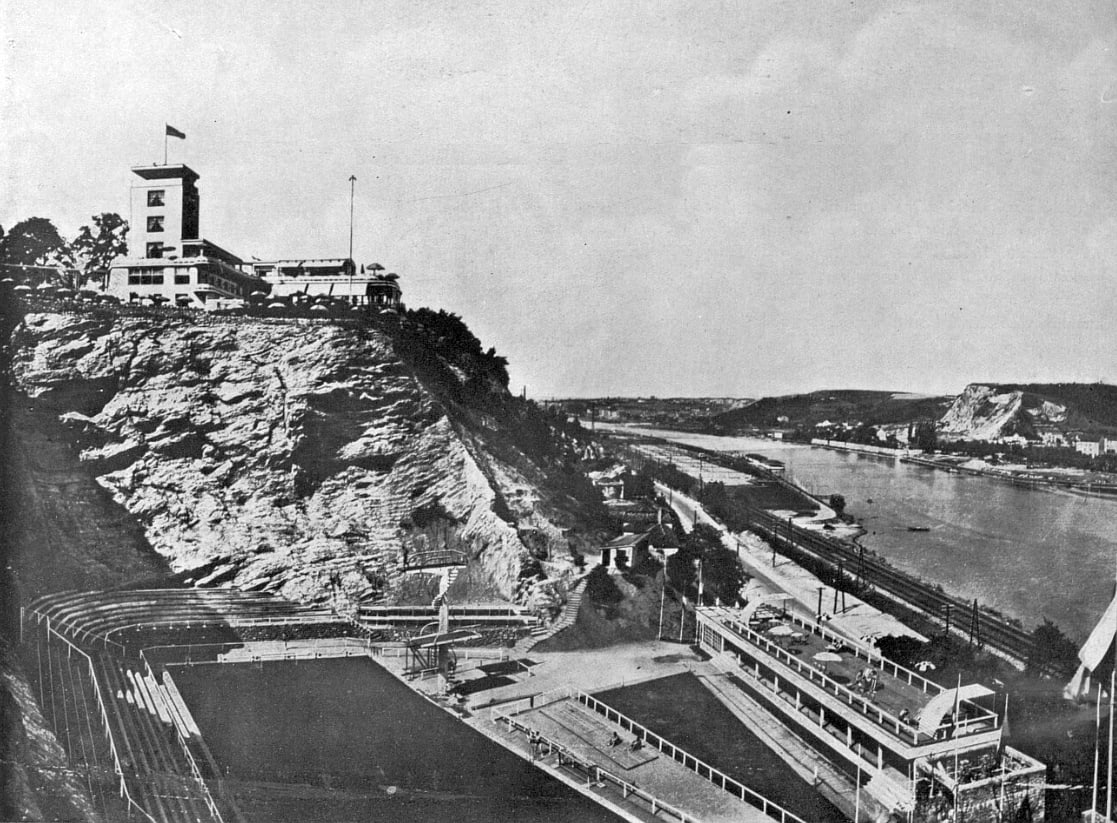
1932 archival view showing the swimming-pool amenity below the terraces.
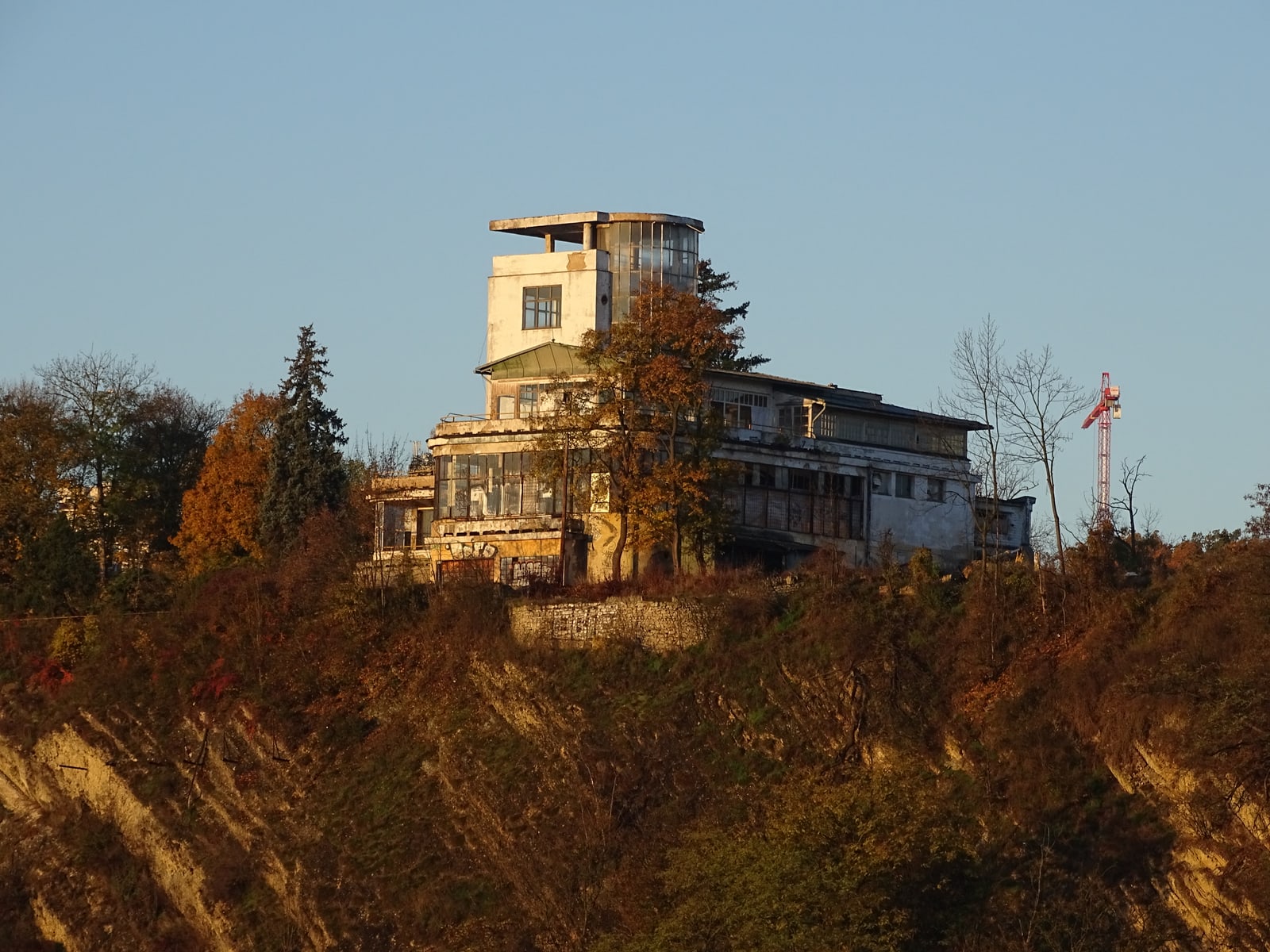
Wide modern view of the Terraces from Barrandov Bridge, showing cliff and urban setting.
Quick facts
- The Barrandov Terraces were initiated by Václav M. Havel in 1929–1930.
- Max Urban designed the main modernist project.
- San Francisco’s Cliff House inspired the cliff-side concept.
- Barrandov’s residential, leisure and film-studio development were closely connected.
Questions
Is Barrandov named after the film studio?
No. The district name was chosen earlier and references Joachim Barrande; the studio became part of the developing area.
Was the Cliff House copied directly?
It was an inspiration, not a literal replica.
Who was Václav M. Havel?
A Czech engineer and developer, and father of the later Czech president Václav Havel.
Sources & further reading
- Barrandov Terraces — History — Barrandovské terasy
- Restaurace Barrandovské terasy — National Heritage Institute
- Naše historie — Barrandov Studio