
Folklore Archaeology
Prague Has a Headless Templar With a Precise Address — But How Old Is the Templar Part of the Story?
Václav Cibula records a headless Templar wandering around Liliová Street. The legend is stable enough to have a Prague address, yet flexible enough that his death, appearance and possible release change between versions.
Liliová Street, Old Town

The Liliová Street legend tells of a headless Templar who rides through Old Town at midnight, his severed head carried with him and his punishment still unfinished.
Cibula gives the ghost a street
In the legend, a Templar knight was executed and returned as a headless revenant in Liliová Street. Later versions picture him in a white crusader’s cloak with a red cross, sometimes riding a horse and sometimes walking through the narrow Old Town streets. He carries or searches for his missing head and appears around midnight, frightening solitary night travellers.
The missing head is the part that survives best
Some retellings say the knight cannot rest until a fearless person completes the act needed to release him from the curse. Exactly why he was executed, what the liberating task is and whether he walks or rides changes from version to version. What remains stable is the Prague folklore core: Liliová Street, a beheaded knight associated with the Templars and a punishment that continues after death. No specific historical execution at this exact spot has been established.
The word ‘Templar’ needs more caution than the ghost
The tradition names the figure as a Templar, but the surviving sources do not establish a specific historical Templar executed at this location. That distinction is crucial. A medieval order can be historically real, and a later Prague legend can genuinely preserve a Templar ghost, without the ghost’s biography being historical. The more interesting question is when and why the Templar identity became attached to a headless revenant in this part of the Old Town.
A legend made from several layers
The appeal of the story comes from the way different layers can be read at once. Liliová is a real street. Medieval religious and military orders belong to the history of Europe and Prague. Headless revenants belong to a broad supernatural tradition. Cibula’s twentieth-century collection records the Prague form in which these elements have already fused. A visitor does not need those layers flattened into one literal event. The fascination lies in seeing how a city turns history into a vocabulary for later legends. The knight becomes ‘Templar’ because that identity carries age, secrecy and punishment long before the apparition takes a single step.
Use the street as evidence of place, not evidence of a ghost
Walk Liliová and notice its scale, turns, entrances and connections to the Old Town. The street provides the topography; Cibula provides the literary-folklore anchor. A specific executed Templar has not been documented, but the combination of place, medieval identity and supernatural motif shows how successfully Prague storytelling joined several layers into one memorable legend.
Reviewed visuals
See the story
Supporting images selected in the Prague Stories visual review. Context images are labeled so they are not mistaken for documentary proof of the exact subject.
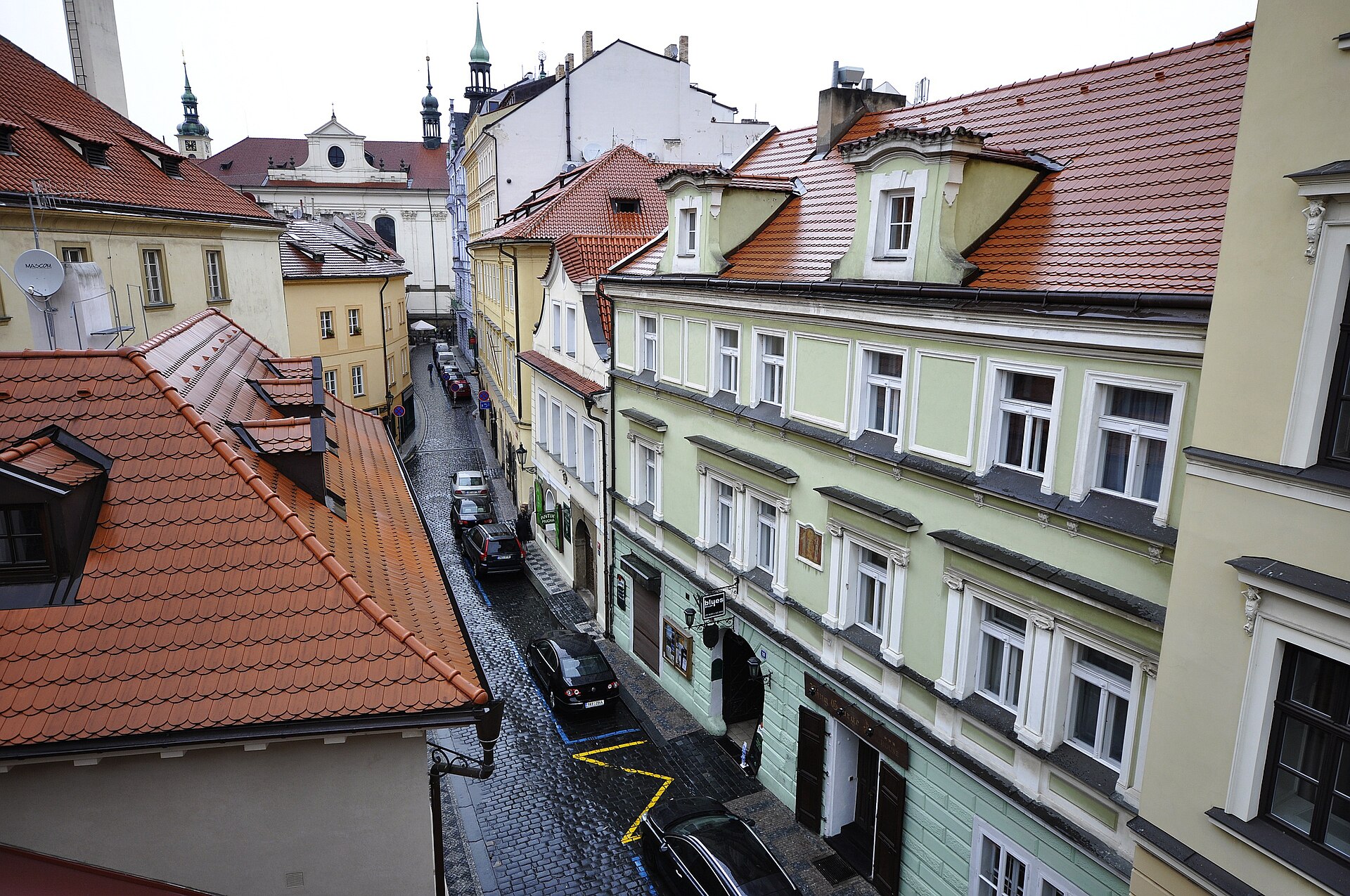
Walk Liliová as the fixed geographical element of the tradition and notice how naturally a wandering-ghost story can attach to its urban form.
Quick facts
- Václav Cibula records the legend as O templáři z Liliové ulice in Pražské pověsti.
- The apparition is a headless Templar associated with Liliová Street in the Old Town.
- Versions differ over the cause of execution, the conditions of release and whether the ghost walks or rides.
- The missing head belongs to the wider headless-revenant motif family.
- A specific historical executed Templar tied to this exact place is not established by the sources used here.
- The medieval, topographical and folkloric layers are best understood separately.
Questions
Did a Templar really get executed in Liliová Street?
The sources used here do not establish a specific historical execution behind the legend.
Why do some versions show a rider and others a walking ghost?
Because the tradition has multiple retellings. The core identity and headless form are more stable than the details of appearance and release.
Sources & further reading
- Pražské pověsti — O templáři z Liliové ulice — Václav Cibula
- Pražské pověsti (1983) — bibliographic contents listing — Václav Cibula / Databáze knih