
Prague Stories · Visitor Myths
Why Prague Is Full of Absinthe Shops — and Why the Story Is More Complicated
Absinthe is real, legal and genuinely connected to modern Czech drinks history — but Prague's image as an ancient absinthe capital is largely a post-1989 story. The flames are newer still.
Central Prague

Prague's centre can make absinthe feel inevitable.
The green bottles look older than the story
Green glass, Belle Époque typography, spoons, sugar cubes and theatrical flames suggest a city that has been drinking the spirit in this exact way for generations. Yet specialist Czech research and modern drinks historians place the city's major absinthe identity much later: in the revival that followed the end of communist rule. That does not mean Czech absinthe is fake. It means the tourism image is younger than its styling. Absinthe itself developed historically in the Franco-Swiss world and became famous in nineteenth-century France. Prague's special role came in a modern revival, when Czech producers and bars helped put the drink back into international circulation and imagination.
The 1990s are the hinge
After 1989, Czech alcohol producers operated in a newly open market, and absinthe became an exportable product with exactly the right mix of mystery and rebellion. Czech specialist accounts identify the Hill brand and international promotion as important pieces of the 1990s revival; drinks writer Evan Rail likewise emphasizes the Czech role in the spirit's modern comeback. This is a better story than pretending Kafka spent his evenings performing tourist absinthe rituals. Prague did matter — just in a different century. It became one of the places where a dormant or marginal drink was repackaged, marketed and rediscovered by a new generation.
The fire is the biggest visual clue to the modern layer
The familiar “Bohemian” ritual — sugar on a spoon, spirit, ignition, blue flame — is highly photogenic. Historical absinthe service is more strongly associated with slowly diluting the spirit with cold water, often over sugar, allowing it to turn cloudy as aromatic oils come out of solution. Specialist Czech accounts trace the flaming presentation to Prague's modern absinthe revival, not to nineteenth-century absinthe culture. Fire therefore tells you something real: not about ancient authenticity, but about 1990s-style presentation and tourism theatre. A ritual can be historically new and culturally influential at the same time.
Czech absinthe can be real absinthe without following one French template
Modern producers use different methods, botanical profiles and spellings — absinthe or absinth — and arguments about “real” absinthe can become more ideological than useful. The better questions are practical ones: does the product use Artemisia or wormwood, how is it made, how strong is it, and how is it meant to be diluted or served? EU law regulates thujone from Artemisia species in alcoholic beverages, including a maximum level of 35 mg/kg for alcoholic beverages produced from Artemisia species. That regulatory fact is more useful than legends that legal absinthe must be hallucinogenic or that Czech products exist outside European food law.
Treat the bottle as a spirit, not a dare
Absinthe is usually high in alcohol. The traditional dilution with water is not a weakness test; it is part of how aroma and drinkability are developed. Setting it on fire is not necessary to “activate” anything, and drinking high-proof spirit as a challenge turns a cultural story into a safety problem. Prague's absinthe story has several layers: older Franco-Swiss roots, a dramatic Czech-led modern revival, a tourist image styled to look older than it is, and a flaming ritual that may be the newest part of the scene. The myth is not that Prague has no absinthe history. The myth is that all of its history is ancient.
Reviewed visuals
See the story
Supporting images selected in the Prague Stories visual review. Context images are labeled so they are not mistaken for documentary proof of the exact subject.
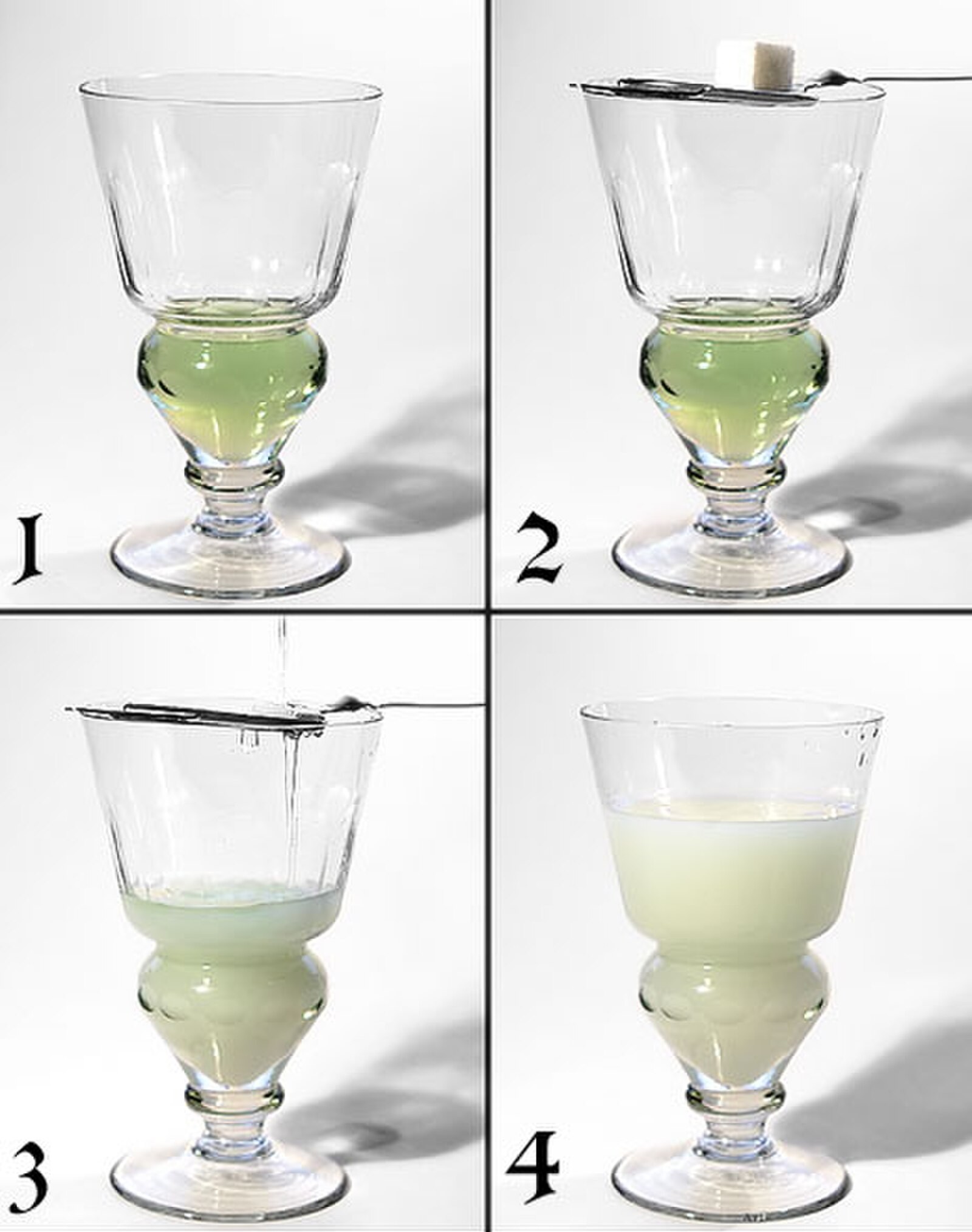
Absinthe preparation ritual using a glass, spoon and sugar/flame apparatus.
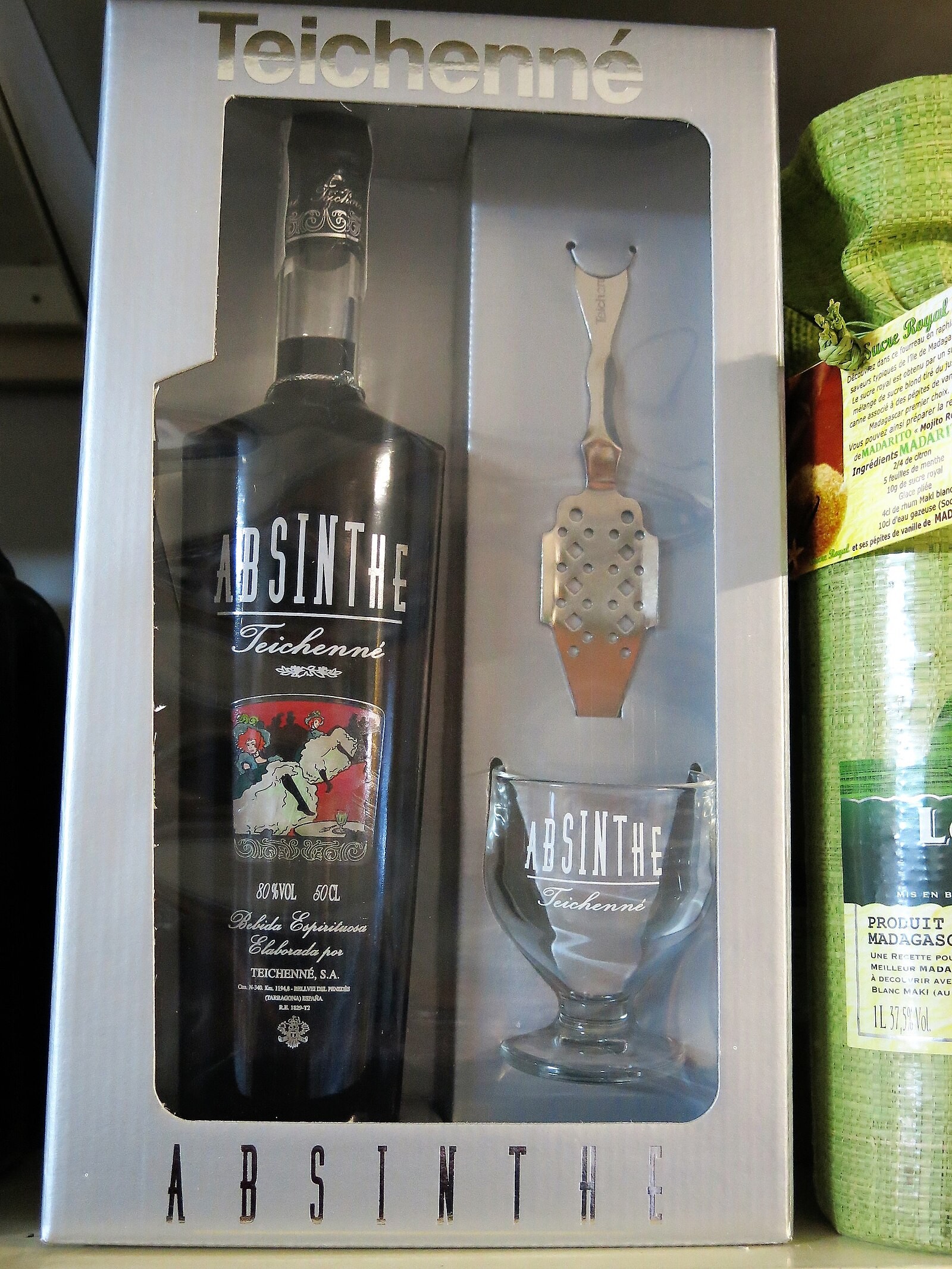
Absinthe bottle, glass and perforated spoon, showing characteristic serving paraphernalia.
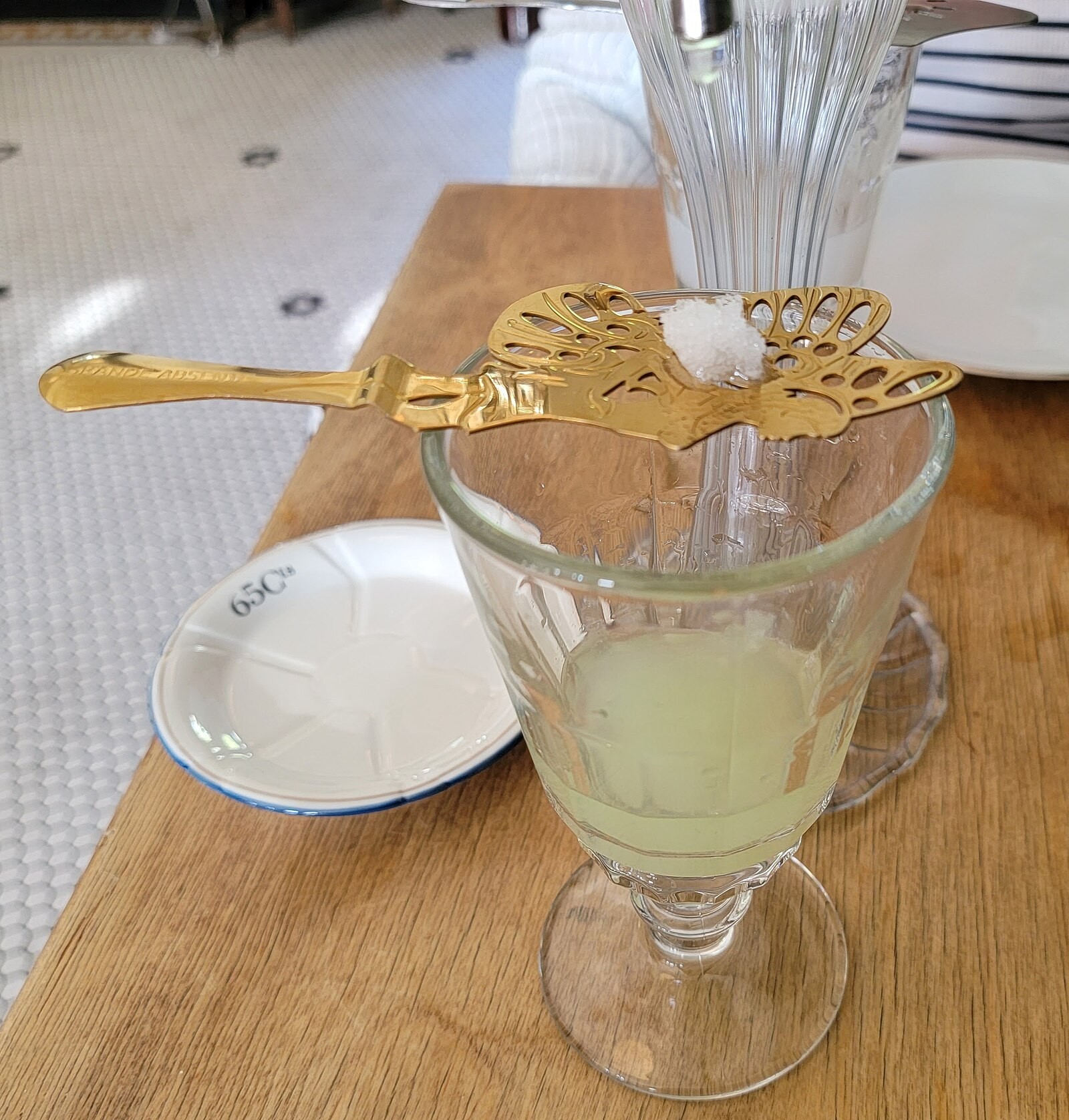
Close-up of a perforated absinthe spoon, associated with modern absinthe ritual.
Quick facts
- Absinthe's major nineteenth-century history is centred in the Franco-Swiss world rather than Prague.
- Czech producers and Prague bars played a significant role in the international absinthe revival after 1989.
- The flaming sugar ritual is associated with the modern Czech/Prague presentation rather than classic nineteenth-century service.
- Traditional absinthe service commonly involves dilution with cold water, with or without sugar.
- EU rules limit thujone in alcoholic beverages produced from Artemisia species to 35 mg/kg.
- Absinthe is typically high-proof alcohol and should not be framed as a drinking challenge.
Questions
Is absinthe traditional in Prague?
Prague has a real modern absinthe history, especially in the post-1989 revival, but the city's image as an ancient absinthe capital is overstated.
Is Czech absinthe real absinthe?
Czech producers make genuine wormwood-based absinthe/absinth products, though styles and production methods vary. Judge the product by its ingredients and method, not nationality alone.
Why do some bars set absinthe on fire?
The flaming sugar ritual became associated with the modern Czech/Prague presentation. It is theatrical and is not required for traditional absinthe preparation.
Is absinthe legal in Czechia?
Yes, legal products are sold under EU food and alcohol rules, including limits on thujone.
Sources & further reading
- Moderní absintová obnova — Czech Absinthe Almanac
- No other spirit has so much mystery: Evan Rail on absinthe's Czech links — Czech Radio / mujRozhlas
- Regulation (EC) No 1334/2008, Annex III — EUR-Lex / European Union