
Prague Stories · Food people miss
Česnečka: Why Czech Garlic Soup Became a Cold-Weather and Morning-After Classic
Czech garlic soup is uncomplicated by design: broth, garlic, potato, marjoram, bread and often cheese or smoked meat. Its reputation reaches beyond dinner — many Czechs also associate a strong bowl with colds, winter and the morning after too much beer.
Prague / Czechia

Czechia has a soup whose reputation is almost medicinal — especially after a long night.
Garlic leads, but texture matters
Česnečka is built around garlic, usually supported by broth and potatoes. Marjoram gives it a recognisably Czech aromatic profile, while toasted bread and cheese can turn a clear soup into something more substantial at the table.
The folk reputation is part of the dish
VisitCzechia describes garlic soup as one of the country’s popular soups and presents soup generally as warming food when people feel unwell. The stronger reputation as a hangover cure belongs to everyday culture, not medicine. Treat it as a ritual with a long fan base, not a clinical promise.
Why it works in a pub city
A bowl of hot salty broth with garlic and bread makes intuitive sense after cold weather or drinking, regardless of whether it “cures” anything. That helps explain why česnečka appears in the same cultural landscape as beer halls, ski lodges and home kitchens.
Do not overcomplicate it
The best versions do not need ten luxury ingredients. What matters is fresh garlic, enough salt and marjoram, properly cooked potato and crisp bread added late enough not to disappear immediately.
The morning-after reputation makes perfect cultural sense
Hot broth, salt, fluid, bread and a blast of garlic are exactly the things people want when they feel cold, tired or punished by the previous night. Whether the bowl actually “cures” anything is beside the point. Česnečka has become one of those foods people reach for because the ritual itself feels right.
No two pubs seem to agree on the exact bowl
One version is clear and sharp; another arrives cloudy with egg, smoked meat or a cap of melting cheese. Garlic simmered for longer tastes rounder, while garlic added late keeps its bite. The ingredient list can stay almost the same and the soup still swing from gentle comfort to something you can smell before it reaches the table.
Reviewed visuals
See the story
Supporting images selected in the Prague Stories visual review. Context images are labeled so they are not mistaken for documentary proof of the exact subject.
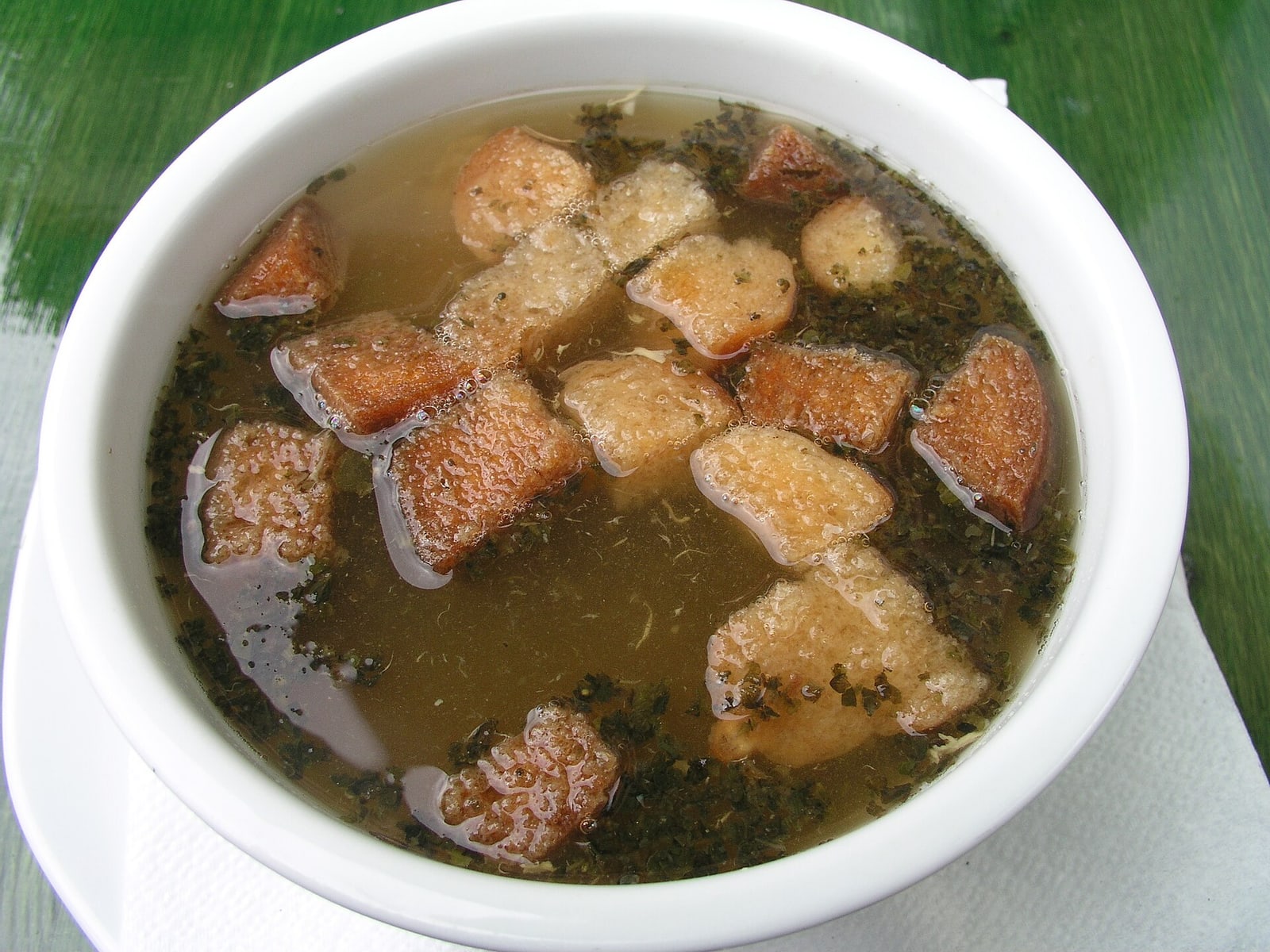
A materially different bowl of Czech česnečka with visible potato/cheese/crouton components.
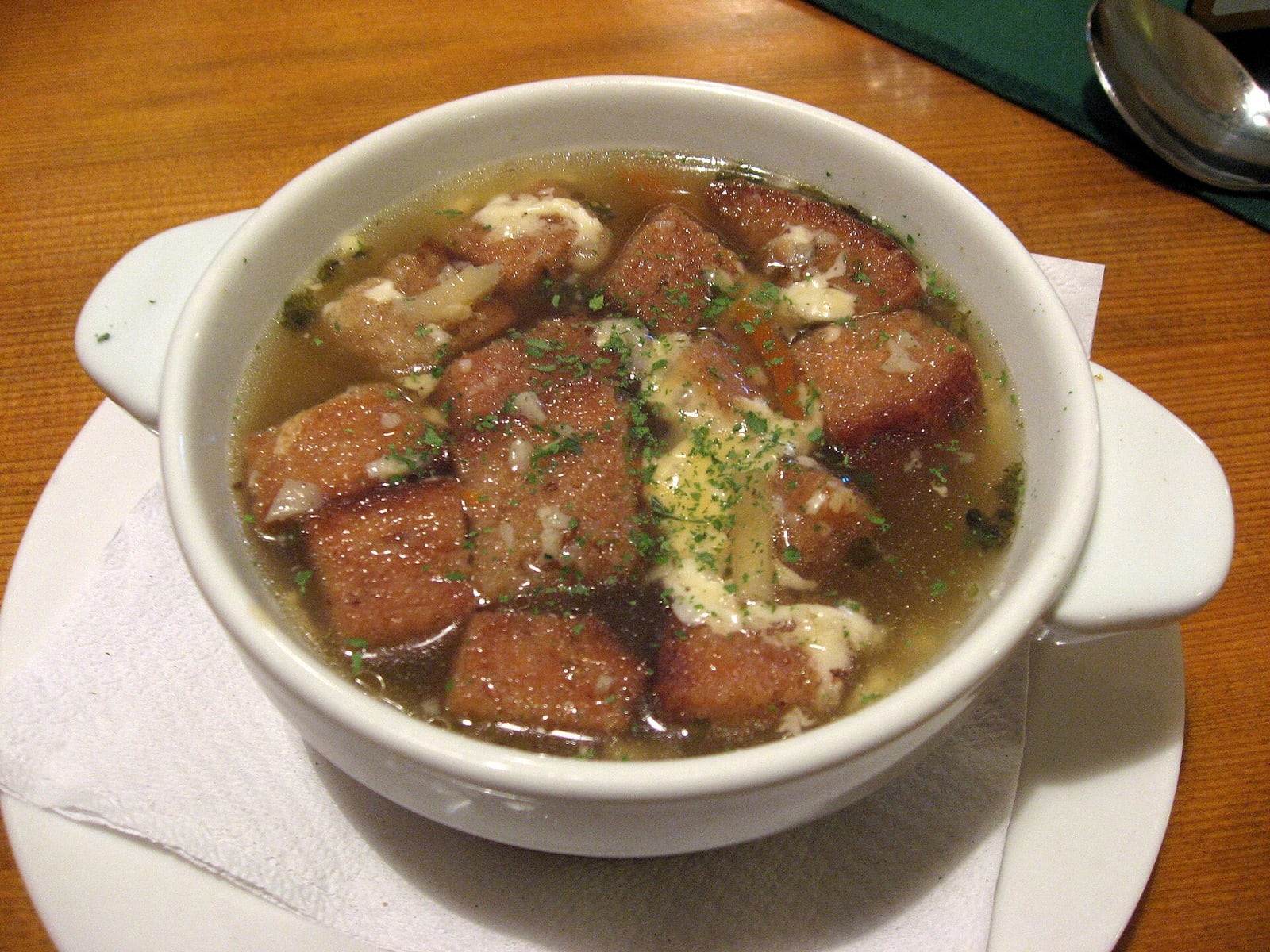
Another exact Czech garlic-soup serving from a different photographer/composition.
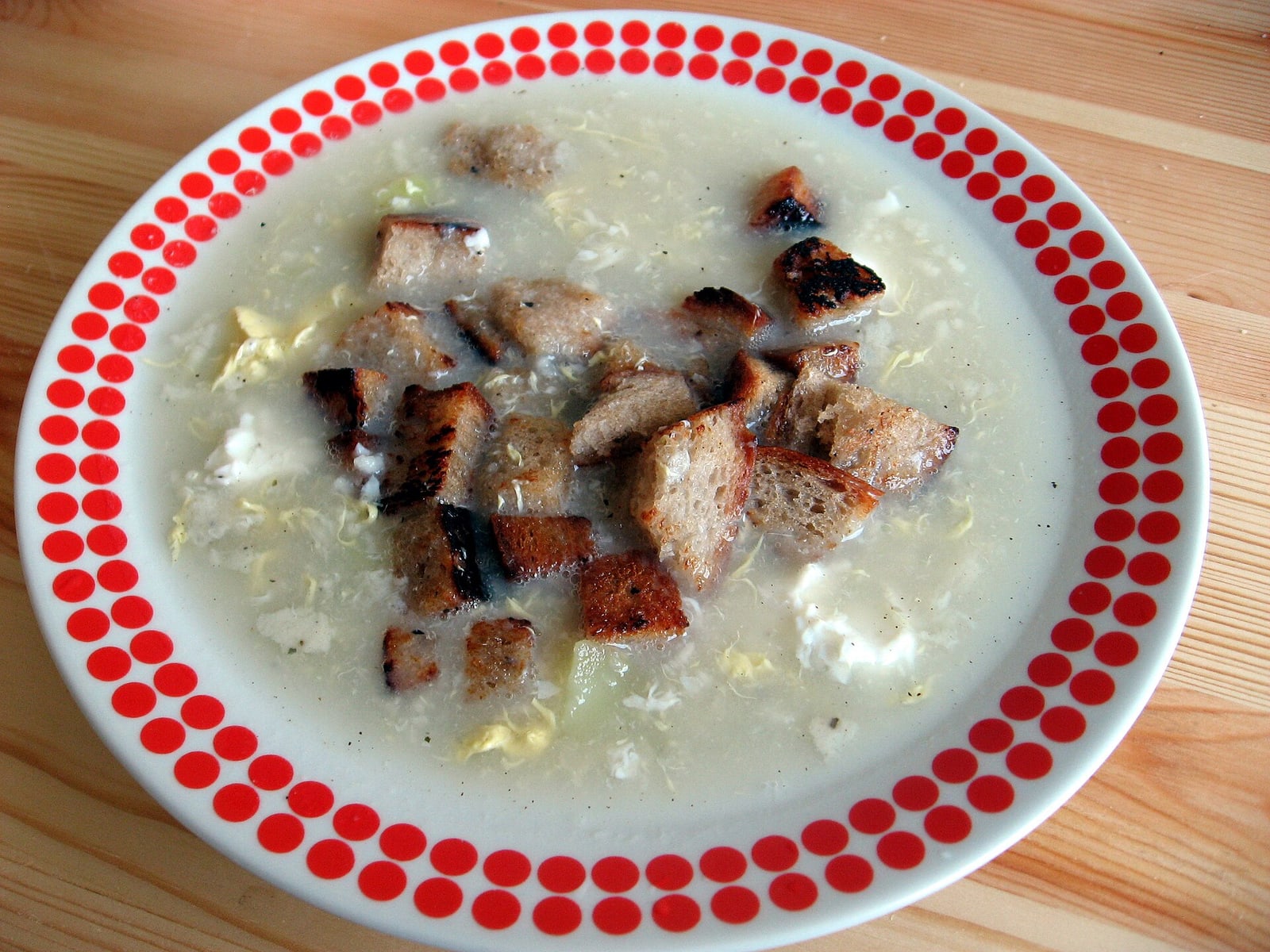
A bowl of homemade Czech garlic soup (Domácí česnečka), photographed by the uploader.
Quick facts
- Česnečka is Czech garlic soup.
- Potato and marjoram are common ingredients.
- Bread croutons and cheese are common additions.
- Its “hangover cure” status is a cultural reputation, not a medical guarantee.
Questions
Is česnečka a hangover cure?
It has that popular reputation, but it should be treated as comfort-food culture, not medical treatment.
Is it vegetarian?
It can be, but versions may use meat broth or smoked meat.
What gives it its Czech flavour?
Garlic, potato and marjoram are a common core.
Sources & further reading
- Garlic soup — VisitCzechia