
Prague Stories · Czech Food
Czech Dumplings Are Not the Dumplings English Speakers Expect
In Czech cooking, knedlíky can mean sliced bread or potato dumplings built to carry sauce, not only stuffed parcels. Once you understand their job on the plate, half the classic Prague menu becomes easier to read.
Prague

Say “dumpling” in English and many people picture something individual: a filled pocket, a round ball, perhaps a soft lump floating in broth.
Forget the little parcel for a moment
Czech knedlíky immediately break that expectation. One of the most common forms arrives as neat oval slices cut from a larger loaf. Another is made from potato dough. Some Czech dumplings are filled, certainly, but the word covers a much broader family than the English translation suggests. That is why a Prague menu can look confusing until the first plate lands. The slices beside svíčková or guláš are not bread in disguise and they are not a decorative side. They are a purpose-built accompaniment with a mild flavour and a structure designed to take up sauce. Think less about the English category “dumpling” and more about what the Czech plate needs the starch to do.
Bread dumplings are made to meet sauce
Classic yeast-raised Czech dumplings can be made from flour, milk or water, yeast and pieces of bread or roll. The dough is shaped into elongated loaves, cooked, then sliced across the loaf. Karlovy Vary-style dumplings use bread in a different, more textured way, while recipes and household methods vary. The common visual clue is the slice: pale, soft, sometimes dotted with cubes or flecks from the bread inside. Now watch what happens when the slice touches sauce. Its cut face is full of tiny pathways that absorb liquid. That makes it an ideal partner for braised meat and smooth sauces. Instead of competing for attention, the dumpling carries the sauce and moderates its intensity. A dry bite can seem plain; a sauced bite explains why the form endured.
Potato dumplings change the weight of the plate
Bramborové knedlíky are a different proposition. Potato gives the dough more density and a subtle earthy flavour. They may also be served in slices or other shapes, depending on the dish and recipe. With roast pork, duck and cabbage, that extra substance can stand up to rendered fat and sharp or sweet-sour vegetables in a way a lighter bread dumpling handles differently. Czech cooking also includes chlupaté knedlíky and filled fruit or savoury dumplings, so “bread versus potato” is not the end of the family tree. It is simply the most useful distinction for a traveller reading classic main-course menus. If a restaurant lists the type, take it as part of the dish design, not an interchangeable side like fries.
The history is a family tree, not a single invention
Dumpling-like preparations appear across Central Europe and have changed over centuries with grains, bread, potatoes, household economies and regional cooking. Czech sources themselves present several distinct forms rather than one canonical ancestor. That is a better historical frame than hunting for a single inventor or birthday. The CzechSpecials overview also reminds us that dumplings have not always been merely an accompaniment; in poorer regions and periods, dumpling preparations could have a more central role. Today, however, a visitor in Prague most often meets slices beside sauce-heavy meat dishes. What survived into the restaurant plate is a technology of thrift and texture refined into a national culinary vocabulary.
Use the menu pairing as your guide
With svíčková, expect bread dumplings to drink up the creamy vegetable sauce. With Czech-style guláš, they mop up the onion-and-paprika gravy. With roast duck or pork and cabbage, bread or potato dumplings may appear, and the choice changes the plate's texture. The pairing is part of the point. When your plate arrives, do one small experiment: cut a piece of dumpling, press it into the sauce, and compare it with a dry edge. That difference is the entire story in one bite. Czech knedlíky are not disappointing versions of the dumplings you already know. They are a different answer to a different culinary problem.
Reviewed visuals
See the story
Supporting images selected in the Prague Stories visual review. Context images are labeled so they are not mistaken for documentary proof of the exact subject.
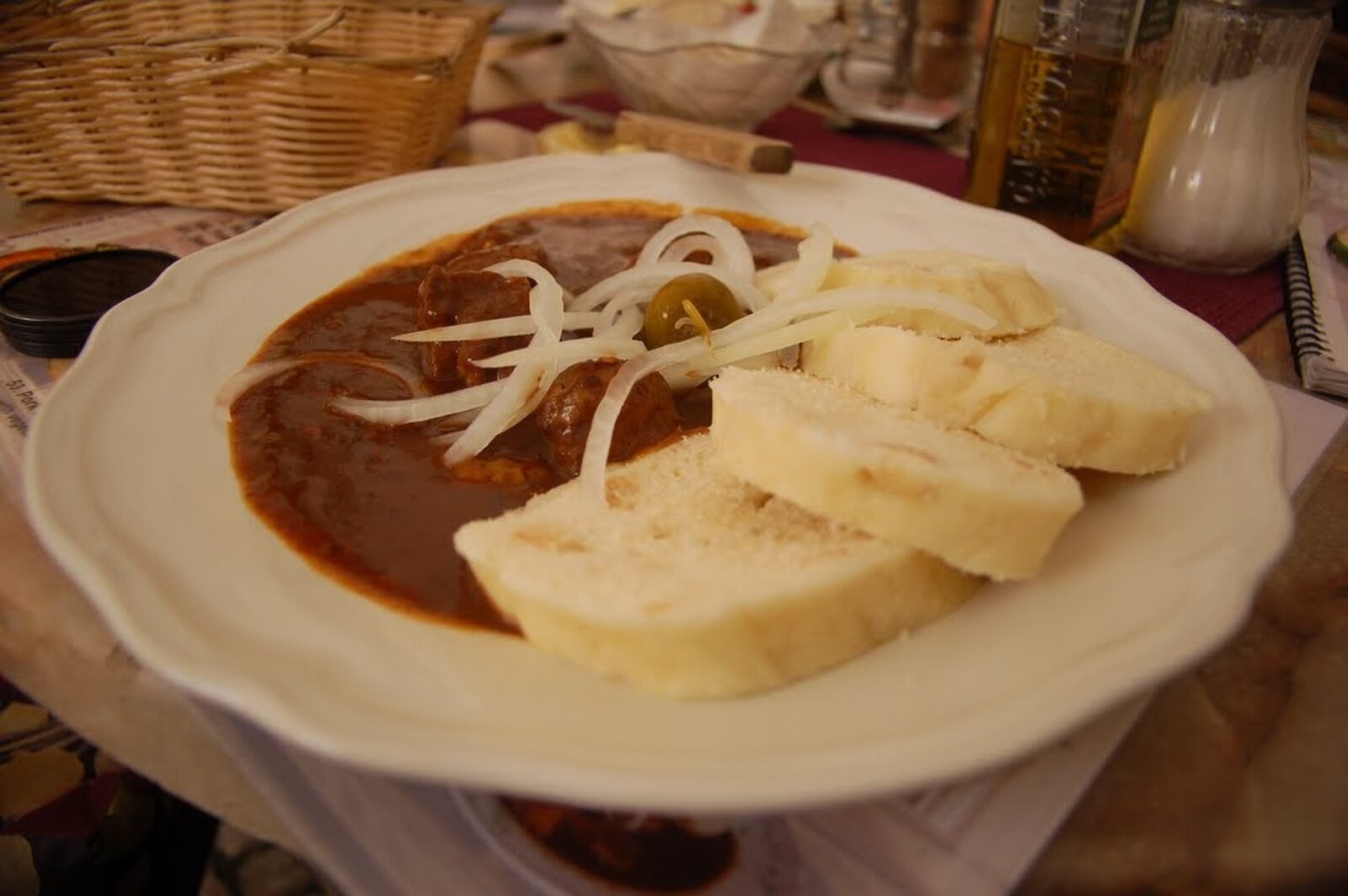
Sliced Czech bread dumplings, showing the loaf-and-slice form unfamiliar to many English speakers.
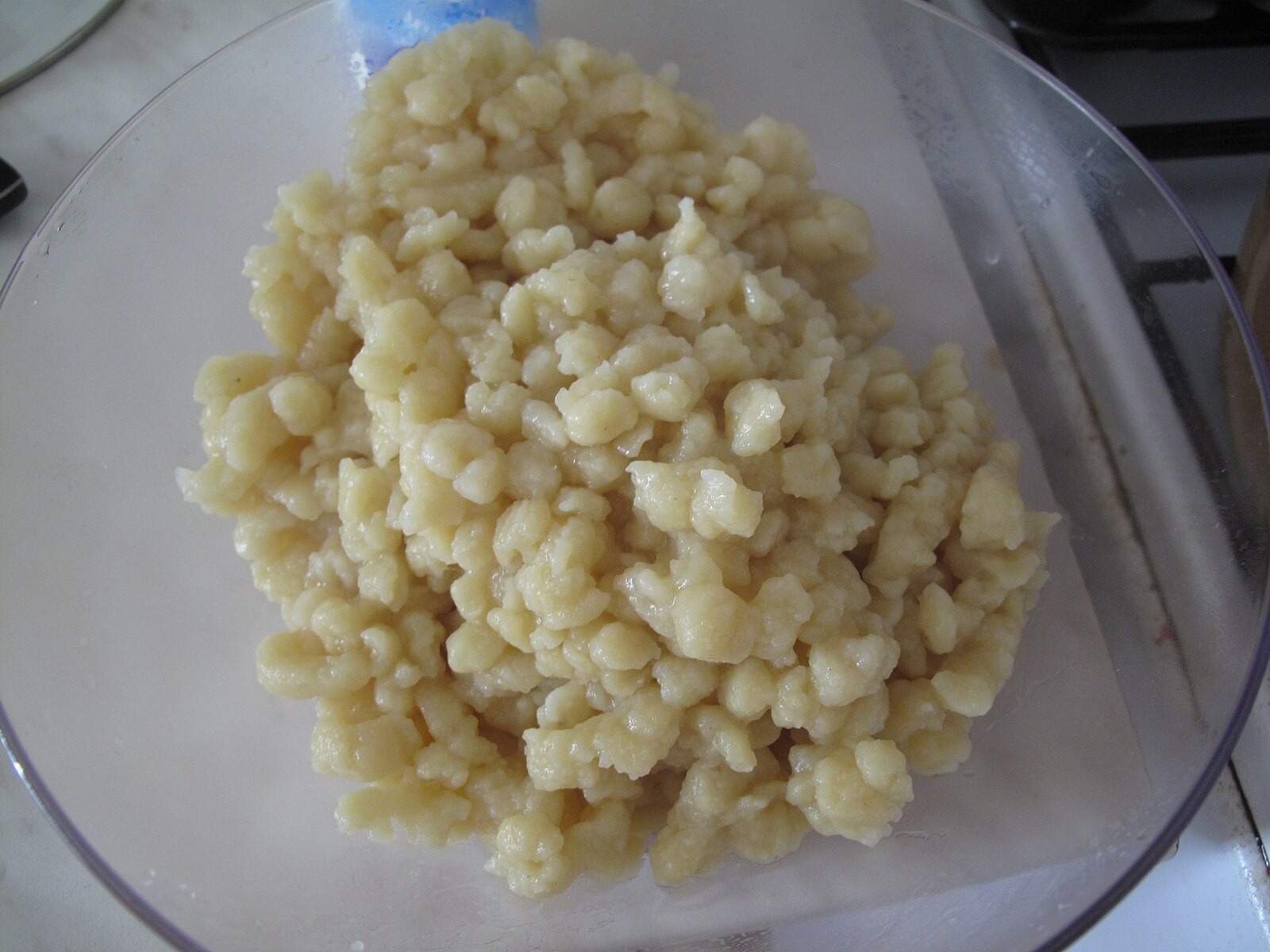
Czech chlupaté potato dumplings, showing a different dumpling family.
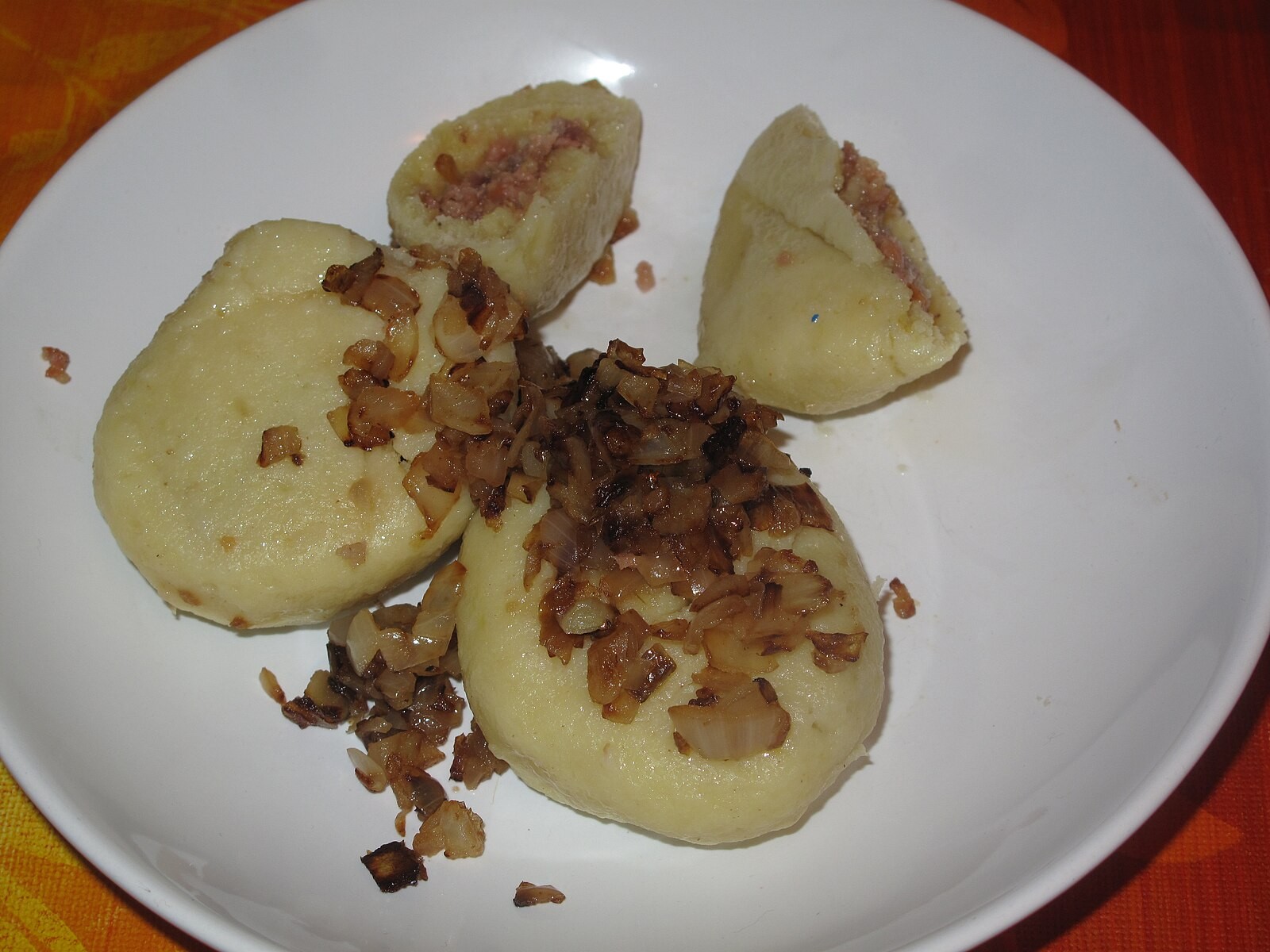
Filled Czech dumplings served with onion, further illustrating the category’s variety.
Quick facts
- Knedlíky is a broad Czech category, not one single dumpling shape.
- Common restaurant forms include bread dumplings and potato dumplings.
- Many bread dumplings are cooked as a loaf and sliced before serving.
- Not all Czech dumplings are filled.
- The mild crumb is designed to absorb sauces from dishes such as svíčková and guláš.
- Czech cuisine also includes regional and filled dumpling variants.
Questions
What are Czech dumplings made from?
It depends on the type. Bread dumplings typically use flour, liquid, yeast and bread or roll; potato dumplings use cooked potato with flour and other binding ingredients.
Are Czech dumplings filled?
Some are, but many classic restaurant dumplings are not. Bread and potato dumplings served with meat and sauce are commonly sliced, unfilled accompaniments.
How do you eat knedlíky?
Cut a slice into bite-size pieces and use it with the sauce, meat or cabbage on the plate. Their texture is designed to absorb liquid.
Which Prague dishes usually come with dumplings?
Common examples include svíčková, Czech-style guláš, roast pork with cabbage and roast duck. The exact dumpling type varies by dish and restaurant.
Sources & further reading
- České knedlíky — CzechSpecials
- Czech Cuisine and Regional Products — VisitCzechia