
Prague Stories · Czech Food
Prague Goulash Is Not the Same Dish as Hungarian Gulyás
The names are relatives, not identical plates. Hungarian gulyás is classically a soup; the guláš you meet in a Prague pub is often a thicker, sauce-rich beef dish served with dumplings.
Prague

Order goulash in Budapest and order guláš in Prague and you can receive two dishes that clearly know each other but behave very differently.
One word crossed a border and changed texture
In Hungarian culinary sources, gulyás is described as a substantial soup: beef, onion, paprika and often potatoes and vegetables in plenty of broth. In a Czech hospoda, hovězí guláš is commonly a thicker beef preparation with a concentrated onion-and-paprika sauce and bread dumplings waiting beside it. That difference is not evidence that one side misunderstood the other. It is what regional cuisines do. Names travel through an empire, through military kitchens, inns, cookbooks and households; techniques adapt to local habits. The Czech plate kept the Hungarian name-family and paprika-onion logic, then made the dish at home in a sauce-and-dumpling culture.
Give Hungary the root without freezing the dish in place
The responsible starting point is Hungarian. Official Hungarian heritage material treats gulyásleves — goulash soup — as a Hungarian-origin dish and describes it as a brothy preparation with onion, paprika, beef, potatoes and often small pasta. Paprika itself became one of the defining signals of modern Hungarian cooking. But influence is not ownership of every later bowl. By the time a visitor reads guláš on a Prague menu, the word has passed through a Czech language and restaurant tradition with its own expectations. Acknowledging the Hungarian root makes the Czech version more interesting, not less: you can see exactly what changed.
The Czech sauce starts with patience and onions
A typical Czech beef guláš builds body by cooking a generous amount of onion until it collapses into the sauce. Paprika brings colour and aromatic warmth. Beef, often a cut suited to braising, cooks until tender. Recipes vary in garlic, caraway, marjoram, tomato or thickening technique, so a checklist should never be mistaken for law. What matters on the pub plate is concentration: meat in a sauce substantial enough to cling to a dumpling. That is the visual shortcut. If your “goulash” is served as a deep bowl with abundant broth, potatoes and vegetables, you are closer to the classic Hungarian gulyás-soup idea. If it arrives as chunks of beef under dark reddish-brown gravy with sliced knedlíky, you are reading the Czech restaurant dialect.
Paprika does not automatically mean hot
English menus sometimes make “paprika” sound synonymous with chilli heat. It is not. Ground peppers vary enormously in sweetness, aroma and pungency, and Czech pub guláš is generally built for warmth and savoury depth rather than a dare. Individual kitchens can make it sharper, of course, and garnishes such as fresh onion or chilli can change the impression. For a first-time order, do not ask whether the dish is “spicy” as though there is one national setting. Ask what that kitchen serves. The more useful expectation is a slow-cooked beef dish with onion richness and paprika character, designed to be eaten with a neutral starch.
Let the dumpling show you which Prague dish you ordered
Bread dumplings turn Czech guláš from a bowl of stew into a particular kind of plate. Their mild crumb takes up the sauce, stretching the strong meat-and-onion flavour across the meal. Some versions come with fresh onion on top; some with different dumplings or bread. Again, the variation is real, but the sauce-plus-starch relationship is durable. On a Prague menu, look for hovězí guláš for beef goulash. Then remember the cultural map hidden in the word: Hungarian gulyás at the root, Czech guláš in the local branch. The best travel food stories are rarely arguments about who is allowed to cook what. They are records of movement — and this one is edible evidence that Central Europe has been exchanging techniques for far longer than tourists have been comparing menus.
Reviewed visuals
See the story
Supporting images selected in the Prague Stories visual review. Context images are labeled so they are not mistaken for documentary proof of the exact subject.
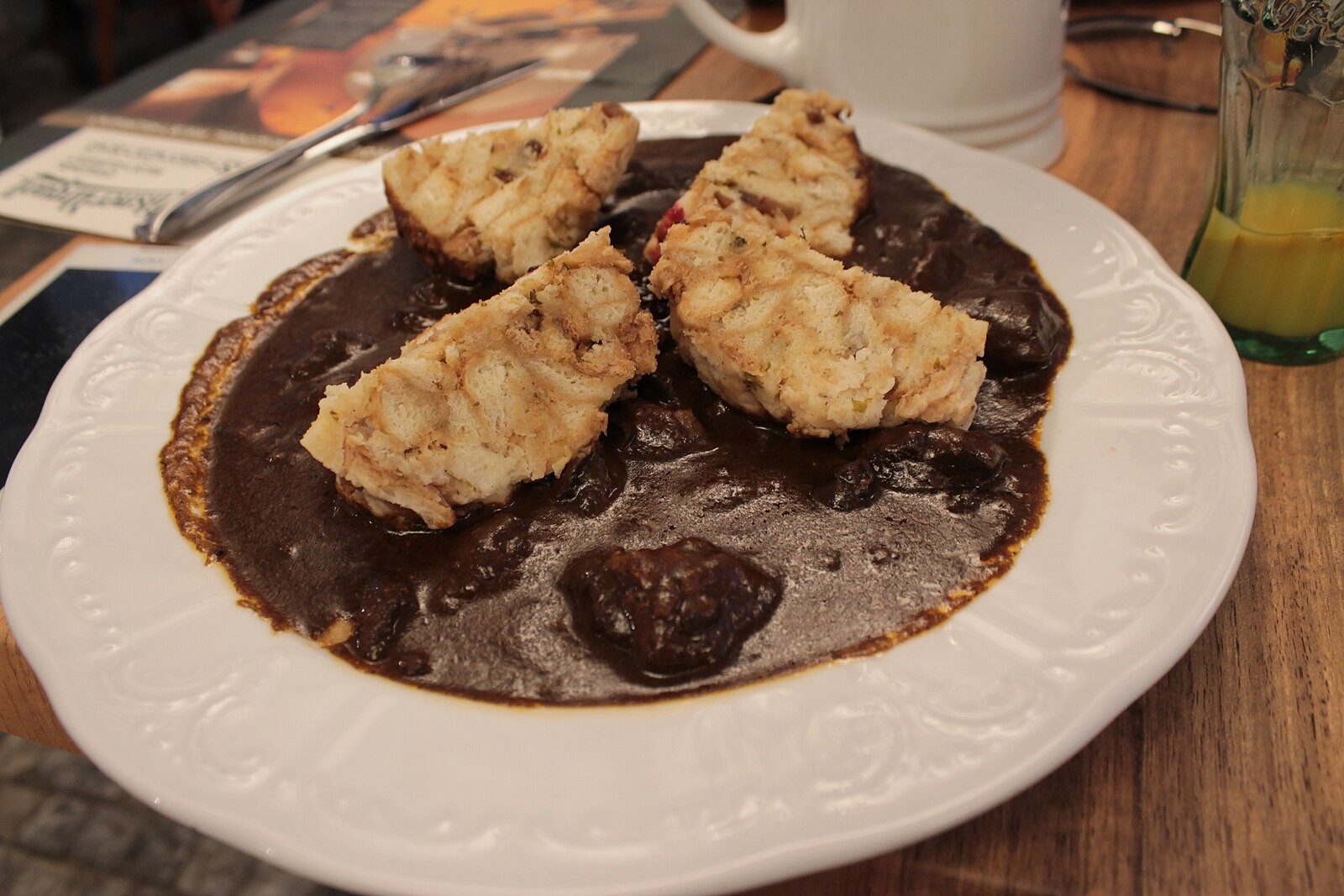
Plate of thick goulash served in Prague/Czech restaurant style.
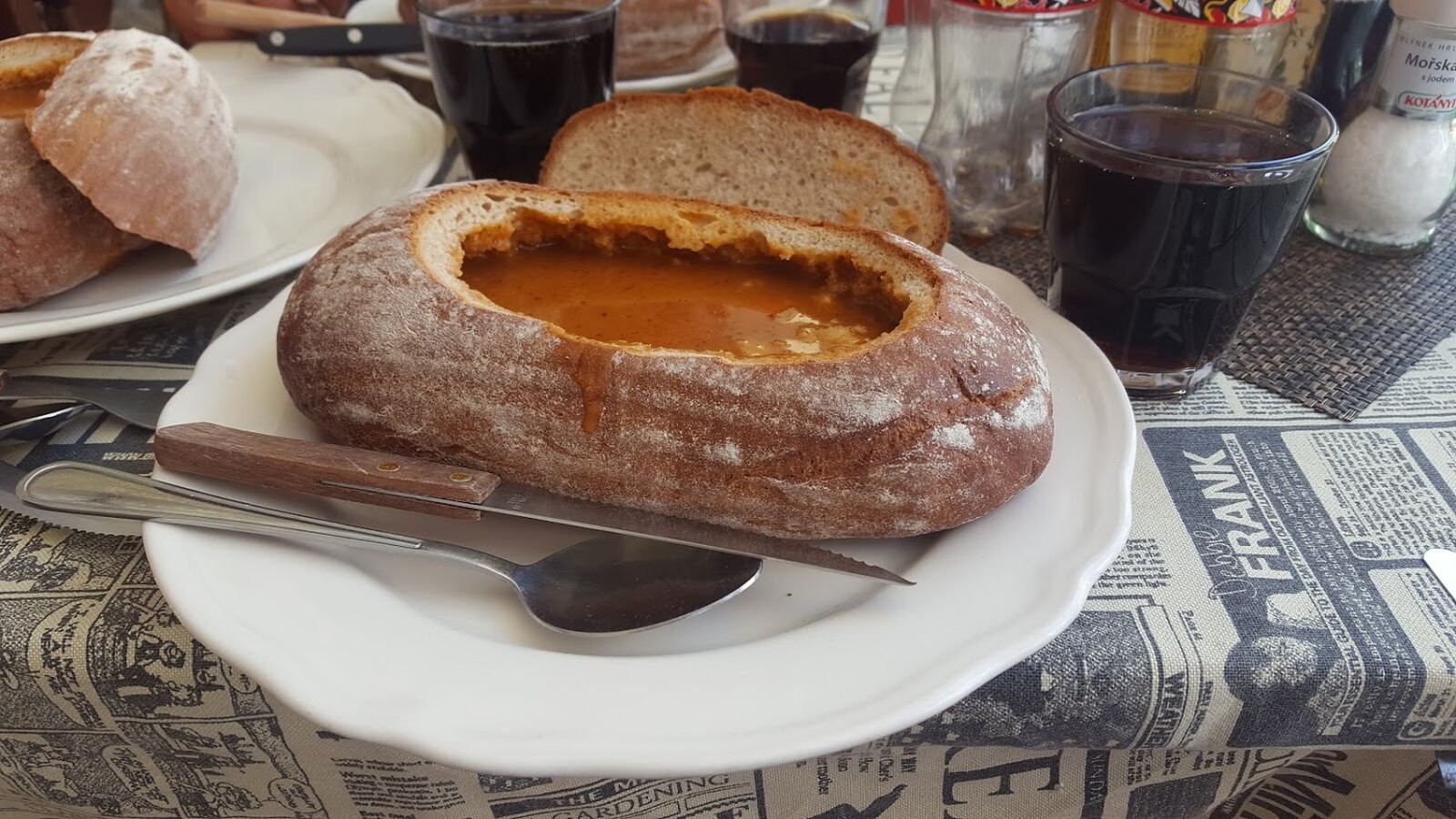
Prague goulash served in bread, illustrating a thick Czech restaurant presentation.
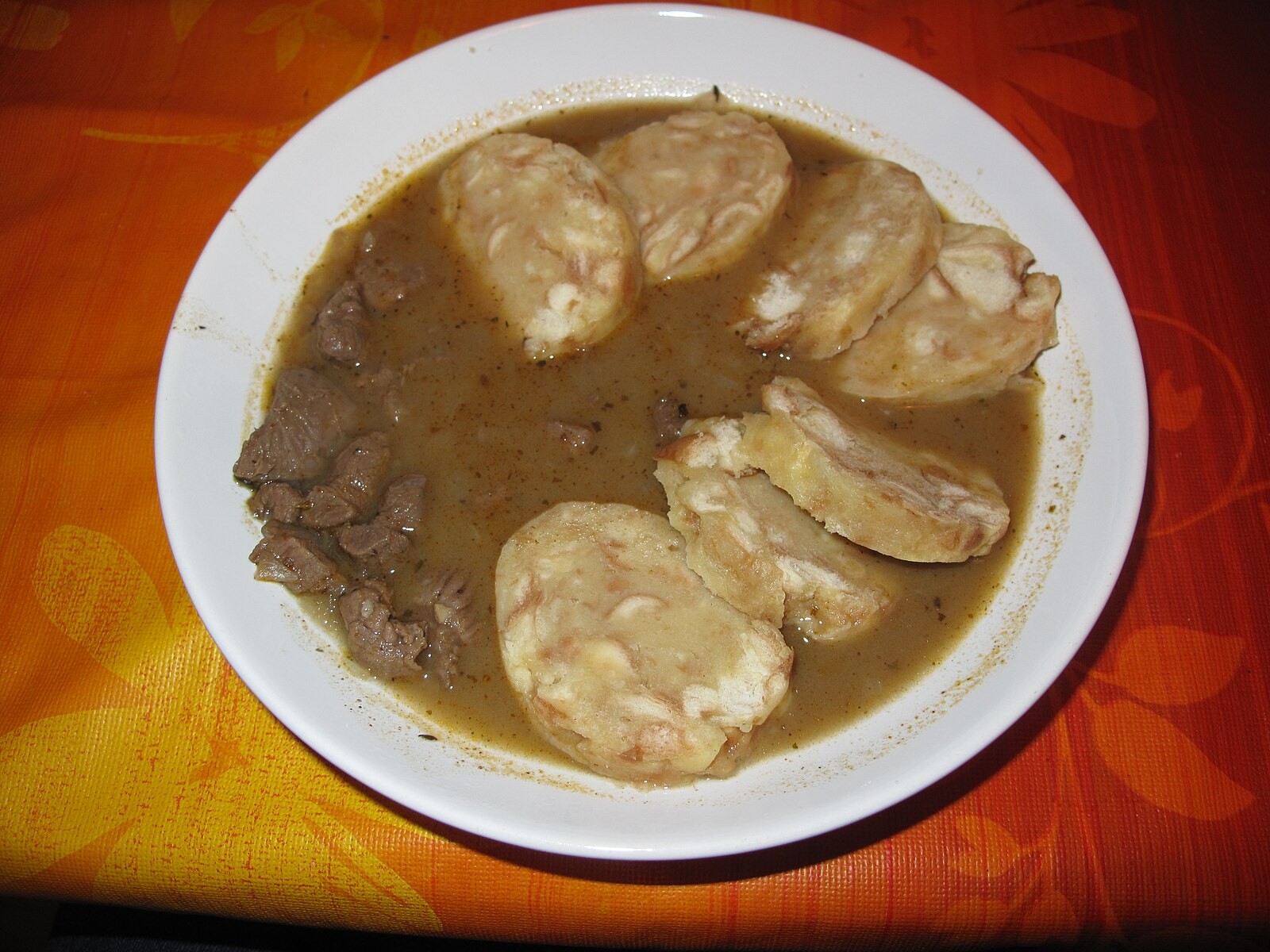
Czech venison goulash served with dumplings.
Quick facts
- Hungarian gulyás is classically a soup and is recognized in Hungary as a traditional national dish.
- Czech restaurant guláš is commonly thicker and served as a main course with dumplings.
- Both traditions commonly use beef, onion and paprika, but recipes vary.
- The Czech word is guláš; hovězí guláš means beef goulash.
- Paprika flavour does not automatically mean strong chilli heat.
- The Czech version should be understood as a local development under strong Hungarian culinary influence, not as an unrelated invention.
Questions
Is goulash Czech or Hungarian?
The name and core tradition lead to Hungarian gulyás. Czech guláš developed as a distinct local version under that influence, so the best answer is Hungarian roots with a recognizable Czech restaurant tradition.
Is Czech goulash a soup?
Usually not in the form visitors meet as hovězí guláš in a Prague pub. It is commonly a thicker beef-and-sauce main course, unlike classic Hungarian gulyásleves.
What is Czech goulash served with?
Bread dumplings are a classic accompaniment, though restaurants may also use bread or other sides.
Is Prague goulash spicy?
It is paprika-forward but not necessarily hot. Heat varies by recipe and garnish, so ask the restaurant if chilli intensity matters to you.
Sources & further reading
- Magyar gulyásleves — Hungarikumok Gyűjteménye
- All you need to know about Hungarian cuisine — Visit Hungary
- Guláš pražského uzenáře — CzechSpecials