
Prague Stories · Industrial Prague
Braník Iceworks: When Prague Stored Winter for Summer
Before mechanical refrigeration became ordinary, ice was infrastructure. The Braník Iceworks were built beside the Vltava in 1908–1911 to move, store and distribute natural ice on an industrial scale.
Braník, Prague

Before refrigerators, Prague built a huge building whose job was to keep winter alive into summer.
The river was part of the machine
The Braník complex originally connected to the Vltava through structures used to move harvested ice toward storage. The river was not scenery here; it supplied the raw material. When the water froze, crews cut ice and fed it into a seasonal supply chain built around keeping winter alive for later use.
Architecture solved a temperature problem
The National Heritage Institute highlights both the architectural and technical value of the icehouse, including early reinforced-concrete construction and sophisticated ventilation and drainage. Keeping large quantities of ice stable required the whole building to behave as environmental machinery.
Cold was a commercial product
Natural ice supported pubs, food handling, breweries and other businesses before electric refrigeration became widespread. The scale of Braník makes sense once cold is treated as a product that had to be harvested, moved, stored and delivered.
The building changes how you read the river
Today the Vltava is usually read as scenery, transport route or flood risk. Braník adds another role: source of a harvestable seasonal commodity. Winter itself entered the city economy in blocks.
Beer needed an invisible cold chain
Prague beer history is usually told through breweries and pubs, yet a cold glass also depended on storage, cellars, transport and ice. Braník sat inside that less glamorous system. Before compact refrigerators could do the work silently in every building, keeping food and drink cool demanded labour, space and an industrial building beside the river.
A summer drink began on a frozen river
The strangest part is the calendar. Cooling in July could depend on work done months earlier, during a hard winter on the Vltava. Ice was cut when weather allowed, packed away and slowly spent through warmer seasons. Braník was, in the most literal sense, a warehouse for another time of year.
Reviewed visuals
See the story
Supporting images selected in the Prague Stories visual review. Context images are labeled so they are not mistaken for documentary proof of the exact subject.
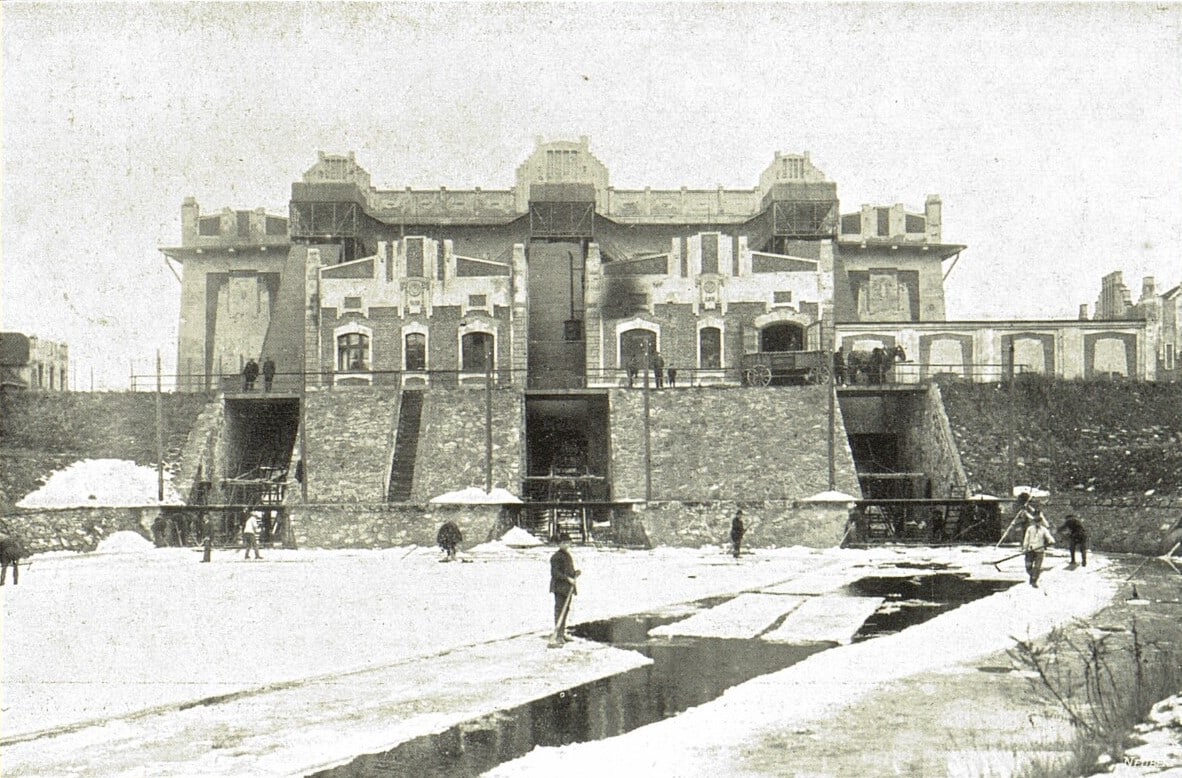
Archival 1913 view of Braník Iceworks and its riverside ice-handling operation.
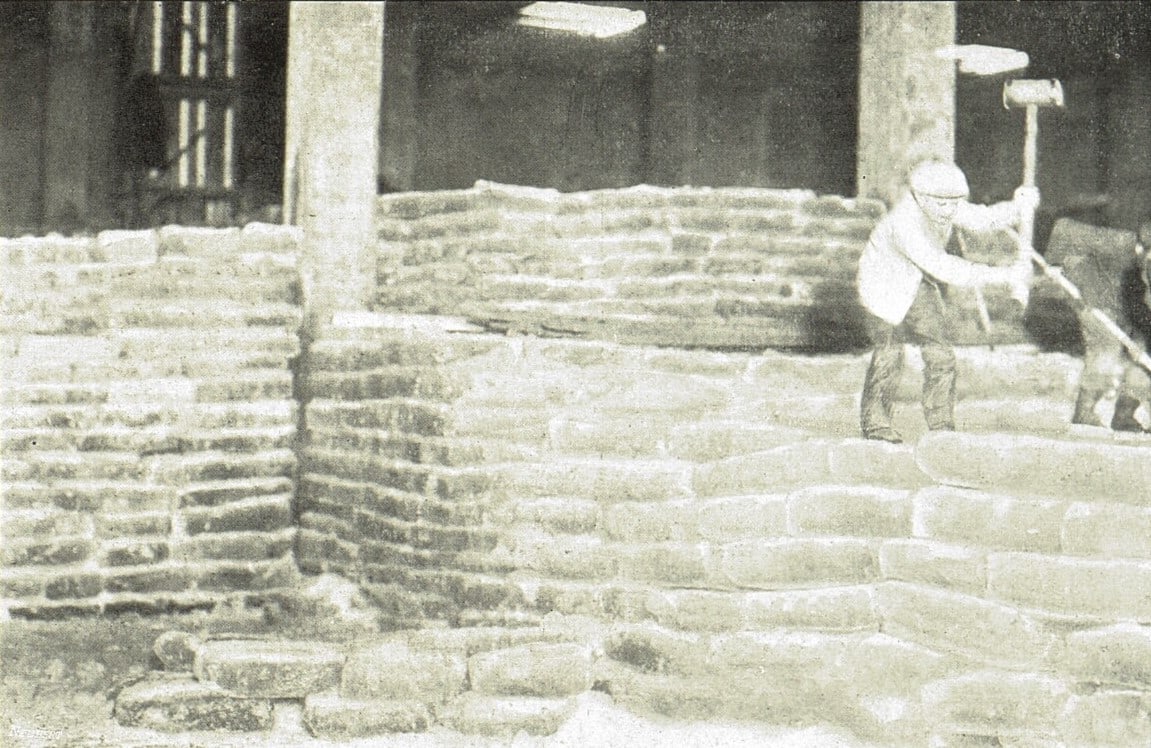
Archival workers building walls/blocks of natural ice at Braník in 1913.
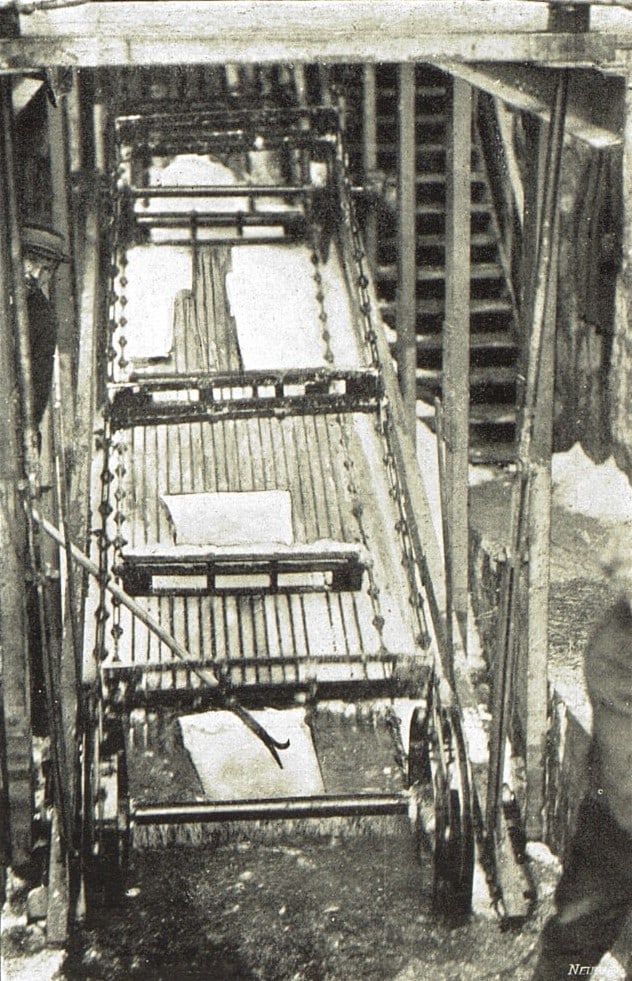
Archival transport of ice floes toward the iceworks, showing how winter ice was handled.
Quick facts
- The Braník Iceworks were built from 1908 to 1911.
- The complex originally connected directly with the Vltava for handling ice.
- Its icehouse used early reinforced-concrete construction.
- Ventilation and drainage were integral technical features.
Questions
Was the ice artificial?
The complex was designed around natural ice harvested from the river environment.
Why was so much ice needed?
Cold storage and food-and-drink service depended on ice before modern refrigeration became common.
Can the complex be visited?
Access and redevelopment conditions can change; check current information before planning a visit.
Sources & further reading
- Branické ledárny — National Heritage Institute