
Prague Stories · Czech Christmas
Why Prague Fills With St Nicholas, Angels and Devils on December 5
On the evening of December 5, Czech Mikuláš tradition sends a strange trio into streets and homes: St Nicholas, an angel and a devil. The costumes are theatrical, but the ritual is built around children, recitation and reward.
Prague on December 5

If you are in Prague on December 5, the first devil on a tram platform can feel like a scheduling error.
Christmas has not arrived — and neither has Santa
Christmas is still weeks away, yet streets fill with bishops' robes, white-winged angels and horned creatures rattling chains. The central figure is Mikuláš — St Nicholas — and the date belongs to his feast, traditionally celebrated in Czech lands on the evening before December 6. Mikuláš is not the Czech version of Santa Claus delivering Christmas presents. Czech Christmas gift-giving has its own figure, Ježíšek, the Baby Jesus. The December 5 ritual is a separate Advent custom with its own cast and logic.
The trio turns behaviour into theatre
Mikuláš usually appears with an angel and a devil, or čert. Together they stage a miniature moral drama for children. Mikuláš asks whether the child has behaved well; the angel represents reward and reassurance; the devil embodies the possibility of consequences. Children may recite a poem, sing a song or otherwise perform, then receive sweets, fruit or small gifts. Traditional versions could be genuinely frightening, and modern families differ in how intensely they use the devil element. It is too crude to describe the custom as “Czechs terrify children at Christmas.” In practice it is a family folk performance mixing fear, humour and reward, with every household setting its own tone.
The date carries older layers
VisitCzechia traces St Nicholas masquerades in Czech lands back centuries, with historical processions containing more varied characters than the now-familiar trio. Over time, the cast simplified and the modern combination of bishop, angel and devil became the recognizable format. That history explains why the costumes can look simultaneously religious and folkloric. Mikuláš carries a bishop's staff and mitre; the angel belongs to Christian imagery; the devil draws from a much noisier folk imagination. The result is not a church service on the street but a living custom that has accumulated theatrical layers.
Public Prague is only one version of the tradition
Visitors are most likely to encounter costumed groups in squares, shopping streets and Advent events. Families may also arrange home visits, where the interaction is private and more personal. Organized tourist or municipal events should not be mistaken for the entire tradition, just as a parade does not define every family's Christmas. If you see a trio interacting with a child, give them space. Photographing costumed adults in a public event is one thing; pushing into a family's ritual for a close-up is another. The best observation is respectful and slightly distant.
What to watch for after dusk
The evening timing is part of the atmosphere. As daylight disappears early in December, white angel costumes, bishop robes and shaggy devils become instantly visible under streetlights. Listen for bells, chains and children reciting. Watch how quickly a frightening mask can be undercut by an ordinary parent holding a shopping bag beside it. That collision of myth and everyday city life is why December 5 can feel so distinctly Czech. For a few hours Prague becomes a stage, but the performance is not primarily for visitors. You are seeing a family tradition spill into public space.
Reviewed visuals
See the story
Supporting images selected in the Prague Stories visual review. Context images are labeled so they are not mistaken for documentary proof of the exact subject.
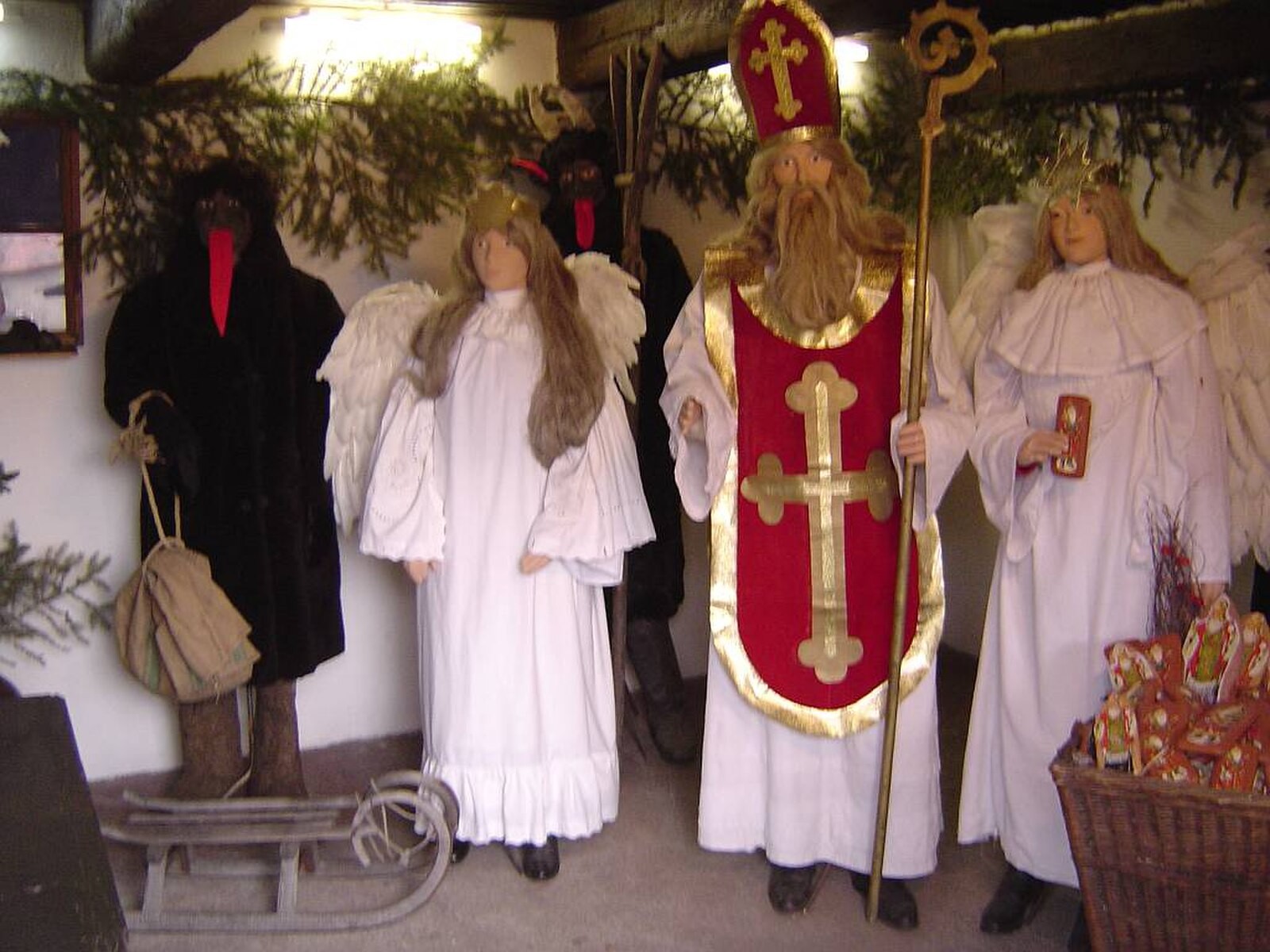
St Nicholas, angel and devil figures in a Czech display context, avoiding identifiable modern participants.
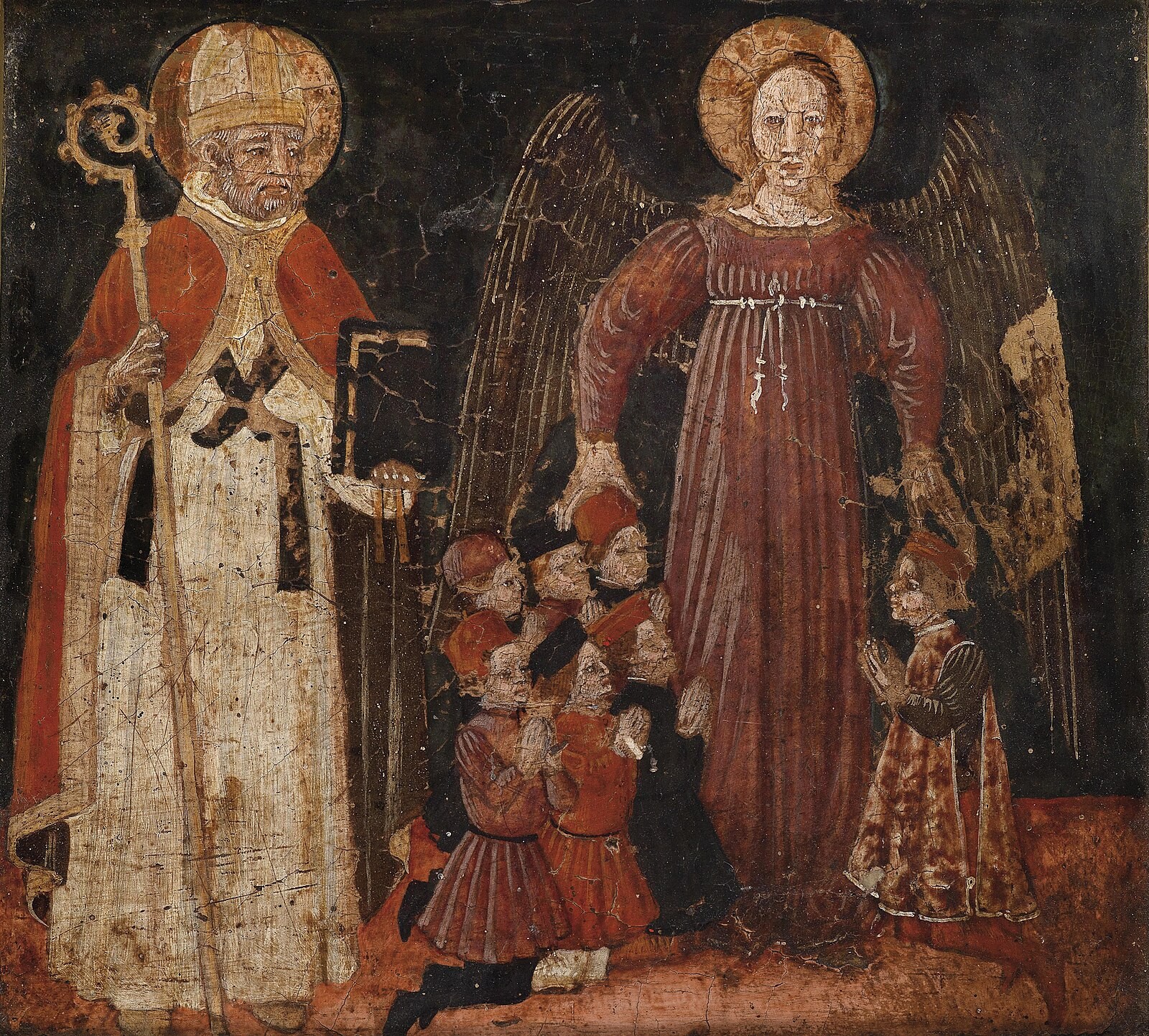
Historical depiction of St Nicholas with children and an angel.
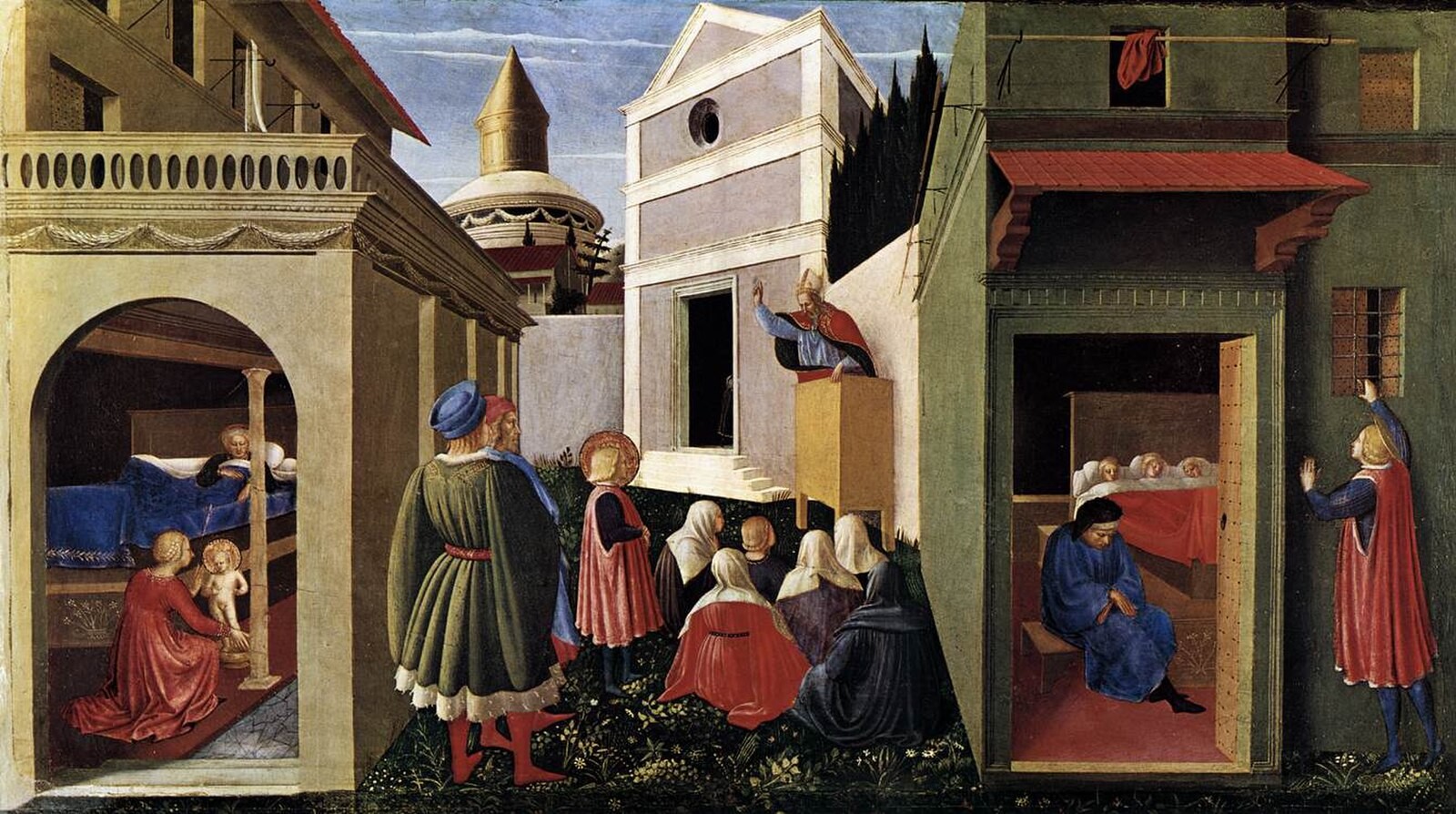
Public-domain historical artwork from the St Nicholas tradition.
Quick facts
- Mikuláš is traditionally celebrated on the evening of December 5, before St Nicholas's feast day on December 6.
- The familiar trio is St Nicholas, an angel and a devil.
- Children may recite a poem or sing and receive sweets, fruit or small gifts.
- Mikuláš is separate from Czech Christmas gift-giving associated with Ježíšek.
- Historical St Nicholas masquerades in Czech lands included more varied characters than the modern trio.
- Public events are only one expression of a custom that also takes place in families and homes.
Questions
When is Mikuláš in Prague?
The main public and family celebrations take place on the evening of December 5, ahead of St Nicholas's feast day on December 6.
Why is there a devil with St Nicholas?
The devil plays the role of consequence or misbehaviour, while the angel represents reward and protection. Together they turn the visit into a moral folk drama.
Is Mikuláš the same as Czech Christmas?
No. It is an Advent tradition earlier in December. Czech Christmas gift-giving is a separate celebration associated with Ježíšek.
Where can visitors see the tradition?
Costumed trios often appear in public squares, streets and Advent events on December 5. Specific organized events change each year and should be checked close to the date.
Sources & further reading
- Advent traditions and folk customs — VisitCzechia
- Traditions of Czech Advent — VisitCzechia