
Prague Stories · Czech Beer
What “Tank Beer” Means in a Prague Pub
Tankové pivo describes how beer is stored and served at the pub, not where it was brewed. In systems such as Pilsner Urquell's Tankovna, beer travels fresh from the brewery and is held in sealed inner bags inside temperature-controlled tanks.
Prague pubs with tank beer systems

A shiny copper or stainless-steel tank behind a Prague bar creates an irresistible story: perhaps the beer was made right there.
The tank is in the pub; the brewery does not have to be
Usually, that is the wrong inference. Tank beer is fundamentally a storage-and-dispense system. The beer is brewed at a brewery, transported to the pub, transferred into a tank system and served from there. In other words, “tankové pivo” describes how the beer is stored and served. It does not mean the pub brewed it on site. If a venue actually brews on site, it can say so separately. The tank tells you about the journey between brewery and glass — and, depending on the system and brand, about how oxygen, pressure, temperature and freshness are managed.
Inside the tank, the beer may never touch the tank wall
Pilsner Urquell's documented Tankovna system is a useful concrete example. Beer arrives from the brewery in a temperature-controlled tanker and is transferred into a sterile, vacuum-sealed bag inside the pub's tank. Air pressure acts on the outside of the bag to push beer toward the tap, so the beer itself is not exposed to compressed air inside the vessel. This is an important detail because the romantic copper tank you see is partly a shell around a much more hygienic, controlled package. Other breweries can use different technologies, so do not universalize one brand's engineering. But the principle helps explain why pubs advertise the system: it is designed to move a high volume of beer while protecting serving quality.
Unpasteurized can be true — but attach the claim to the system
Pilsner Urquell states that beer supplied through its Tankovna system is unpasteurized. That is a brand- and system-specific fact, not a definition that automatically applies to every tank beer in the Czech Republic. A pub sign saying tankové pivo tells you to ask what brewery and what tank program is involved before making claims about pasteurization. The word “fresh” also needs a little care. Tank systems are designed for fast turnover and controlled storage, but the result still depends on correct handling, clean lines and regular turnover. Hardware helps; good cellar practice still finishes the job.
Volume is part of the hidden equation
A tank system makes most sense in a pub that sells enough of one beer to empty the vessel quickly. Pilsner Urquell's own guidance emphasizes delivery speed and consumption within a limited period after opening. That means the tank sign also suggests something about the venue's rhythm: the featured beer is important enough to justify dedicated infrastructure and turnover. For the customer, this can be more meaningful than a generic promise of prestige. A busy tank pub is a logistics machine. Beer arrives, stays cold, remains sealed in its inner bag, moves through well-used lines and leaves the tap quickly. The experience depends on that chain.
What you can infer — and what you cannot
You can infer that the pub has invested in a tank-serving system for the named beer. Depending on the brewery program, you may be able to verify pasteurization status, delivery standards and storage method. You cannot infer that the beer was brewed in the building, that tank beer is objectively better than every keg beer, or that the tapster's technique will automatically be perfect. So when you see tankové pivo, ask a more interesting question than “Is tank beer best?” Ask what the tank changes. The answer is a story about distribution and service — the invisible half of beer culture that begins after brewing and ends only when the glass reaches your table.
Reviewed visuals
See the story
Supporting images selected in the Prague Stories visual review. Context images are labeled so they are not mistaken for documentary proof of the exact subject.
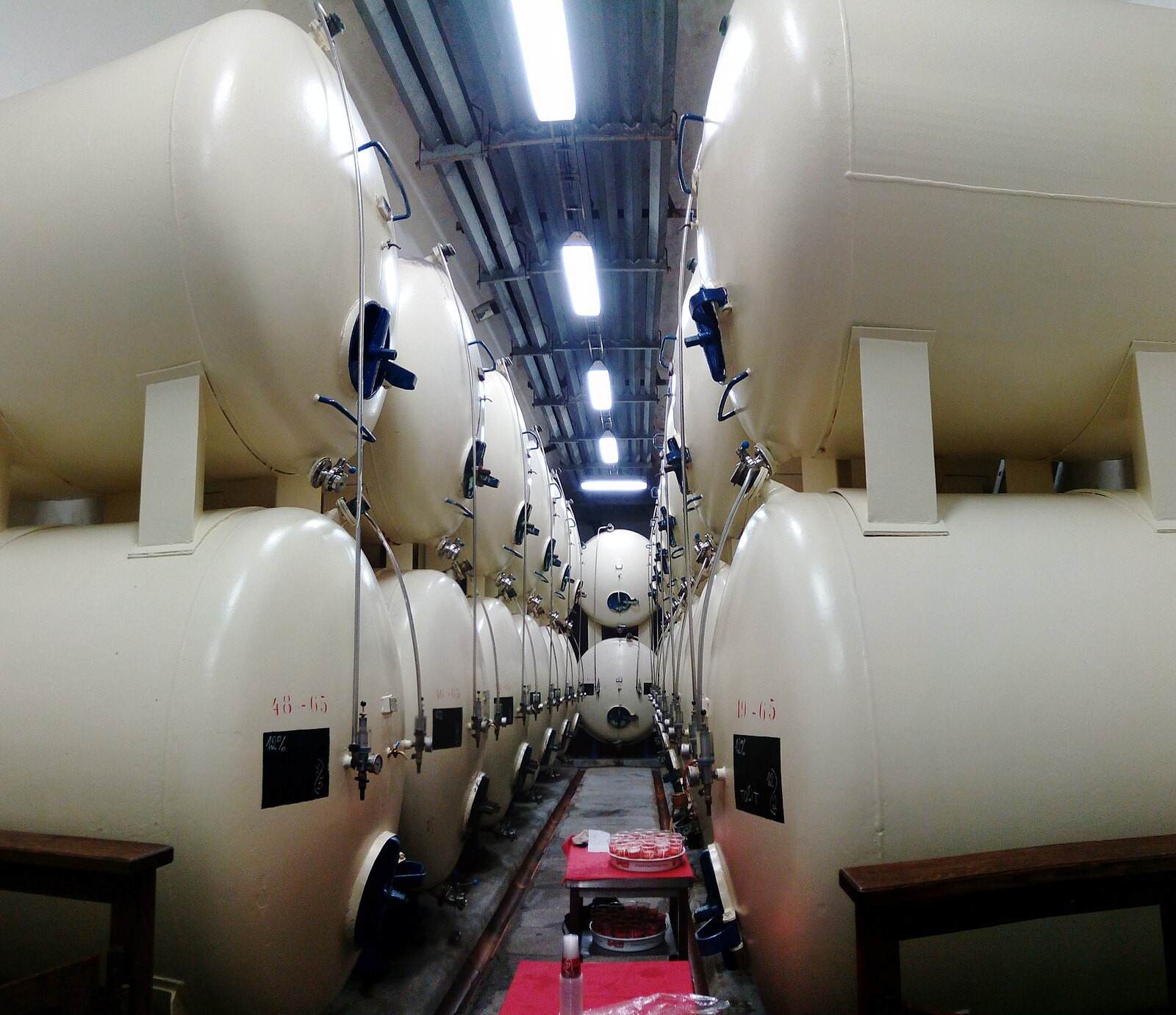
Large beer storage/processing tanks at Budweiser Budvar brewery.
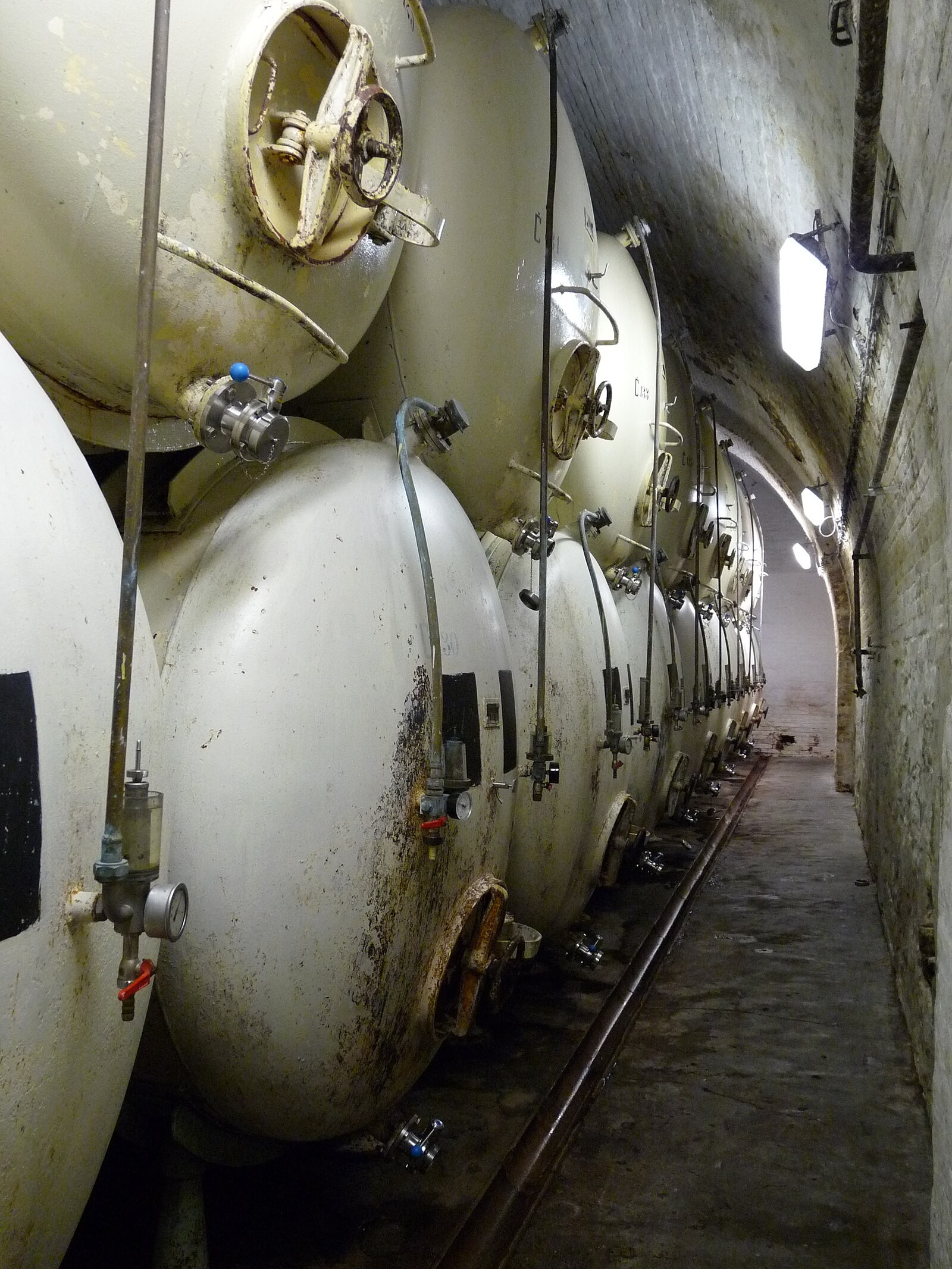
Lager tanks inside Třeboň brewery.
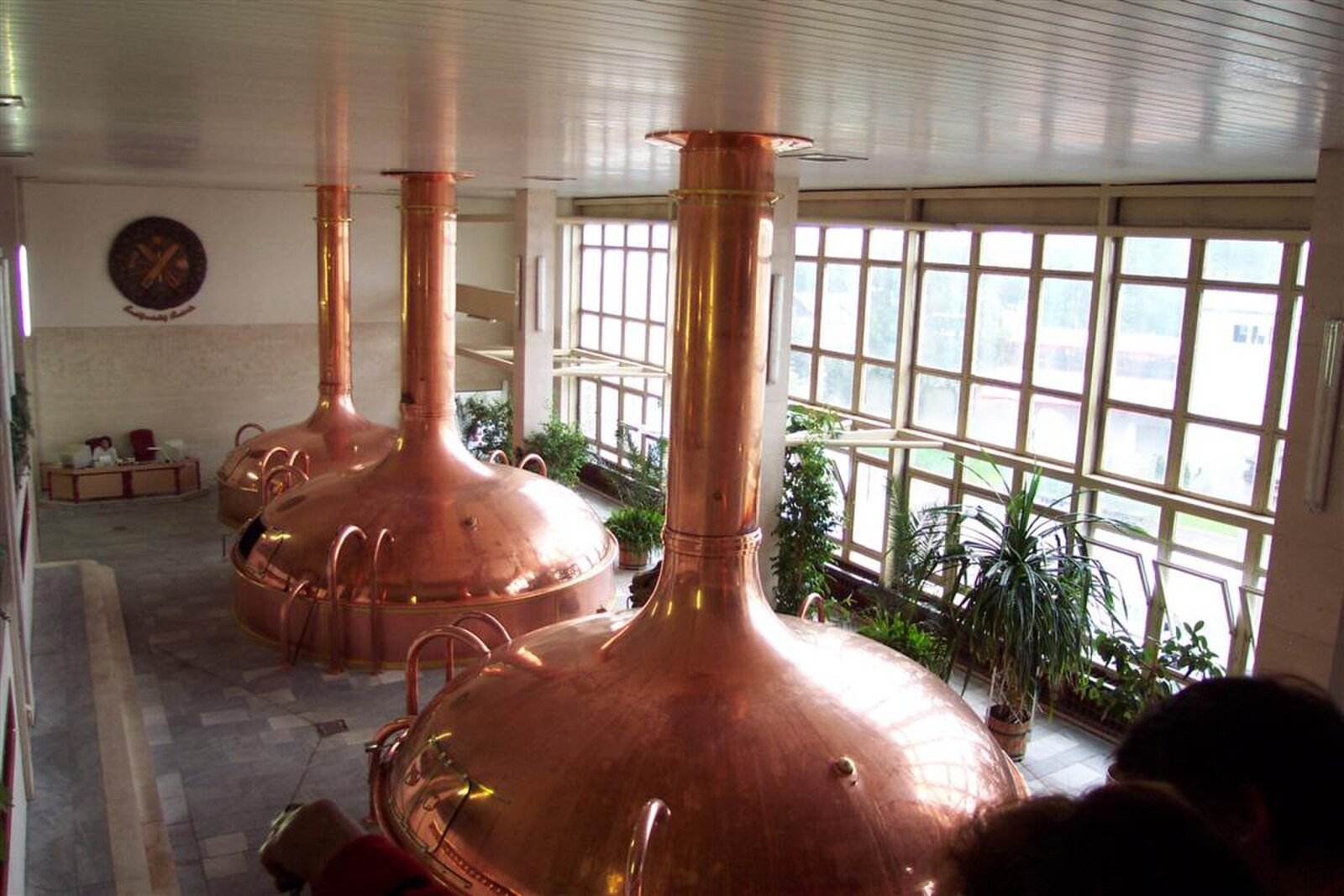
Large beer vats/tanks in a Czech brewery.
Quick facts
- Tank beer refers to a pub storage-and-dispense system, not necessarily on-site brewing.
- Pilsner Urquell's Tankovna system uses sealed bags inside tanks.
- In that system, air pressure pushes on the outside of the bag rather than contacting the beer.
- Pilsner Urquell states that its Tankovna beer is unpasteurized.
- Tank systems depend on high turnover, temperature control and correct maintenance.
- Different breweries may use different tank technologies, so brand-specific claims should not be generalized.
Questions
What is tank beer?
Beer stored at the pub in a dedicated tank system and dispensed from that system. It is normally brewed elsewhere unless the venue separately operates as a brewery.
Is tank beer unpasteurized?
Some systems are. Pilsner Urquell states that its Tankovna beer is unpasteurized, but that should not be assumed for every brewery or tank system.
Is tank beer better than keg beer?
Not automatically. Tank systems can support freshness and high-volume service, but beer quality also depends on transport, temperature, line care, turnover and pouring.
Is tank beer brewed in the pub?
Usually not. The tank describes storage and service. On-site brewing is a separate claim.
Sources & further reading
- Why Tank Beer Tastes Perfect — Pilsner Urquell