
Prague Stories · Czech Beer
Why Czech Beer Says 10°, 11° or 12° — and It Is Not the Alcohol Percentage
A 12° beer in Prague does not contain 12 percent alcohol. The number points back to the wort before fermentation, giving Czech drinkers a compact clue about the beer's original extract and traditional category.
Prague pubs and beer halls

A Prague beer board can look alarming if you read 10°, 11° and 12° as alcohol percentages.
The first thing to forget is the percent sign in your head
Do not. Those numbers belong to a different measurement tradition. They describe the concentration of the original wort — the liquid containing dissolved material from malt before fermentation has turned part of those sugars into alcohol and carbon dioxide. In Czech legal and brewing language, that original extract remains important enough to help define beer categories. A “ten” and a “twelve” are therefore not simply weak beer and strong beer written in a strange unit. They begin with different concentrations before fermentation, which tends to influence body and potential alcohol but does not mathematically dictate the final ABV on its own.
Think of the number as a snapshot taken before yeast finishes the job
Brewers make wort by extracting soluble material from malt into water. The degree number is a shorthand for how much extract was present at the start. A 12° beer began with a more concentrated wort than a 10° beer. Fermentation then changes the liquid: yeast consumes fermentable sugars and produces alcohol, leaving behind different amounts of residual material depending on recipe, yeast and process. That is why two beers with the same degree can finish at different alcohol strengths, and why the degree cannot be converted into ABV by simply adding a percent sign. The measurement tells you something meaningful — just not the thing an English-speaking visitor often assumes.
Czech categories make the old shorthand useful on a modern menu
Czech rules define “výčepní” beer in the 7–10 percent original-extract range and bottom-fermented “ležák” in the 11–12 percent range, with stronger categories above that. Those legal categories are more precise than pub folklore, but they also explain why 10°, 11° and 12° are so culturally legible. The numbers map onto familiar expectations about style and body. In everyday ordering, a 10° can be a lighter, highly drinkable pub beer; an 11° may sit between categories in the drinker's imagination; a 12° lager often carries more malt body. But these are tendencies, not promises about flavour. Hops, malt bill, fermentation and serving quality still matter enormously.
The ABV is a separate line — read it separately
Real brewery examples make the distinction easy. A 10° beer may sit around four percent alcohol by volume, while a 12° beer may be around five percent, but those numbers vary by brand. The important habit is to look for “% alc.” or “ABV” if alcohol strength is what you need to know. Do not estimate your intake from the degree alone. This separation is especially useful in Prague, where menus may foreground the degree because locals already understand the convention. For a visitor, learning it turns a cryptic symbol into a piece of beer literacy: the menu is telling you about the beer before fermentation as well as after it.
Use the menu like a Czech shorthand lesson
If a board lists 10°, 11° and 12° versions from the same brewery, compare them in a small, controlled way rather than assuming the highest number is automatically “best.” Notice body, malt sweetness, bitterness and finish. A lower-degree beer can be more refreshing; a higher-degree beer can feel rounder without being radically stronger. And keep one boundary clear: degree says nothing about where the beer was brewed, whether it came from a tank or keg, or which foam style the tapster poured. Those are different stories. The number is a clue to original extract — one small symbol that lets a Prague beer menu reveal much more than its price.
Reviewed visuals
See the story
Supporting images selected in the Prague Stories visual review. Context images are labeled so they are not mistaken for documentary proof of the exact subject.
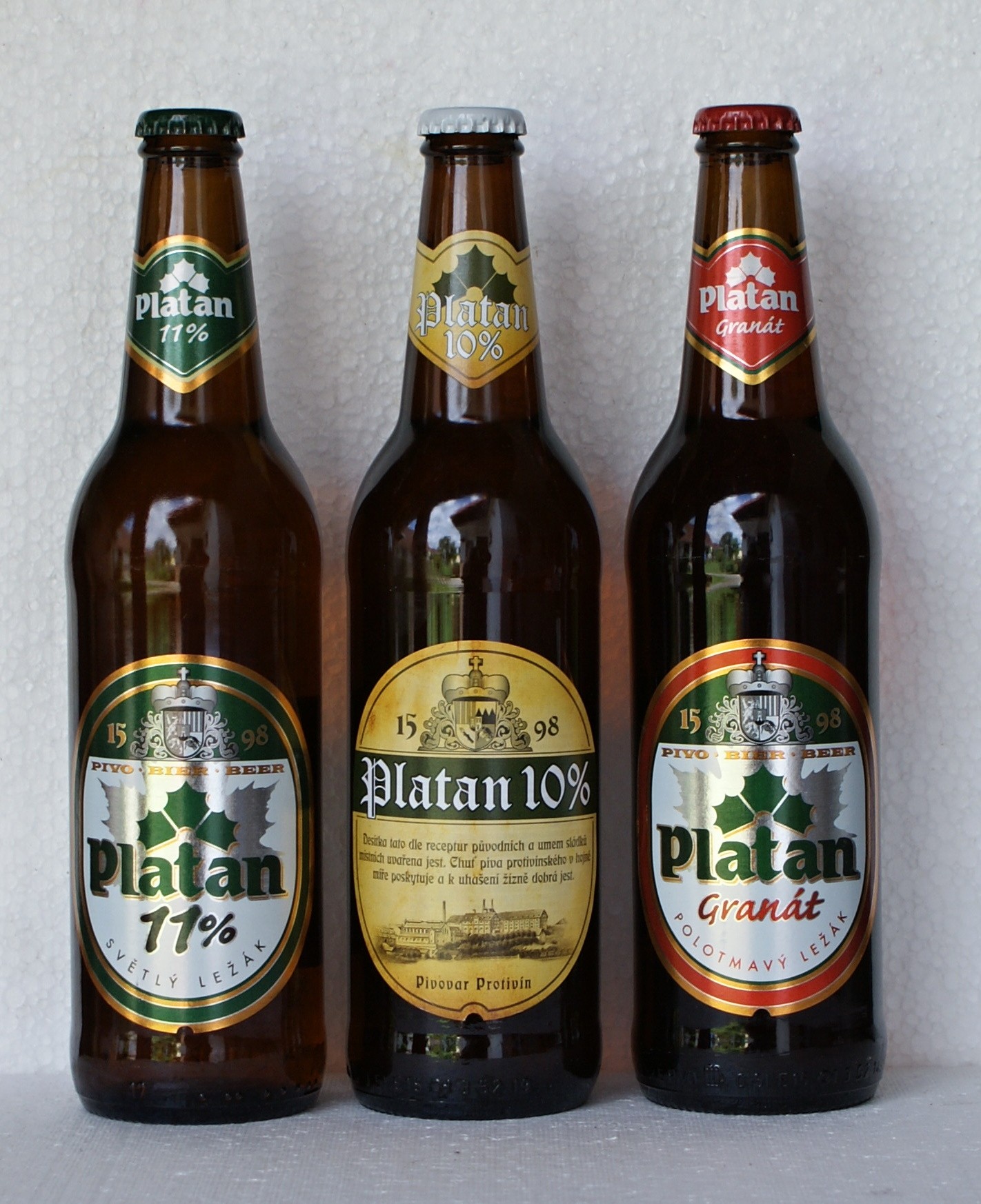
Three Czech Platan beers with degree-strength labels, directly illustrating Czech beer degrees.
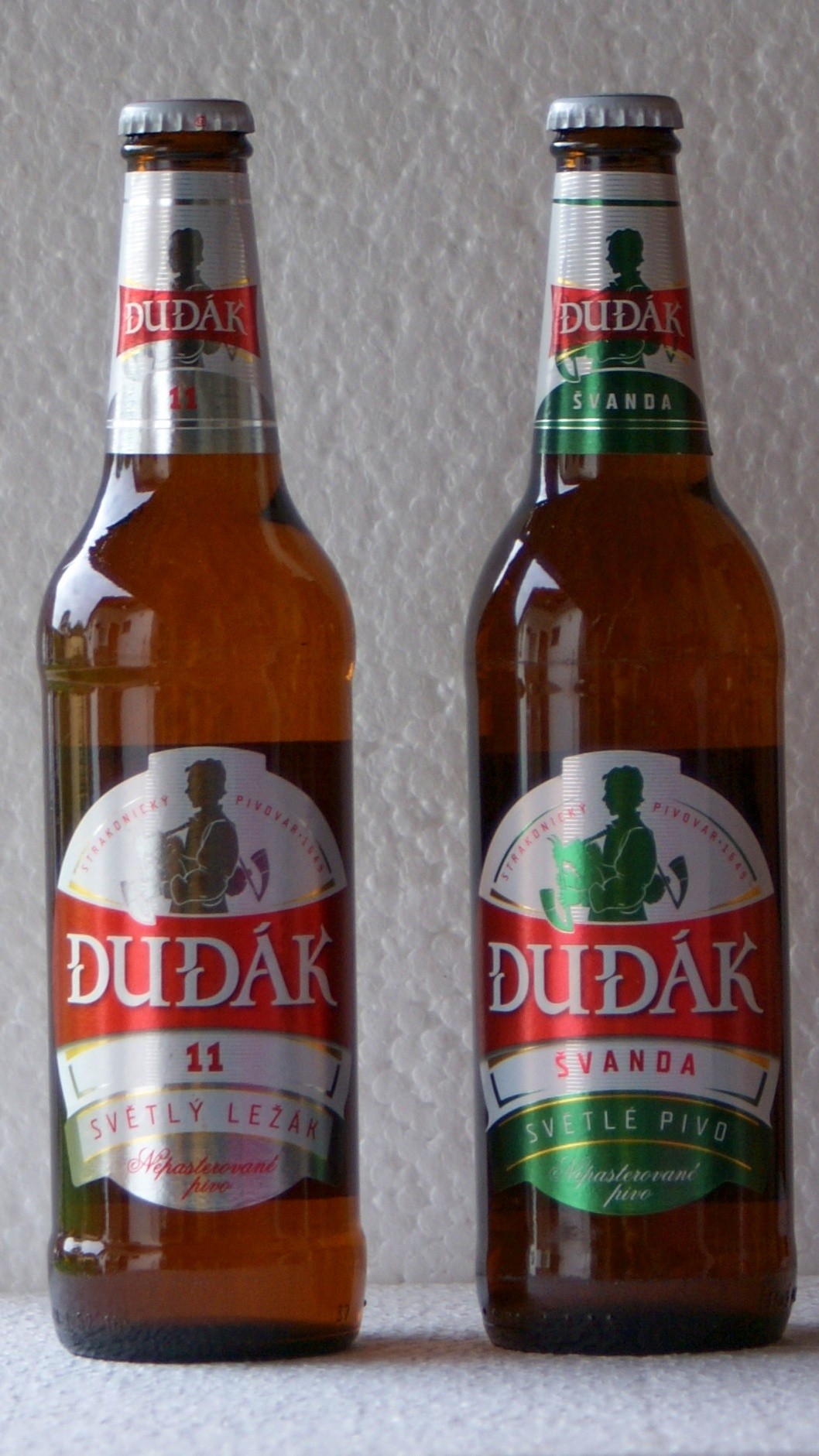
Bottle and glass of Czech Dudák beer; label provides Czech beer-strength context.
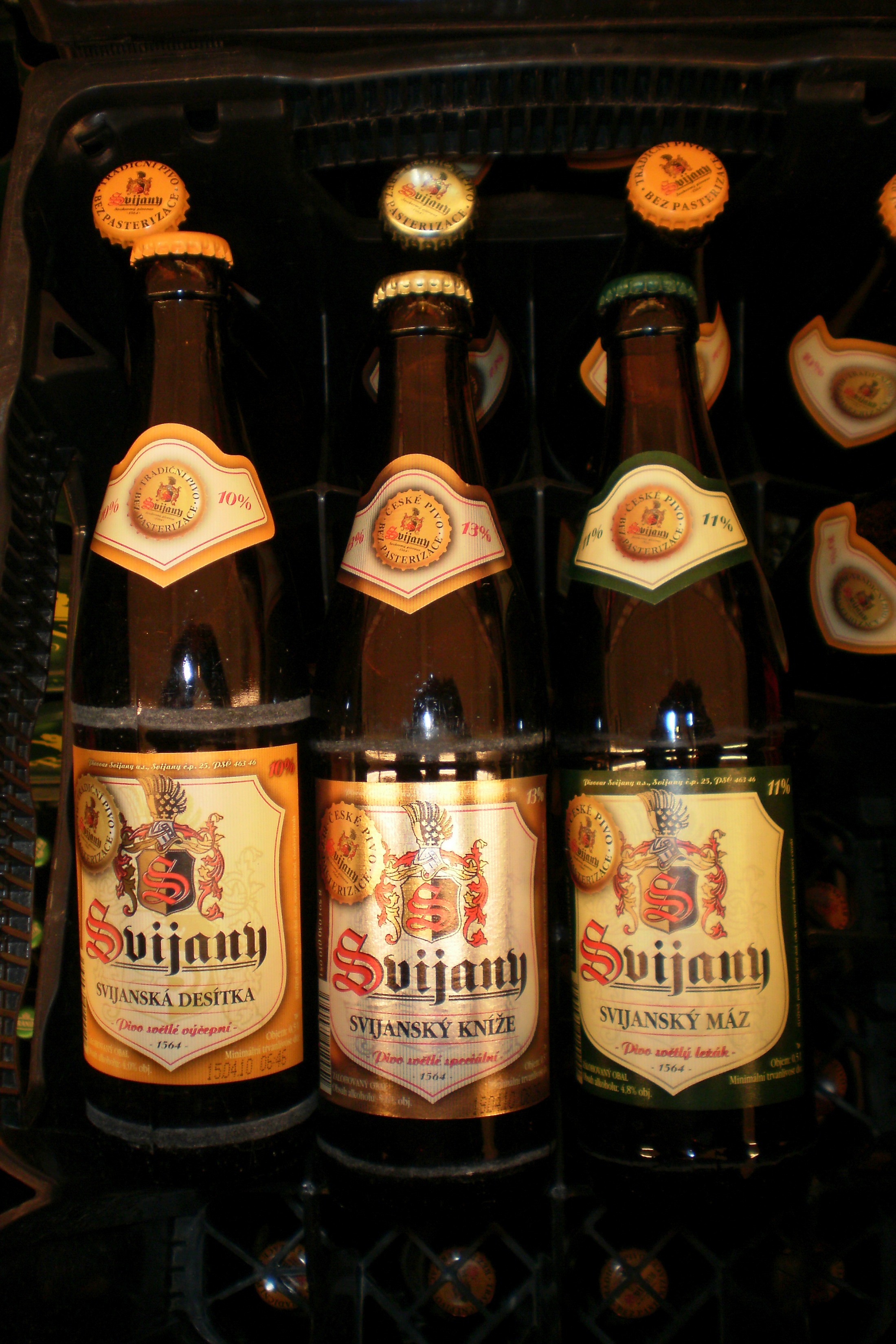
Several Svijany Czech beers representing different named strengths.
Quick facts
- Czech beer degrees such as 10°, 11° and 12° refer to original wort extract, not alcohol percentage.
- Czech law uses original extract to define categories including výčepní beer and ležák.
- A 12° beer usually starts from a more concentrated wort than a 10° beer.
- Final ABV depends on fermentation and recipe, so degree and alcohol strength are not identical measurements.
- Many Czech breweries print both the degree and the ABV.
- The degree does not tell you where the beer was brewed or whether it is served from a tank.
Questions
Does 12° beer mean 12% alcohol?
No. The 12° refers to the beer's original wort extract before fermentation, not to alcohol by volume.
Is 12° stronger than 10°?
It starts from a more concentrated wort and often finishes with more alcohol and body, but the final ABV depends on fermentation. Check the actual ABV if strength matters.
What is a ležák?
In Czech legal terminology, a bottom-fermented ležák is made from wort with 11–12 percent original extract. In everyday English it is commonly rendered as lager.
Which beer degree is most common in Prague?
10°, 11° and 12° are all common enough to be useful menu categories. Availability depends on the brewery and pub, so there is no single degree you must order.
Sources & further reading
- Czech legal definitions for beer categories — Ministry of Agriculture of the Czech Republic
- Beer glossary — Heřmanický pivovar
- Our beers — Pivovar Holandan