
Relics and place
A Bone Relic Helps Explain Why Prague Castle Had a St Vitus Rotunda
Prague City Tourism says Prince Wenceslas received a bone from St Vitus’s arm from Henry I and deposited it in the rotunda he established at the Castle.
St Vitus Cathedral, Prague Castle

Before the Gothic cathedral, a relic gave the Castle’s smaller rotunda a saintly anchor.
Before the cathedral, there was a relic and a rotunda
The name St Vitus belongs so naturally to Prague Castle today that it can seem inseparable from the Gothic cathedral. Prague City Tourism pushes the dedication much further back. Around 925, it says, Prince Wenceslas established a rotunda after receiving from Henry I the Fowler a relic—a bone from St Vitus’s arm—and deposited it there.
A small object could shape a major sacred site
Relics mattered because they connected churches with saints in a concrete devotional way. In this case, the object helps explain why St Vitus became anchored in the Castle’s religious geography long before the present cathedral rose. The spectacular architecture came later; the dedication already had a history.
The buildings changed, the dedication endured
The rotunda was replaced by a basilica, and later the Gothic cathedral took its place. Those architectural changes can make the site look like a sequence of separate monuments. The relic story offers continuity across them: different structures occupied the ground while the association with St Vitus persisted.
Look at the cathedral with an earlier scale in mind
Standing in the present cathedral, it is difficult to imagine the much smaller rotunda that preceded it. That contrast is precisely the point. Prague Castle’s sacred centre expanded and rebuilt itself over centuries. The relic does not explain every later development, but it gives the earliest St Vitus chapter a tangible anchor and helps prevent the Gothic cathedral from swallowing the history of everything that came before.
Reviewed visuals
See the story
Supporting images selected in the Prague Stories visual review. Context images are labeled so they are not mistaken for documentary proof of the exact subject.
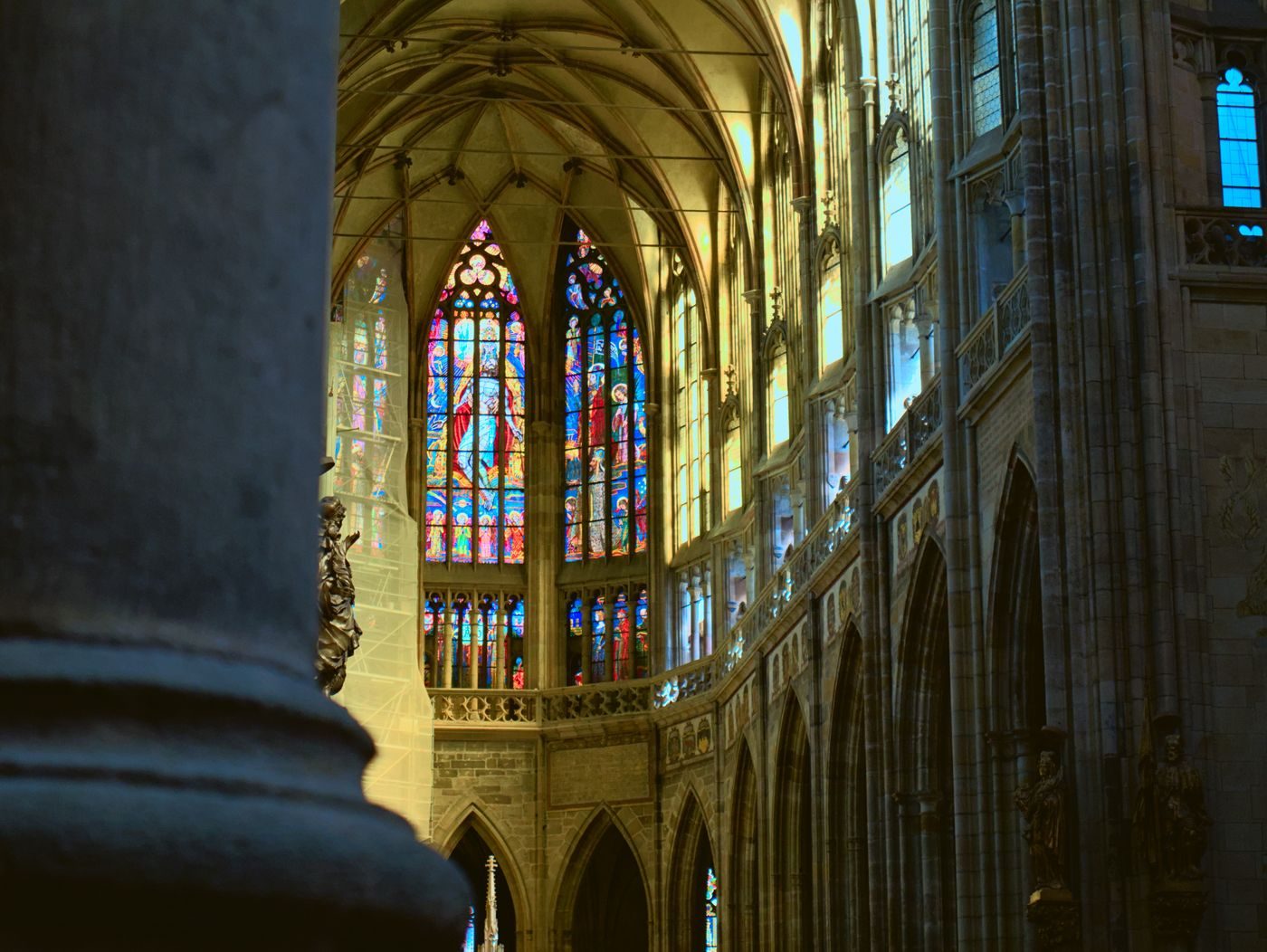
Exact cathedral interior visibly includes stone architecture and stained glass.
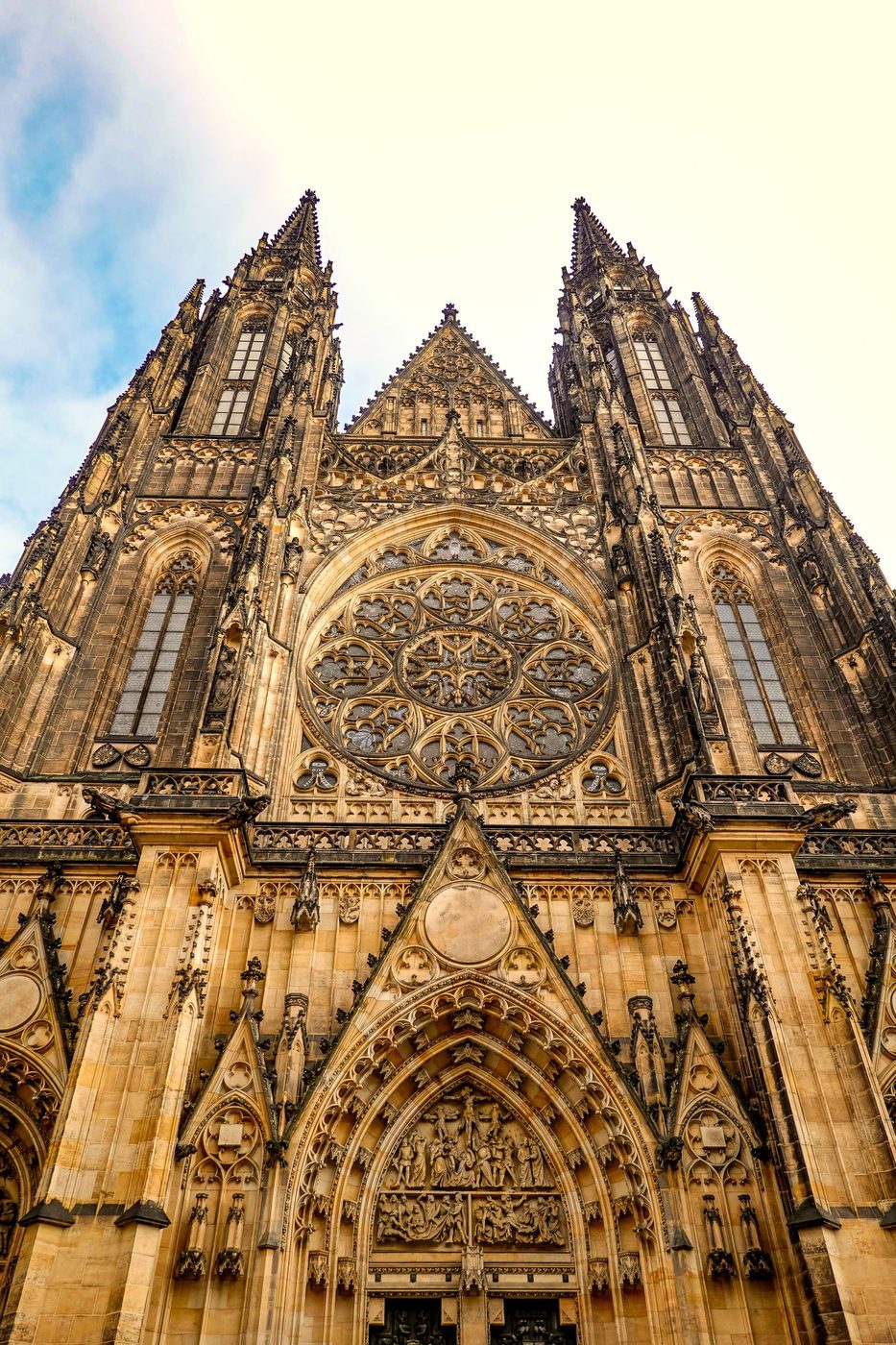
Exact St Vitus façade and towers are visibly identifiable.
Quick facts
- Prince Wenceslas established a St Vitus rotunda at Prague Castle.
- Prague City Tourism places this around 925.
- Henry I the Fowler gave Wenceslas a relic from St Vitus.
- The source identifies the relic as a bone from St Vitus’s arm.
Questions
What relic does Prague City Tourism identify?
A bone from St Vitus’s arm.
Who received it?
Prince Wenceslas, from Henry I the Fowler.
Sources & further reading
- Prague Castle — Cathedral of St Vitus, St Wenceslas and St Adalbert — Prague City Tourism