
Prague Stories · Czech Food
Czech “Turek” Is Not Turkish Coffee
Ask for a Czech turek and you may get finely ground coffee placed directly in a cup and flooded with hot water. Despite the name, that is not the cezve-brewed Turkish coffee recognized by UNESCO.
Prague cafés and everyday Czech kitchens

Czech turek is a linguistic trap.
The same word points to two different techniques
The name points toward “Turkish,” but the Czech preparation is strikingly simple. Ground coffee goes straight into a cup, hot water is poured over it, and the grounds settle at the bottom. There is no filter and, crucially, no cezve pot in which the coffee is brewed. Traditional Turkish coffee uses very finely ground coffee cooked slowly with water — and often sugar — in a small long-handled pot called a cezve, producing a characteristic foam before serving. Both drinks leave grounds in the cup, which may explain why they can look related to an outsider, but the extraction method is not the same.
Czech everyday coffee had its own constraints
For much of the twentieth century, turek became an ordinary Czech household and workplace method: cheap equipment, no machine, one cup, hot water, done. Czech Radio accounts describe it as a familiar standard for years, especially before the explosion of espresso-based café culture after 1989. That context matters more than searching for a noble origin legend. Turek was practical. It suited kitchens, offices, workshops and homes where people wanted coffee and a pause without needing special equipment. Everyday habits can become culturally durable precisely because they require almost nothing.
The grounds tell you how to drink it
Because coffee grounds remain loose in the cup, the drink changes as it sits. Extraction continues; the flavour can become more bitter; sediment accumulates at the bottom. Czech drinkers often wait for the grounds to settle and then stop before the last muddy mouthful. Stirring early can help the grounds sink, but aggressive stirring later wakes them back up. The technique teaches its own pace: drink from the top, leave the final centimetre or so alone, and do not expect a clean paper-filter finish.
Modern Prague cafés do not need turek to prove they are Czech
Prague now has a sophisticated specialty-coffee scene built around espresso, batch brew, pour-over and carefully sourced beans. Many contemporary cafés do not serve turek at all, and that absence does not make them less Czech. The older method survives more strongly in homes, traditional venues and memory than as the flagship of modern urban coffee. That is an important correction to travel writing that searches for one “authentic Czech coffee.” Coffee culture changes. Turek is valuable because it records an everyday twentieth-century habit, not because every Prague barista should preserve it.
The name is the historical curiosity, not a brewing instruction
Once you know the distinction, ordering becomes simple. If you want true Turkish coffee, look for a venue that explicitly says it is brewed in a cezve or ibrik. If you want Czech turek, expect grounds in the cup and a pour-over-without-filter logic. Do not complain that one is a badly made version of the other; they are different preparations. A familiar foreign name became attached to an everyday Czech method, then survived long enough to confuse a new generation of travellers. The mistake is only in assuming the label guarantees the technique.
Reviewed visuals
See the story
Supporting images selected in the Prague Stories visual review. Context images are labeled so they are not mistaken for documentary proof of the exact subject.
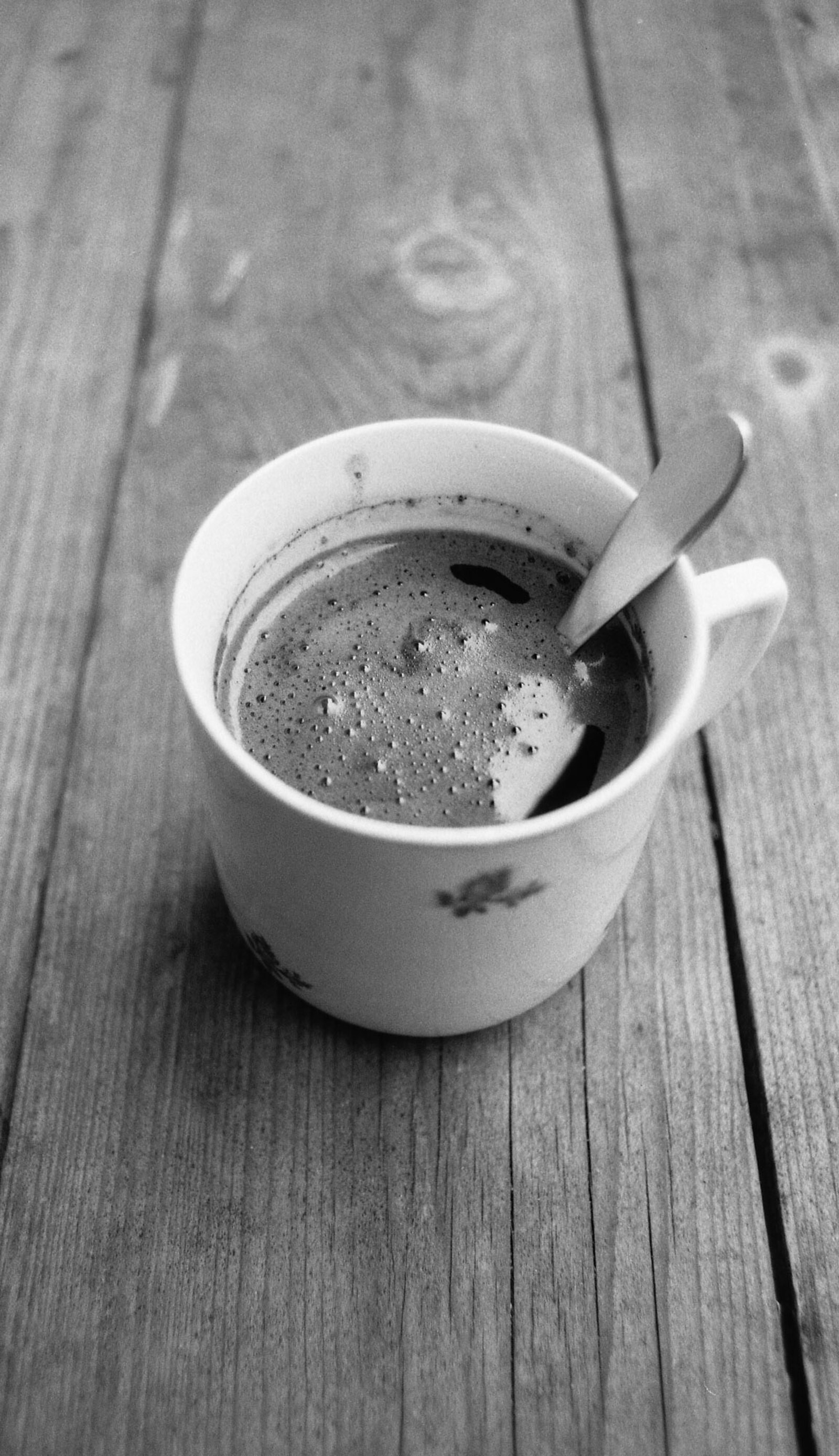
Czech-style “turek”: ground coffee steeped directly in a glass/cup with sediment left in the drink.

Actual Turkish coffee prepared in a copper cezve, included as a direct visual comparison.
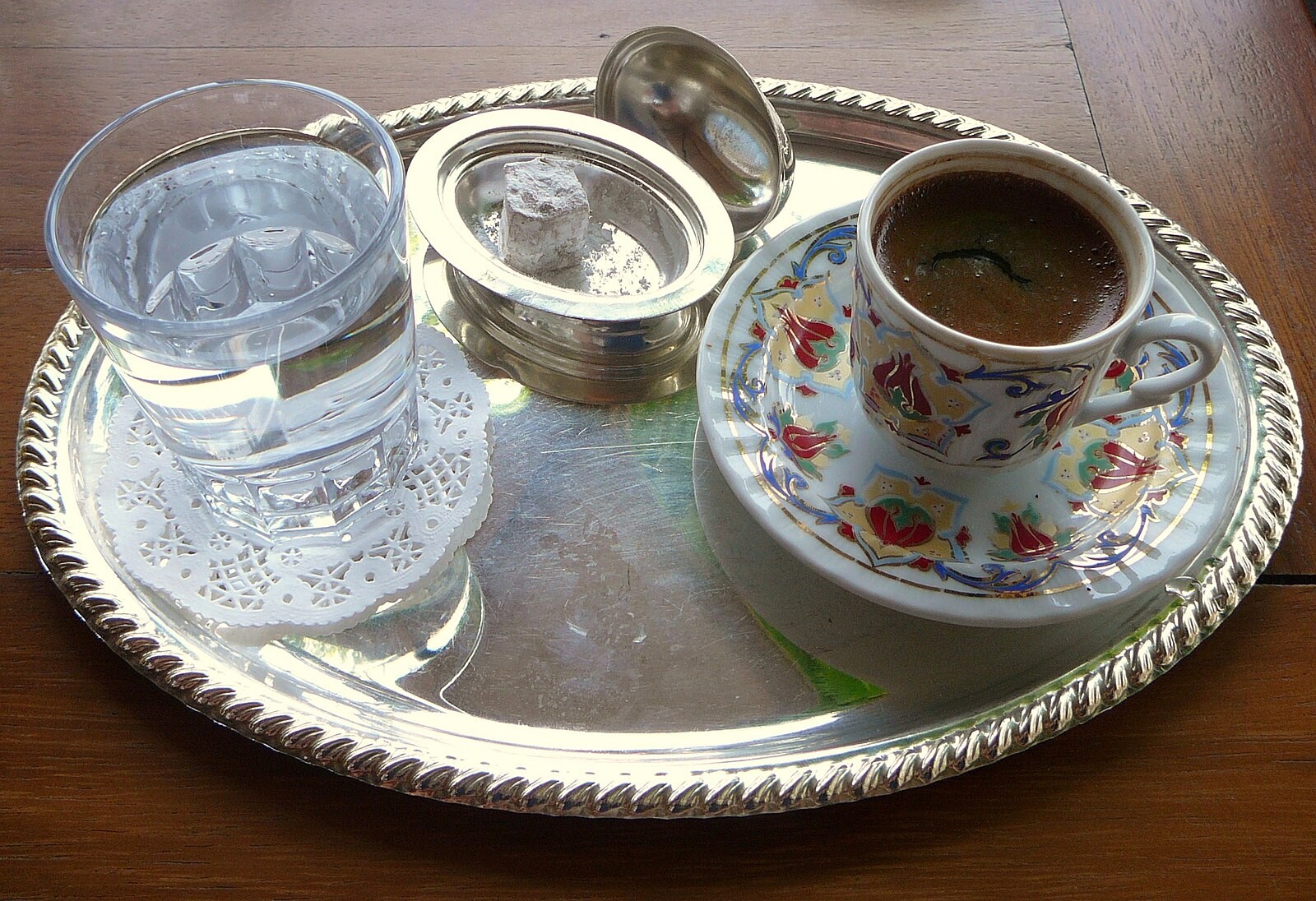
Traditional Turkish coffee served in Istanbul, contrasting with Czech “turek”.
Quick facts
- Czech turek commonly means ground coffee placed in a cup and flooded with hot water.
- The grounds remain in the cup and settle at the bottom.
- Traditional Turkish coffee is brewed in a cezve and uses a distinct preparation method.
- Czech turek was an everyday twentieth-century coffee habit and remained common before post-1989 café diversification.
- Modern specialty cafés in Prague may not serve turek.
- Shared sediment in the cup does not make the Czech and Turkish techniques identical.
Questions
What is Czech turek coffee?
A simple unfiltered preparation in which ground coffee is placed directly in the cup and hot water is poured over it; the grounds remain in the cup.
Is turek the same as Turkish coffee?
No. Traditional Turkish coffee is brewed slowly in a cezve, whereas Czech turek is typically infused directly in the serving cup.
Do Prague cafés still serve it?
Some traditional cafés and restaurants do, but modern specialty cafés often focus on espresso and filtered methods instead.
How is it prepared?
Ground coffee is put into the cup, covered with hot water and allowed to steep while the grounds settle. Exact household ratios and technique vary.
Sources & further reading
- Magazine: Czech coffee and 'turek' — Radio Prague International
- Turkish coffee, not just a drink but a culture — UNESCO
- Turkish coffee culture and tradition — UNESCO decision — UNESCO Intangible Cultural Heritage