
Prague Stories · Czech Food
Why Svíčková Comes With Cream, Cranberries and Lemon
Svíčková looks like a collection of contradictions: savoury beef, a pale vegetable sauce, bread dumplings, tart berries, lemon and sometimes whipped cream. On a good plate, every element is there to pull the next one into balance.
Prague

The first surprise in svíčková is usually visual.
Read the plate from the sauce outward
A few slices of beef sit under a smooth beige sauce, beside white bread dumplings, with a dark-red spoonful of cranberries and a bright slice of lemon. Then there may be a cloud of whipped cream on top. To a visitor expecting Central European roast meat to arrive brown, crisp and uncompromisingly savoury, it can look almost like dinner and dessert negotiated a truce on one plate. But svíčková makes more sense when you stop treating the garnishes as decoration. The sauce is built from root vegetables and cream, so it naturally carries sweetness and richness. Acid sharpens it. Cranberries bring fruit and tartness. Lemon can lift the sauce further. Dumplings absorb what would otherwise pool on the plate. The beef supplies savoury depth. Each element changes the one beside it; the dish is less a list of ingredients than a balance system.
The name is simpler than the argument around it
On restaurant menus you will often see svíčková na smetaně — literally a form of “svíčková with cream,” but the word svíčková is also associated with beef tenderloin. That overlap helps explain why conversations about the “correct” cut of meat become so animated. In practice, Czech recipes and restaurants do not always use tenderloin. The CzechSpecials recipe, for example, allows rear beef or tenderloin. That is a good reminder that the dish is defined as much by its preparation and sauce as by any one cut of meat. So do not judge the plate only by whether the meat matches the English word “sirloin” or “tenderloin.” What matters more is whether the beef is tender, the sauce has depth rather than simple sweetness, and the accompaniments work together. Svíčková has survived precisely because Czech cooks have treated it as a living dish, not a museum formula.
The vegetables disappear, but their work remains
Carrot, parsley root or parsnip, celeriac and onion are common foundations. They are cooked with the meat and aromatics, then worked into a smooth sauce and softened with cream. By the time the plate arrives, the vegetables are almost invisible, but they determine the colour, body and gentle sweetness. That is why calling svíčková simply “beef in cream sauce” misses the architecture. The sauce also explains the dish's famous sweet-sour tension. Czech recipes vary in how they tune it, but lemon, vinegar, sugar or other acidic and sweet elements can be used to bring the vegetable base into balance. A good version does not taste like custard and it does not taste sharply sour. It moves between savoury, sweet, creamy and bright. This is one of those dishes where the final spoonful tells you more than the first: once the cranberries, lemon and sauce have crossed paths, the logic becomes obvious.
Cranberries and cream are not random decoration
The berries provide contrast in a concentrated form. A small amount can cut through several bites of rich sauce and meat, which is why you do not need to spread them over the entire plate. Lemon works similarly, adding aroma and acidity. Whipped cream, where used, sounds extravagant but plays a quieter role: it softens and rounds a sauce that already contains cream while creating a temperature and texture contrast. There is no requirement that every restaurant stage the garnish identically. One kitchen may serve a restrained spoon of berries, another a more theatrical arrangement, and some may omit the whipped cream. The useful constant is the idea of counterpoint. If you taste each component separately, the plate can seem odd. If you combine a little sauce, meat, dumpling and berry, you are eating it in the grammar the dish expects.
The dumplings are the plate's punctuation
Bread dumplings — houskové knedlíky or a related white-bread style — are cut into slices and served not because the plate needed more starch, but because the sauce needed somewhere to go. Their mild flavour and porous crumb make them a delivery system. Drag one edge through the sauce and the dumpling absorbs it without competing with it. That function is central to Czech sauce-based dishes and is one reason an English speaker's idea of a sealed or filled “dumpling” can be misleading here. For a first order in Prague, look for “svíčková na smetaně.” Expect a substantial composed dish, not a steak. Start with the sauce, then add a small amount of cranberry. Squeeze or taste the lemon only if you want more brightness. There is no prize for eating the garnish in a prescribed order. What looks like a strange combination on paper makes much more sense on the plate: rich, sweet, sour and savoury elements all meeting in one dish.
Reviewed visuals
See the story
Supporting images selected in the Prague Stories visual review. Context images are labeled so they are not mistaken for documentary proof of the exact subject.
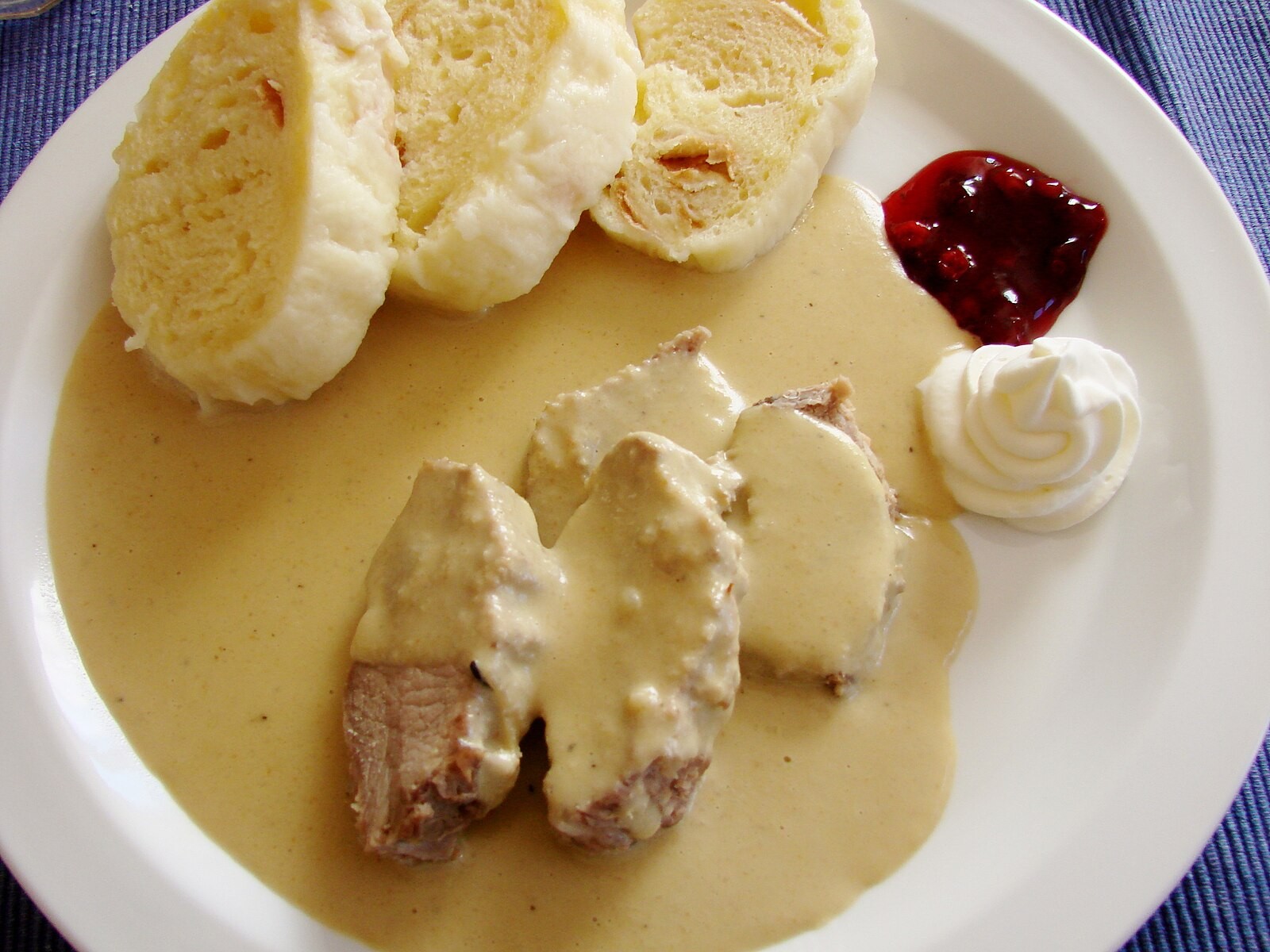
Svíčková na smetaně with dumplings, cream garnish, cranberries and lemon.
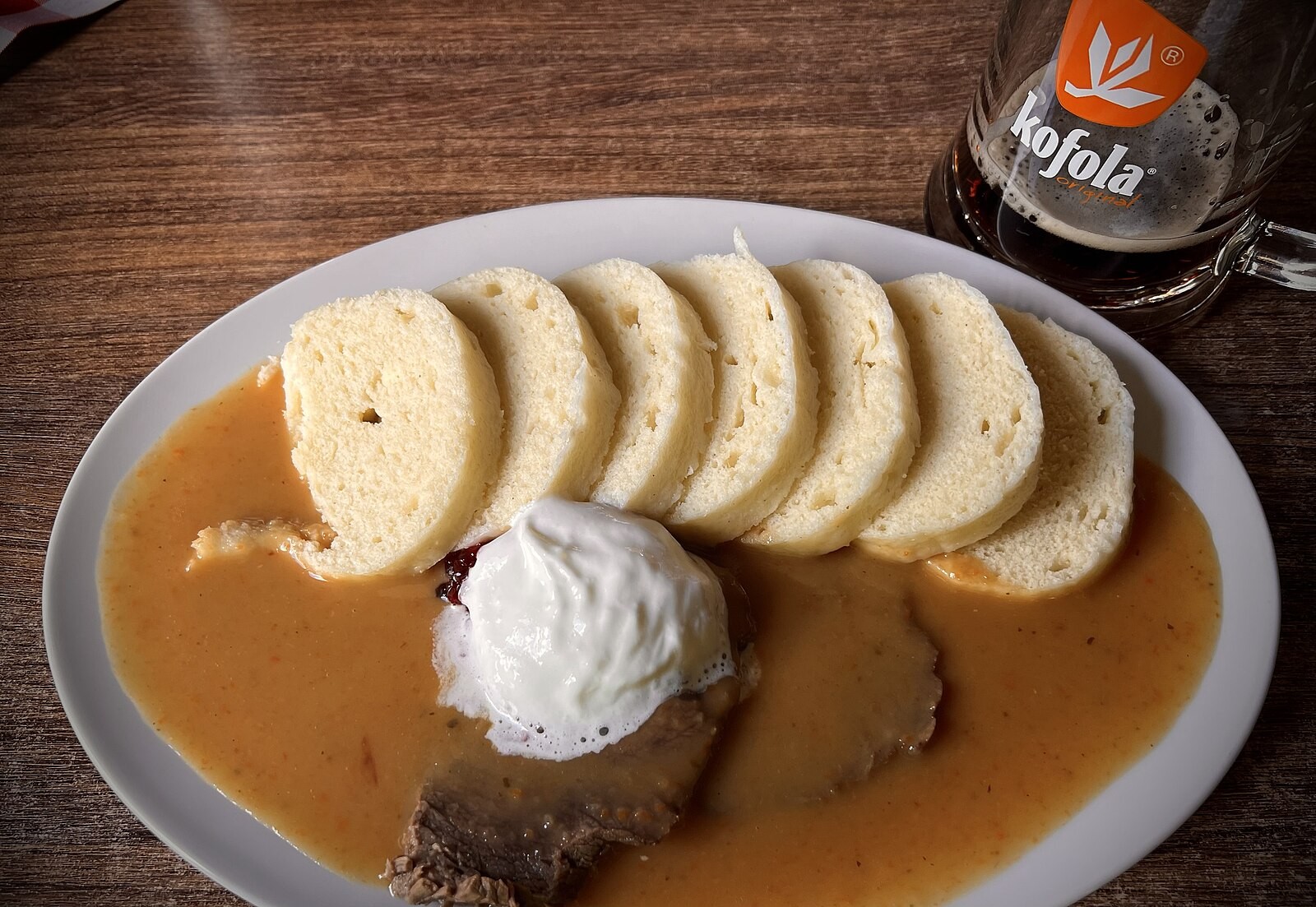
Restaurant serving of svíčková with its characteristic sauce, dumplings and garnishes.
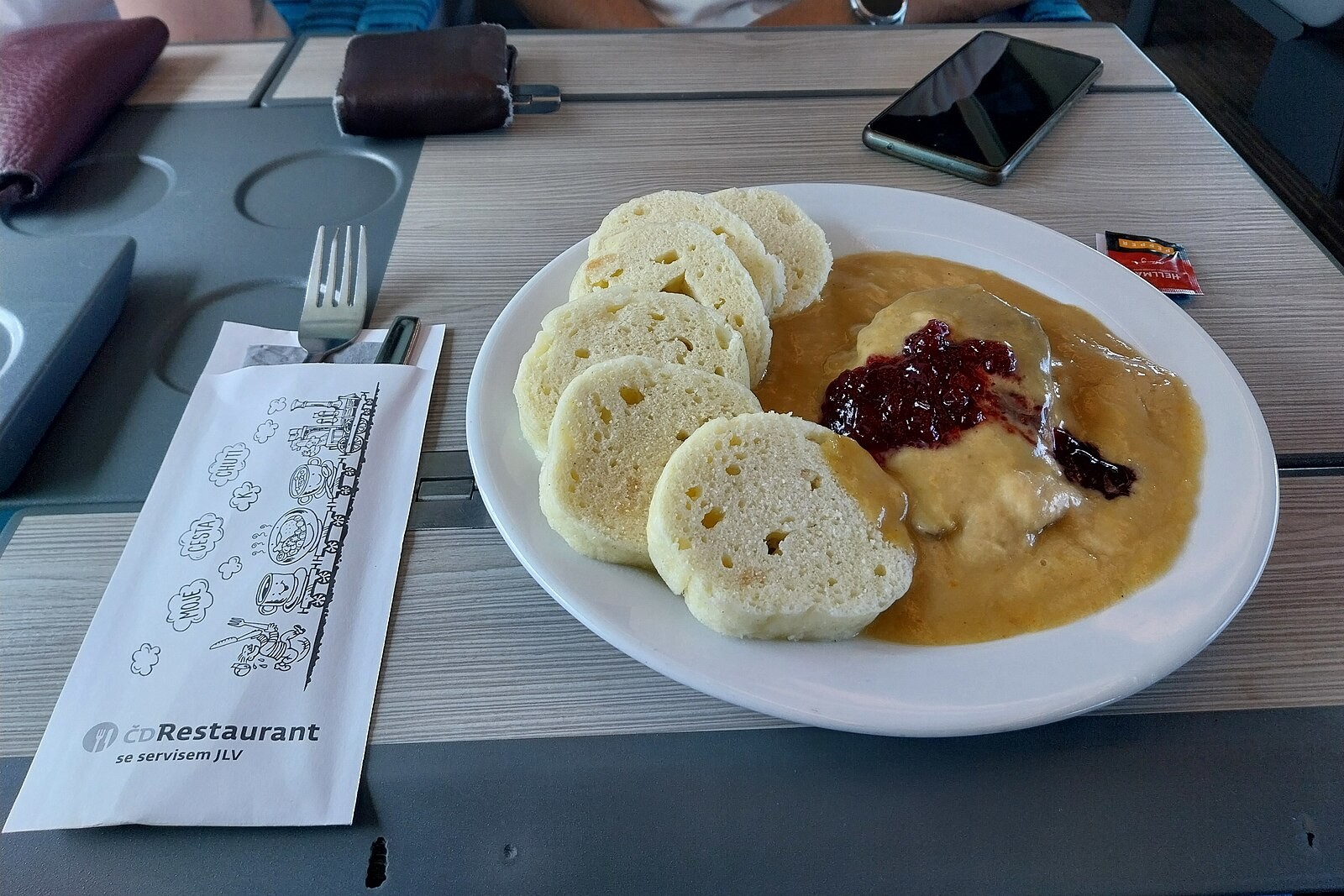
JLV train-restaurant serving of svíčková, a clearly different presentation of the same dish.
Quick facts
- Svíčková na smetaně is a beef dish defined by its creamy root-vegetable sauce and accompaniments.
- The name can suggest beef tenderloin, but Czech recipes and restaurants may use other suitable cuts of beef.
- Root vegetables such as carrot, celeriac and parsley root commonly form the body of the sauce.
- Bread dumplings absorb the sauce and are a functional part of the plate.
- Cranberries, lemon and sometimes whipped cream provide contrast to the rich sauce.
- Recipes vary; there is no single restaurant presentation that every Czech kitchen follows.
Questions
What meat is used in svíčková?
Beef is standard, but the exact cut varies. Despite the name's association with tenderloin, Czech recipes may use tenderloin or other rear cuts suitable for slow cooking.
Is svíčková sweet?
It can have a gentle sweetness from root vegetables and seasoning, but a well-balanced sauce also has savoury depth and acidity. It should not read simply as a sweet cream sauce.
Why are cranberries served with it?
Their tart fruit flavour cuts through the rich sauce and meat. They are best understood as a concentrated counterpoint rather than a dessert garnish.
What are Czech bread dumplings?
They are steamed or boiled loaf-shaped dumplings that are sliced for serving. Their mild, porous crumb is especially good at absorbing sauces.
Sources & further reading
- Svíčková na smetaně — CzechSpecials
- Czech Cuisine and Regional Products — VisitCzechia