
Hidden infrastructure
Wenceslas Square Had Gas Lighting Before Its Massive Iron Lampposts
Prague City Tourism dates gas lighting on Wenceslas Square to 1865 and the massive iron lampposts on its central axis from 1868.
Wenceslas Square / Prague

First came gas lighting; then came a new generation of large iron lampposts in the square’s central axis.
Treat street furniture as history
Large squares are usually read through buildings, statues and political events, while objects such as lamps fade into the background. Wenceslas Square gives a reason to reverse that habit. Prague City Tourism dates the installation of gas lighting there to 1865 and says massive iron lampposts appeared along the middle axis from 1868. The sequence turns lighting hardware into evidence of change in the public realm rather than decorative scenery.
Notice that systems and objects can change separately
Gas lighting is a system; a lamppost is a visible object carrying that system into public space. The city account places the arrival of gas lighting before the later massive iron posts. That distinction is useful when reading historic streets. Do not assume every surviving-looking lamp belongs to the first moment a technology arrived. Infrastructure can be introduced, redesigned, replaced and restyled while the street around it continues to evolve.
Look at lamps as part of a composition
On a broad square, the position of lighting matters as much as the lamp itself. The historical account describes rows along sidewalks and later large posts in the middle axis. That gives you two spatial questions to ask on any old urban street: where is the light placed, and what part of the space is it organizing? Even when today’s fixtures come from a later phase, the habit helps you see street furniture as intentional city design rather than visual clutter.
Reviewed visuals
See the story
Supporting images selected in the Prague Stories visual review. Context images are labeled so they are not mistaken for documentary proof of the exact subject.
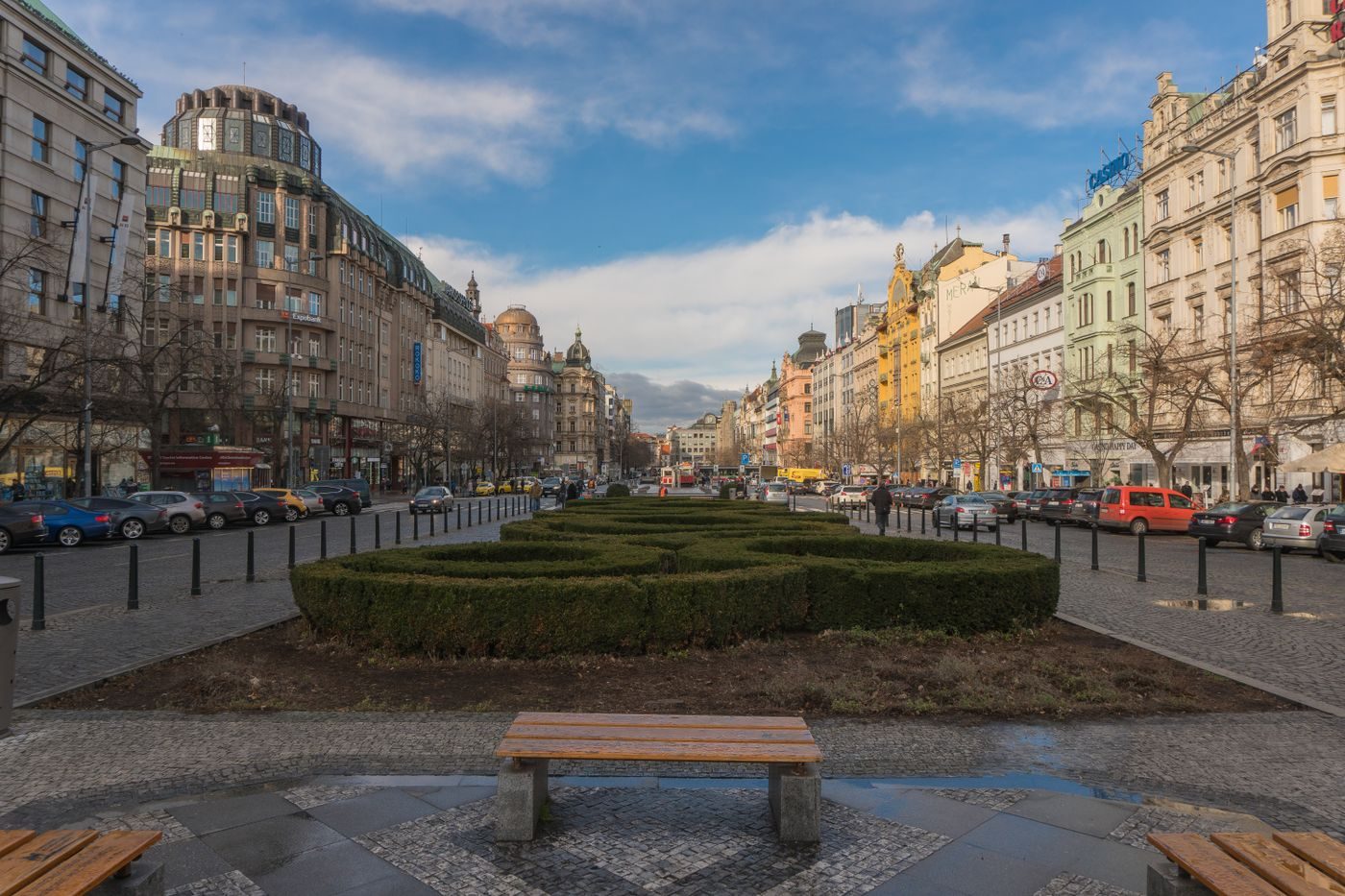
Another current view visibly establishes the scale and axis of Wenceslas Square.
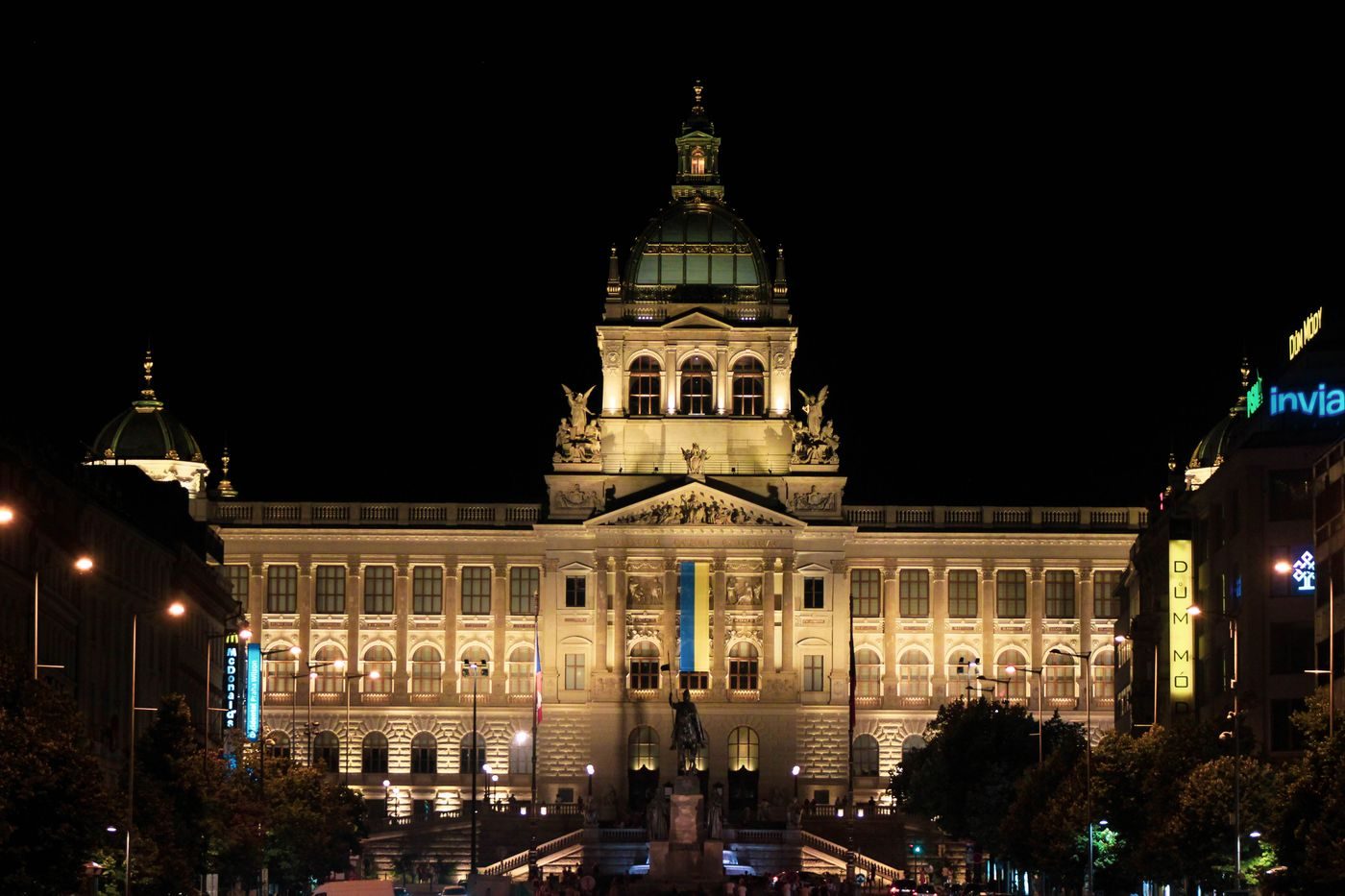
Illuminated National Museum and night setting visibly anchor the upper end of Wenceslas Square.
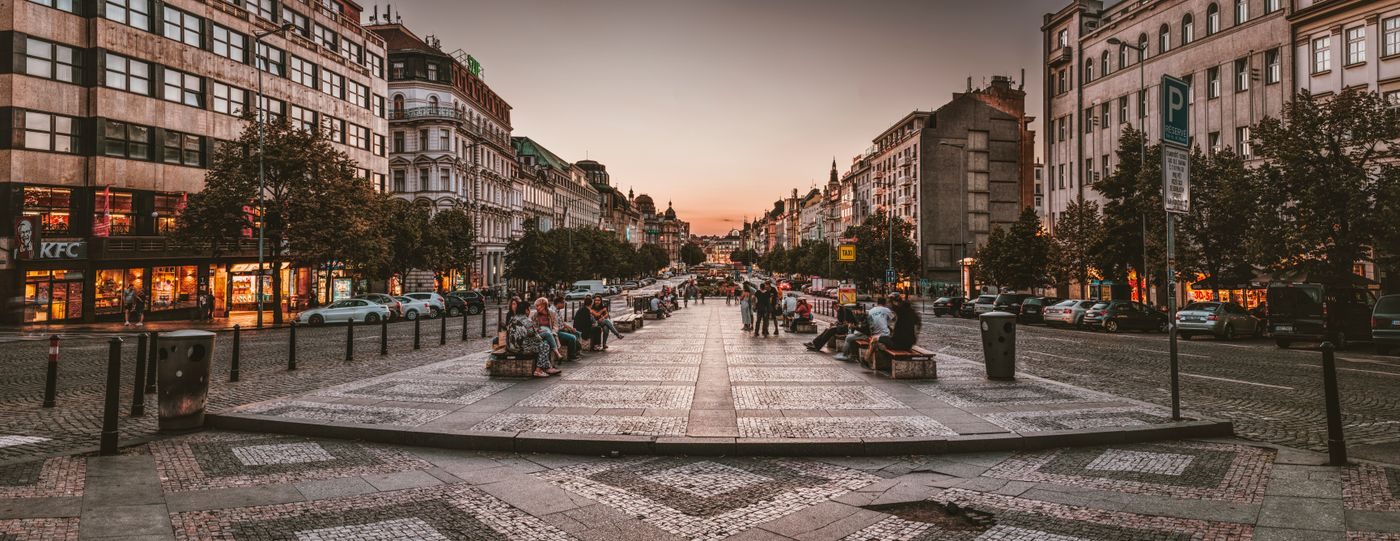
Current Prague/Wenceslas street scene visibly includes street lights and public seating.
Quick facts
- Prague City Tourism dates gas lighting on Wenceslas Square to 1865.
- The source says gas lamps were installed in rows along sidewalks.
- From 1868, massive iron lampposts were installed in the middle axis.
- Street-lighting history can be read through both technology and placement.
Questions
When did gas lighting arrive on Wenceslas Square?
Prague City Tourism gives the year 1865.
Sources & further reading
- Wenceslas Square — Prague City Tourism