
River Folklore
The Water Goblin of the Šítkov Mills Belongs to a Place Where Water Really Worked
Václav Cibula places a vodník by the Šítkov Mills and even records stories about water-goblin children. The supernatural resident makes more sense when the river is remembered as a working landscape, not just a postcard view.
Vltava by the Šítkov Mills

The vodník is folklore; the mill environment that gave the story a precise watery home was part of the real city.
Cibula gives the vodník a working-water setting
Václav Cibula’s Pražské pověsti includes O vodníkovi u Štítkovských mlýnů and O vodníkových dětech. The local water spirit is not floating in an abstract fairy-tale river. He belongs to the Vltava around the Šítkov Mills, a setting where human work and water meet. In the stories he can enter the human world and may even have a family. That domestic dimension matters because it moves the vodník beyond the simple image of a monster waiting to drown someone. He becomes a neighbouring presence with his own social world.
Water spirits are dangerous, comic and domestic at once
The tradition allows the vodník to occupy several roles: guardian of water, trickster, potential threat and sometimes a figure capable of interaction that is not immediately violent. Cibula’s inclusion of water-goblin children makes the boundary even more porous. The supernatural family mirrors the human world beside it. This is one reason water-spirit stories are so durable: the river is not presented as wholly alien. It is another domain pressed against the city, with beings who resemble human neighbours while remaining governed by different rules.
The mills are the key to the geography
The strongest Prague Story does not begin by asking where a green man sat. It begins with the mill landscape. Water infrastructure — mills, weirs and channels — creates precisely the kind of edge where folklore can imagine a resident spirit. The practical city is constantly negotiating with moving water, and the legend gives that environment a personality. The supernatural explanation does not replace the technological one. Instead, the two sit on top of each other: one explains how the water was used; the other explains how it was imagined.
Do not merge every Prague vodník into one character
Prague has more than one water-spirit tradition. The Šítkov figure is related to the broader Podskalí and Vltava world of vodník stories, but it should not automatically be treated as identical with every other named or localized water goblin. Cibula’s titles preserve a specific Šítkov Mills cycle, and that specificity is valuable. Keeping local traditions separate makes the city richer. Instead of one generic Prague vodník moving wherever a guide needs him, different river locations can preserve their own overlapping supernatural residents.
The modern riverfront hides the older working river
Today the Vltava is visually familiar, but the historical river edge cannot be read simply from its modern appearance. Stand near the relevant riverfront, identify the area associated with the mills and imagine a landscape organized around the mechanical use of water. Cibula’s vodník then becomes a second layer: the physical environment explains why the supernatural being belongs here without requiring a claim that a water spirit was ever a documented resident.
Reviewed visuals
See the story
Supporting images selected in the Prague Stories visual review. Context images are labeled so they are not mistaken for documentary proof of the exact subject.
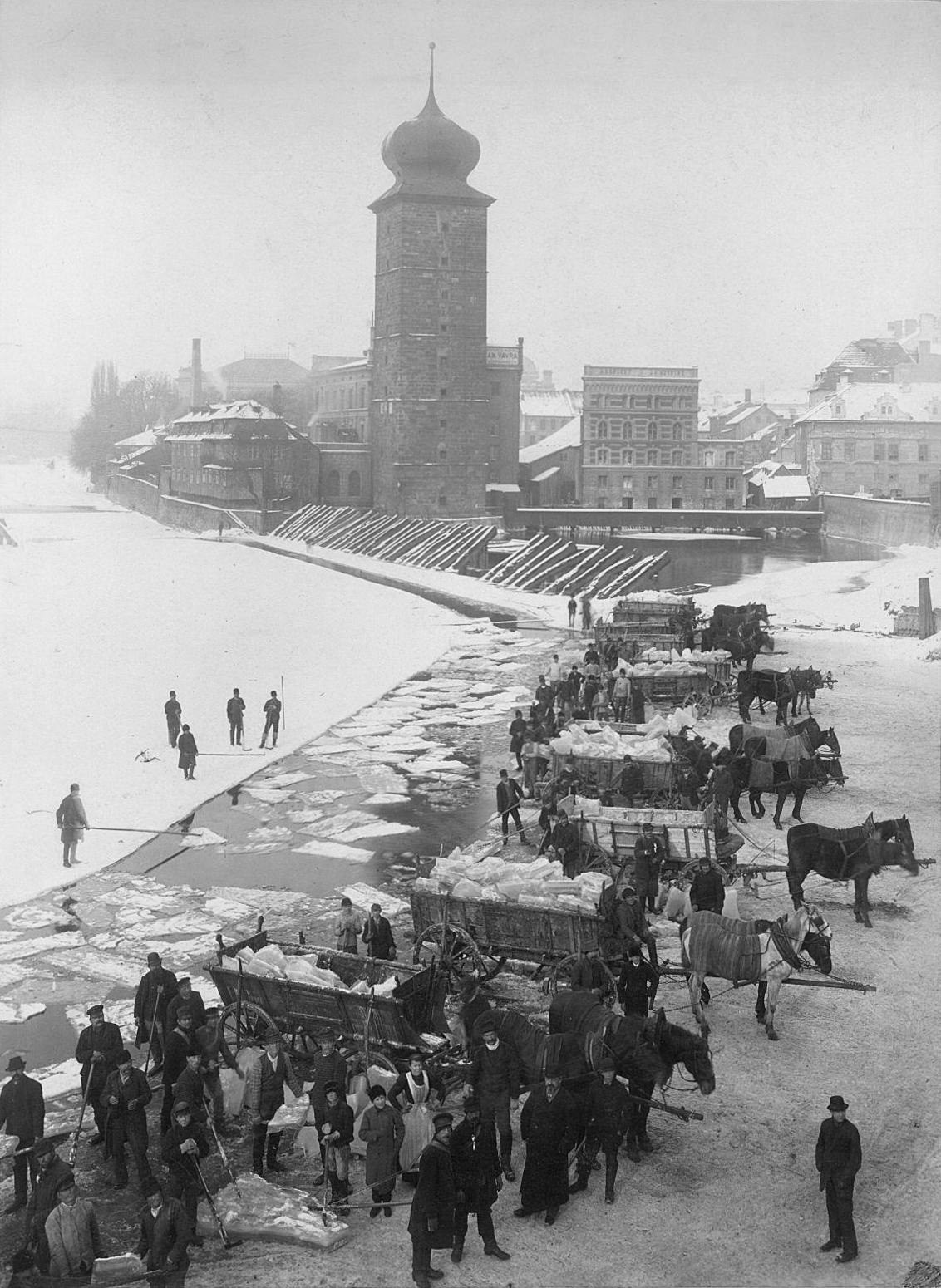
Read the riverfront as former working-water infrastructure, not only as scenery.
Quick facts
- Václav Cibula records O vodníkovi u Štítkovských mlýnů and O vodníkových dětech.
- The water spirit is localized to the Vltava around the Šítkov Mills.
- The vodník can enter the human world in the recorded tradition.
- Cibula also preserves stories in which water spirits have children or family life.
- The figure belongs to the wider water-spirit motif family often compared with Thompson F420.
- The Šítkov tradition is related to, but should not automatically be merged with, other Podskalí vodník stories.
Questions
Where is this vodník recorded?
Václav Cibula includes both O vodníkovi u Štítkovských mlýnů and O vodníkových dětech in Pražské pověsti.
Is he only a dangerous monster?
No. The local tradition includes interaction with the human world and even family stories, making the figure more complex.
Is he the same as the Podskalí vodník?
The traditions are related, but the source notes that they are not necessarily identical.
Sources & further reading
- Pražské pověsti — O vodníkovi u Štítkovských mlýnů; O vodníkových dětech — Václav Cibula
- Pražské pověsti (1983) — bibliographic contents listing — Václav Cibula / Databáze knih