
Power and architecture
Wallenstein Palace Was Built Across the Site of 26 Houses
Prague City Tourism says the vast early-Baroque palace was built between 1624 and 1630 on the site of 26 houses, six gardens and two brickworks.
Wallenstein Palace, Malá Strana

The palace did not simply fill one empty parcel: its site absorbed an entire patchwork of earlier properties.
Start with the footprint
Palaces communicate power through facades, halls and gardens, but Wallenstein Palace has an even simpler clue: the amount of city fabric required to make room for it. Prague City Tourism says the complex was built between 1624 and 1630 on land that had contained 26 houses, six gardens, two brickworks and another plot. That list turns architectural scale into something concrete. You can imagine not one previous building but a whole patchwork of smaller properties disappearing into a single aristocratic project.
Read consolidation as a design decision
Walk along the palace edge and notice how long the complex continues. The point is not to reconstruct the exact boundaries of every lost house. It is to see what consolidation does to urban form. A powerful patron can replace many separate parcels with courtyards, ceremonial rooms and a unified garden. The resulting palace reads as one institution because earlier divisions have been absorbed. Scale becomes political before you even enter a hall.
Compare palace and neighbourhood
Malá Strana still contains narrow streets, small plots and intimate facades nearby. Use that contrast. Move from a compact residential street toward Wallenstein Palace and feel how the grain of the city changes. The documented list of houses and gardens gives the shift historical weight. A palace is not simply a beautiful object placed inside Prague; it can be understood as a reorganization of land, ownership and movement. That makes the building easier to read as an expression of power rather than decoration alone.
Reviewed visuals
See the story
Supporting images selected in the Prague Stories visual review. Context images are labeled so they are not mistaken for documentary proof of the exact subject.
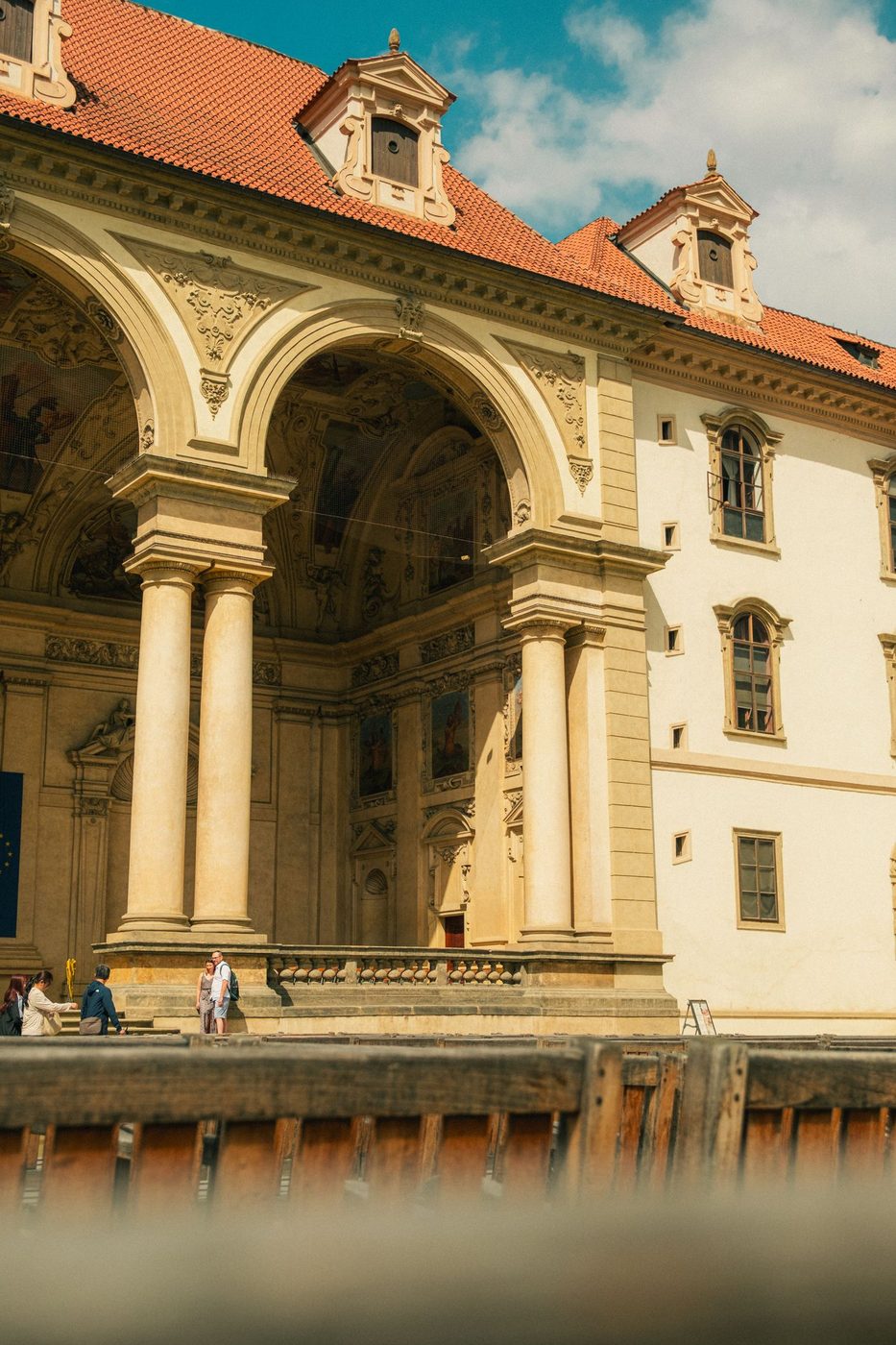
Exact Wallenstein Garden frame visibly includes historic palace architecture, columns and formal greenery.
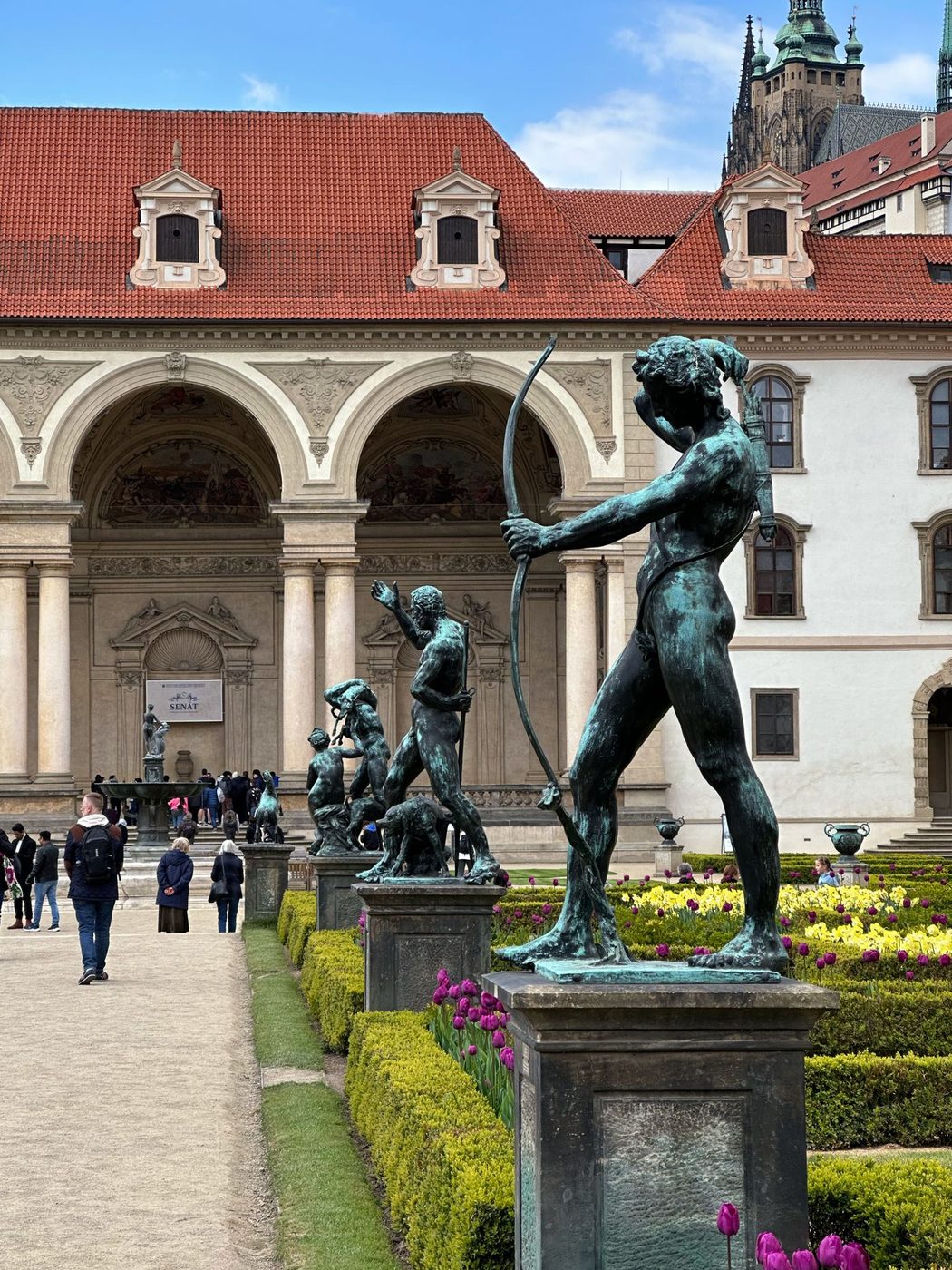
Historic statues, garden paths and Prague courtyard architecture are visibly identified as Wallenstein Garden.
Quick facts
- The palace was built between 1624 and 1630.
- Prague City Tourism says its site included 26 houses.
- The source also lists six gardens and two brickworks.
- Prague City Tourism links the palace complex directly with a site that previously held many separate properties.
Questions
Who was the palace built for?
Prague City Tourism identifies Albrecht Waldstein as the powerful nobleman behind the project.
Sources & further reading
- Waldstein Palace — Prague City Tourism