
Prague Stories · Czech Food
Vepřo Knedlo Zelo: The Czech Meal Whose Name Is Almost the Recipe
The nickname sounds like three clipped words because that is essentially what it is: pork, dumplings, cabbage. The simplicity of the name hides a plate built around fat, sauce, starch and acidity.
Prague

Vepřo knedlo zelo has the rhythm of a chant because it is a colloquial compression of the plate itself: vepřové, knedlíky, zelí — pork, dumplings, cabbage.
Three words, one Czech shorthand
You may also see the full restaurant description, such as vepřová pečeně s knedlíkem a se zelím. The nickname is memorable precisely because it reduces a whole Sunday-lunch-looking meal to three blunt components. Yet the plate is more engineered than the shorthand suggests. Roast pork brings fat, browned flavour and meat juices. Dumplings collect those juices. Cabbage contributes acidity, sweetness or both, preventing the combination from becoming relentlessly rich. Nothing needs to be exotic because the pleasure comes from the interaction.
The pork is the centre, but not the whole story
Czech recipes commonly roast pork with caraway and onion, though cut and seasoning vary. As the meat cooks, the pan develops the liquid that will connect pork to dumpling. Lean, dry slices with no juice miss part of what makes the dish satisfying; this is food designed around moisture moving from one component to another. That is also why “pork, dumplings and cabbage” is not a recipe in the strict sense. Each household and restaurant makes choices: shoulder, neck or another roasting cut; more or less caraway; bread or other dumplings; white or red cabbage; sweeter or sharper seasoning. The name identifies the architecture, not every measurement.
Cabbage is the brake pedal
Cooked cabbage or sauerkraut can lean sour, sweet-sour or gently sweet depending on the preparation. In every case, its most useful job is contrast. Pork fat coats the palate; cabbage refreshes it. Dumpling softens the cabbage's sharpness; cabbage wakes up the dumpling. Take away that third element and the plate becomes much heavier. Visitors sometimes treat the cabbage as a garnish and leave most of it behind. Try the opposite. Build a bite with a small piece of pork, sauce-soaked dumpling and cabbage. The dish suddenly feels less like three piles of food and more like one composed system.
This is home-food logic adapted to the pub
Roast meat, dumplings and cabbage belong to the kind of substantial Central European cooking that makes sense for family tables, Sunday meals and traditional restaurants. In Czech public culture, the combination became recognizable enough to earn its clipped nickname. That does not mean every Czech eats it constantly, nor that every kitchen makes it the same way. In Prague, you are most likely to find it where the menu leans toward classic Czech mains rather than modern small plates. It is a useful order when you want to understand the structure of traditional savoury cooking: roasted meat, sauce-carrying starch and an acidic vegetable, all on one plate.
Order the relationship, not just the ingredients
When the plate arrives, look for moisture first. Is there enough roasting juice or sauce to give the dumplings a purpose? Then taste the cabbage separately: is it sour, sweet-sour, red, white? Finally combine them. The dish rewards mixing more than isolation. That method turns a tourist-menu cliché into a small lesson in Czech culinary design. Vepřo knedlo zelo is famous not because any one component is rare, but because the three have spent generations proving how well they solve one another's problems.
Reviewed visuals
See the story
Supporting images selected in the Prague Stories visual review. Context images are labeled so they are not mistaken for documentary proof of the exact subject.
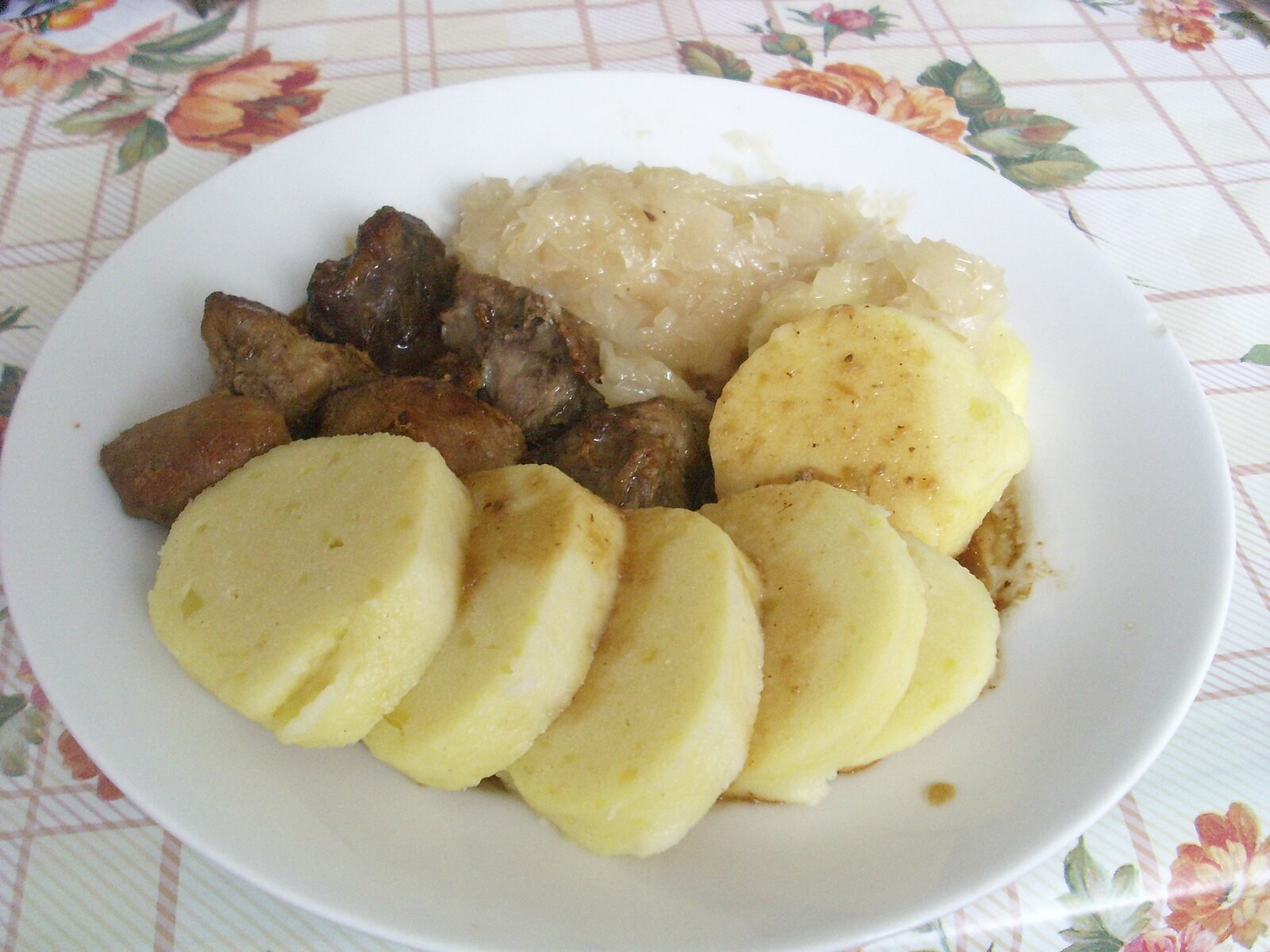
Vepřo-knedlo-zelo with pork, dumplings and cabbage visible as the three named components.
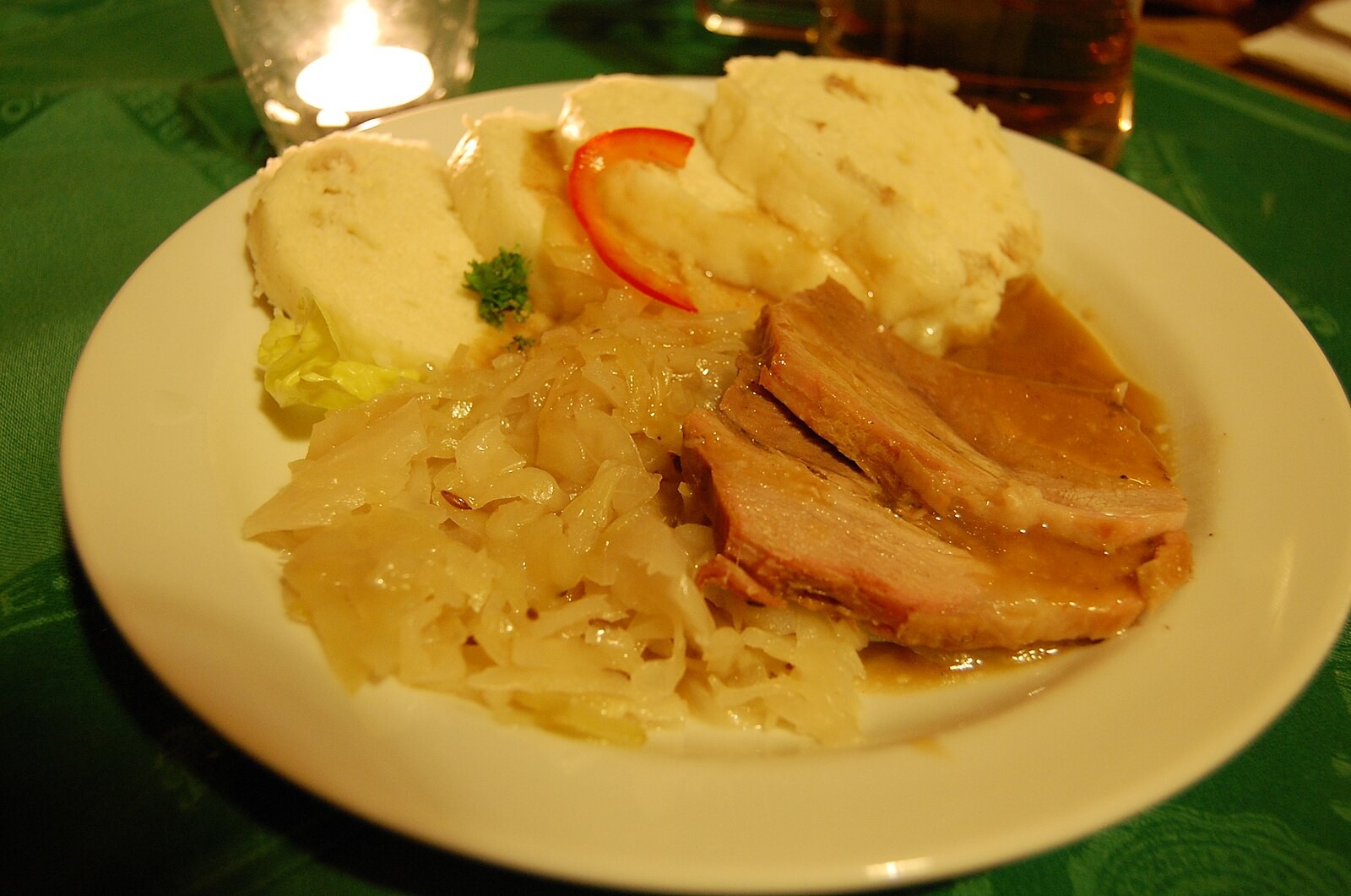
Prague restaurant serving of vepřo-knedlo-zelo.
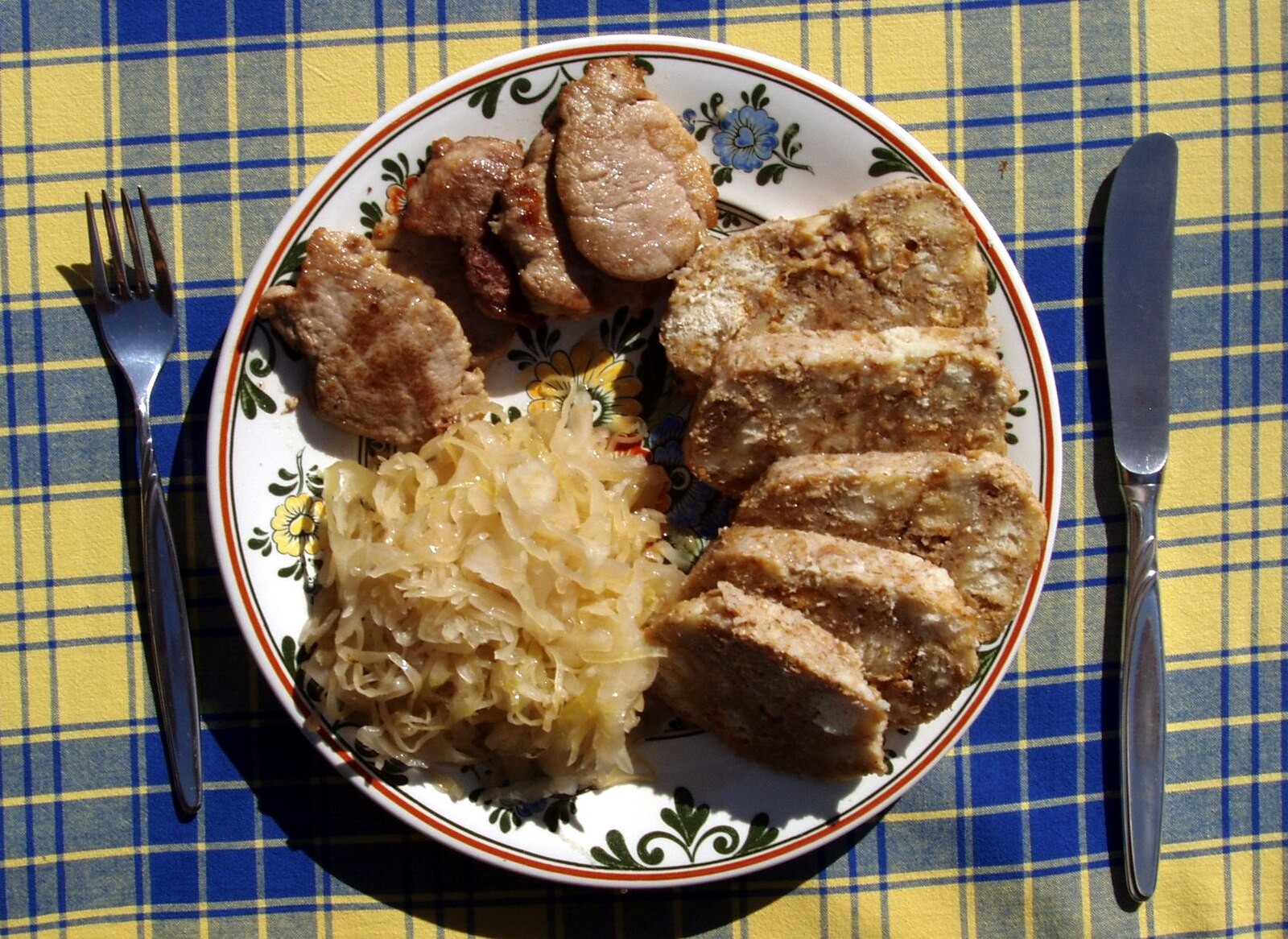
A visually distinct plate of pork, dumplings and cabbage.
Quick facts
- Vepřo knedlo zelo is a colloquial shorthand for pork, dumplings and cabbage.
- The full dish is often listed more formally as roast pork with dumplings and cabbage.
- Pork cuts, dumpling types and cabbage preparations vary by kitchen.
- Cabbage may be sour or sweet-sour and can be white or red.
- The dumplings are meant to absorb roasting juices or sauce.
- The dish is strongly associated with Czech home-style and traditional restaurant cooking.
Questions
What does vepřo knedlo zelo mean?
It is colloquial shorthand for pork, dumplings and cabbage — the three defining components of the dish.
Is the cabbage sweet or sour?
It can be sour, sweet-sour or slightly sweeter depending on the recipe. Both white and red cabbage preparations occur.
What kind of dumplings come with it?
Bread dumplings are common, but potato and other Czech dumpling styles may also be served depending on the restaurant.
Where would a visitor typically see it on a Prague menu?
Look in traditional Czech restaurants, hospodas and places serving classic meat-and-dumpling mains. The menu may use the nickname or the full description.
Sources & further reading
- Vepřová pečeně s knedlíkem a se zelím — CzechSpecials
- Czech Cuisine and Regional Products — VisitCzechia