
Street Memory
Nerudova Street Has Not One but Two Headless Ghosts
Václav Cibula records a pair of headless figures in Nerudova Street. Later retellings can separate them into a Swedish soldier and a Premonstratensian or priest, raising a better question than ‘which ghost is real?’ — did one story become two?
Nerudova Street, Lesser Town

Nerudova’s legend gives the street two headless night visitors: a Swedish soldier punished after wartime looting and a second headless apparition with a different, more mysterious identity.
One street, two headless figures
One version begins during the Thirty Years’ War. A Swedish soldier is said to have plundered churches and stolen sacred valuables while foreign troops occupied part of Prague. According to the legend, Lesser Town residents finally caught him in Nerudova, killed him and cut off his head. Death did not end the punishment: the headless soldier was condemned to return at night, carrying his severed head as he wandered the street.
The Swedish figure carries a historical atmosphere
The tradition also gives Nerudova a second headless figure. Later retellings describe him variously as a cleric, Premonstratensian or another spectral victim, while other versions turn him into a fiery headless skeleton. The identities are less stable than the setting, but the core image is memorable: two different dead men, both deprived of their heads, sharing one Prague street after dark.
The cleric changes the moral register
The second figure is identified in later retellings as a Premonstratensian or priest. With that change, the same headless motif acquires a different set of associations — religion, discipline, guilt, punishment or unresolved obligation. The contrast demonstrates how supernatural forms work. The body can remain almost identical while the social identity changes the meaning of the story. That is why it is more useful to compare the two figures than to turn them into separate horror episodes. Nerudova becomes a small laboratory for seeing how one motif can produce different kinds of memory.
Headlessness is the common language
Both apparitions belong to the broader headless-revenant motif family. The missing head is a visual shorthand for a death that is not peacefully contained. In traditional stories, such a body often indicates violence, punishment or the need for release. The exact mechanics vary, and the Prague material should not be forced into a single universal formula. What matters here is that the form itself is stable enough to survive changes in identity. A soldier and a cleric can become very different characters while remaining instantly recognizable as members of the same supernatural family.
Nerudova is the evidence that stays still
The street is the element a visitor can verify. Its route, house signs, doorways and passages provide a physical stage on which later memory repeatedly placed headless figures. That does not prove either apparition, but it explains why the legend feels so geographically complete. The best Prague Story therefore uses the street as a fixed axis and the ghosts as changing narratives around it. Instead of asking visitors to choose which headless man ‘really’ haunted Nerudova, it invites them to notice how one urban corridor accumulated multiple versions of violent death and how later naming may have split a single complex into separate supernatural residents.
Reviewed visuals
See the story
Supporting images selected in the Prague Stories visual review. Context images are labeled so they are not mistaken for documentary proof of the exact subject.
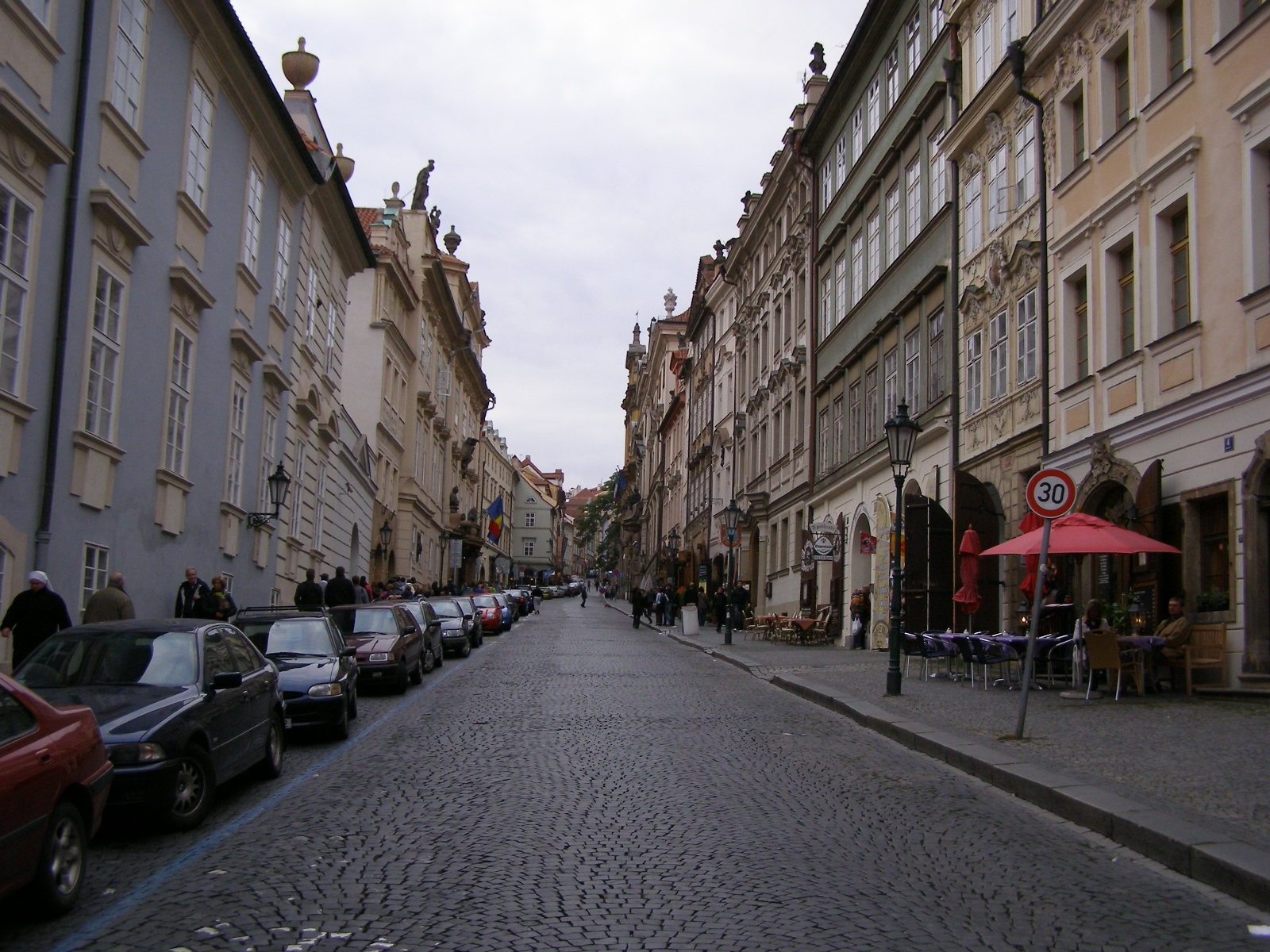
Follow Nerudova as one continuous story space and notice how much supernatural material can be attached to a single urban route.
Quick facts
- Václav Cibula records O dvou bezhlavých z Nerudovy ulice.
- Later retellings often distinguish a headless Swedish soldier and a headless Premonstratensian or priest.
- The source tradition leaves open whether these are two independent legends or a later split of one story complex.
- The Swedish identity gives one version an atmosphere associated with the Thirty Years’ War.
- Both figures belong to the wider headless-revenant motif family.
- Nerudova Street is the stable physical anchor even when the ghosts’ identities change.
Questions
Are these definitely two separate ghosts?
Not necessarily. Cibula records a pair, while later retellings can split them into more clearly named figures.
Was the Swedish ghost a documented soldier?
The material used here supports the legendary identity, not a verified biography of a specific historical soldier.
What makes the pair interesting?
The same headless form carries different meanings once one figure is framed as a soldier and the other as a religious man.
Sources & further reading
- Pražské pověsti — O dvou bezhlavých z Nerudovy ulice — Václav Cibula
- Pražské pověsti (1983) — bibliographic contents listing — Václav Cibula / Databáze knih