
Prague Stories · Pub culture
Tlačenka: The Czech Pub Dish That Makes More Sense After You Stop Calling It Cheese
The English label “head cheese” can make tlačenka sound stranger than it is. Think instead of a rustic pork terrine set in its own gelatin, sliced cold and sharpened with raw onion and vinegar.
Prague / Czechia

This Czech “head cheese” contains no cheese.
Start by fixing the translation
Tlačenka is a pressed pork preparation in which pieces of meat are held in savoury gelatin. VisitCzechia compares it more usefully to a rustic terrine than to cheese. The Czech name is linked to tlačit — to press — which describes the physical idea better than the English nickname.
The garnish is almost part of the identity
A classic serving is cold, in thick slices, with chopped raw onion, vinegar, bread and sometimes mustard. Acid and onion cut through the richness. Without them, a visitor misses the balance that makes the dish work at a pub table.
It comes from a no-waste butchery tradition
Tlačenka is closely associated with zabijačka, the traditional winter pig slaughter. In that setting, fresh pork was divided into many products with different textures, uses and keeping qualities. The point was never to select only the cuts that a modern supermarket would put under bright lights.
The English name makes it sound stranger than the plate is
“Head cheese” can stop a visitor before the first bite. On the plate, the structure is easier to understand: pieces of pork set in savoury gelatin, served cold, then sharpened with vinegar and raw onion. Think rustic terrine and the dish suddenly has a more familiar family resemblance.
The whole serving is designed around richness
Gelatin binds the meat; onion brings crunch and heat; vinegar cuts fat; bread gives you a neutral base. Take them together rather than judging a plain slice in isolation. What can look severe in a butcher display turns into a balanced pub snack once the accompaniments start doing their work.
One slice carries a much bigger winter ritual
Zabijačka traditionally meant an intense day of butchery, cooking and preserving, with sausages, jitrnice, broth, tlačenka and other preparations emerging from the same animal. Most urban diners now meet only the finished product. Knowing the older system explains the dish without pretending that every Czech household still lives by it.
Reviewed visuals
See the story
Supporting images selected in the Prague Stories visual review. Context images are labeled so they are not mistaken for documentary proof of the exact subject.
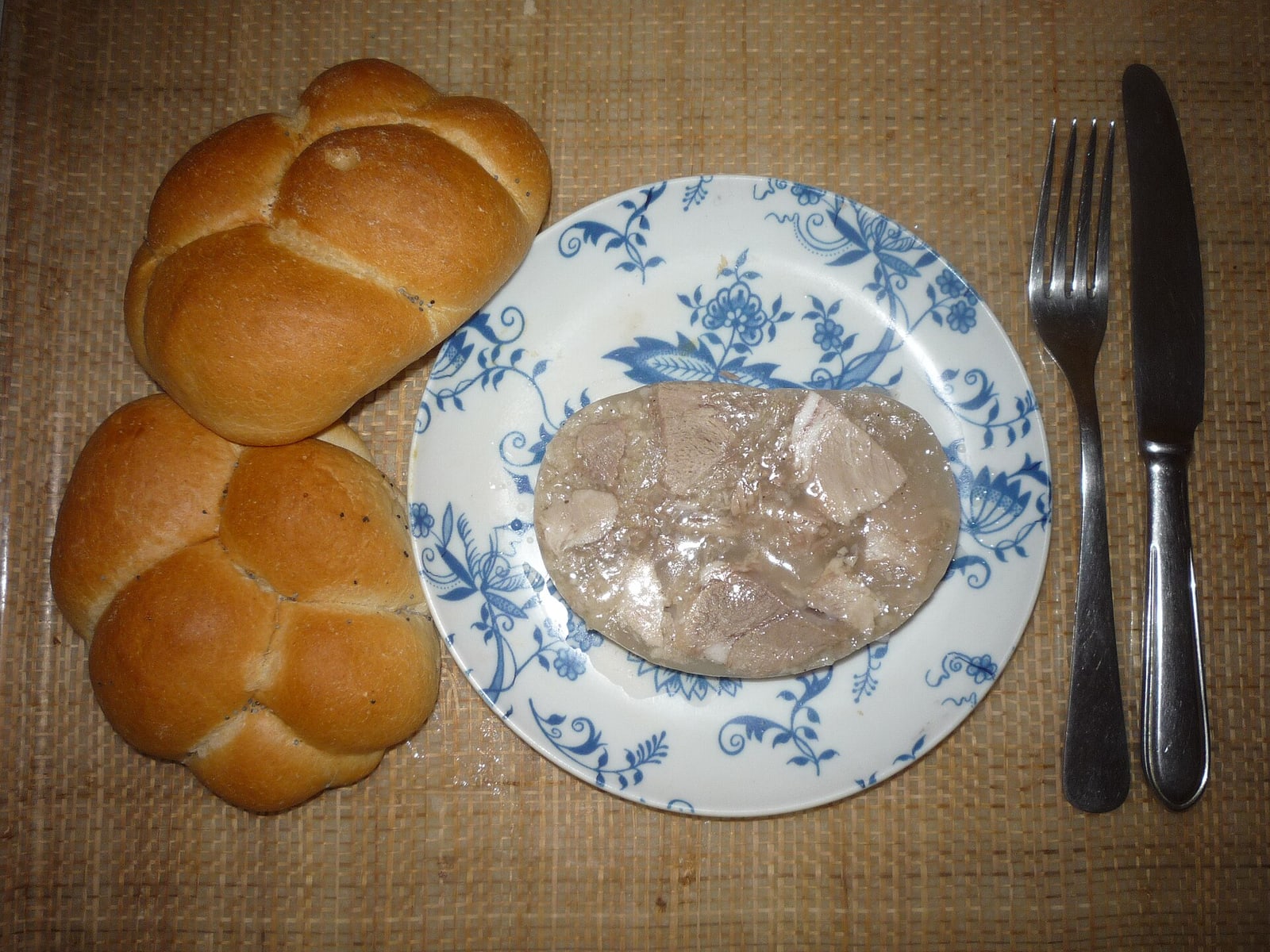
Home-style tlačenka served with bread.
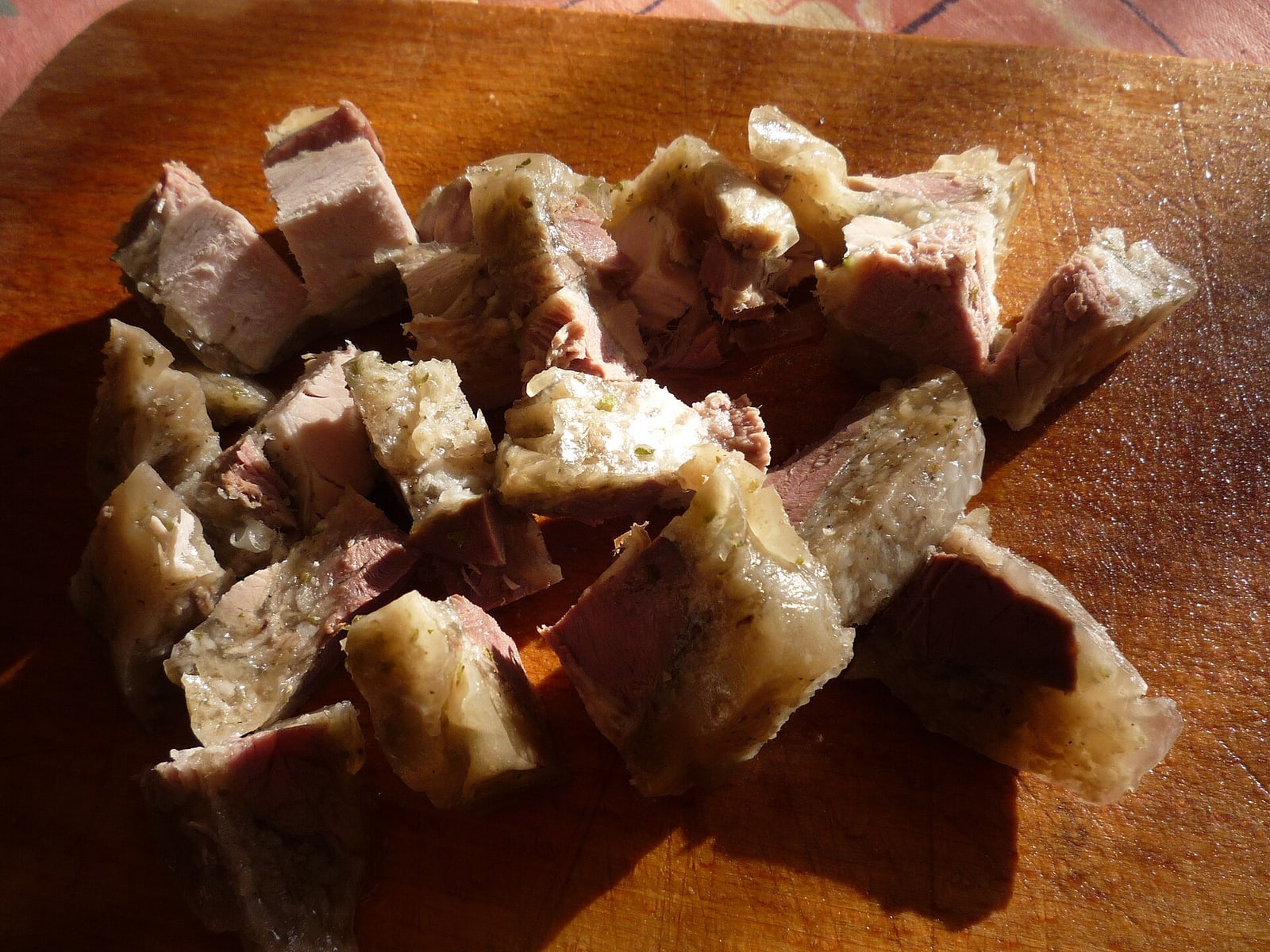
Tlačenka cut into cubes and served with vinegar, a materially different presentation.
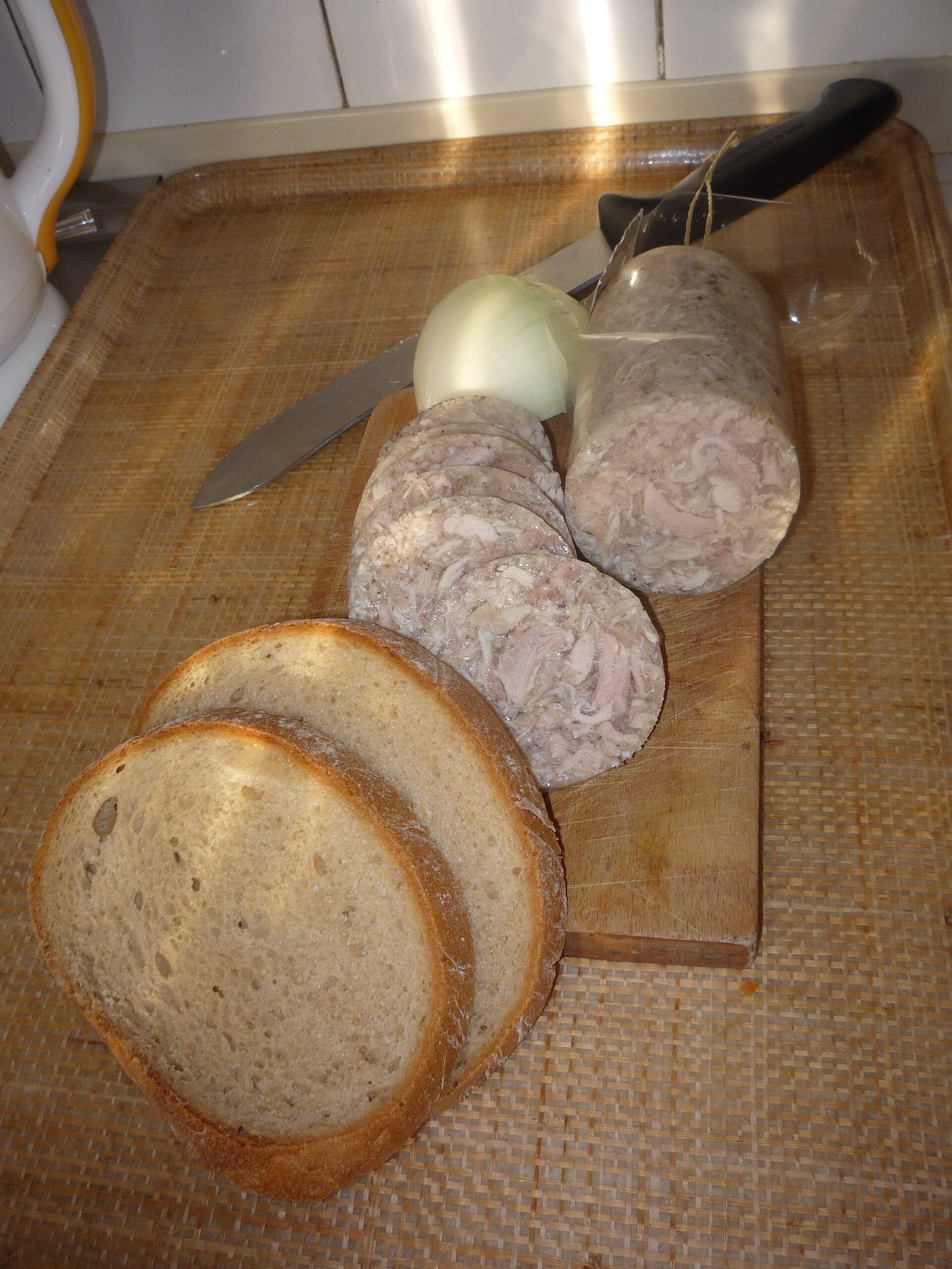
Classic serving with onion, vinegar and pepper.
Quick facts
- Tlačenka is a cold pork preparation set in natural gelatin.
- The name is linked to the Czech verb tlačit, “to press.”
- It is commonly served with raw onion, vinegar and bread.
- It is associated with traditional zabijačka pig-slaughter culture.
Questions
Does tlačenka contain cheese?
No. “Head cheese” is an English name; Czech tlačenka is a meat preparation.
Is it eaten hot?
It is typically served cold.
What is zabijačka?
A traditional pig-slaughter event and food-making tradition in which many different pork products are prepared.
Sources & further reading
- Explore Traditional Czech Pub Specialties & Iconic Dishes — VisitCzechia