
Prague Stories · First-time Prague
What Should a First-Time Visitor Actually Do in Prague?
Prague rewards sequence more than quantity. On a first visit, the goal is to understand how the Castle hill, river, Old Town and living neighborhoods fit together — then leave enough unplanned time for the city to stop feeling like a set of monuments.
Prague

Prague looks dangerously easy on a map.
The first mistake is treating Prague like a bag of landmarks
The famous names sit close together, the historic centre is compact, and a determined traveler can draw a line through the Castle, Charles Bridge, Old Town Square and the Jewish Quarter before lunch. That is exactly how a first visit can become oddly forgettable. The city makes more sense in layers. Start high, around Prague Castle and Hradčany, where the Vltava and the red roofs below give you the geography before you walk into it. Descend through Malá Strana on foot; do not jump straight to the next pin. Cross the river on foot. Let the towers of Old Town move from skyline to street level. By the time you reach Old Town Square, you have not merely “seen” several attractions; you have watched the city change scale around you. This is also why the obvious route remains worth doing even if you have seen it a thousand times online. The experience is not one photograph of Charles Bridge or one façade on the square. It is the succession: quiet courtyards, steep lanes, a stone bridge above moving water, then the denser medieval street pattern on the east bank. Prague’s historic core works best as a piece of urban theatre, with the famous stops connected by the streets between them.
Give the Castle a morning, not a checkbox
Prague Castle is a district-sized complex, not a single building with one front door. The courtyards are part of the experience; so are St Vitus Cathedral, the Old Royal Palace, St George’s Basilica and Golden Lane if you choose the standard interiors. Trying to compress all of that into the gap between breakfast and a lunch reservation usually means spending more time monitoring the clock than looking at anything. A first-time visitor does not necessarily need every interior. Choose according to curiosity. Architecture and sacred space point toward St Vitus. Political history makes the Old Royal Palace more useful. Golden Lane works best when you want the intimate scale of the old castle settlement after the ceremonial spaces. The grounds themselves remain meaningful even if you are traveling on a tight budget. Then walk down. Malá Strana earns its place in a first visit because it changes the mood immediately: palaces, gardens, Baroque façades and narrower streets pressed between Castle hill and the river. The descent also solves a practical problem. The steeper stretch of the route comes on the descent, saving you the climb.
Old Town is essential; the Jewish Quarter deserves its own attention
Old Town Square is where many first visits naturally converge, but the surrounding lanes matter as much as the square itself. The Astronomical Clock draws a crowd on the hour; a few minutes later, most of that crowd starts moving again. Let the day follow that rhythm. Step into side streets, look back at the towers, notice how quickly the city changes once you are one block away from the main pedestrian current. Josefov, the historic Jewish Quarter, deserves more than a quick photo stop between bigger names. The Jewish Museum is distributed across several synagogues and the Old Jewish Cemetery; there is no single conventional museum building. That physical structure matters: you move through surviving places of worship, memory and burial while learning a history that cannot be reduced to the Golem legend or a picturesque cemetery image. The museum closes on Saturdays and Jewish holidays, so this is one part of a first-time plan where checking the calendar really matters. If time is short, it is better to give Josefov a deliberate visit and skip a lesser priority than to hurry through it because it appears geographically convenient.
The river is your orientation line
When Prague begins to feel like a maze, find the Vltava. The river separates Old Town from Malá Strana, curves below Vyšehrad, opens long views toward the Castle and gives the city a breathing space its narrow streets do not have. The river does not require a cruise ticket to become part of the day. Walk one bank, cross on a bridge, sit on an embankment, or take a tram that briefly reveals the water between buildings. Charles Bridge belongs in the first-time experience, but it is not the only river moment. Seeing the bridge from another bridge or from the bank often explains its setting better than standing in the middle of it. A viewpoint does something similar from above. Letná is excellent for reading the sequence of bridges. Petřín gives a greener, higher perspective. Vyšehrad looks back toward the centre from the south and feels less like a ceremonial overlook than a park that happens to sit above the river. Choose one. Three viewpoints in a day is usually one viewpoint too many.
One, two or three days changes the answer
With one day, stay disciplined: Castle and Malá Strana, cross the river, Old Town, then one evening walk. You will miss plenty. Accepting that is what makes the day enjoyable. With two days, give the Jewish Quarter proper time and add one area beyond the postcard core — perhaps Vinohrady for cafés and residential streets, Žižkov for a rougher, hillier texture, or Holešovice for industrial architecture and contemporary culture. A second evening is valuable because Prague after dark is not simply daytime Prague with lamps switched on; the crowd pattern changes, the river becomes more prominent and many façades become easier to read. Three days is where the city begins to loosen. Keep the major sights, but add a long lunch, a park, Vyšehrad or a neighborhood wander with no major monument at the end of it. That apparently “empty” time is often when Prague stops performing for you and starts feeling inhabited. Book ahead when a specific timed experience would genuinely damage your trip if you missed it. For the rest, resist building an itinerary so precise that a beautiful courtyard, an unexpected exhibition or a long conversation over coffee becomes a scheduling problem.
Reviewed visuals
See the story
Supporting images selected in the Prague Stories visual review. Context images are labeled so they are not mistaken for documentary proof of the exact subject.
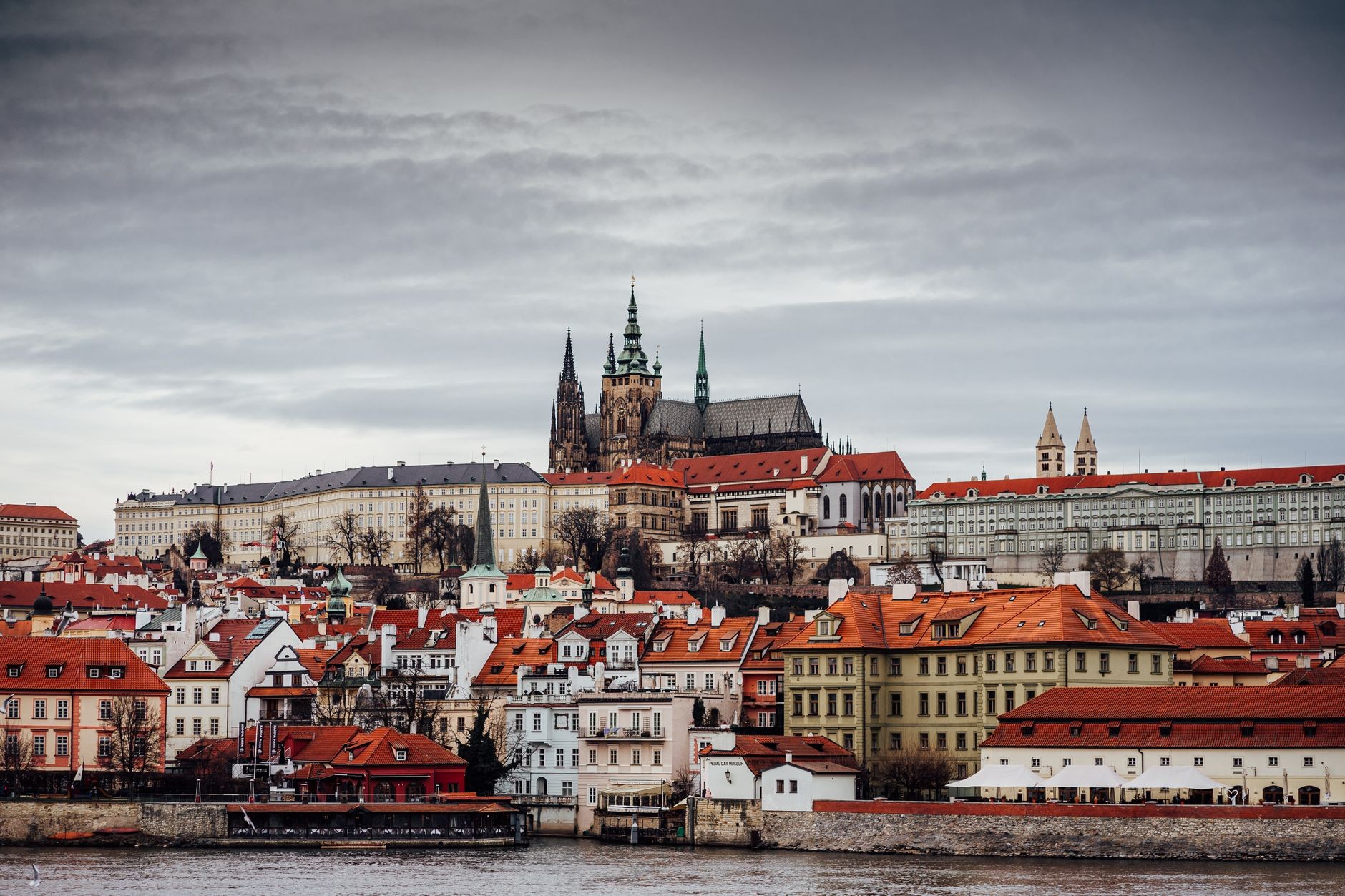
Prague Castle seen from the river, a first-visit landmark overview.
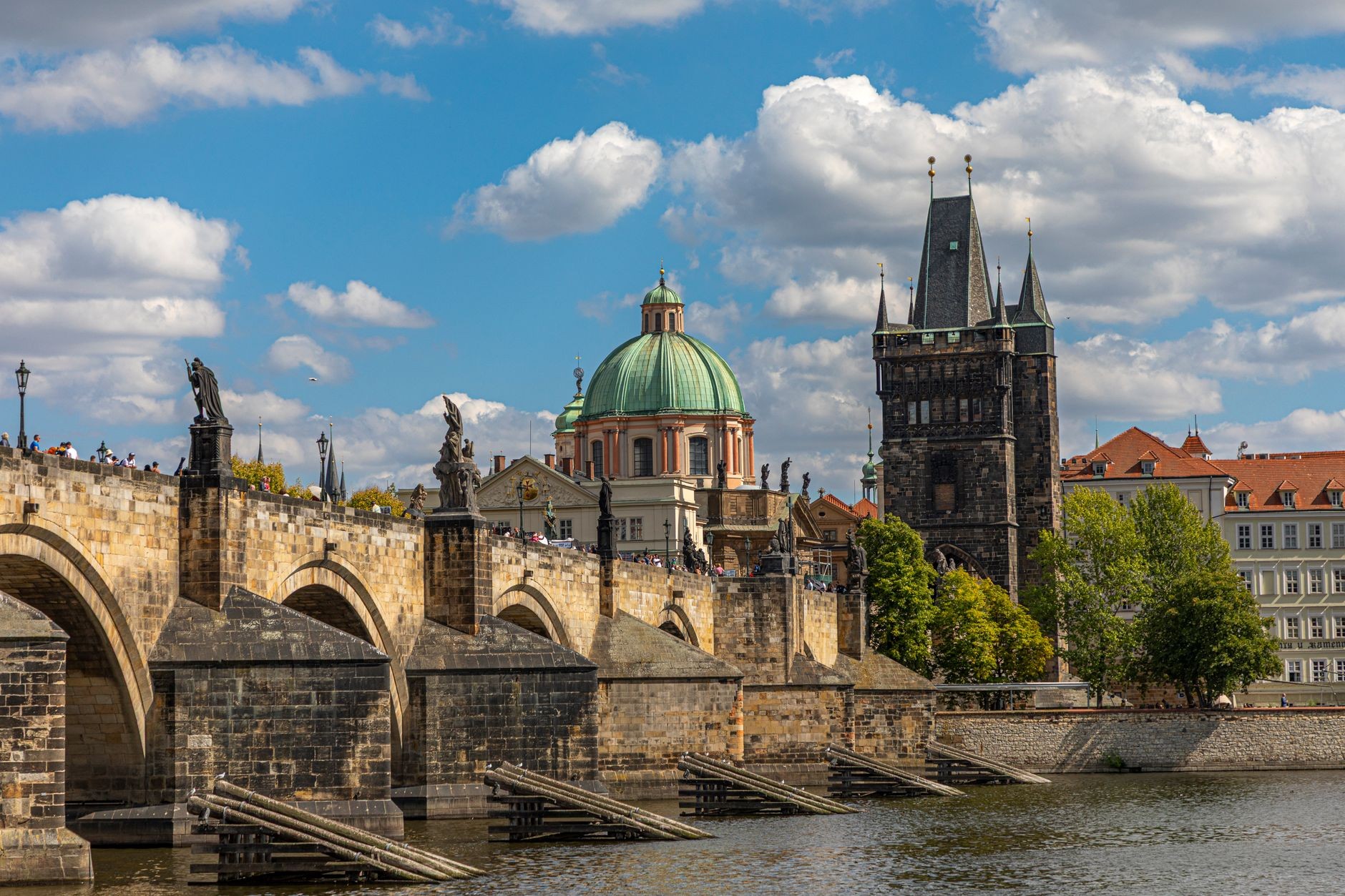
Charles Bridge with Prague’s historic architecture.
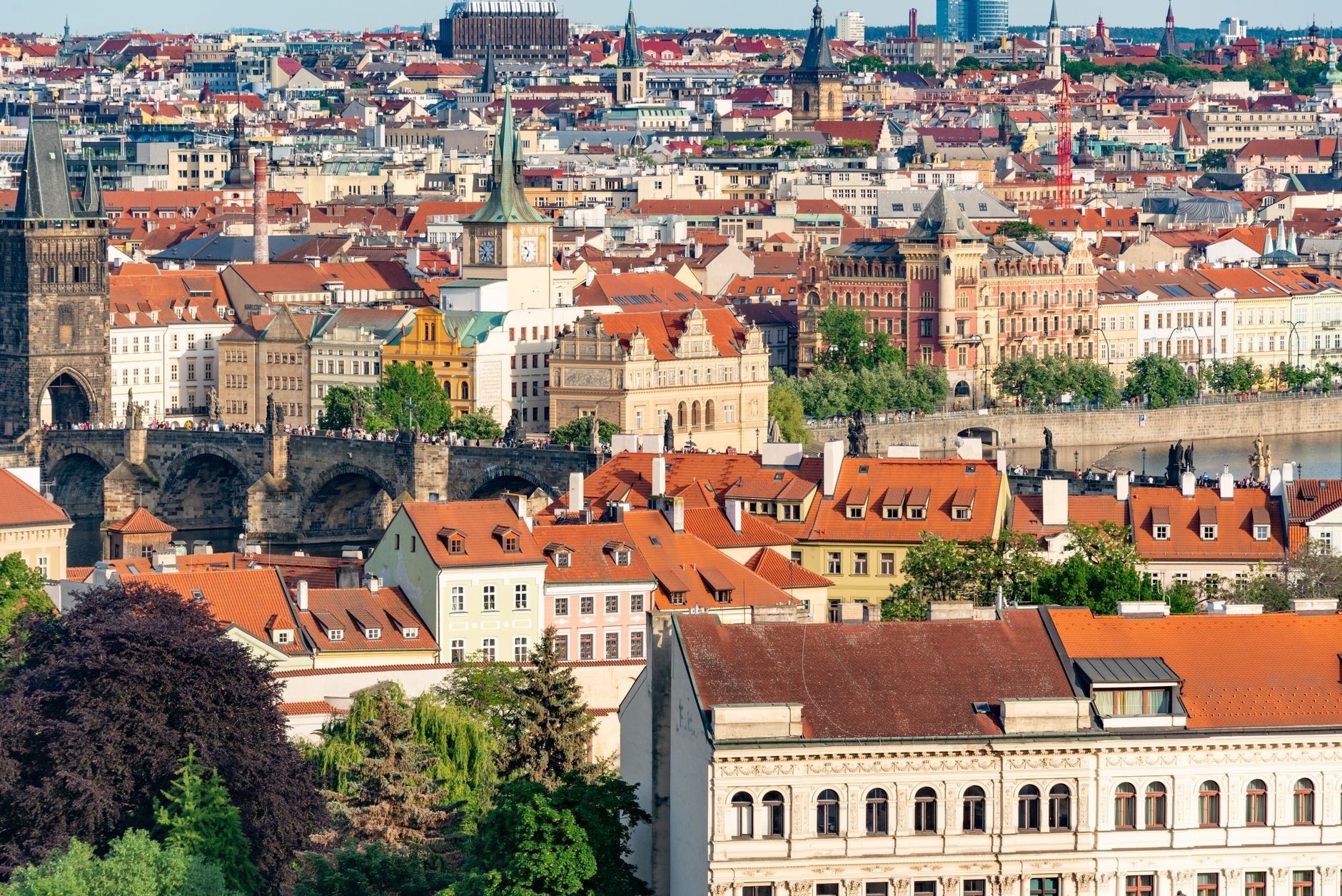
Aerial view of Charles Bridge and surrounding historic centre.
Quick facts
- Prague’s historic core is compact, but the Castle hill and river create real changes in elevation and pace.
- Prague Castle is a complex of courtyards, churches, palaces and lanes rather than one building.
- The Jewish Museum in Prague operates across several historic sites and closes on Saturdays and Jewish holidays.
- Charles Bridge, Old Town, Malá Strana and the Castle form a natural first-visit walking sequence.
- Letná, Petřín and Vyšehrad offer very different ways to understand Prague from above.
- A first visit feels less rushed when at least one block of time is left without a ticketed attraction.
Questions
What should I not miss in Prague?
For most first-time visitors, the essential sequence is Prague Castle and Hradčany, Malá Strana, a walk across the Vltava, Old Town and a considered visit to Josefov. Add one viewpoint or neighborhood rather than trying to add every famous attraction.
How many days do I need in Prague?
Two days can cover the main historic areas; three days gives enough space for a neighborhood, park or slower museum visit without turning the trip into a race.
Can I see Prague in one day?
You can see the central visual story of Prague in one long day, especially Castle–Malá Strana–Charles Bridge–Old Town. You cannot meaningfully cover every major interior and district.
What should I book in advance?
Check current rules for any timed or limited-capacity attraction that matters to you, and always check Prague Castle and Jewish Museum schedules around special closures, Sundays, Saturdays and Jewish holidays.
Sources & further reading
- Plan your trip to Prague — Prague City Tourism
- Opening hours — Prague Castle for visitors — Prague Castle Administration
- Opening hours — Jewish Museum in Prague
- Charles Bridge — Prague City Tourism
- Letná Parks — Prague City Tourism