
Prague Stories · Czech Christmas
Svařák: What Czechs Mean When They Order Mulled Wine
Svařák is hot spiced wine in Czech winter language: familiar, warming and highly visible during Advent. It belongs to the same European family as Glühwein, but the Czech name tells you what locals are actually ordering.
Prague in winter

Svařák is the kind of Czech word a visitor learns by smell.
One word turns cold weather into a menu
Walk past a winter market and wine, citrus and warm spice arrive before the sign does. The term comes from svařené víno — heated or mulled wine — and in practice refers to wine warmed with sugar and spices, often with citrus. There is no single legally canonical household recipe. Cinnamon and cloves are common; star anise or other spices may appear; red wine is familiar but not the only possible base. That variability is part of the drink's social nature. Svařák is less a precision cocktail than a winter format.
It is Czech, but not uniquely Czech
Germany and Austria have Glühwein; Nordic countries have glögg; many European cultures heat and spice wine in winter. Svařák belongs inside that family. Calling it a uniquely Czech invention would erase the obvious regional overlap. The local element is vocabulary, habit and context. In Prague, ordering svařák at an Advent stall is a Czech-language participation in a broader Central European ritual. Something can feel local without being unique to one country.
The spices should support the wine, not bury it
Recipes differ, but the same mistakes show up everywhere. Too much heat flattens the aroma, too much sugar hides the wine, and too much spice can make the cup taste like potpourri. Better versions retain recognizable wine beneath the cinnamon, clove and citrus. Because market batches are prepared in volume, sweetness and strength can vary substantially. If the details matter to you, ask the vendor instead of assuming every cup of svařák follows the same formula.
Do not confuse it with medovina or grog
Medovina is a honey wine or mead-based drink. Its base is fermented honey rather than grape wine. Grog in Czech winter usage commonly means hot water with rum or a rum-like spirit, often sweetened and brightened with lemon. They can occupy neighbouring menu lines and serve the same cold-weather purpose while being chemically and culturally different drinks. Learning those three words — svařák, medovina, grog — makes a winter stall much easier to read. The labels are not decorative Czech; they tell you what alcohol base is in the cup.
The real ingredient is the pause
Svařák's importance is not that Czech cuisine discovered warm wine. It is that the drink creates a reason to stop outside in bad weather. You hold the cup with both hands, stand under lights, talk longer than the temperature should allow, and accept that winter public space can still be social. That is why the drink is so visible during Advent. It is portable heat with a mild ritual attached. Enjoy it as alcohol, not medicine: it does not cure the cold, and warmth from alcohol can be deceptive. Its cultural job is simpler — to make a December street feel hospitable for another ten minutes.
Reviewed visuals
See the story
Supporting images selected in the Prague Stories visual review. Context images are labeled so they are not mistaken for documentary proof of the exact subject.
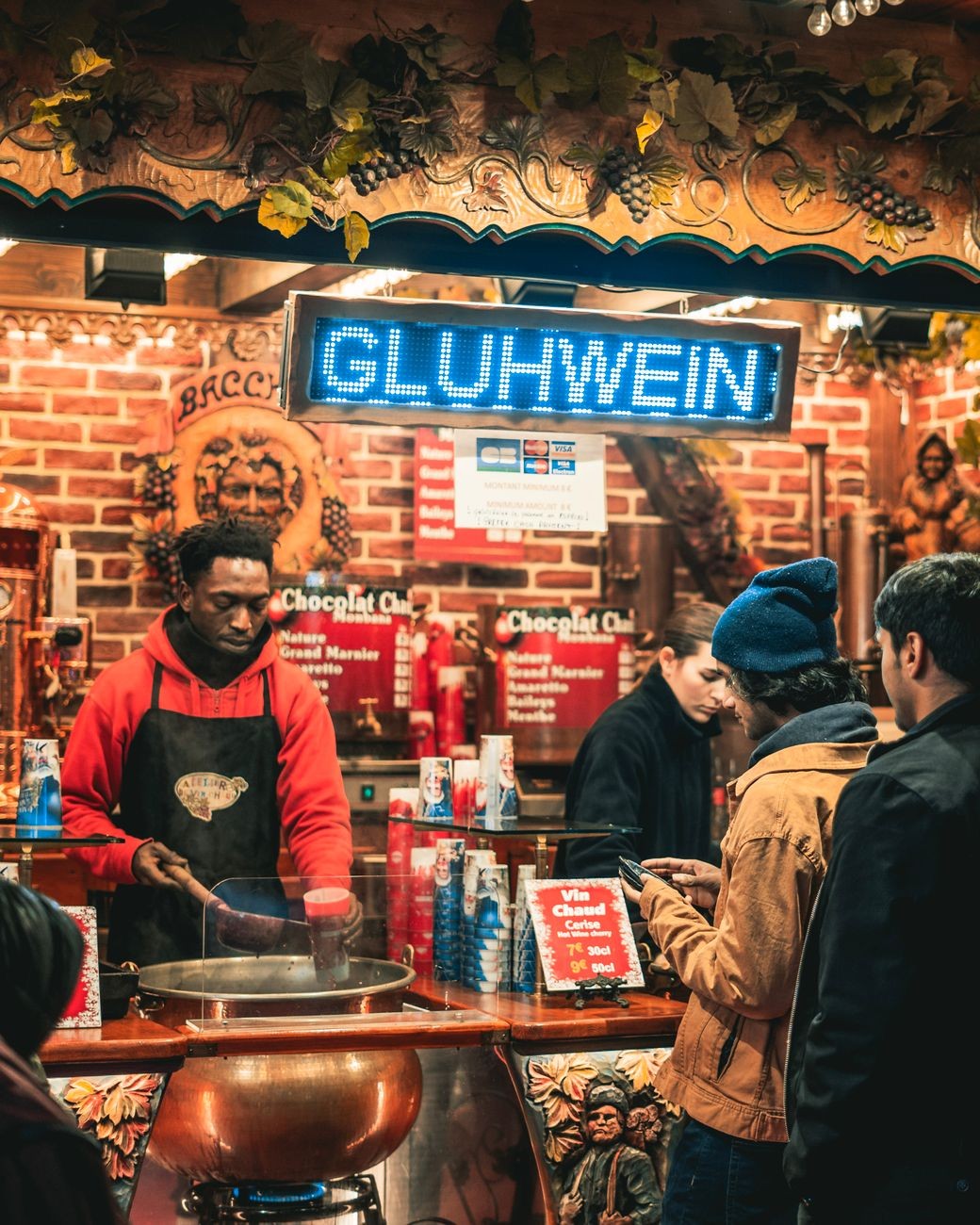
Mulled-wine stand/bar in a winter-market context.
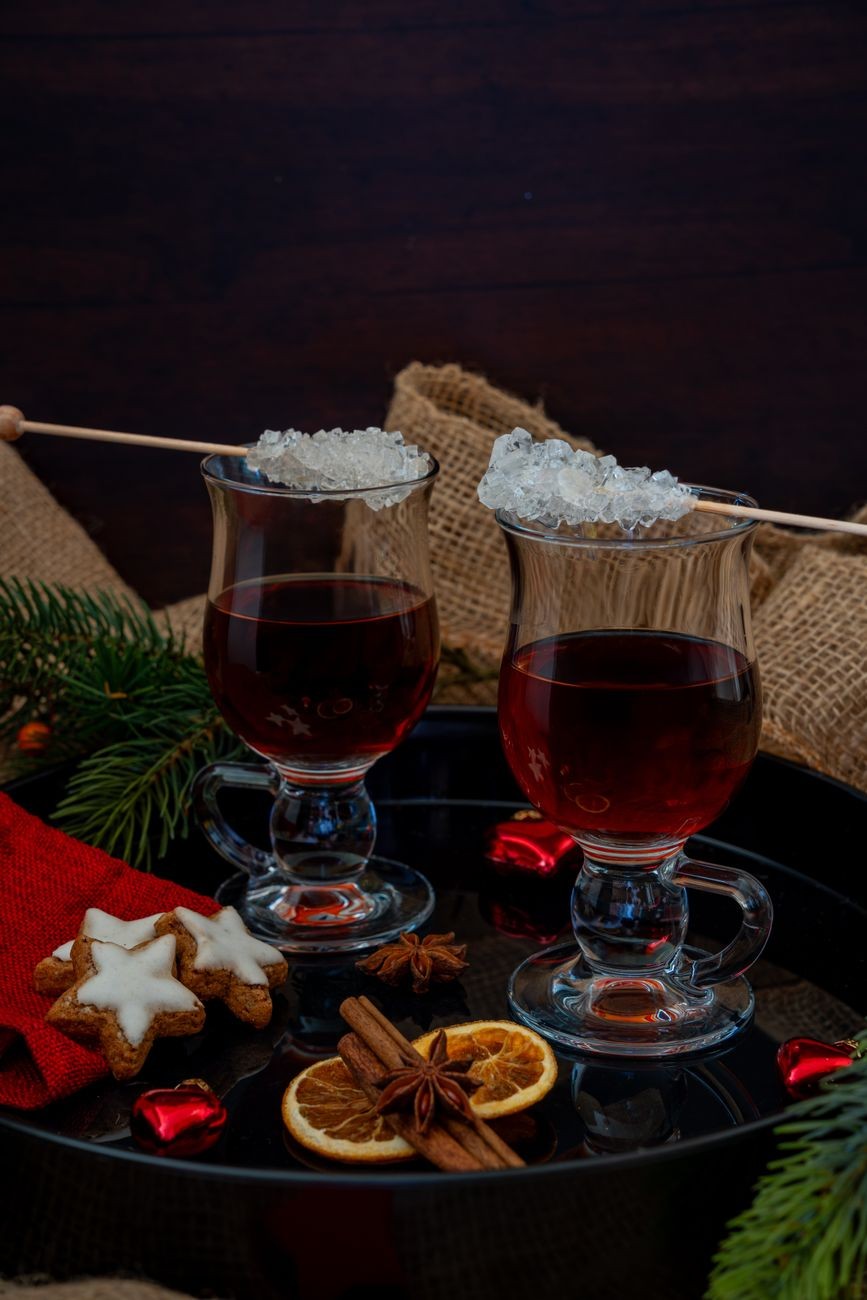
Festive glass of mulled wine with Christmas-season decoration.
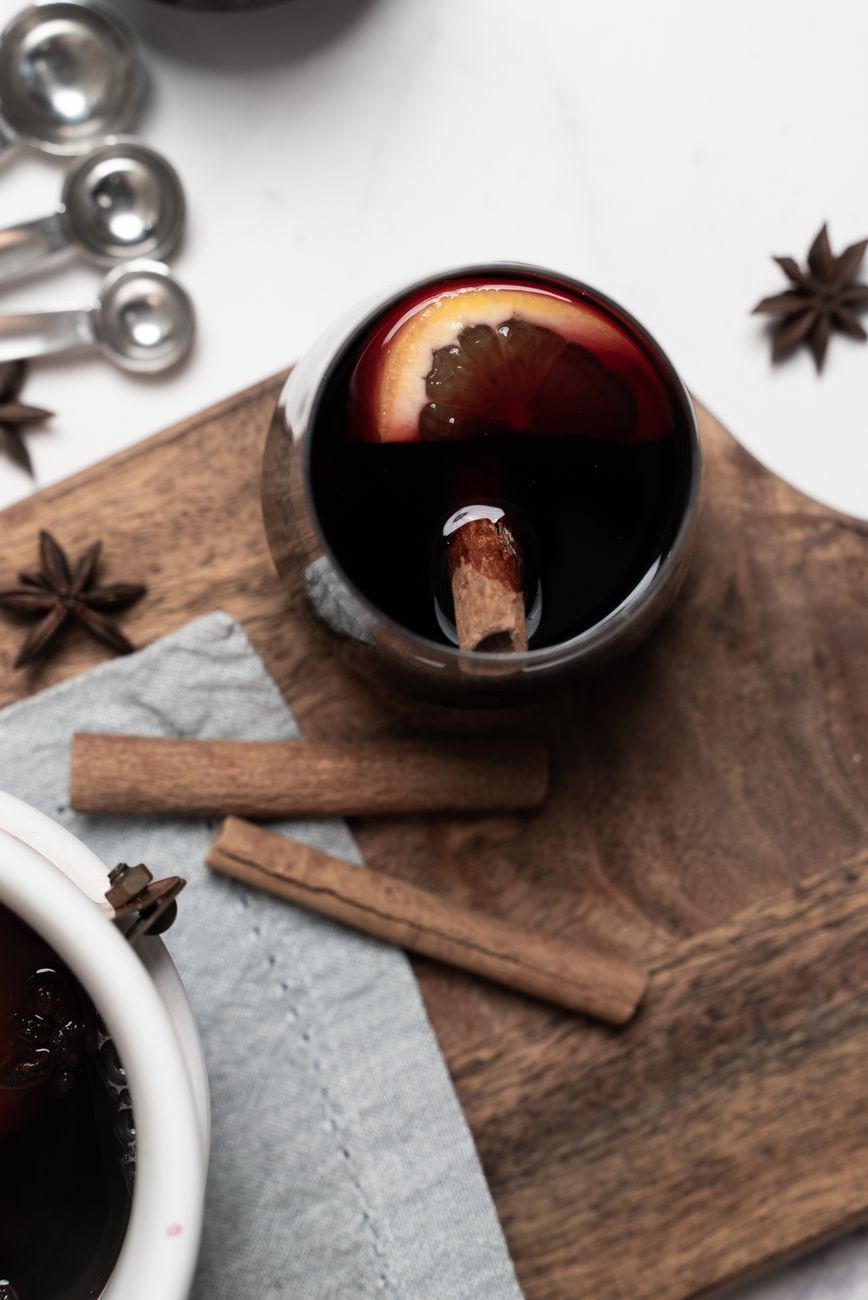
Warm spiced drink with cinnamon, illustrating typical mulled-wine aromatics.
Quick facts
- Svařák is the Czech term for hot spiced or mulled wine.
- Cinnamon, cloves, citrus and sugar are common, but recipes vary.
- Svařák belongs to a broader European mulled-wine tradition and is not uniquely Czech.
- Medovina is honey-based and is different from mulled grape wine.
- Czech-style grog is typically a hot water-and-spirit drink and is also distinct.
- Svařák is alcoholic unless specifically sold as a non-alcoholic version.
Questions
What is svařák?
Hot spiced wine, commonly sweetened and flavoured with spices such as cinnamon and cloves and often citrus.
Is svařák the same as Glühwein?
They are close relatives in the European mulled-wine family. Recipes and terminology differ, but the basic format is comparable.
What is medovina?
A honey-based alcoholic drink related to mead. It is not simply another name for mulled wine.
Is svařák alcoholic?
Yes, standard svařák is made from wine and contains alcohol. Non-alcoholic versions may be sold separately.
Sources & further reading
- Svařák — Radio Prague International
- Hot winter drinks: svařák, punch and grog — Prima Living
- Medovinárna — Prague City Tourism