
Prague Stories · Czech Food
Why Fried Cheese Became a Czech Restaurant Classic
Smažený sýr is exactly as direct as it sounds: cheese breaded and fried until crisp outside and molten inside. Its real story is how that simple formula became a familiar Czech casual meal — and, for years, an easy meat-free order.
Prague

Smažený sýr means fried cheese, and the plate rarely tries to hide the idea behind elegance.
The menu translation is almost suspiciously literal
A thick slice or block of cheese is coated in flour, egg and breadcrumbs, then fried until the crust turns golden and the centre softens. Cut it too early and the cheese can escape across the plate; wait a moment and you get the ideal contrast between crisp shell and elastic, molten middle. In Prague, the dish can appear in pubs, casual restaurants, canteens and fast-food-style settings. The cheese varies. Edam-type cheese is common, but other semi-hard cheeses, Hermelín-style mould-ripened cheese or different regional choices may be used. That variety is why “the authentic cheese” is the wrong question. The technique is more stable than the filling.
It became ordinary, which is part of its cultural power
Fried cheese has predecessors and relatives beyond Czech borders; breading and frying cheese is not a national patent. Czech food histories nevertheless trace smažák through twentieth-century restaurant culture, with references before the Second World War and much wider popularization in the later socialist era. By the 1960s and after, it had become the kind of dish ordinary diners could recognize quickly and kitchens could produce reliably. That ordinariness matters. Many foods become cultural markers not because they are ceremonial masterpieces but because people repeatedly encounter them in everyday institutions. Fried cheese fits that pattern: inexpensive compared with many meat mains, straightforward to understand and adaptable to restaurant service.
Fries and tartar sauce complete the expected grammar
The classic casual presentation is fried cheese with fries or potatoes and tartar sauce. The sauce provides acidity, herbs and creaminess against the fried crust; potatoes make the plate substantial. You may also find a bun version sold more like fast food, with the breaded cheese acting as the central filling. The best way to judge it is brutally simple. The crust should remain crisp enough to contain the cheese, and the interior should be properly softened without turning oily or rubbery. Because the ingredient list is short, technique has nowhere to hide.
For many visitors, it is the accidental vegetarian classic
For decades, Czech restaurant menus were often more meat-centred than today's international city dining scene. Fried cheese consequently became a dependable meat-free option — not because it was invented as modern vegetarian cuisine, but because it happened to satisfy the requirement. That legacy is why travellers still hear the joking shorthand that smažák was once “the vegetarian choice.” Do not assume every version meets every dietary definition. The cheese may use animal rennet, frying oil can be shared, and tartar sauce contains egg. If that matters, ask the restaurant. Culturally, the more accurate point is that smažený sýr occupied an unusually visible meat-free position on otherwise meat-heavy menus.
Order it before you decide it is too simple
There is a temptation to dismiss fried cheese as children's food or a hangover snack. Then the plate arrives at exactly the right temperature, the crust breaks audibly, and the centre stretches. Simple food can be technically unforgiving and deeply tied to everyday memory. If you want the Prague reading, do not look for luxury. Look for competence: a clean crust, properly melted cheese, potatoes that still have texture, and enough tartar sauce to cut the richness. Smažený sýr is not trying to be the most sophisticated thing you eat in the city. Its charm is that it never needed to be.
Reviewed visuals
See the story
Supporting images selected in the Prague Stories visual review. Context images are labeled so they are not mistaken for documentary proof of the exact subject.
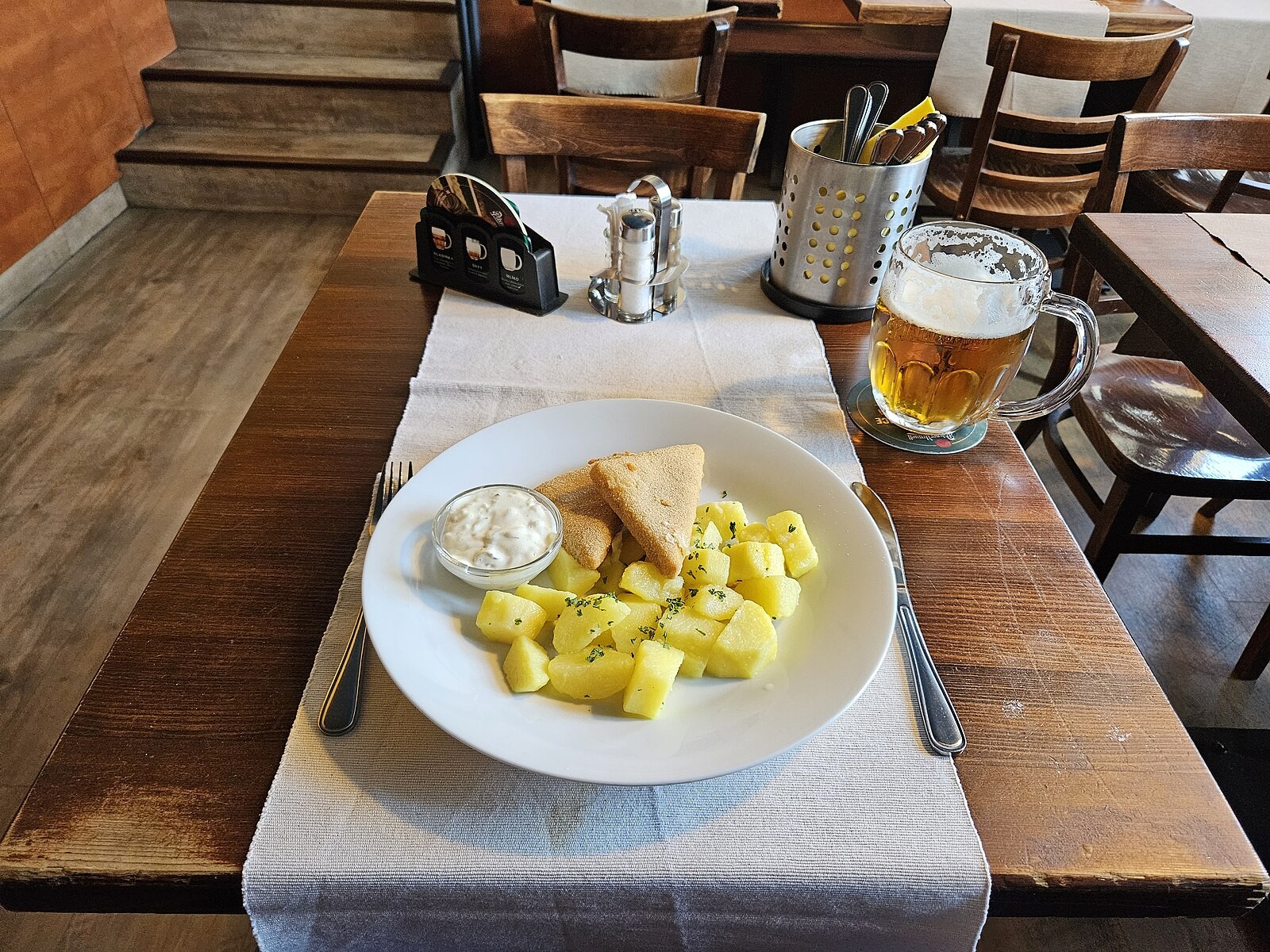
Czech fried cheese plated with common accompaniments.
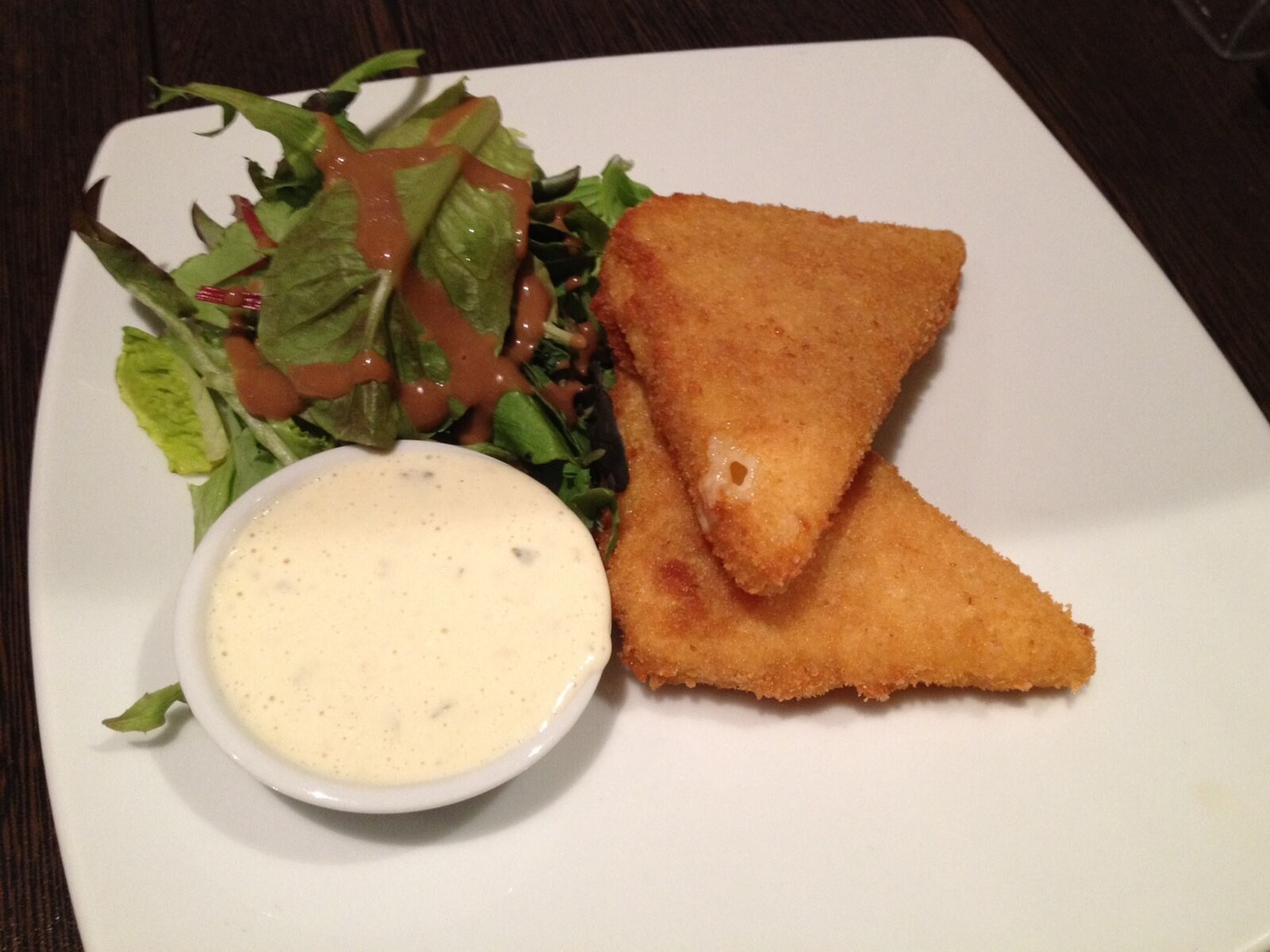
Breaded fried cheese in Czech serving style.
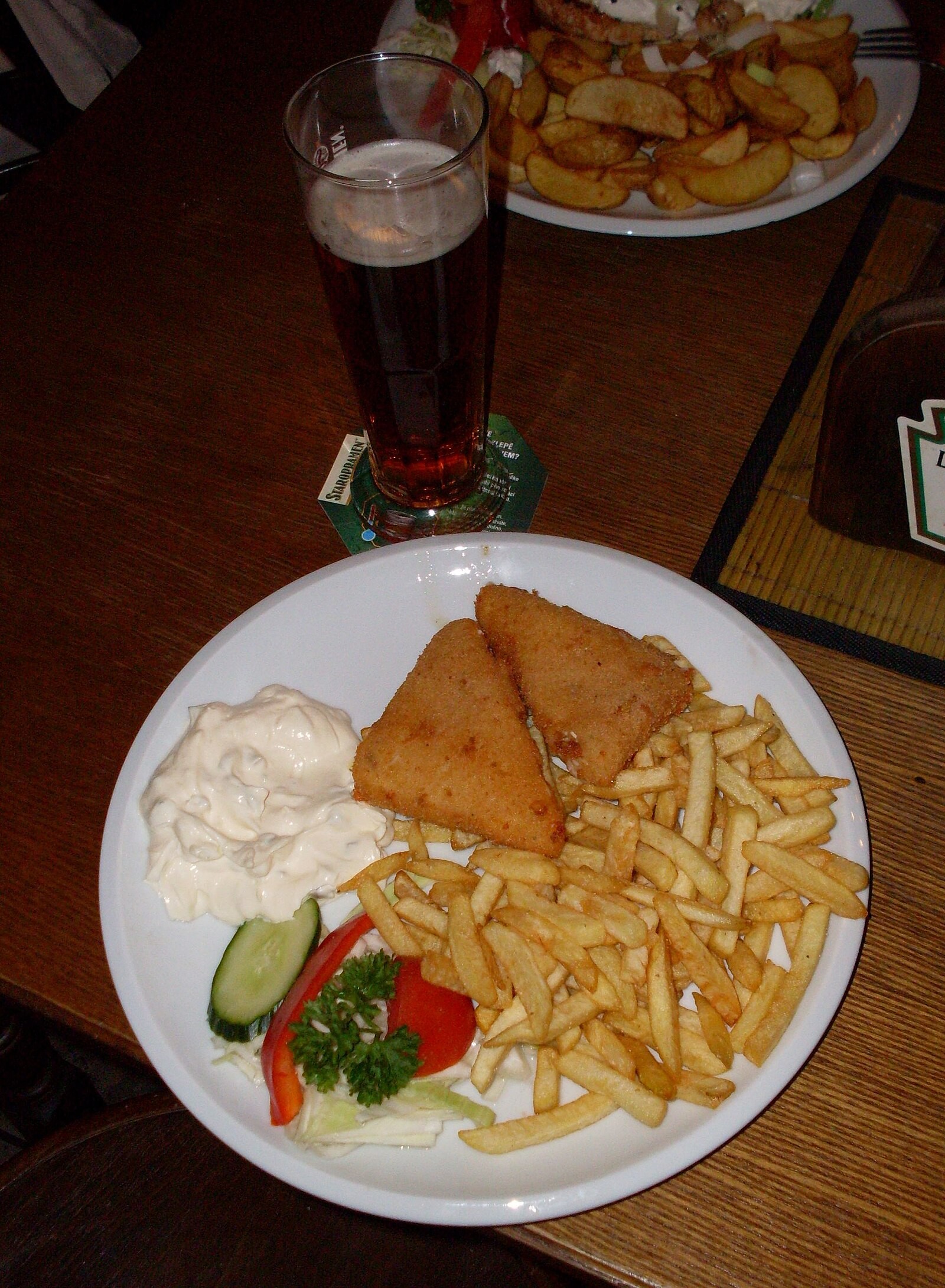
Fried cheese served with fries and beer, a common pub/restaurant combination.
Quick facts
- Smažený sýr literally means fried cheese.
- The standard method breads a thick piece of cheese and fries it until crisp outside and soft inside.
- Edam-type cheese is common, but different cheeses are used.
- Fries or potatoes and tartar sauce are familiar accompaniments.
- The dish became especially widespread in Czech casual restaurant culture during the twentieth century.
- It has often functioned as a default meat-free main, although specific vegetarian requirements should be checked.
Questions
What cheese is used for smažený sýr?
Semi-hard Edam-type cheese is common, but restaurants use several cheeses, including other semi-hard types and sometimes Hermelín-style mould-ripened cheese.
Is Czech fried cheese vegetarian?
It is meat-free, but strict vegetarians may want to ask about rennet and shared frying oil. Restaurant practices vary.
What is it served with?
Fries, boiled or roasted potatoes and tartar sauce are common accompaniments.
How do you pronounce or order it?
The full Czech name is smažený sýr; many menus and diners also use the nickname smažák. Pointing to the menu name is perfectly fine if pronunciation is uncertain.
Sources & further reading
- Czech Gastronomy — VisitCzechia
- Smažený sýr: history and preparation — Prima Fresh