
Prague Stories · Practical
Is Prague Safe? The Risks Tourists Actually Need to Know
Prague is generally a low-risk destination for visitors, but ‘safe’ is not the same as friction-free. The problems most travelers are warned about are ordinary city risks: pickpocketing, careless payments, late-night judgment and the occasional scam aimed at someone distracted by being on holiday.
Prague

Travel-safety pages tend to produce one of two bad moods: panic or dismissal.
The useful answer is calmer than the internet version
Prague deserves neither. The U.S. State Department currently places Czechia at Level 1, “exercise normal precautions.” The UK’s travel advice is similarly specific about the problem that matters most to visitors: petty theft, particularly in busy tourist areas and on public transport. That is a very different risk profile from a city where travelers are routinely warned to avoid broad districts. So yes, you can walk through central Prague at night, use the tram, sit by the river and explore beyond Old Town without behaving as if danger is waiting around every corner. But the city’s beauty does not suspend normal urban habits. A phone sticking out of a back pocket on a packed tram remains a phone sticking out of a back pocket.
Pickpockets prefer attention that is somewhere else
The classic conditions are predictable: crowds, luggage, a confusing ticket moment, people looking upward at a monument, or a packed vehicle where accidental contact feels normal. The UK advice specifically flags busy tourist areas, airport-to-centre transport and trams serving popular sights. Those routes are not automatically unsafe; they simply create the distractions a pickpocket wants. Carry a bag so you can feel and close it. Do not hang a phone or wallet loosely from an outer pocket. At a café, do not leave a bag on the back of a chair where it disappears from your attention. When someone bumps you in a crowd, check your belongings without turning the moment into a confrontation. Stay alert without treating the people around you as suspects. Remove the easy opportunity and most of the practical advice has done its job.
Money problems are often inconvenience before they are crime
Prague’s tourist centre concentrates exchange offices, ATMs, bars and high-volume restaurants in a small area. Most transactions are ordinary. A few bad ones can still ruin an afternoon. Never exchange money with a stranger on the street. Review the amount before confirming a card payment. Use ATMs in sensible, monitored locations, and read each conversion prompt before accepting it. If a price or service condition feels unclear, ask before consuming or committing. Some of these issues overlap with separate questions about the Czech koruna, tipping and exchange rates. Keeping them separate is useful: a poor exchange rate is not the same category of risk as theft, even if both cost you money. The practical habit is the same in each case — slow the transaction down. Scams thrive on hurry, embarrassment and the traveler’s fear of looking difficult.
Night changes judgment before it changes the city
Prague has a large evening economy, from opera and jazz to pubs, cocktail bars and clubs. Most nights end without drama. Alcohol still changes the arithmetic. Keep your drink with you. Know how you are getting home before you are tired. Respect residential streets when leaving venues; Prague City Tourism explicitly reminds visitors that night quiet rules apply after 22:00 in the centre. A loud group can be a nuisance without being a safety threat, and it is worth distinguishing the two. If a venue uses a consumption card or unfamiliar billing system, ask how it works when you arrive, not when the bill comes. If something feels coercive, leave and seek help. Solo travelers should use the same instincts they would in another European capital: lit routes, known transport, a charged phone and a clear address for their accommodation.
If something actually happens
For urgent help anywhere in the EU, 112 is the general emergency number and can assist callers who do not speak Czech. Czech national numbers include 158 for state police, 156 for municipal police and 155 for medical emergency services. If property is stolen, report it to police, especially when you need documentation for insurance. The UK advice notes a central Prague police station at Jungmannovo náměstí that operates around the clock and can provide English-speaking interpretation support. Losing a passport creates a bureaucratic problem that is best handled through the proper police and consular channels. Contact your country’s embassy or consulate and the police as required for replacement documents. Prague does not require paranoia. It rewards the kind of boring competence that keeps a normal city problem from becoming the story of your holiday.
Reviewed visuals
See the story
Supporting images selected in the Prague Stories visual review. Context images are labeled so they are not mistaken for documentary proof of the exact subject.
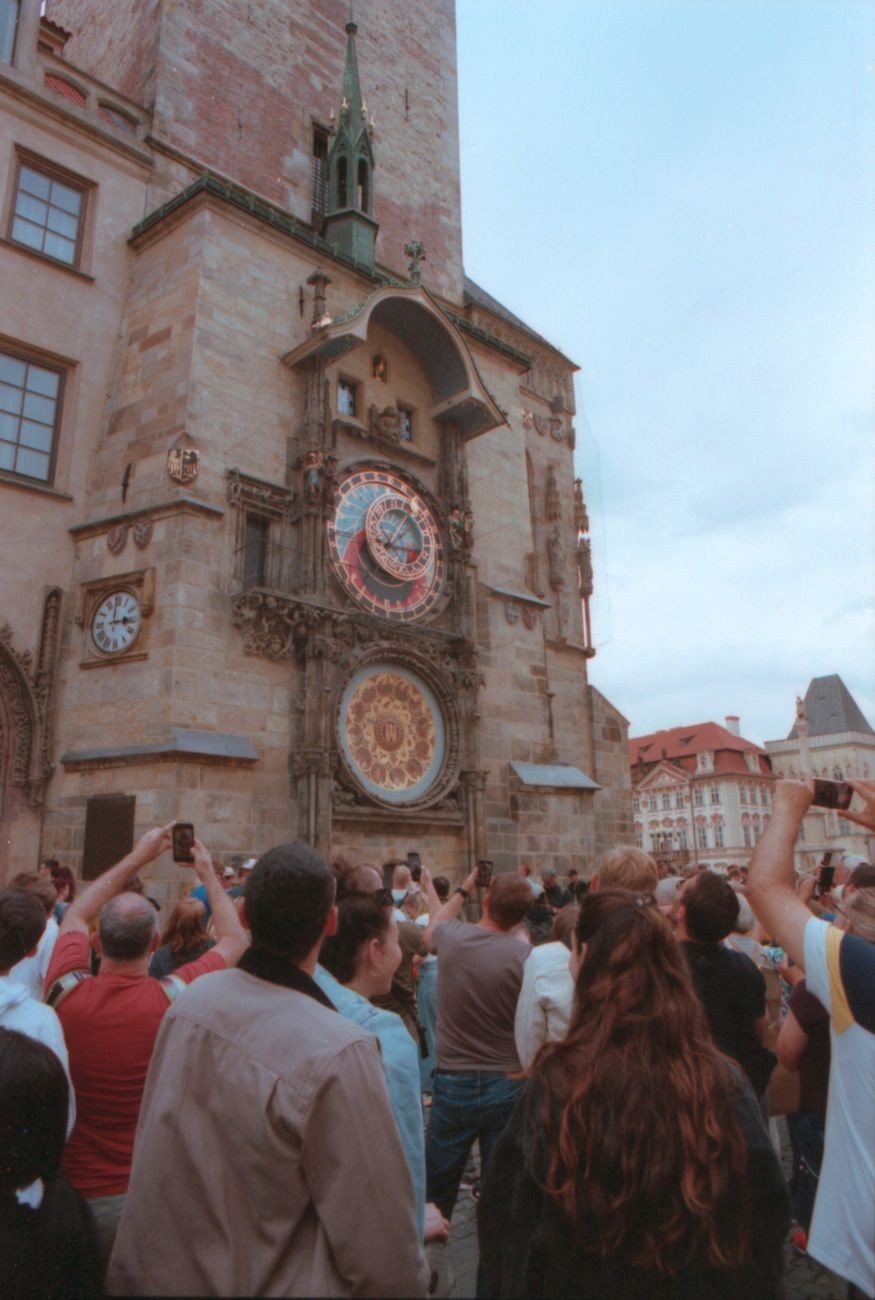
Tourists clustered around the Astronomical Clock, a typical crowded visitor zone.
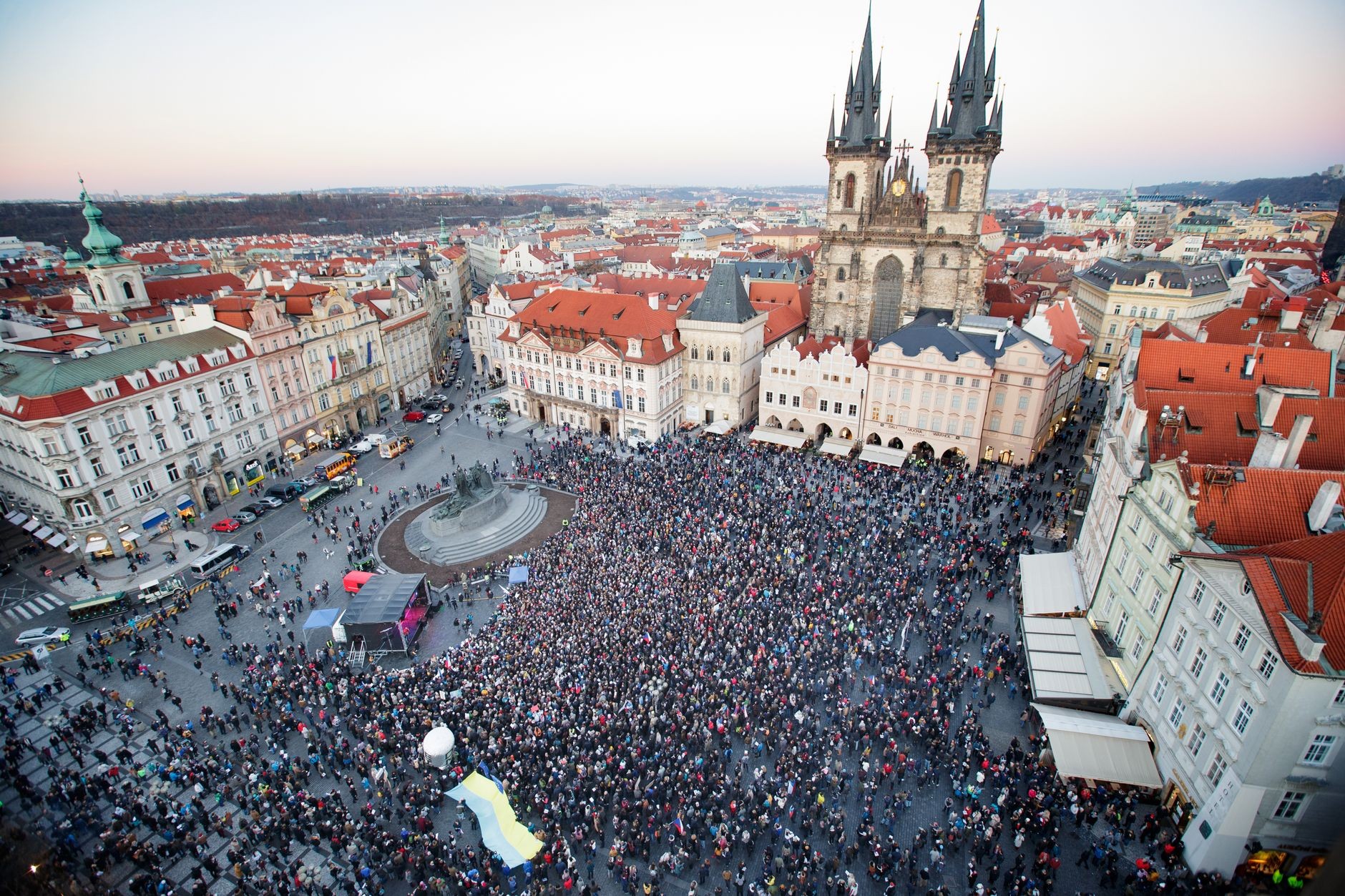
Crowds on Old Town Square.
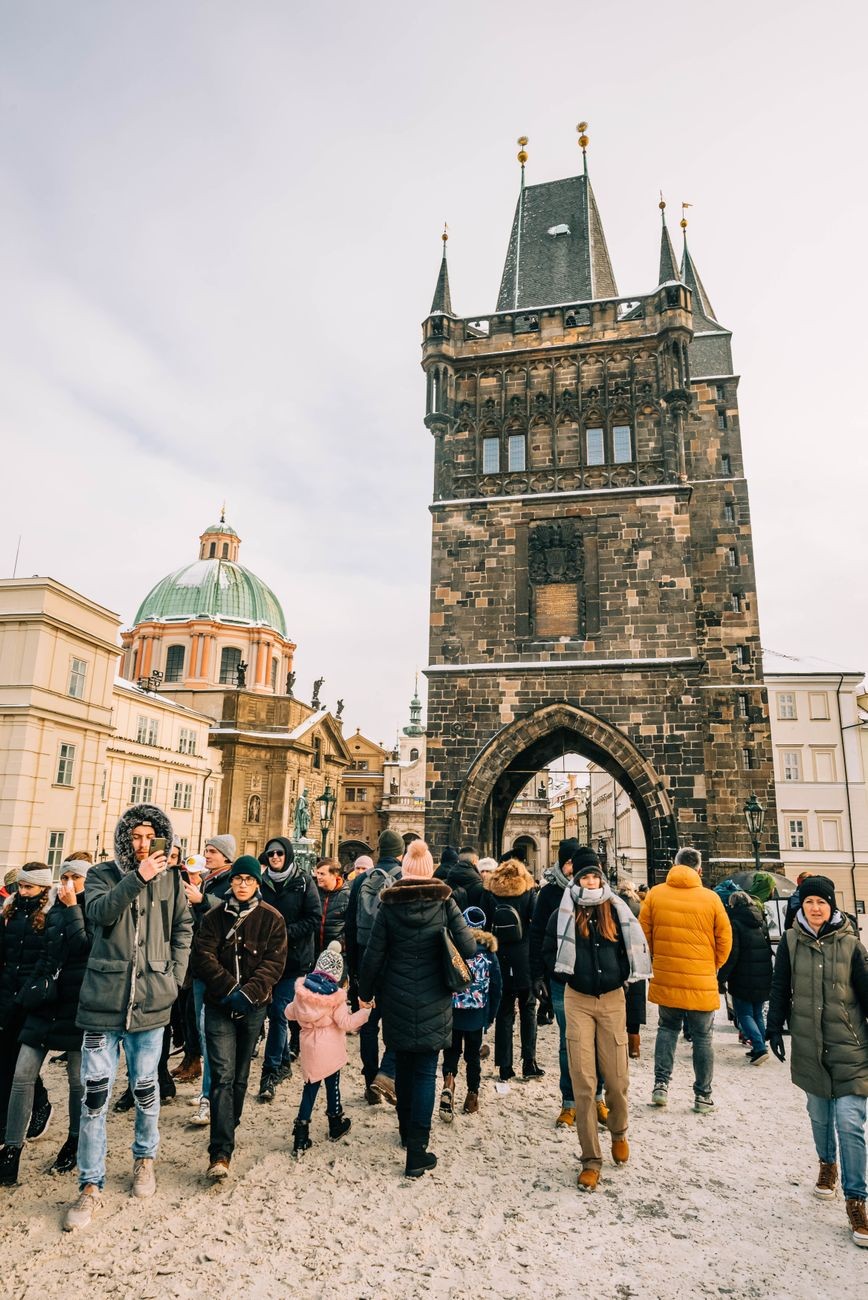
Visitors around the Old Town Bridge Tower/Charles Bridge approach.
Quick facts
- Czechia is currently Level 1 — exercise normal precautions — in the U.S. travel advisory system.
- Official travel advice identifies petty theft and pickpocketing as the principal recurring visitor crime risk in Prague.
- Busy tourist areas and public transport are common environments for pickpocketing.
- 112 is the general European emergency number and is suitable for foreign-language callers.
- Czech emergency numbers include 158 for state police, 156 for municipal police and 155 for medical emergency services.
- Street currency exchange with strangers should be avoided.
Questions
Is Prague safe at night?
Prague is generally safe for normal visitor activity at night. Use ordinary big-city precautions, especially around alcohol, crowded nightlife areas and the journey home.
Are there pickpockets in Prague?
Yes. Official travel advice specifically warns about pickpocketing in busy tourist areas and on public transport.
What scams should I avoid?
Do not exchange cash with strangers, verify card charges, use sensible ATMs, and be cautious when a payment or bar system is unclear. Separate poor-value tourist pricing from actual fraud.
What is the emergency number in Czechia?
112 is the general European emergency number. Czech national numbers include 158 police, 156 municipal police, 155 ambulance and 150 fire service.
Sources & further reading
- Czechia Travel Advisory — U.S. Department of State
- Safety and security — Czechia travel advice — UK Foreign, Commonwealth & Development Office
- Emergencies — Ministry of the Interior of the Czech Republic
- Enjoy Respect Prague — Prague City Tourism