
Documented Haunting
In 1874 Prague Investigated a Ghost That Nobody Even Had to See
For several weeks in December 1874, mysterious disturbances in Podskalí became a public spectacle. The remarkable part is not proof of a ghost, but the fact that a modern city produced a new supernatural legend in front of newspapers and crowds.
Podskalí

The 1874 Podskalí case can be studied as an actual urban event: sounds, public attention, explanation, spectacle and later folklore.
December 1874: a haunting enters the public record
The Podskalí case is unusually strong because it is not only a later legend about an undefined past. Petr Janeček’s study Podskalské strašidlo: Přízrak industriálního věku treats the disturbance as a nineteenth-century urban phenomenon rooted in December 1874. Contemporary people described what was happening through the vocabulary of haunting and poltergeist activity. Mysterious sounds and other disturbances attracted attention, and the event grew beyond the private space in which it began. The important historical claim is therefore not that a supernatural being was demonstrated. What can be followed is a real social episode: people heard reports, gathered, interpreted the disturbances and turned them into a shared city event.
A ghost that becomes a spectacle
Janeček’s work places the case in the environment of a modernizing Prague, where an unexplained disturbance could become a form of vernacular spectacle. That phrase matters. A haunting does not remain the property of the household that experiences it once neighbours, passers-by and the press begin to participate. The story acquires audiences, rival explanations and expectations about what should happen next. The Podskalí case therefore shows folklore being produced in public. Every repetition can sharpen the mystery, simplify uncertain details or attach the event to existing ideas about ghosts. By the time a sensation is widely known, the boundary between what was directly observed and what was retold can already be difficult to recover.
Moral panic belongs to the story too
Janeček’s later research on Prague ghostlore places the 1874 phenomenon within a wider discussion of moral panic and urban spectacle. That gives the episode a dimension that a simple ‘haunted house’ treatment would miss. The city is not merely frightened by a possible ghost; it is reacting to crowds, disorder, rumour and the unsettling possibility that ordinary urban space no longer behaves predictably. The supernatural explanation becomes one part of a broader social disturbance, showing how fear can be organized collectively through attention, repetition and the pressure to explain an ambiguous event.
The legend did not end when the noise stopped
Later folklore and nostalgic recollection preserved the Podskalí haunting after the immediate event had passed. That afterlife is crucial. A short-lived disturbance can disappear physically yet continue as a story because later generations inherit the memorable shape of the episode: the place, the unexplained sounds, the crowds and the idea that Prague once had a sensation large enough to disrupt everyday life. In that sense, the haunting has two dates. The first is the actual period of the 1874 disturbance. The second is every later retelling that converts the event into part of the supernatural identity of old Podskalí.
Stand in a changed district and reconstruct the event carefully
Modern Podskalí is not a frozen nineteenth-century stage. Its riverfront and built environment changed dramatically, so no untouched ‘haunted house’ can simply reproduce what the crowds of 1874 saw. The useful approach is reconstruction: locate the district, notice how it changed, and then follow how a few weeks of mysterious disturbances became public news. The physical city shows the transformation, while the academic sources preserve the chronology and interpretation of a modern urban legend born within living memory.
Reviewed visuals
See the story
Supporting images selected in the Prague Stories visual review. Context images are labeled so they are not mistaken for documentary proof of the exact subject.
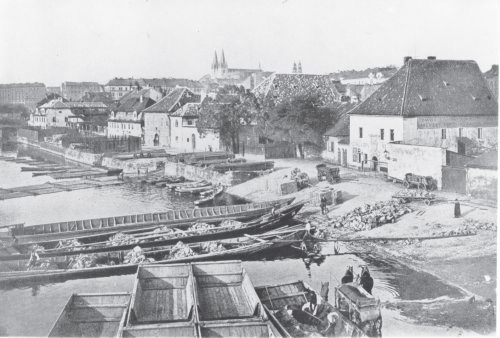
Focus on how a private disturbance became a public spectacle: the movement of people, attention and stories is the real visible pattern.
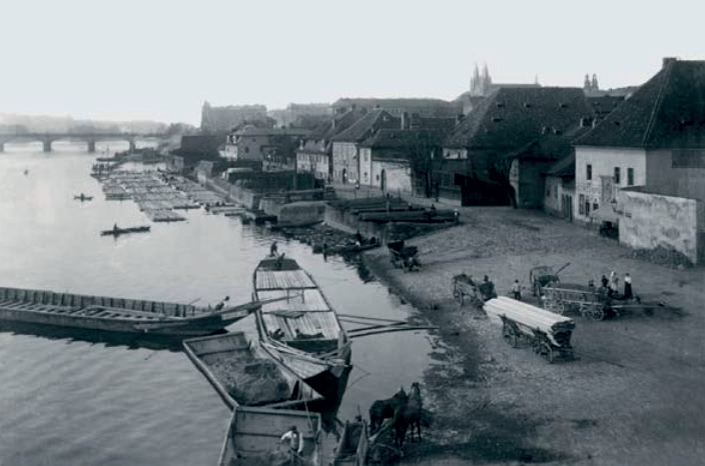
Focus on how a private disturbance became a public spectacle: the movement of people, attention and stories is the real visible pattern.
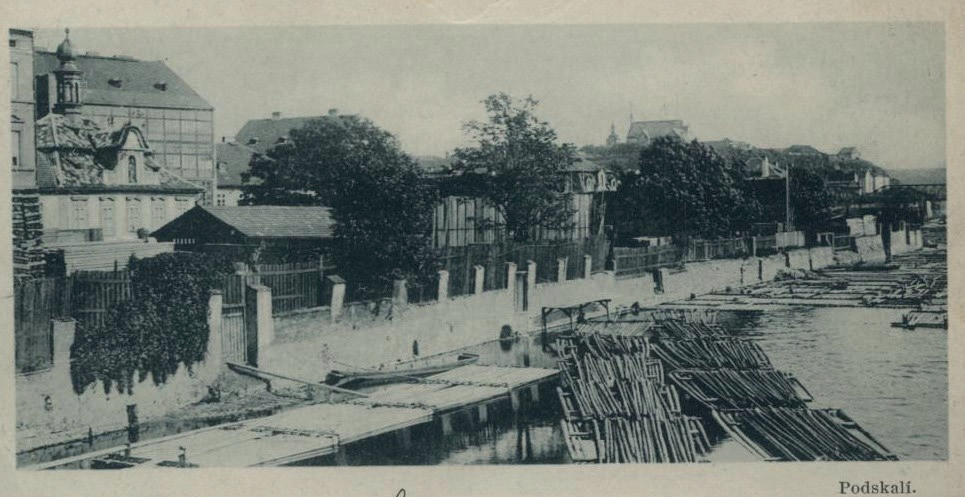
The Podskalí haunting belongs specifically to December 1874.
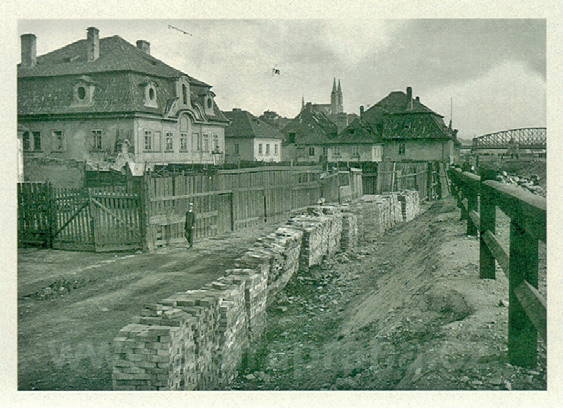
Contemporary interpretations used the language of haunting and poltergeist activity.
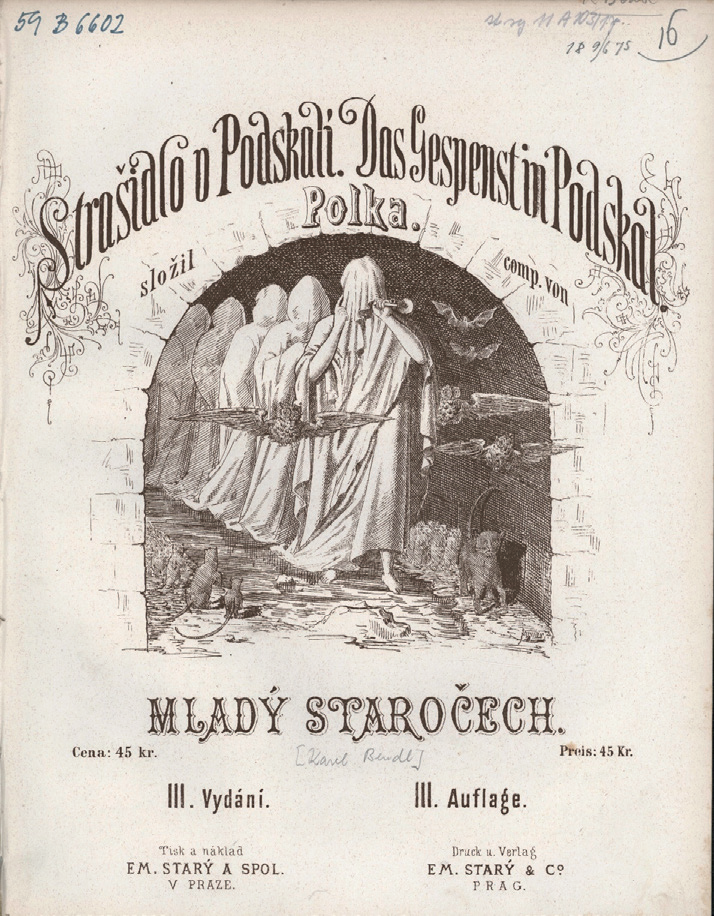
The case developed into a public spectacle rather than remaining a private household incident.
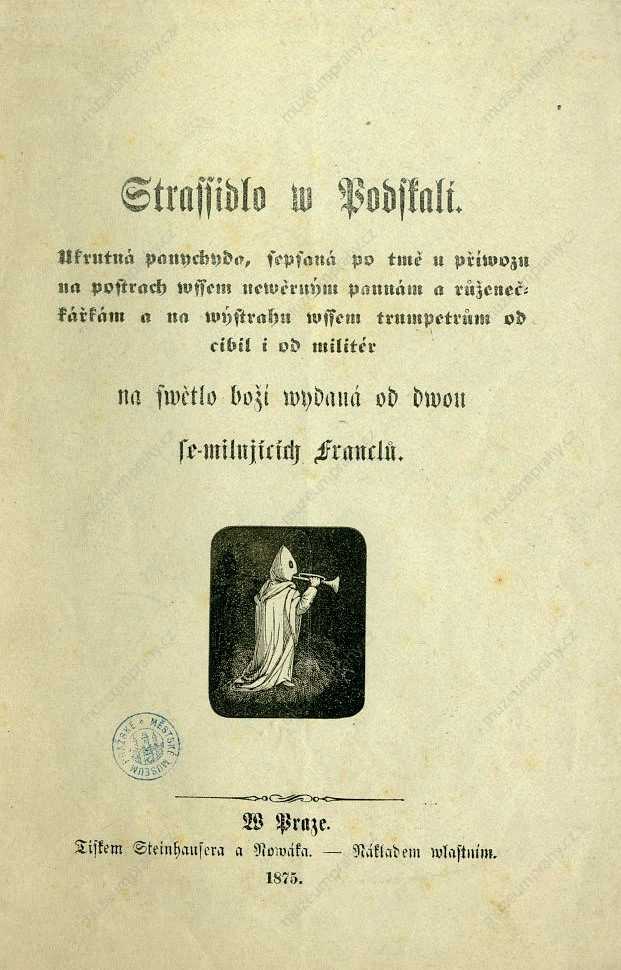
Petr Janeček analyzes the episode as part of nineteenth-century Prague ghostlore.
Quick facts
- The Podskalí haunting belongs specifically to December 1874.
- Contemporary interpretations used the language of haunting and poltergeist activity.
- The case developed into a public spectacle rather than remaining a private household incident.
- Petr Janeček analyzes the episode as part of nineteenth-century Prague ghostlore.
- The phenomenon later became folkloric and nostalgic material.
- The strongest evidence concerns the public event and its reception, not proof of a supernatural being.
Questions
Was a ghost proven in Podskalí in 1874?
No. The research documents a haunting phenomenon, public reaction and the growth of a city sensation; it does not establish a supernatural cause.
Why is this story unusually well sourced?
Because Petr Janeček has studied the case academically, including its place in nineteenth-century urban ghostlore and public spectacle.
What should visitors look for today?
The transformed geography of Podskalí and the contrast between the modern district and the social world in which the 1874 sensation spread.