
Modern history
The National Museum Preserved Scars From the 1968 Shooting
The National Museum says Soviet soldiers fired on its Historical Building on 21 August 1968 and that traces of the damage were deliberately preserved during reconstruction.
National Museum, Wenceslas Square

Some marks on the museum are not defects to erase; they were preserved as historical evidence.
Read damage as evidence
A restored monument usually encourages the eye to look past cracks, patches and repairs. The National Museum asks for the opposite kind of attention. Its own account says Soviet soldiers fired on the Historical Building on 21 August 1968 and severely damaged the facade, sandstone columns, stone sculpture and interior spaces. That turns surface damage into evidence. The building is not only a backdrop to political history; part of that history physically struck the architecture.
Notice repair without erasure
Later repairs could have aimed to make the facade look untouched. Instead, the museum’s account explains that visible traces remained part of the building’s memory. That is a valuable conservation question: should restoration hide a violent episode or keep enough of it legible for future viewers? You do not need to identify every mark as a bullet impact.
Use the facade as a historical document
When you stand on Wenceslas Square, the museum can look monumental and timeless. The 1968 story breaks that illusion. A building changes not only through architects and restorers but through events imposed on it. Look at the facade, then imagine the square as a site of occupation rather than ceremony. The preserved scars create a bridge between architectural observation and modern history: something as small as a patch in stone can carry evidence that a photograph or plaque would otherwise have to explain alone.
Reviewed visuals
See the story
Supporting images selected in the Prague Stories visual review. Context images are labeled so they are not mistaken for documentary proof of the exact subject.
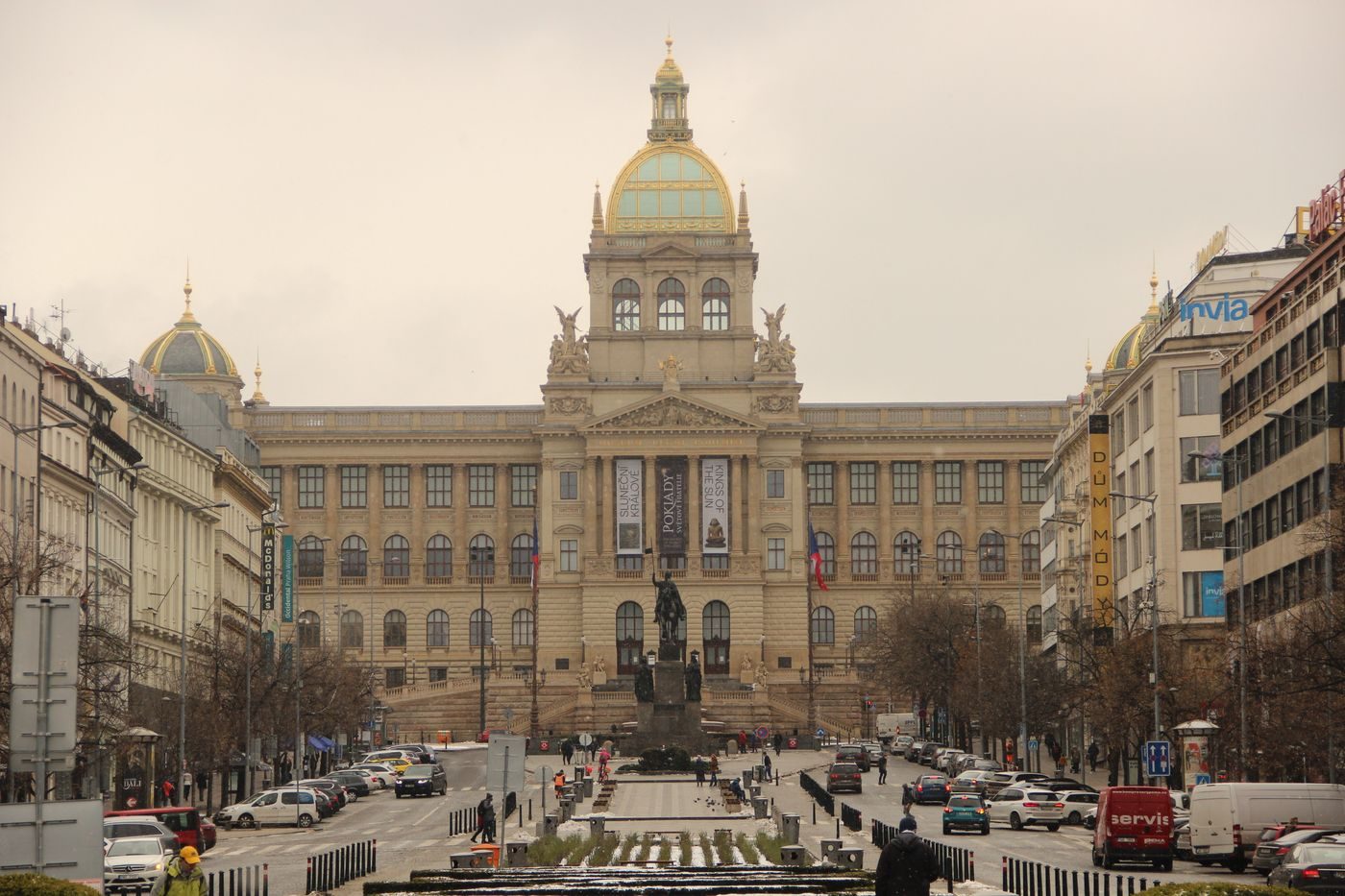
Street-level exact National Museum view visibly shows the historical building in Wenceslas Square context.
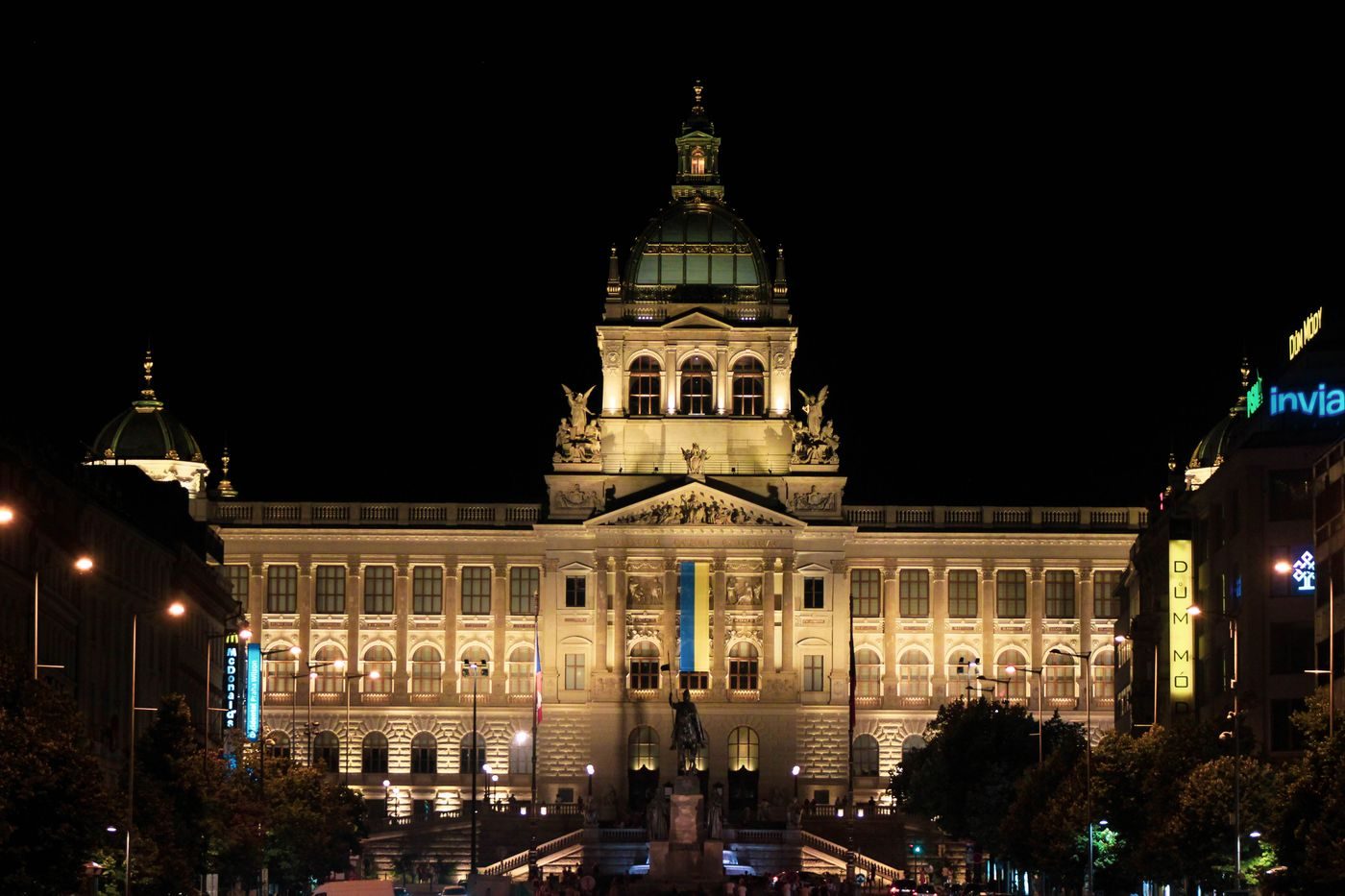
Exact museum is visibly illuminated at night.
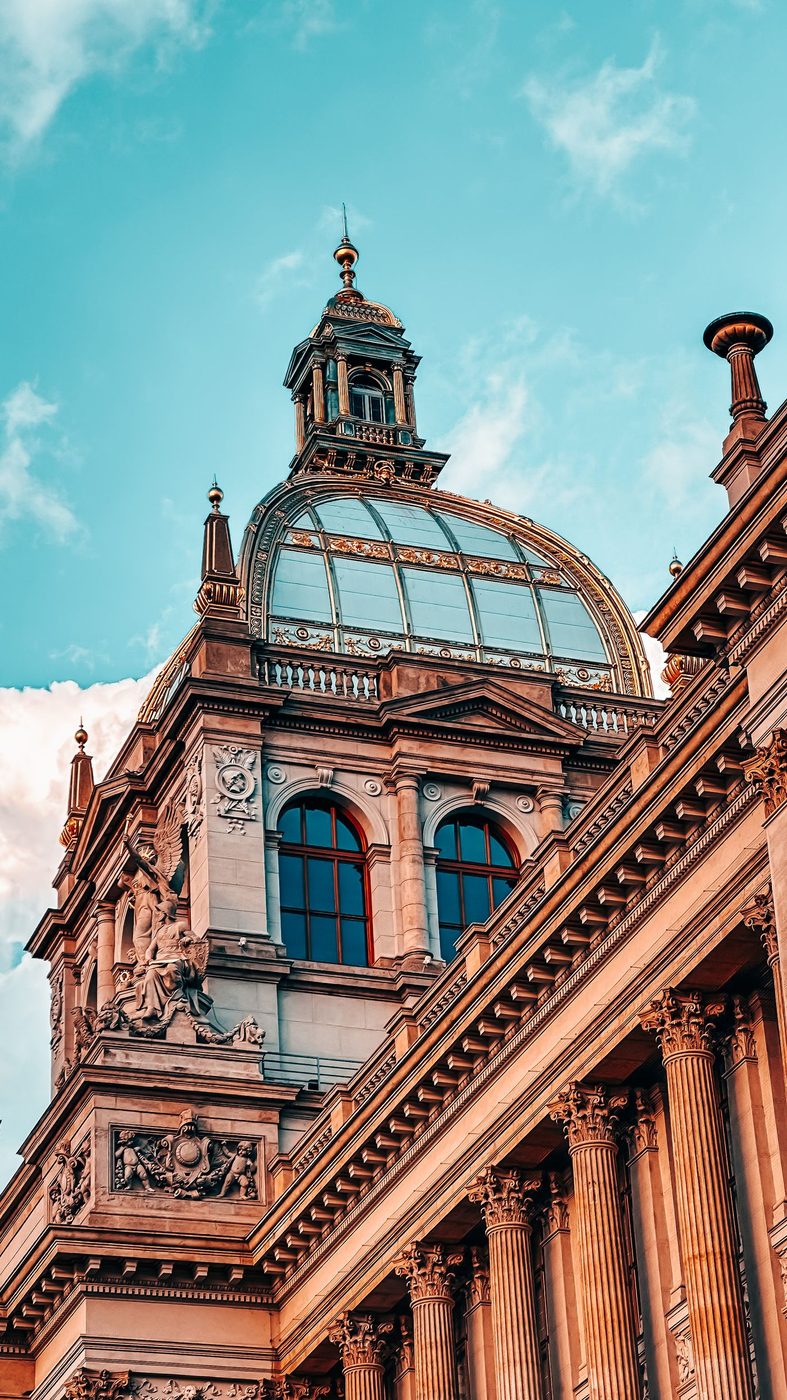
Close exact National Museum architectural detail visibly shows dome/façade stonework.
Quick facts
- The National Museum says Soviet soldiers fired on the building on 21 August 1968.
- The National Museum says the shooting damaged its facade, sandstone columns and stone sculptures.
- The museum treats surviving traces as historical evidence.
- The museum facade carries documented physical traces of the 1968 attack.
Questions
Who fired on the National Museum in August 1968?
The museum’s account identifies Soviet soldiers.
What was damaged?
The National Museum says the facade, sandstone columns, stone sculptures and interior spaces were damaged.
Sources & further reading
- Stopy po střelbě z roku 1968 rekonstrukce nezahladí — Národní muzeum