
Transit design
Prague Metro Line A Turns Anodised Aluminium Into a City Signature
Prague City Tourism credits Jaroslav Otruba with the iconic shaped tiles of anodised aluminium used on metro line A.
Prague metro Line A

The famous Line A surfaces are not generic metal panels; they are a deliberately designed system of shaped anodised aluminium tiles.
Read the wall as designed infrastructure
A metro platform can feel purely functional until one material repeats strongly enough to become identity. Prague City Tourism credits architect and designer Jaroslav Otruba with the iconic shaped tiles made of anodised aluminium on line A. That gives you a practical reading tool: instead of treating the wall finish as background, notice shape, reflection and colour as part of the transport system’s visual language.
Watch how the surface changes with movement
Metallic panels do not look identical from every angle. As you walk along a platform or pass through a tunnel, light catches convex and concave surfaces differently. The effect makes a static wall feel variable. You do not need to memorise station colour schemes to appreciate the design logic. Compare one section close up with a longer view down the platform and notice how individual tiles merge into a larger rhythm.
Use repetition to build orientation
Transit design becomes useful when repeated elements help a place feel coherent. The Line A tiles are a strong example because one design family can appear in different station contexts while remaining recognisable. Next time you descend into the metro, look for the material before the station name. The goal is not to navigate without signs; it is to see that Prague’s transport network contains an intentional design layer that can be read just like architecture above ground.
Reviewed visuals
See the story
Supporting images selected in the Prague Stories visual review. Context images are labeled so they are not mistaken for documentary proof of the exact subject.
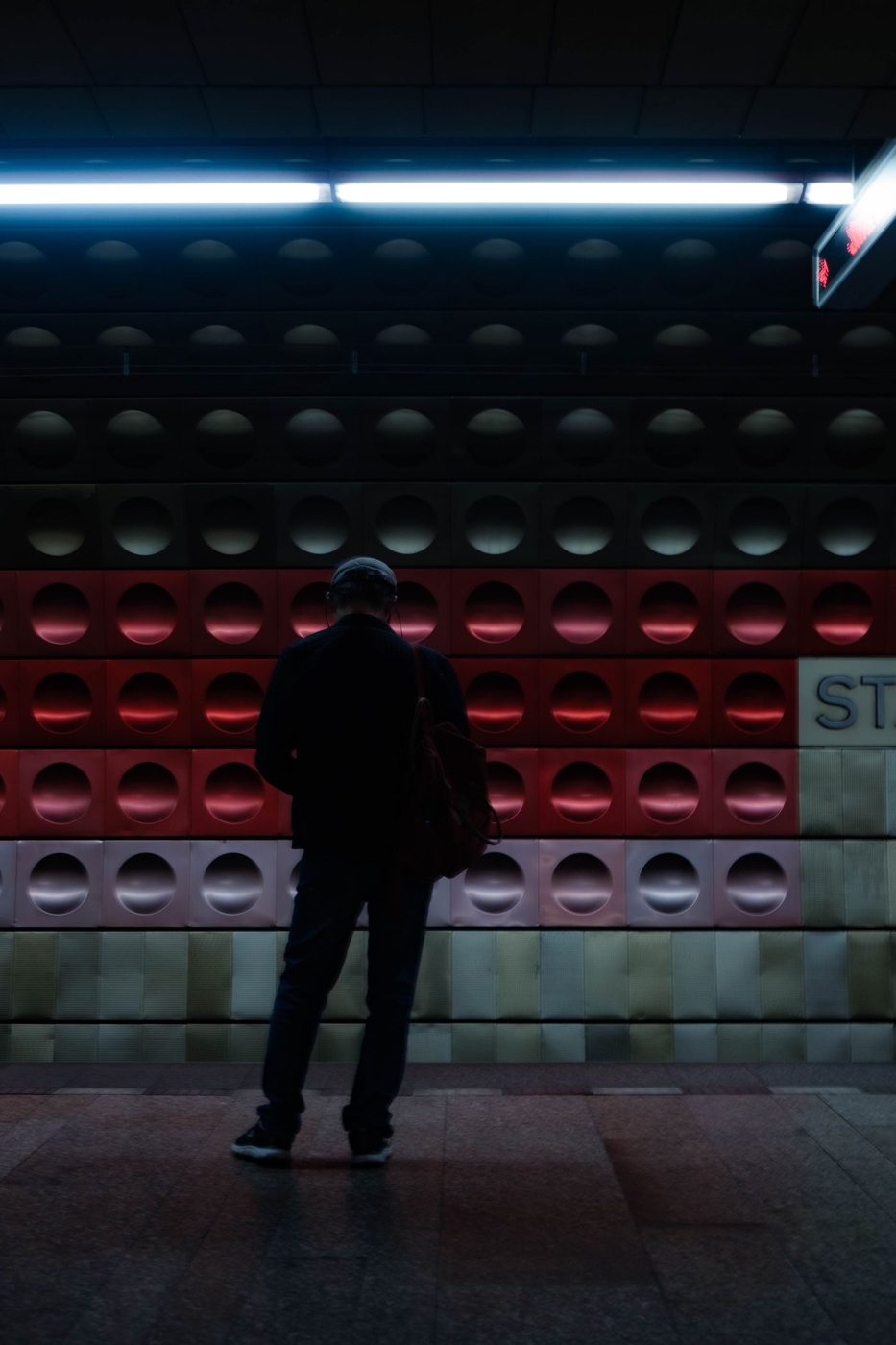
A man waits on an exact Prague metro platform against illuminated wall panels.

A train visibly passes a waiting passenger in an exact Prague subway station.
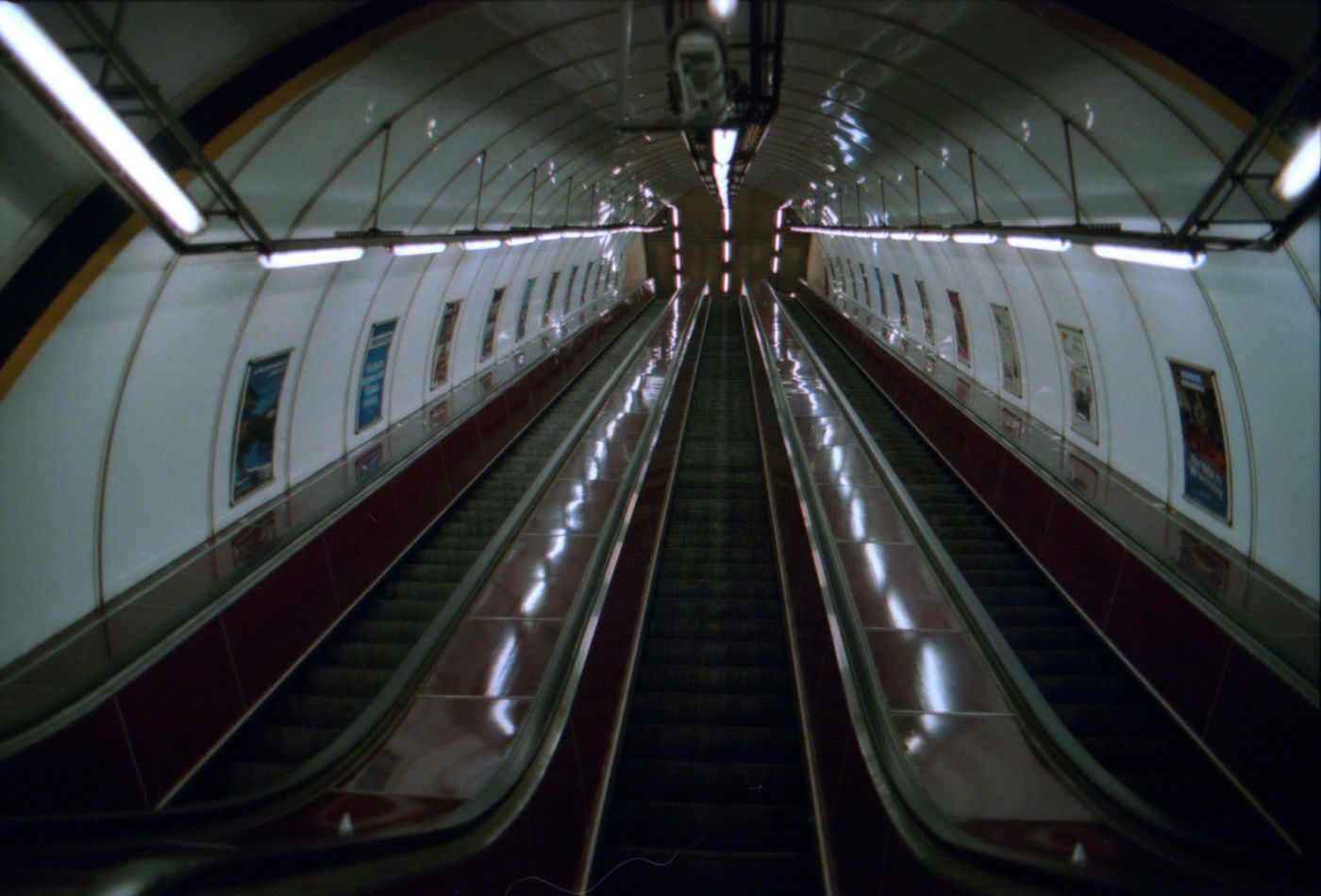
A long exact Prague subway escalator and tunnel architecture are visibly shown.
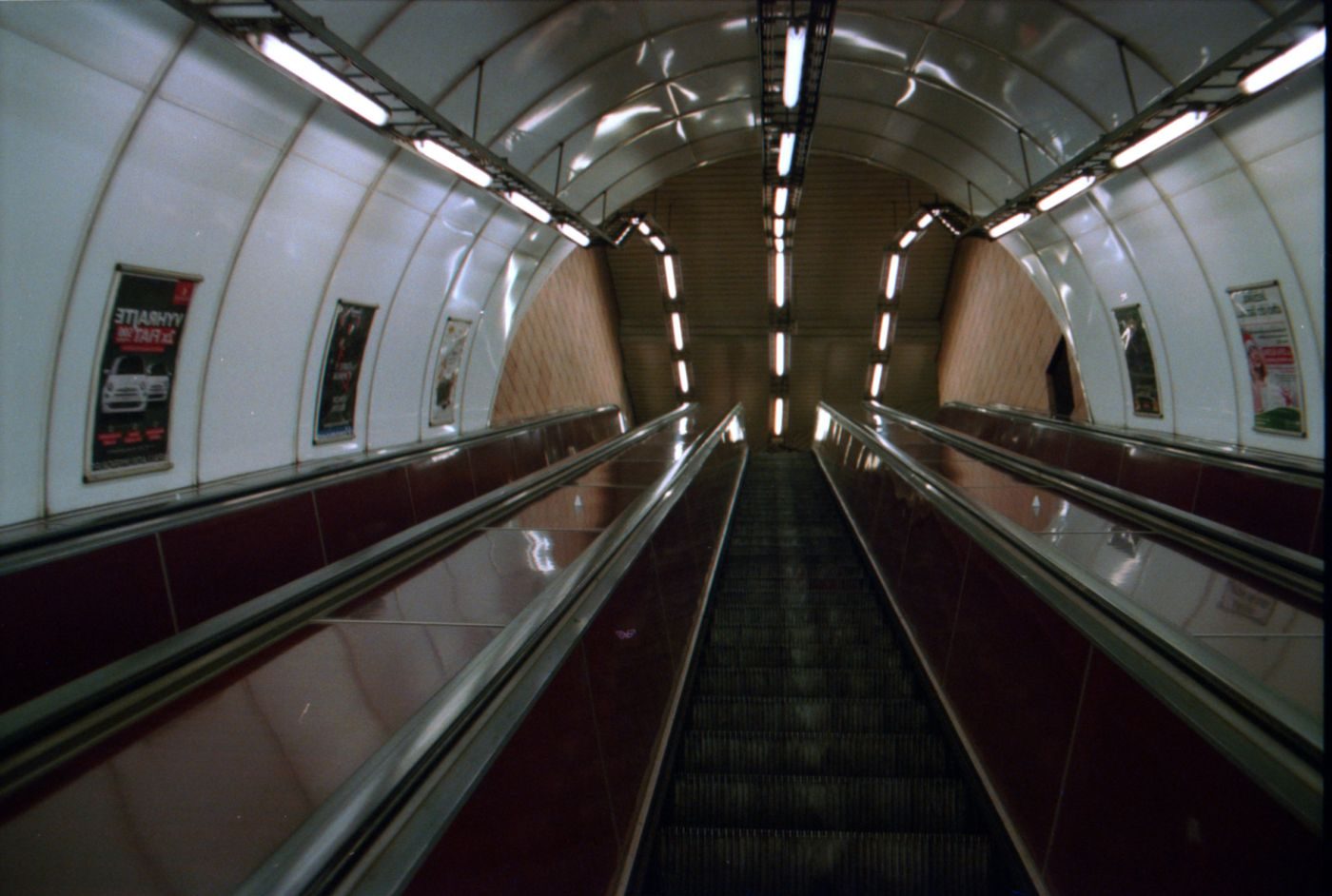
Empty Prague metro escalator is visibly framed in a strong symmetrical tunnel composition.
Quick facts
- Prague City Tourism credits Jaroslav Otruba with the Line A tile design.
- The tiles are shaped rather than flat generic panels.
- The city source identifies anodised aluminium as the material.
- Prague City Tourism identifies shaped anodised-aluminium tiles as an iconic Line A design.
Questions
Who designed the iconic Line A tiles?
Prague City Tourism identifies Jaroslav Otruba.
Sources & further reading
- Prague metro iconic design — Prague City Tourism