
Public Art & Legend
Prague’s Iron Man Is a Real Figure — the Curse Is Its Second Life
Platnéřská Street gives the Iron Man legend something many ghost stories lack: a visible object. Václav Cibula preserves the tale of a man cursed into a metal or stone form, while the surviving figure raises a second question — did the story explain the image, or did the image reshape the story?
Platnéřská Street, Old Town

The Iron Man legend gives the figure in Platnéřská a grim biography: Jáchym Berka kills the woman he loves in a fit of jealousy and is cursed to remain trapped in an iron body.
Cibula’s Iron Man is a punished figure
In the familiar legend, a man later named Jáchym Berka is consumed by jealousy and kills his beloved. As she dies, she curses him. His punishment is not simply death: he must remain as the Iron Man, fixed to the Prague street and unable to find peace.
The city gives the legend a body
Different retellings give the curse a possible escape. A pure and courageous young woman may be able to free him when the right moment returns — often only after a long interval, traditionally a hundred years. The visible Iron Man figure in Platnéřská gives the story a physical face. The statue is real; the murder, curse and rare chance of redemption belong to the legend that grew around it.
Jáchym Berka belongs to the narrative layer
The Iron Man tradition is associated with the name Jáchym Berka in later storytelling. The name belongs to the legendary protagonist and moralized curse, but it does not by itself settle every biographical detail. Keeping that boundary clear shows how an urban object can accumulate a specific personality until later visitors experience the image and the legend as if they had always belonged together.
Which came first — the object or the familiar version of the legend?
The source notes an important complication: later sculptural representation may have influenced the iconography of the tale. Folklore is not always a one-way process in which an old story produces a later statue. A visible figure can also feed back into storytelling, stabilizing how the cursed man is imagined or encouraging new details that fit the object people can actually see. The Iron Man is therefore a story about mutual reinforcement. Architecture gives folklore a face; folklore gives architecture a biography; later generations inherit both as a single Prague curiosity.
Reviewed visuals
See the story
Supporting images selected in the Prague Stories visual review. Context images are labeled so they are not mistaken for documentary proof of the exact subject.
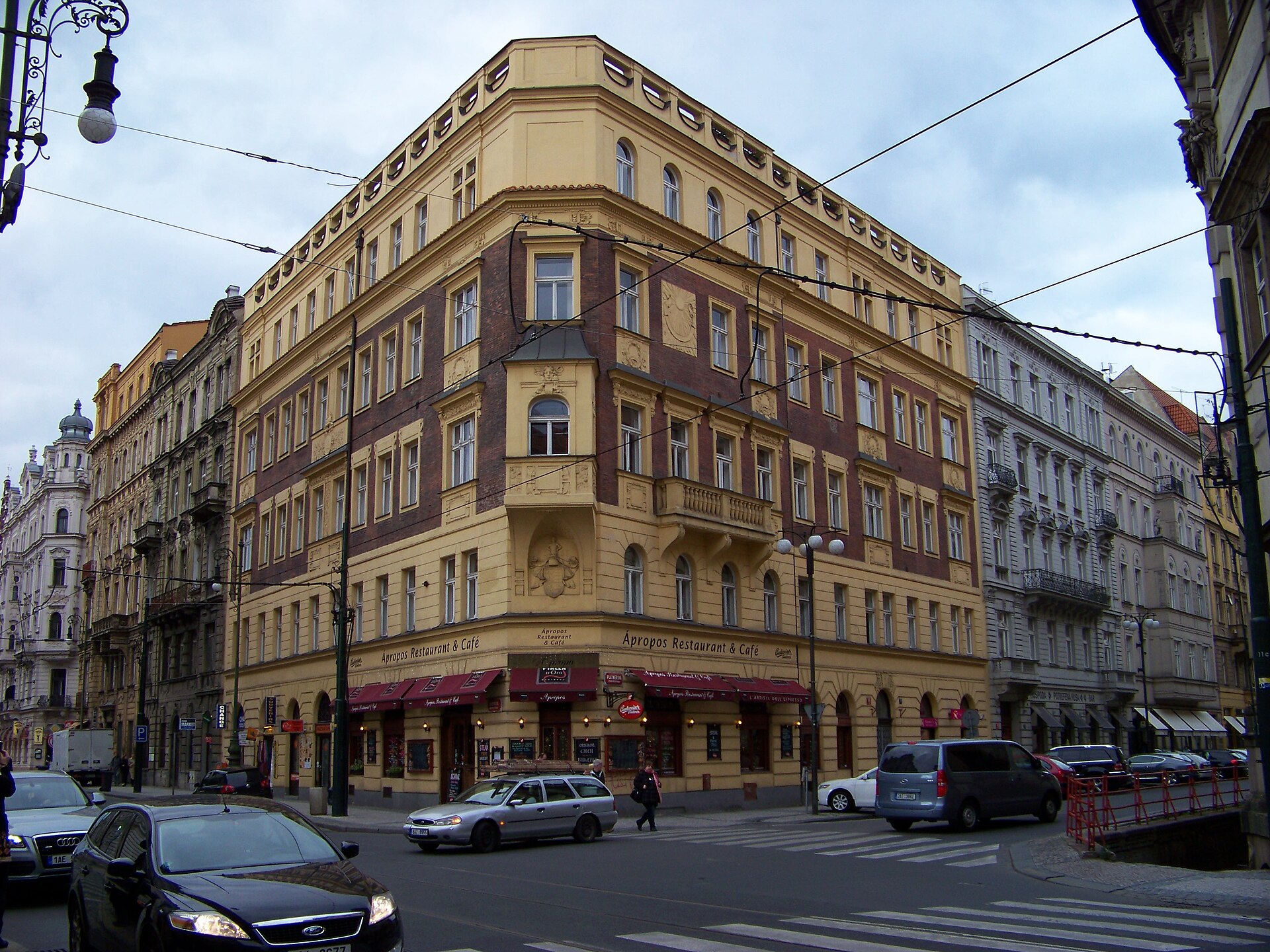
Find the figure in Platnéřská before reading the curse story and treat the object as the first layer of evidence.
Quick facts
- Václav Cibula records O železném muži z Platnéřské ulice in Pražské pověsti.
- The legend concerns a man cursed into a metal or stone form after a transgression.
- Different versions connect release with a moral task or a time condition.
- The visible figure or house-sign tradition gives the story a physical anchor.
- Later sculptural representation may have influenced how the legendary Iron Man is imagined.
- The relationship between object and legend may be reciprocal rather than a simple story-first sequence.
Questions
Is the Iron Man figure real?
Yes. The physical figure provides the visual anchor. The transformation and curse belong to the legend tradition.
Was Jáchym Berka a documented cursed man?
The sources preserve the legendary protagonist; they do not establish the supernatural biography as history.
Did the legend create the sculpture?
The sequence is not safely one-directional. Later sculptural representation may also have influenced the legend’s iconography.
Sources & further reading
- Pražské pověsti — O železném muži z Platnéřské ulice — Václav Cibula
- Pražské pověsti (1983) — bibliographic contents listing — Václav Cibula / Databáze knih