
Prague Stories · Day trips
Terezín From Prague: How to Visit a Place of Persecution Responsibly
Terezín was not one single camp with one function. The Nazi-controlled town contained a Jewish ghetto in the Main Fortress, while the nearby Small Fortress served as a Gestapo prison; understanding that distinction is the starting point for any responsible visit.
Terezín, Ústí nad Labem Region

A first visit to Terezín can be confusing because the name is used for several connected but historically distinct sites.
Start by separating two places that are often blurred together
The walled Main Fortress became the location of the Theresienstadt Jewish ghetto. The Small Fortress, across the river, was used by the Gestapo as a police prison. They belonged to the same landscape of Nazi persecution, but they did not have the same administration, prisoners or function. This difference is not a technical footnote. Without it, visitors can leave with a distorted idea of what happened here. In the Main Fortress, people were confined in overcrowded conditions, families were separated, cultural life existed under extreme coercion, and transports carried prisoners onward to killing centres and other camps. In the Small Fortress, the prison regime belonged to the machinery of Gestapo repression. A responsible visit gives each place its own history before drawing connections between them.
Theresienstadt was used both to imprison and to deceive
The ghetto was established in late 1941. According to the United States Holocaust Memorial Museum, more than 140,000 Jews were imprisoned in Theresienstadt during its existence. Tens of thousands died there, and many more were deported east, most of whom did not survive. The Nazis also exploited Theresienstadt for propaganda. Its cultural activity and carefully manipulated public image were used to disguise the reality of deportation, deprivation and mass persecution. That history makes surviving drawings, music, diaries, records and personal testimony especially important. They are not evidence that conditions were benign; they show people creating, teaching, documenting and trying to preserve dignity inside a system designed to control and destroy them. Numbers establish scale, but the memorial sites become more comprehensible when those numbers remain attached to individuals. Names, objects, children’s drawings and testimony resist the tendency to turn a place of persecution into an abstract history lesson.
The Small Fortress tells a different institutional story
The Small Fortress had been built long before the Nazi occupation. From 1940, the Gestapo in Prague used it as a prison. International Holocaust Remembrance Alliance material distinguishes this prison clearly from the ghetto in the Main Fortress and records tens of thousands of people passing through it. Physically moving between the two helps explain why photographs can be misleading. Cells, yards and prison infrastructure in the Small Fortress create a different spatial experience from the streets and buildings of the former ghetto town. Neither should be treated as the “real” Terezín while the other becomes an optional add-on. Together with the cemetery, crematorium, museums and other memorial locations, they document different parts of the system.
Give the visit enough time to remain a visit, not a collection
Terezín is possible independently from Prague, but logistics should come after the decision about what you want to understand. The memorial is spread across multiple sites. Trying to move through the Small Fortress, ghetto museums and other locations at sightseeing speed can turn difficult material into a sequence of rooms. Allow pauses. Read labels. If an exhibition gives you a name, a letter or a work made by a prisoner, stay with it longer than you would stay with an ordinary museum object. Photography may be permitted in some areas under current rules, but permission is not the same thing as an obligation to photograph. The memorial is not a backdrop. Current opening arrangements and transport should be checked with the Terezín Memorial and current journey planners shortly before travel. Practical information changes; the historical responsibility does not.
Terezín and Auschwitz should not be collapsed into one comparison
Travelers sometimes ask whether Terezín was “like Auschwitz.” The useful answer begins with difference. Auschwitz-Birkenau was the largest Nazi concentration and extermination camp complex and a major centre of mass murder. Theresienstadt served principally as a ghetto, transit site and instrument of propaganda, while the Small Fortress functioned as a Gestapo prison. Prisoners from Theresienstadt were deported onward to Auschwitz and other sites of murder. Comparison can help explain the broader Nazi system only if it preserves those distinctions. Terezín does not need to be described as “Czech Auschwitz” to convey its importance. Its history is specific, extensively documented and devastating on its own terms.
Reviewed visuals
See the story
Supporting images selected in the Prague Stories visual review. Context images are labeled so they are not mistaken for documentary proof of the exact subject.
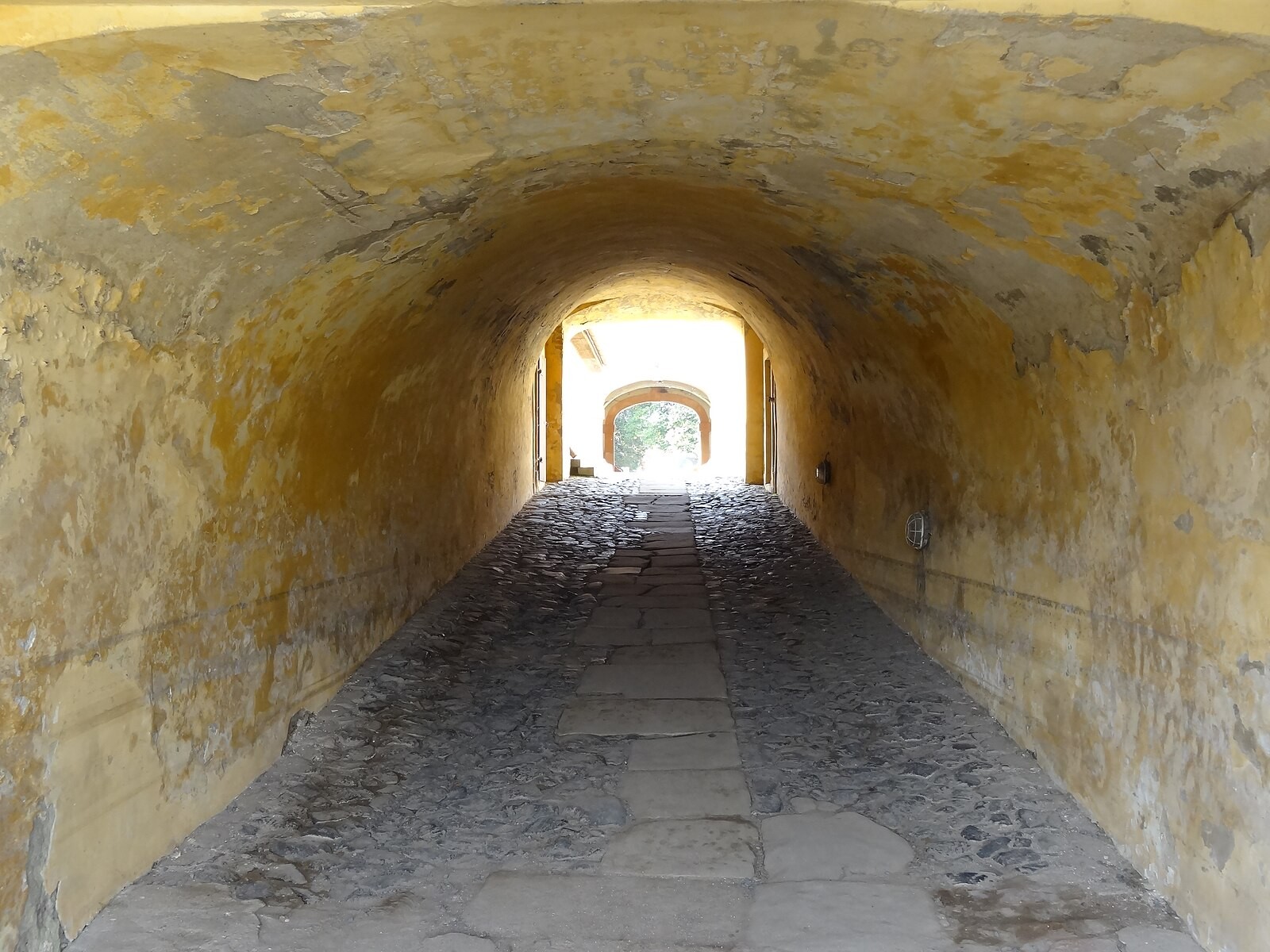
Fourth courtyard of the Small Fortress at Terezín.
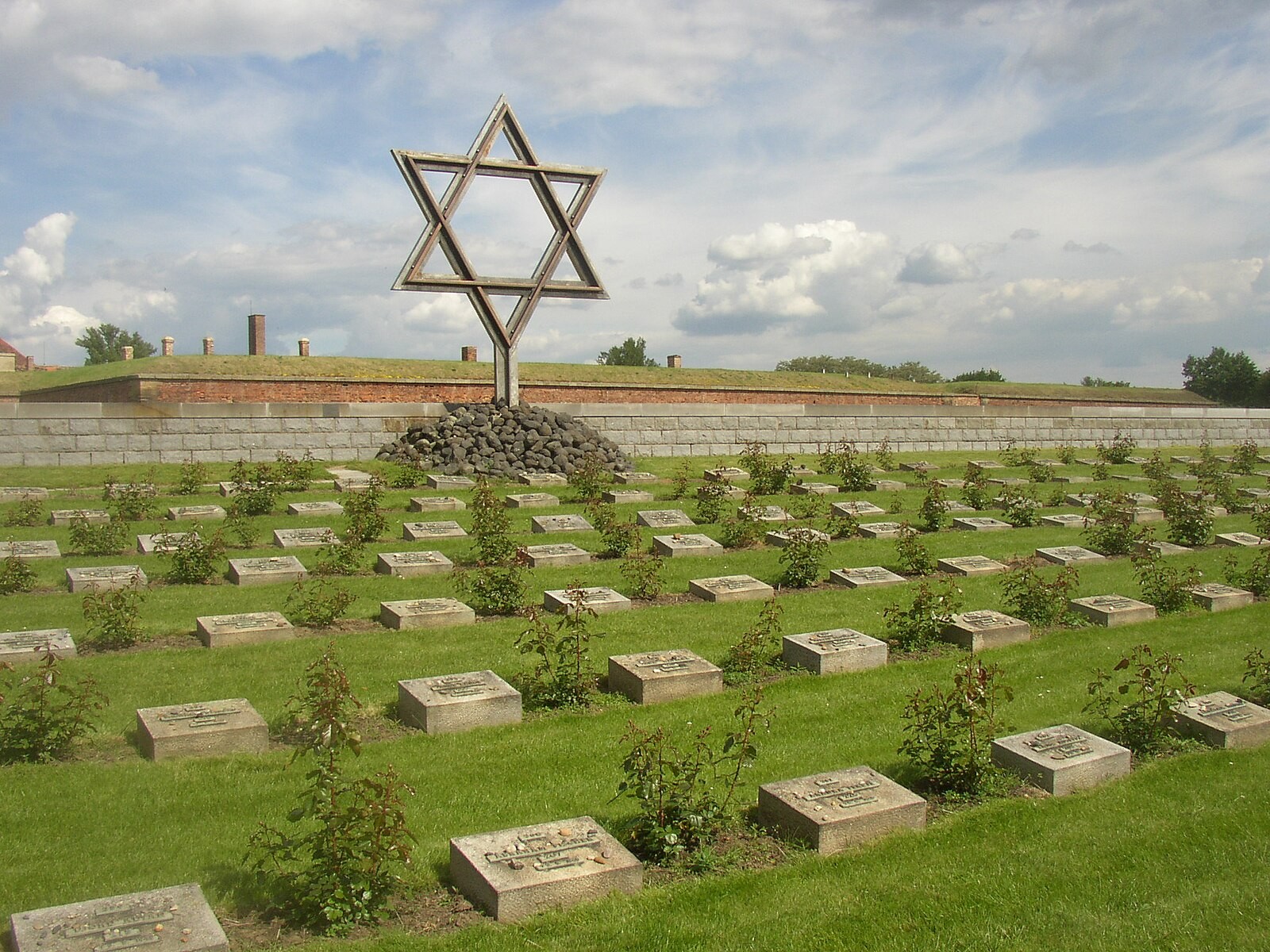
Terezín memorial cemetery, reinforcing the commemorative context.
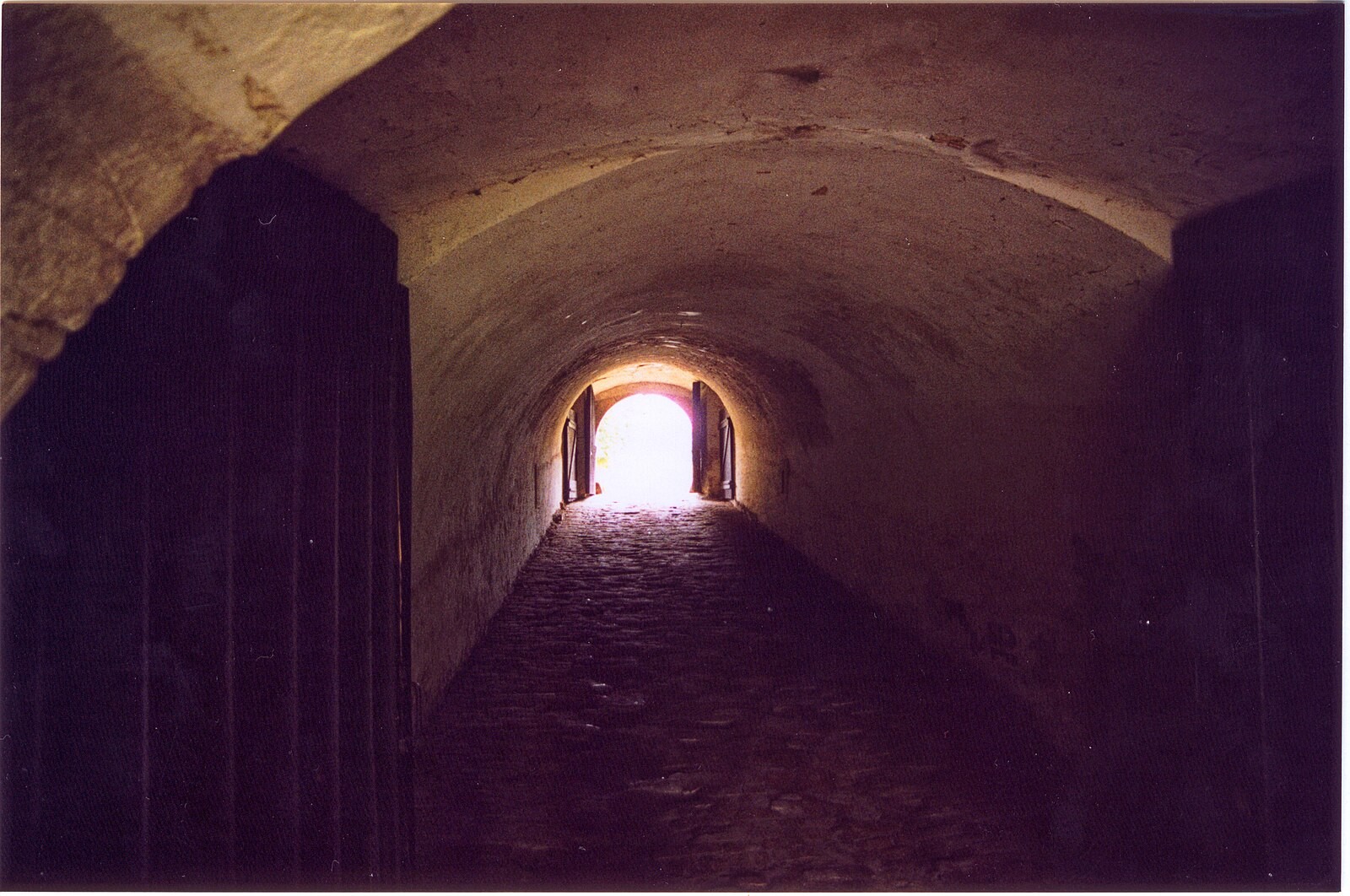
View through the so-called Gate of Death at the Small Fortress in Terezín.
Quick facts
- The Jewish ghetto was located in Terezín’s Main Fortress; the Small Fortress served as a Gestapo prison.
- The Theresienstadt ghetto was established in 1941.
- More than 140,000 Jews were imprisoned in Theresienstadt during the Nazi period, according to the US Holocaust Memorial Museum.
- The Nazis used Theresienstadt in propaganda intended to conceal the reality of persecution and deportation.
- Many prisoners held in Theresienstadt were later deported to Auschwitz and other killing or concentration sites.
- The Terezín Memorial comprises multiple locations rather than one single museum building.
Questions
How far is Terezín from Prague?
Terezín is close enough for a day visit from Prague.
What is the difference between Terezín and Auschwitz?
They had different functions within the Nazi system. Theresienstadt was principally a Jewish ghetto, transit site and propaganda instrument; Terezín’s Small Fortress was a Gestapo prison. Auschwitz-Birkenau was a concentration and extermination camp complex and major centre of mass murder. Many people imprisoned at Theresienstadt were later deported to Auschwitz.
How long should you spend there?
Allow at least several hours if you intend to understand both the former ghetto and the Small Fortress. A fuller visit can take most of a day because the memorial consists of multiple sites and the material benefits from a slower pace.
Can you visit independently?
Yes. Independent visits are possible, while guided options can add context. Check the Terezín Memorial directly for current opening arrangements, tours and access information.
Sources & further reading
- The Theresienstadt (Terezín) Ghetto — United States Holocaust Memorial Museum
- Terezín — International Holocaust Remembrance Alliance
- Terezín Memorial — Terezín Memorial