
Prague Stories · Practical Culture
Why Prague Still Uses the Czech Koruna Instead of the Euro
Czechia has been in the European Union since 2004, but it is not in the euro area. Prague's official currency is therefore the Czech koruna — CZK — and that distinction matters every time a visitor sees a price.
Prague

The confusion is understandable.
EU does not automatically mean euro
Prague feels unmistakably European, Czechia is an EU member, and many nearby countries use the euro. Yet European Union membership and euro-area membership are not the same thing. Czechia joined the EU in 2004 but has not adopted the euro, so the country's official currency remains the Czech koruna. That single institutional fact explains most of the practical landscape. Menus, public transport, shops and official prices are fundamentally denominated in koruny, normally abbreviated Kč in Czech and CZK internationally. A business may choose to accept euros, but that is a private convenience, not evidence that Prague has two official currencies.
The koruna is not a transitional souvenir
It is tempting to treat the Czech crown as a currency merely waiting for a scheduled switch. The European Commission's current country page says Czechia does not have a target date for euro adoption and is not participating in ERM II, the exchange-rate mechanism that forms part of the path toward adopting the euro. The durable explanation is institutional: Czechia has an obligation in principle connected to EU membership, but adoption requires conditions and political decisions that have not yet produced a timetable. The practical conclusion for a traveller today is simple: plan in CZK.
A euro price can hide a bad conversion without breaking any currency rule
Some tourist-facing businesses may quote or accept euros because visitors carry them. When that happens, the business chooses the conversion rate. A convenient euro price can therefore be less favourable than paying in koruny, especially if you never compare it with the CZK amount. Acceptance is a service; the exchange rate is the cost of that service. The same principle applies at card terminals when you are offered a choice between paying in CZK and your home currency. That involves dynamic currency conversion, a separate payment issue whose terms can vary. The safest habit is to know that the underlying local price is in CZK and evaluate any conversion before accepting it.
Cash and card are tools, not identities
Prague is highly card-friendly, but “card-friendly” is not the same as “cashless everywhere.” Small businesses, markets, older establishments or temporary outages can still make cash useful. Meanwhile, carrying excessive cash creates its own inconvenience. A mixed approach — card as the default, a modest amount of CZK as backup — is practical without turning currency choice into a rule. If you need cash, use a reputable bank ATM and read every screen before accepting conversion or fees. If you exchange physical currency, compare the posted rate and conditions before handing over money. Official visitor services can help if you are unsure.
Read Kč as part of the city, not an obstacle
Learning the local currency changes the way prices feel. A coffee at 80 Kč, a museum ticket in hundreds of koruny, a restaurant bill in thousands: within a day, the units stop looking absurdly large and start forming a mental scale. That is more useful than converting every purchase to euros in real time. The koruna is also a reminder that European integration is layered. Borders, institutions, currencies and identities do not all move in lockstep. Prague is an EU capital city whose everyday money remains Czech. Once you understand that, the payment question becomes less mysterious — and much harder for an unfavourable exchange rate to exploit.
Reviewed visuals
See the story
Supporting images selected in the Prague Stories visual review. Context images are labeled so they are not mistaken for documentary proof of the exact subject.
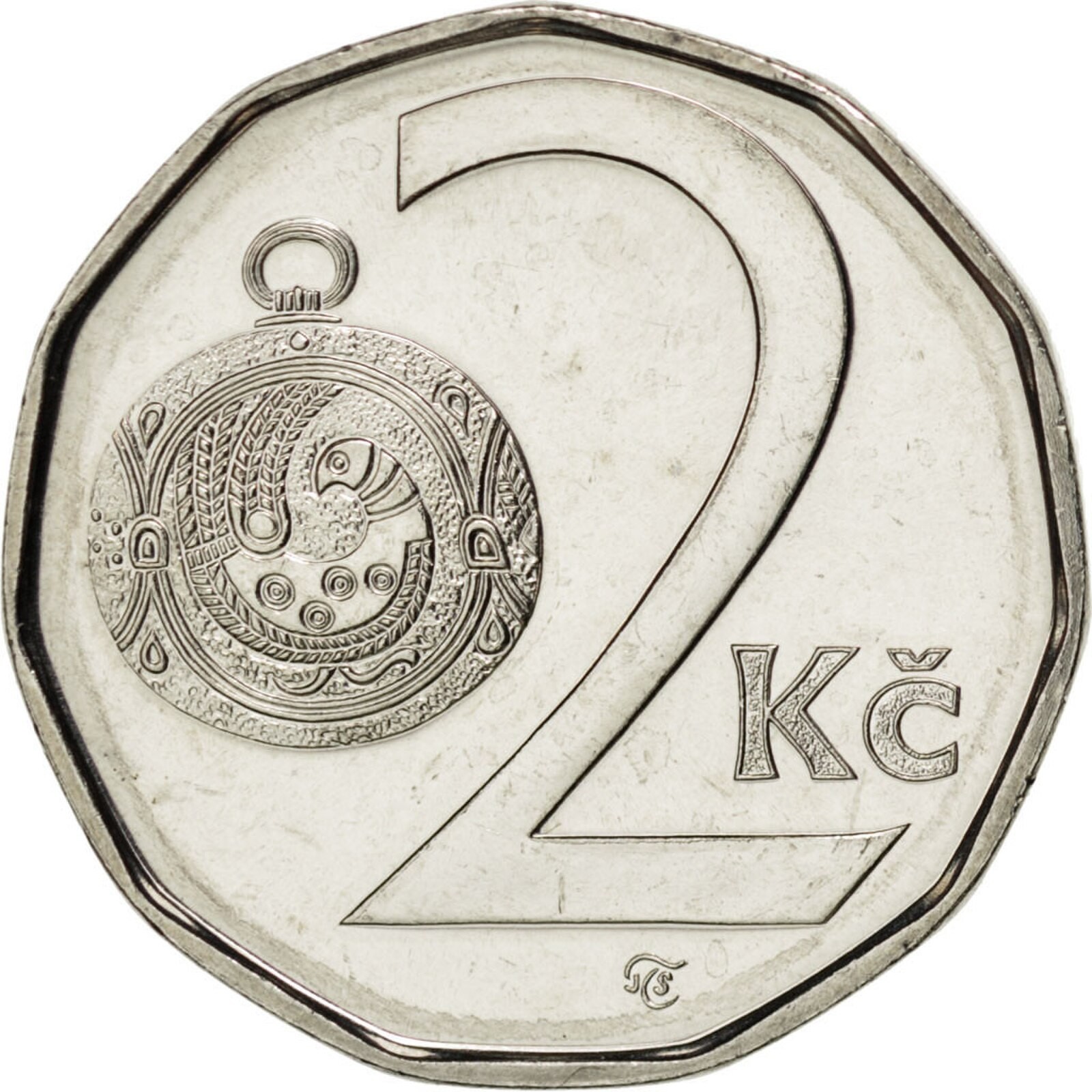
Czech 2-koruna coin, clearly showing Czech koruna currency.
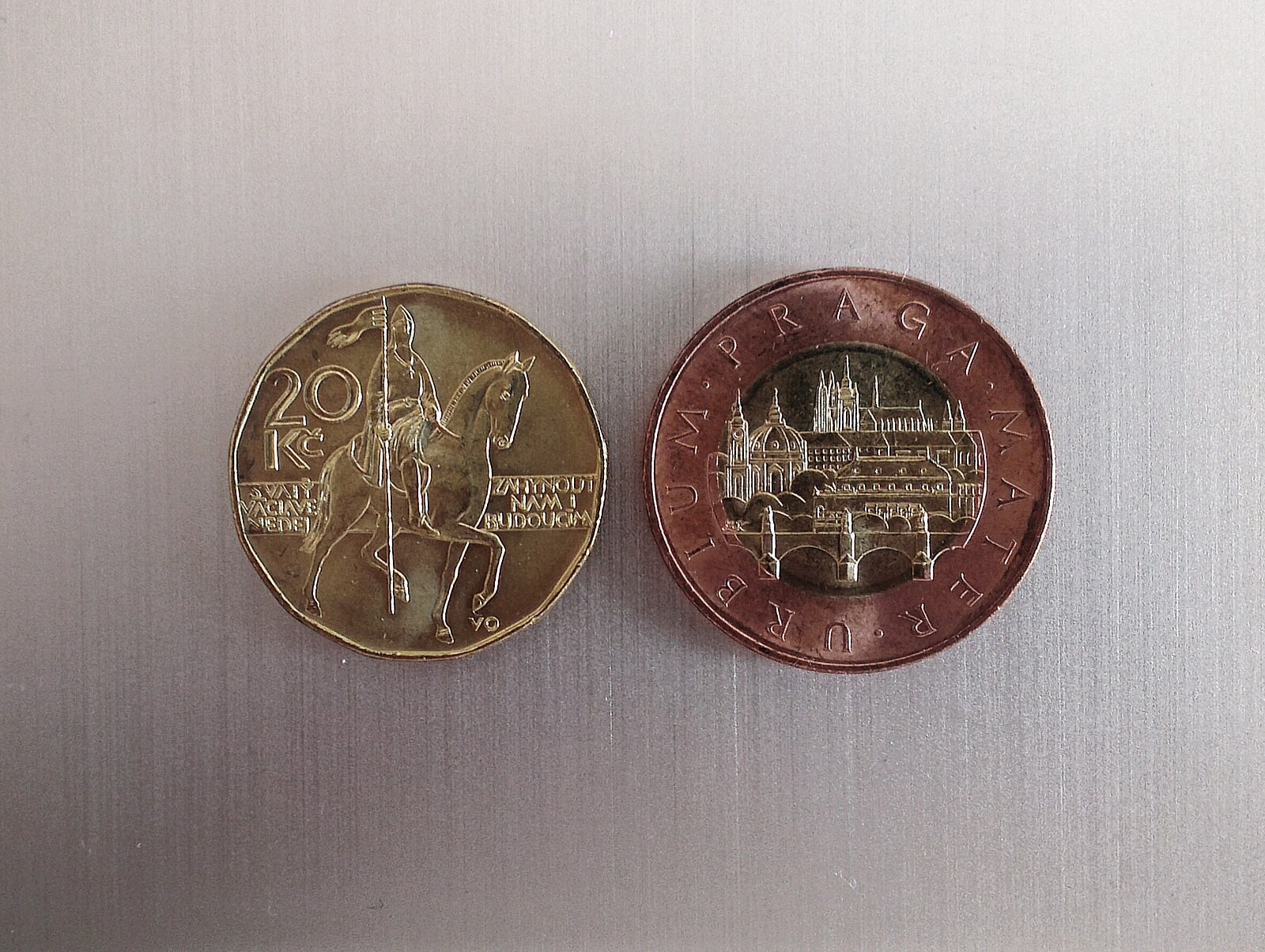
Group of Czech koruna coins in several denominations.
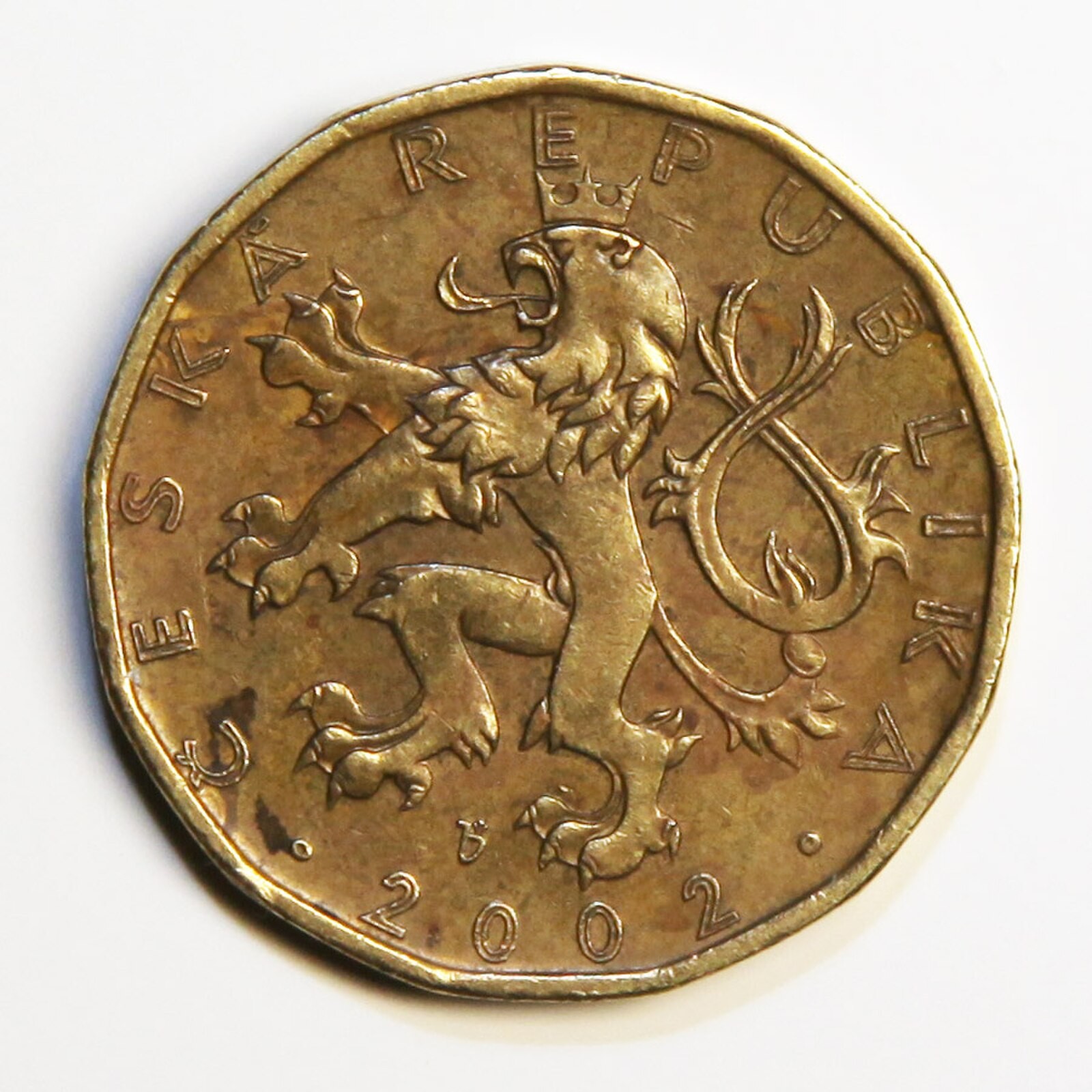
Obverse of a Czech 20-koruna coin.
Quick facts
- Czechia joined the European Union in 2004 but is not part of the euro area.
- The official currency in Prague is the Czech koruna, internationally coded CZK and commonly shown as Kč.
- The European Commission currently lists no target date for Czech euro adoption.
- Some businesses may accept euros voluntarily, but the koruna remains the official currency.
- When a merchant converts a CZK price into euros, the merchant's exchange rate matters.
Questions
What currency does Prague use?
The Czech koruna, coded CZK and usually written Kč after the amount.
Can I pay in euros in Prague?
Some tourist-facing businesses may accept euros, but they are not required to treat the euro as the local currency. The business chooses its conversion terms.
Should I use cash or card?
Cards are widely useful in Prague, but a small amount of CZK can be a sensible backup. Check individual businesses rather than assuming one method works everywhere.
Where should I avoid exchanging money?
Avoid any exchange or ATM transaction whose rate, fee or conversion terms you do not understand. Compare the offered terms first and use established banks or clearly regulated services when possible.
Sources & further reading
- Czechia and the euro — European Commission
- Cost of Living — Prague City Tourism
- Prague Visitor Centre – Na Můstku — Prague City Tourism