
Prague Stories · Czech Christmas
What at a Prague Christmas Market Is Actually Czech?
Prague's Christmas markets mix Czech festive habits with broader Central European winter culture and modern tourist products. The useful question is not whether every stall is uniquely Czech, but which details connect to local seasonal life.
Old Town Square, Wenceslas Square and Prague seasonal markets

Walk into a Prague Christmas market and the sensory shorthand is immediate: steam, grilled meat, hot wine, honey drink, sweets, wooden ornaments, lights.
A Christmas market is a mixture by design
The temptation is to label the entire scene “traditional Czech Christmas.” That is too easy. Christmas markets across Central Europe share ingredients, drinks, decorations and commercial formats, and Prague participates in that regional culture while adding its own local products and customs. So authenticity is not a yes-or-no test at the entrance. It is something you read stall by stall. A Czech word on a cup may describe a local version of a wider Central European tradition. A craft can have regional roots, and a winter food can feel very Czech without being unique to Czechia. The market becomes more interesting when you stop asking it to prove exclusivity.
Start with words Czechs actually use
Svařák is the Czech everyday word for mulled wine, a hot spiced wine that belongs to winter and Advent social life but has close relatives such as German Glühwein. Medovina is a honey-based alcoholic drink with a different base and flavour. Sausages and grilled foods belong to a broad Central European market tradition; they are not a recipe unique to Prague. Then there are sweets and baked goods. Czech Christmas has a deep home tradition of vánoční cukroví — small Christmas cookies — even if a market stall's exact assortment changes. Nuts, gingerbread and festive pastries may appear alongside imported or international sweets. Read names and ingredients instead of trusting a “traditional” banner.
Trdelník is the perfect test of market literacy
Trdelník is highly visible at Prague markets and tourist streets, but visibility does not make it an old Czech Christmas food. The better-documented protected trdelník tradition points to Skalica in Slovakia, while Prague's elaborate filled versions belong to the modern visitor economy. That does not forbid you from eating one under Christmas lights. It simply means the market is showing you modern Prague tourism as well as Czech seasonal culture. Once you accept that mixture, the experience improves. You no longer need every bite to pass a purity test. You can enjoy a photogenic modern sweet and then look for something whose connection to Czech Christmas is stronger.
Craft needs the same scepticism as food
Wooden ornaments, glass, ceramics, candles and textile goods can all connect to Czech craft traditions — or they can be mass-produced products styled to look regional. A useful market habit is to ask where an item was made, whether the maker is named and whether the stall can explain the technique. That small conversation shifts the market from a backdrop into a supply chain. A “Czech design” label means more when the object can be traced to a workshop, region or named maker, not just a souvenir stand with a Czech flag.
Vendor lineups, prices and opening dates change every year
Major markets usually begin in late November and run through December, with some extending into early January. Exact dates change every year and should be verified on official city listings.
Reviewed visuals
See the story
Supporting images selected in the Prague Stories visual review. Context images are labeled so they are not mistaken for documentary proof of the exact subject.
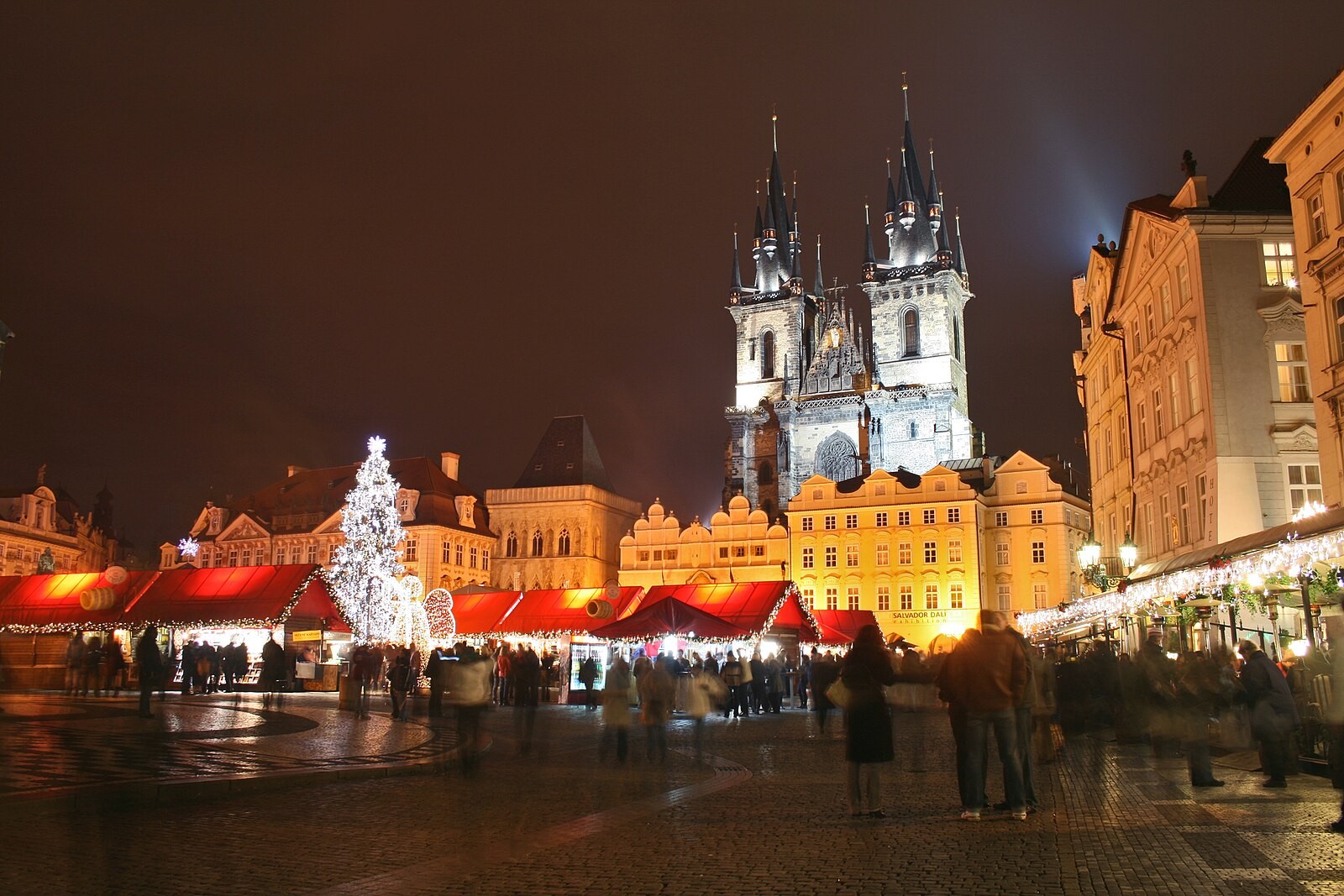
Old Town Square in Prague decorated for Christmas, with market activity and seasonal lighting.
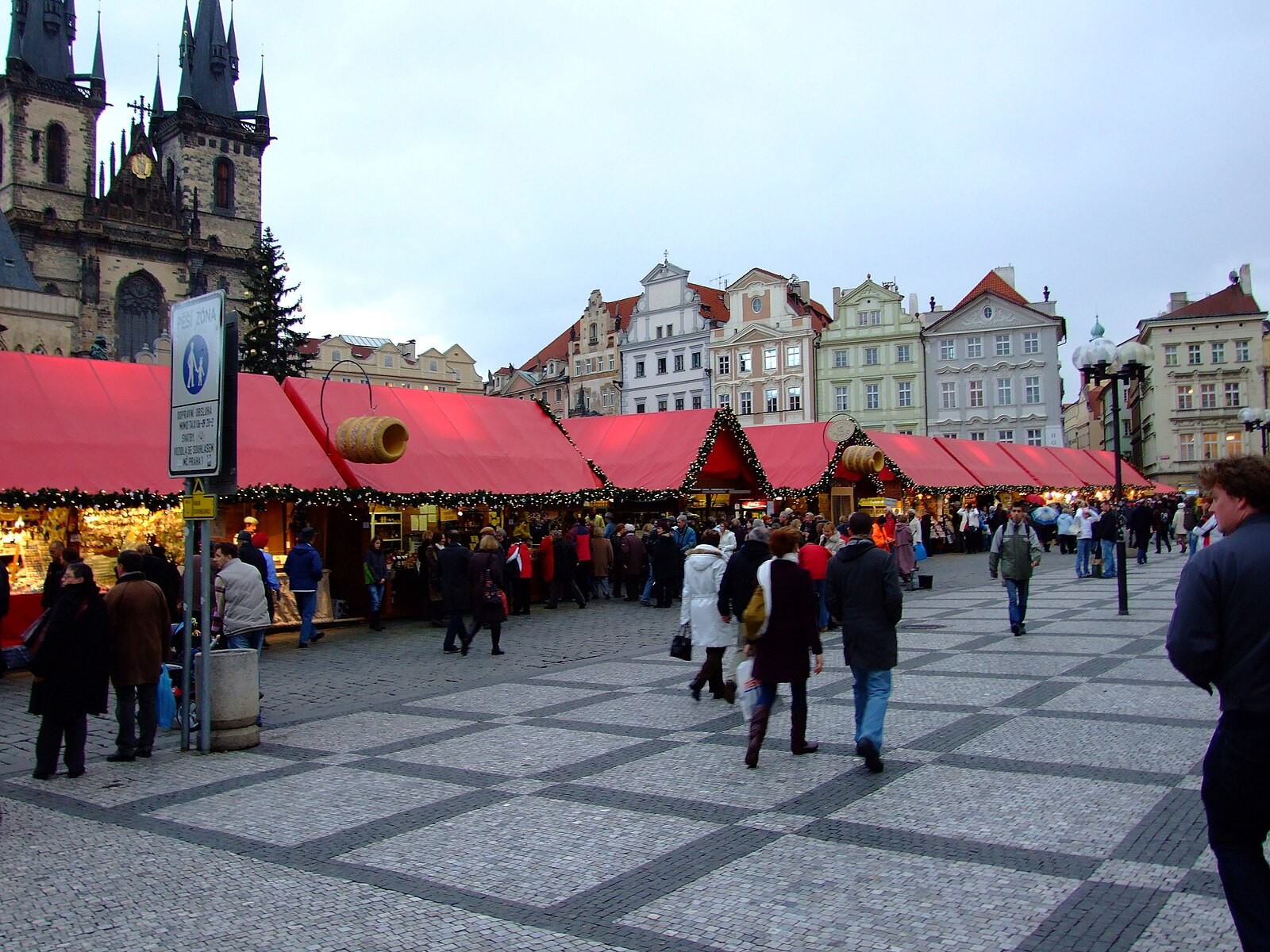
Daytime Christmas market stalls on Prague Old Town Square.
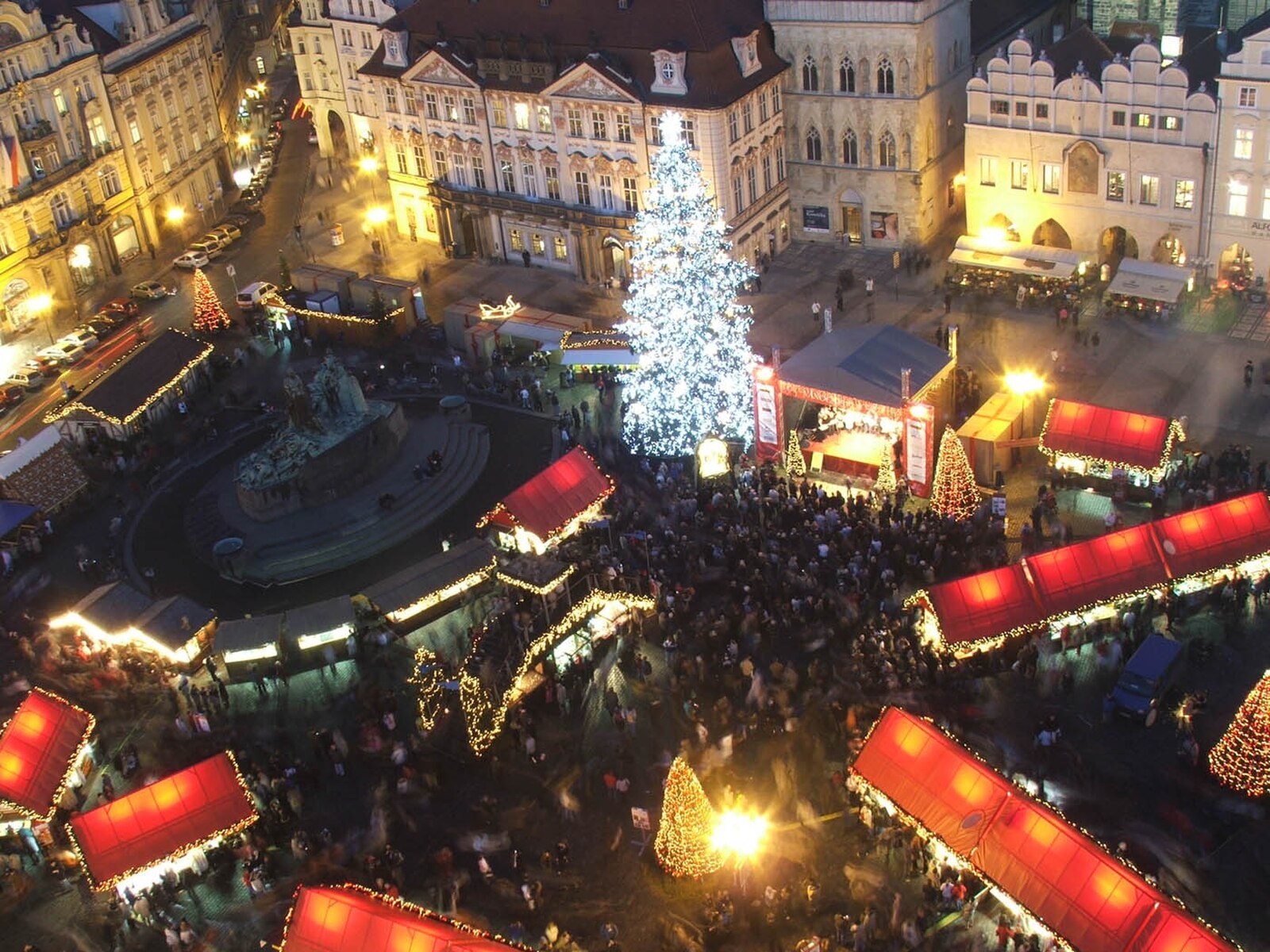
Prague Christmas market scene with stalls and seasonal decorations.
Quick facts
- Prague Christmas markets combine Czech, Central European and modern tourist-market traditions.
- Svařák is the Czech term for mulled wine; similar drinks exist across Central Europe.
- Medovina is honey-based and is not the same drink as mulled wine.
- Trdelník's strong Prague-market visibility should not be confused with an old Czech Christmas origin.
- Vendor lineups, prices and opening dates change every year.
- Prague City Tourism currently lists the main central 2026 markets from late November, with Old Town Square and Wenceslas Square continuing into early January.
Questions
What food should I try at Prague Christmas markets?
Look for foods and drinks with clear Czech seasonal context such as svařák and Czech Christmas sweets, alongside sausages and other Central European market foods. Vendor offerings change annually.
Is trdelník a traditional Czech Christmas food?
No strong evidence supports treating it as an old Czech Christmas tradition. It is a prominent modern Prague tourist-market food with a documented related tradition centred in Skalica, Slovakia.
What is svařák?
Hot spiced wine — the Czech version of the wider European mulled-wine tradition.
When do Prague Christmas markets usually run?
Major markets usually begin in late November and run through December, with some extending into early January. Exact dates change every year and should be verified on official city listings.
Sources & further reading
- Markets — Prague City Tourism
- Vánoční trhy – Staroměstské náměstí — Prague City Tourism
- Czech Christmas — VisitCzechia
- Publication of an application: Skalický trdelník — EUR-Lex / European Union