
Baroque urban change
Clam-Gallas Palace Replaced a Smaller Palace and Several Burgess Houses
Prague City Tourism says the Baroque palace was built from 1713 for Jan Václav Gallas on the site of a smaller palace and several burgess houses.
Clam-Gallas Palace, Old Town

A monumental palace required consolidating a site that had previously held several smaller urban properties.
A palace this large had to remake the block
Clam-Gallas Palace did not rise on an empty parcel. Prague City Tourism says construction began from 1713 for Jan Václav Gallas on a site previously occupied by a smaller palace and several burgess houses. The monumental residence therefore records a process of urban consolidation: multiple earlier properties were absorbed into one aristocratic project.
Old Town scale makes the intervention visible
The surrounding street network still carries the tighter grain of older Prague. Against that context, a major courtyard palace with ceremonial entrances represents a different kind of spatial ambition. Its footprint tells a social story as clearly as its decoration does.
The project reached beyond Prague — buildings erase and preserve at the same time
Prague City Tourism connects the design with the Vienna architect Johann Bernhard Fischer von Erlach, placing the palace within a wider Central European Baroque world. The building also changed the block itself: a smaller palace and several burgess houses gave way to one much larger aristocratic residence. What now looks old and settled was once a major redevelopment of an even older part of the city.
Reviewed visuals
See the story
Supporting images selected in the Prague Stories visual review. Context images are labeled so they are not mistaken for documentary proof of the exact subject.
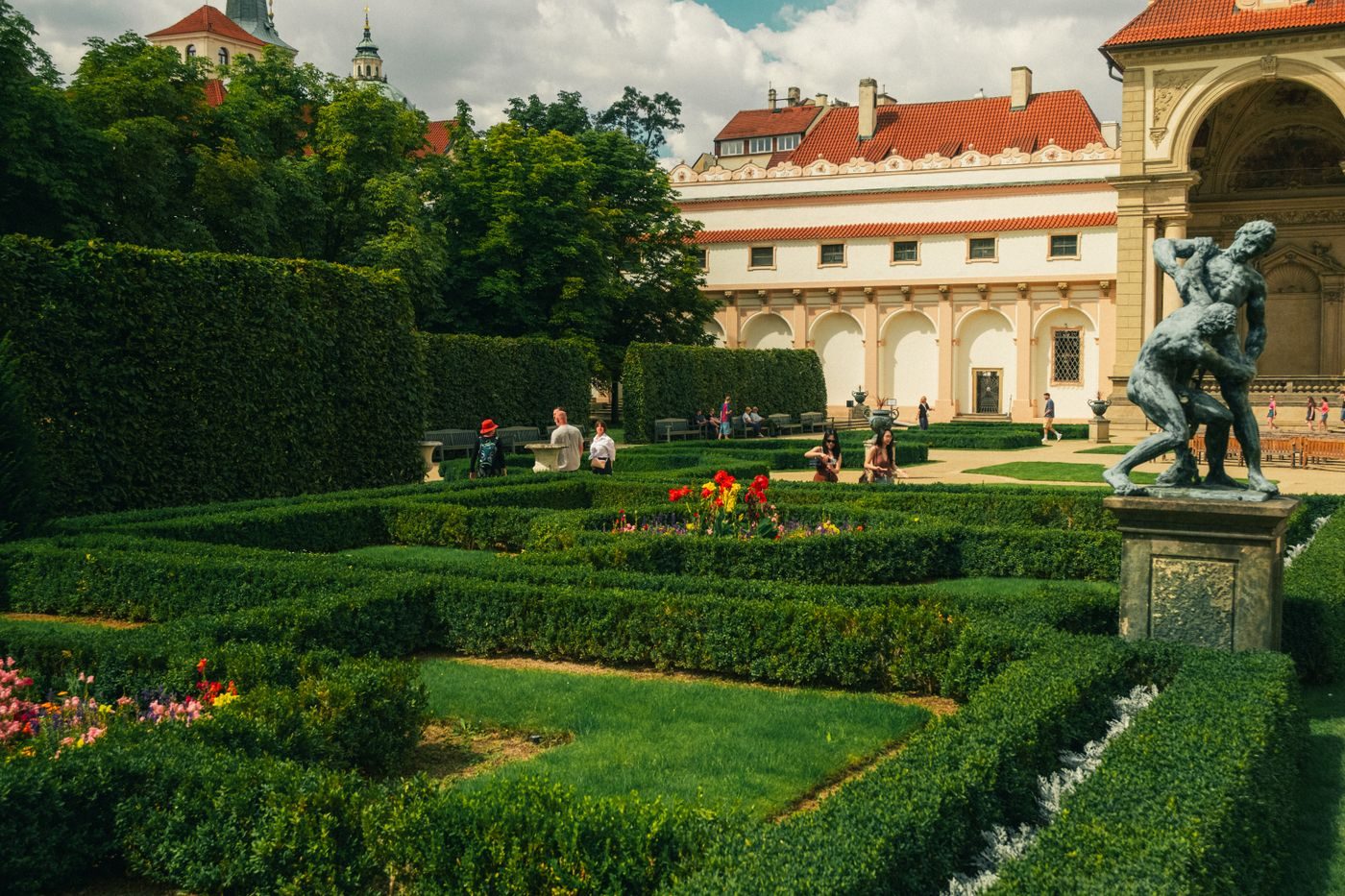
A large exact Prague Baroque palace complex is visibly shown.
Quick facts
- Construction began from 1713 according to Prague City Tourism.
- The patron was Jan Václav Gallas.
- The site had held a smaller palace and several burgess houses.
- The source connects the project with Johann Bernhard Fischer von Erlach.
Questions
What occupied the site before the palace?
Prague City Tourism says a smaller palace and several burgess houses.
Which architect does the source connect with the project?
Johann Bernhard Fischer von Erlach.
Sources & further reading
- Clam-Gallas Palace — Prague City Tourism