
Coffeehouse culture
Café Louvre Hosted the Czechoslovak PEN Club’s Founding Meeting in 1925
Café Louvre’s own history says 38 writers met there on 15 February 1925 to found the Czechoslovak PEN Club centre, with Karel Čapek as its first chairman.
Café Louvre, New Town

One café table became the meeting point for founding a national PEN Club centre.
A café table can become institutional history
Café Louvre records that 38 writers gathered there on 15 February 1925 for the founding meeting of the Czechoslovak PEN Club centre, with Karel Čapek becoming its first chairman. The episode turns a familiar Prague café into something larger than a place for coffee: it was infrastructure for organised literary life.
Coffeehouses worked because they were semi-public
A café offers a particular kind of room. It is accessible without being fully public, social without requiring a private home, and flexible enough for conversation, reading and meetings. Those qualities help explain why intellectual networks repeatedly used coffeehouses as workplaces and gathering points.
Čapek belongs here as an organiser, not only an author
Remembering his chairmanship changes the literary portrait. Famous writers do not only produce books; they create associations, negotiate institutions and build networks with other writers. The Louvre episode captures that organisational side of cultural history.
One meeting changed the café’s literary history
There is no need to turn every café anecdote into mythology. This one comes with a date, an attendance figure and a clear outcome: 38 writers met here on 15 February 1925 to found the Czechoslovak PEN Club centre. An ordinary café interior became the setting for an institution whose influence reached far beyond its tables.
Reviewed visuals
See the story
Supporting images selected in the Prague Stories visual review. Context images are labeled so they are not mistaken for documentary proof of the exact subject.
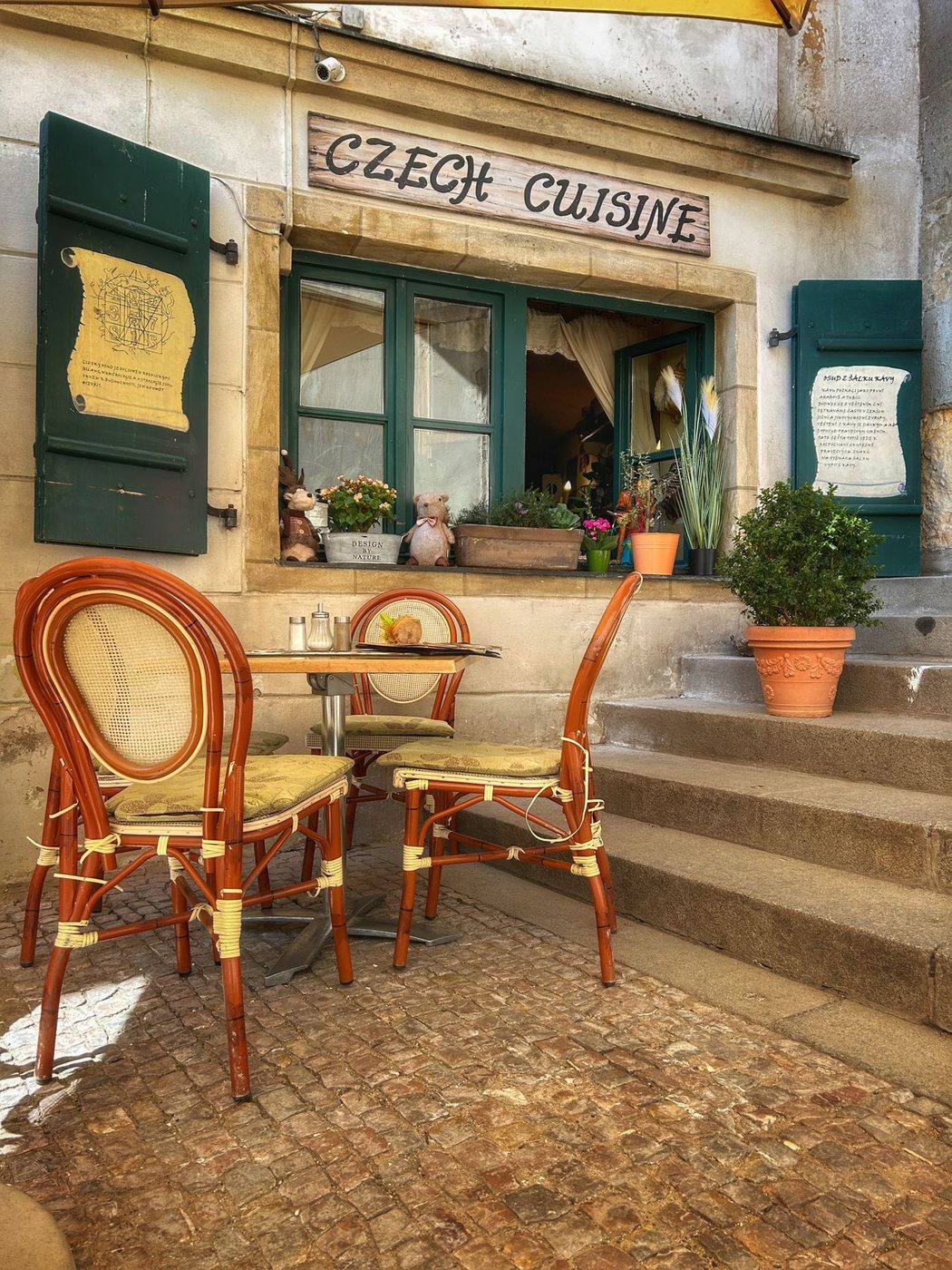
A Prague street café and seating are visibly shown.
Quick facts
- The founding meeting took place in 1925.
- Café Louvre says 38 writers attended.
- The meeting founded the Czechoslovak PEN Club centre.
- The source names Karel Čapek as its first chairman.
Questions
What happened at Café Louvre in February 1925?
Its official history says 38 writers met there to found the Czechoslovak PEN Club centre.
Who became the first chairman?
Karel Čapek.
Sources & further reading
- Café Louvre — History — Café Louvre